Showing Posts From
Hallstatt travel guide
-
 Cemre Seyyah
 - 19 Jul, 2026 22:48
'Hallstatt: Where Time Carved Its Name into the Alps and Salt Whispered Eternity'
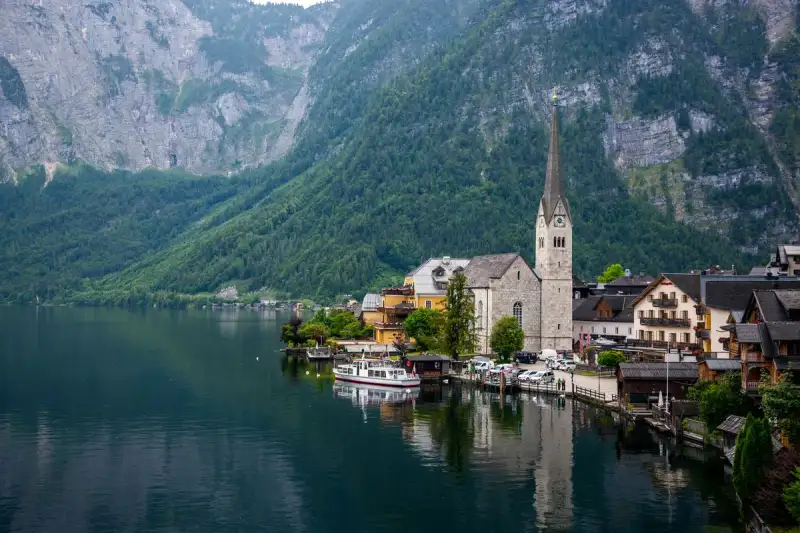
Nestled like a forgotten verse in the grand epic of the Alps, Hallstatt clings to the southwestern shore of its namesake lake, a jewel of Upper Austria where the Dachstein massif rises like the spine of a slumbering giant. Here, where the earth’s crust bled salt for millennia, humanity etched its earliest ambitions into the rock—literally. The air hums with the echoes of miners who carved not just tunnels, but the very identity of a continent. This is no ordinary village; it is a living museum where time itself was mined, traded, and immortalized. To stand in Hallstatt is to walk through the layers of history as one might peel the pages of a thousand-year-old manuscript. Beneath your feet lie the silent galleries of the world’s oldest salt mine, while above, the sky reflects the shimmer of a lake so still it feels like a mirror held to the heavens. The village is a paradox: a place of overtourism yet untouched by modernity’s rush, a UNESCO-listed dream that feels both timeless and transient. How did a settlement carved into a cliffside become the poster child for global wanderlust? And why does its story begin—and perhaps end—with salt?The Alchemy of Salt: How Hallstatt Became Europe’s First Industrial Powerhouse Long before the Romans named provinces or the Celts forged their legendary swords, Hallstatt was already a power center—not of armies, but of necessity. Salt, the "white gold" of antiquity, was here in abundance, crystallized in the veins of the Dachstein massif. By the Bronze Age (circa 2000–800 BC), Hallstatt’s miners were extracting salt in quantities that defied the era’s technological limits. They didn’t just dig; they engineered. Using antler picks and wooden tools, they carved hearts into the salt deposits—a symbol of life and trade, perhaps, or a nod to the sacred nature of their labor. The wealth generated from this trade was staggering. Archaeologists uncovered a prehistoric cemetery near the Salzberg mines, revealing 1,045 burials spanning centuries. These were not mere graves; they were archives of status, profession, and artistry. Grave goods included iron swords, bronze brooches, and pottery adorned with motifs that would later define the Hallstatt culture (800–450 BC). The salt’s preservative magic extended beyond food—it mummified textiles, leather shoes, and even wooden tools, offering a snapshot of daily life frozen in time. Yet for all its prosperity, Hallstatt’s golden age was fleeting. By 500 BC, the mines ran deep, the work perilous, and the culture’s dominance waned. The reasons remain shrouded in mystery: Was it exhaustion? Invasion? A shift in trade routes? What we know is that the village’s heart—its salt—continued to beat, even as the world moved on.The Hallstatt Culture: Europe’s Iron Age Renaissance The name "Hallstatt" is synonymous with an archaeological revolution. The Hallstatt culture (800–450 BC) was not just a period; it was a cultural earthquake that reshaped Central Europe. Defined by its distinctive burial practices, art, and proto-Celtic identity, it bridged the Bronze Age and the Iron Age, leaving behind a legacy that archaeologists still dissect today. The Burials: Windows into a Lost World The cemetery at Salzberg mines is a time capsule. Of the 1,300+ burials uncovered, only a fraction contained infants—a clue that Hallstatt’s society was selective, perhaps even stratified. Women and children were interred with grave goods, suggesting roles beyond the domestic sphere. The most striking finds? Elaborately decorated skulls in the local ossuary, their painted faces bearing names, professions, and dates of death. This macabre artistry was born of necessity: Hallstatt’s burial space was as scarce as its living quarters, forcing villagers to exhume bones every decade to make room for the newly dead. The Artifacts: Stories in Iron and Clay Hallstatt’s miners didn’t just extract salt—they extracted culture. Iron swords (Hallstatt C) and daggers (Hallstatt D) emerged as symbols of status, while pottery and brooches reflected regional influences. The village sat at the crossroads of the Hallstatt culture’s western and eastern zones, meaning its artifacts are a melting pot of styles. Some graves held Villanovan cremation urns, hinting at early Mediterranean connections, while others showcased the first iron tools—a technological leap that would define Europe’s future. The Decline: Why Did Hallstatt Fade? By 500 BC, the mines were exhausted, the graves looted, and the culture’s influence waned. Some scholars point to the rise of the La Tène culture (the "true" Celts) as a factor. Others argue that the salt’s depletion forced a shift in economic power. Whatever the cause, Hallstatt’s first act as a cultural titan had ended. But its second act was just beginning.From Obscurity to Obsession: Hallstatt’s Modern Metamorphosis For centuries, Hallstatt was a secret known only to locals and intrepid travelers. The village’s isolation was its charm—and its curse. Access was limited to boats or narrow trails, and the land between lake and mountain was so scarce that houses were stacked like books on a shelf. The first road, blasted into the rock in 1890, was a revolution. Yet even then, Hallstatt remained a backwater, its salt mines operating quietly beneath the radar. The 19th Century: The Birth of a Legend It was the 19th century that turned Hallstatt into a scholarly obsession. In 1846, Johann Georg Ramsauer began excavating the Salzberg cemetery, uncovering a trove of artifacts that would rewrite European prehistory. The finds were so significant that they gave their name to an entire culture. Meanwhile, the village itself became a curiosity—a place where bones were exhumed to make room for the living, and where skulls were painted with the stories of the dead. The 20th Century: From Salt to Stardom Hallstatt’s modern fame, however, was not born of archaeology alone. In 1997, UNESCO declared the Hallstatt-Dachstein/Salzkammergut Cultural Landscape a World Heritage Site, recognizing its "outstanding universal value." But the real explosion came in 2006, when a South Korean TV show featured Hallstatt as a picturesque escape. Social media did the rest. By 2013, the village was trending in Asia as "the most Instagrammable town in the world," its pastel houses and mirror-like lake inspiring millions of posts. Rumors swirled that Disney’s Frozen had copied its aesthetic from Hallstatt (the filmmakers denied it, citing Norway and Canada as inspirations), but the myth only fueled the pilgrimage. Today, Hallstatt is a victim of its own success. Overtourism has led to restrictions on visitor numbers, and locals grapple with balancing preservation and profit. Yet in the quiet hours before dawn, when the tour buses are still docked and the lake’s surface is glass, Hallstatt reveals its true self: a place where the past is not just remembered, but lived.The Hallstatt Salt Mine: A Journey into the Earth’s Belly To understand Hallstatt, you must descend into its mines. The Hallstatt salt mine is not just the world’s oldest working salt mine—it is a cathedral of human ingenuity, where every tunnel tells a story. The Levels: A Vertical Timeline The mine spans 21 levels, from the Erbstollen at 514 meters above sea level to the Erzherzog Matthias Schurf at 1,267 meters. Each level is a chapter in Hallstatt’s history:Level 1 (Erbstollen): The oldest, dating back to prehistoric times. Level 5: Home to the "world’s oldest pipeline," a 400-year-old system of 13,000 hollowed-out trees that transported brine to evaporation pans. Upper Levels: Used for modern mining, though the salt’s purity is now secondary to tourism.The Experience: More Than a Tour Visitors don’t just walk through the mine—they become part of its legacy. You’ll:Slide down wooden chutes (a tradition since the Bronze Age). See preserved artifacts, including miner’s backpacks and tools, still intact after centuries. Touch the "eternal salt"—a chamber where salt crystals grow like stalactites, untouched by time.The mine’s most haunting feature? The silence. Beneath the mountain, the world’s noise fades, leaving only the whisper of salt and the weight of history.Hallstatt’s Treasures: A Guide to the Village’s Soul Hallstatt is small—just 780 residents—but its cultural density is unmatched. Here’s how to experience its essence: 1. Hallstatt Skywalk: The View That Stole a Thousand Hearts Perched 360 meters above the village, the Skywalk (or "World Heritage View") offers a panorama that feels like standing on the edge of the world. The Dachstein Alps rise in jagged splendor, their peaks dusted with snow even in summer. Below, the Hallstätter See mirrors the village’s pastel facades, creating a scene so perfect it’s almost surreal. Come at sunset for the most magical light. 2. Hallstatt Ossuary: Where the Dead Keep Watch St. Michael’s Chapel houses one of Europe’s most unusual attractions: an ossuary with over 1,200 skulls, 600 of which are painted with names, dates, and symbols. The tradition began in the 16th century when space ran out, but the result is a macabre art installation. Some skulls bear poignant inscriptions like "Here lies Anna, wife of the baker, 1749–1800." It’s a reminder that Hallstatt’s history is not just ancient—it’s deeply personal. 3. Hallstatt Museum: A Time Machine to the Iron Age The museum’s exhibits are a deep dive into the village’s dual identity: salt miner and cultural crucible. Highlights include:Bronze Age tools used to extract salt. Iron Age jewelry and weapons from the Hallstatt culture. A replica of the 2nd-century Medusa cameo, discovered in 2025 during funicular construction—a rare Roman artifact in Upper Austria.4. The Village Itself: Where Every Corner Holds a StoryThe Market Square: Lined with Baroque houses, it’s the heart of Hallstatt’s charm. The Church of St. Mary: A Gothic masterpiece with a towering spire. The Lake Promenade: Where locals and visitors alike gather to watch the sunset over the water.The Dark Side of Hallstatt’s Fame: Overtourism and Its Toll Hallstatt’s transformation from sleepy mining village to global phenomenon has come at a cost. The village now welcomes over a million visitors annually, leading to:Overcrowded streets and long waits for attractions. Rising property prices, pushing locals out. Environmental strain on the delicate alpine ecosystem.In response, authorities have implemented measures like:Visitor quotas for the Skywalk. Bans on drone flights to protect the landscape. Promotion of shoulder seasons to distribute tourism more evenly.Yet for all its challenges, Hallstatt’s magic endures. Perhaps it’s because the village refuses to be reduced to a postcard. Beneath the Instagram filters, it remains a place where history is not just displayed—it’s lived.Hallstatt Beyond the Postcard: Hidden Gems and Local Secrets If you venture beyond the main attractions, Hallstatt reveals its quieter side: 1. The Dachstein Ice Caves A short cable car ride away, these caves are a frozen wonderland of stalactites and underground lakes. The "World Ice Arena" is a highlight—a cathedral of ice where you can walk through tunnels lit by eerie blue light. 2. The Five Fingers Viewing Platform Part of the Dachstein Skywalk, this cantilevered platform juts out over a 400-meter drop, offering vertigo-inducing views of the Alps. 3. The Salt World Theme Park A family-friendly attraction where kids (and adults) can learn about salt mining through interactive exhibits and a simulated mine train ride. 4. The Local Gasthäuser Skip the touristy restaurants and head to family-run Gasthäuser (inns) like Gasthof Zauner for authentic Austrian dishes like Kasnocken (cheese dumplings) or Wiener Schnitzel.When to Visit Hallstatt: Seasons of Light and Shadow Hallstatt’s mood shifts with the seasons, each offering a unique experience:Season Pros ConsSpring (May–June) Fewer crowds, blooming wildflowers. Unpredictable weather.Summer (July–Aug) Long daylight hours, lively atmosphere. Peak tourist season, hot and crowded.Autumn (Sept–Oct) Golden foliage, crisp air, fewer tourists. Some attractions may have reduced hours.Winter (Nov–Mar) Snow-covered village, Christmas markets. Short daylight hours, some closures.Best time to visit: Late September to early October, when the crowds thin and the lake reflects the fiery hues of autumn.How to Get to Hallstatt: The Journey is Part of the Adventure Hallstatt’s remoteness is part of its allure. Here’s how to reach it: By AirNearest airports: Salzburg (1.5 hours), Graz (2 hours), or Vienna (3 hours). From Salzburg: Take a train to Attnang-Puchheim, then a regional train to Hallstatt (3.5 hours total).By TrainThe Salzkammergutbahn line connects Hallstatt to Salzburg, Graz, and Vienna. The journey along the lake is breathtaking.By CarDrive via the A1 highway (Salzburg–Vienna), then take Route 145 to Hallstatt. Parking is limited; use the P5 parking garage (€12/day).By BoatFrom Obertraun (opposite shore), take a ferry (€10 round-trip) for a scenic crossing.Pro tip: Arrive early or stay overnight to avoid the day-trippers. The village is at its most enchanting at dawn and dusk.Final Thoughts: Why Hallstatt Matters Hallstatt is more than a destination; it’s a lesson in how humanity and nature can intertwine to create something extraordinary. It’s a place where salt—once a commodity—became a catalyst for culture, where a village carved into a cliffside became a symbol of global fascination, and where the past is not just remembered, but revered. To visit Hallstatt is to touch the pulse of Europe’s earliest chapters. It’s to stand in a mine where miners once carved hearts into salt, to walk streets where Iron Age Celts traded their swords, and to gaze upon a lake that has reflected the same mountains for millennia. In a world obsessed with the new, Hallstatt reminds us that some places are timeless. So come. But come slowly. Stay awhile. Let the village’s whispers sink in. And when you leave, take a piece of Hallstatt with you—not in your camera roll, but in your understanding of what it means to be human.#HallstattTravel #UNESCOHiddenGem #AlpineMagic #SaltAndHistory #AustrianWonders Related InsightsThe Magic of Pamukkale Whispers of the Wind: Chasing the Phantom Melodies of Mongolia's Barking Sands Ethiopia’s Danakil Depression: Where Earth’s Hellish Beauty Meets Alien Landscapes{ "@context": "https://schema.org", "@type": "FAQPage", "mainEntity": [ { "@type": "Question", "name": "What is the main focus of 'Hallstatt: Where Time Carved Its Name into the Alps and Salt Whispered Eternity'?", "acceptedAnswer": { "@type": "Answer", "text": "Discover Hallstatt, the Alpine village where prehistoric salt mines birthed a culture, and modern fame collided with ancient whispers—all cradled by the Dachstein’s embrace." } }, { "@type": "Question", "name": "Who authored the comprehensive guide on 'Hallstatt: Where Time Carved Its Name into the Alps and Salt Whispered Eternity'?", "acceptedAnswer": { "@type": "Answer", "text": "This detailed article and its insights were carefully researched and authored by Cemre Seyyah." } }, { "@type": "Question", "name": "Where can I find more related content about Travel?", "acceptedAnswer": { "@type": "Answer", "text": "You can explore more articles, detailed reviews, and similar insights by browsing the Related Insights section at the bottom of this article or visiting our dedicated Travel category page." } } ] }