Showing Posts From
Harry potter y la c
-
 Anna Kowalska
 - 08 Mar, 2026 17:59
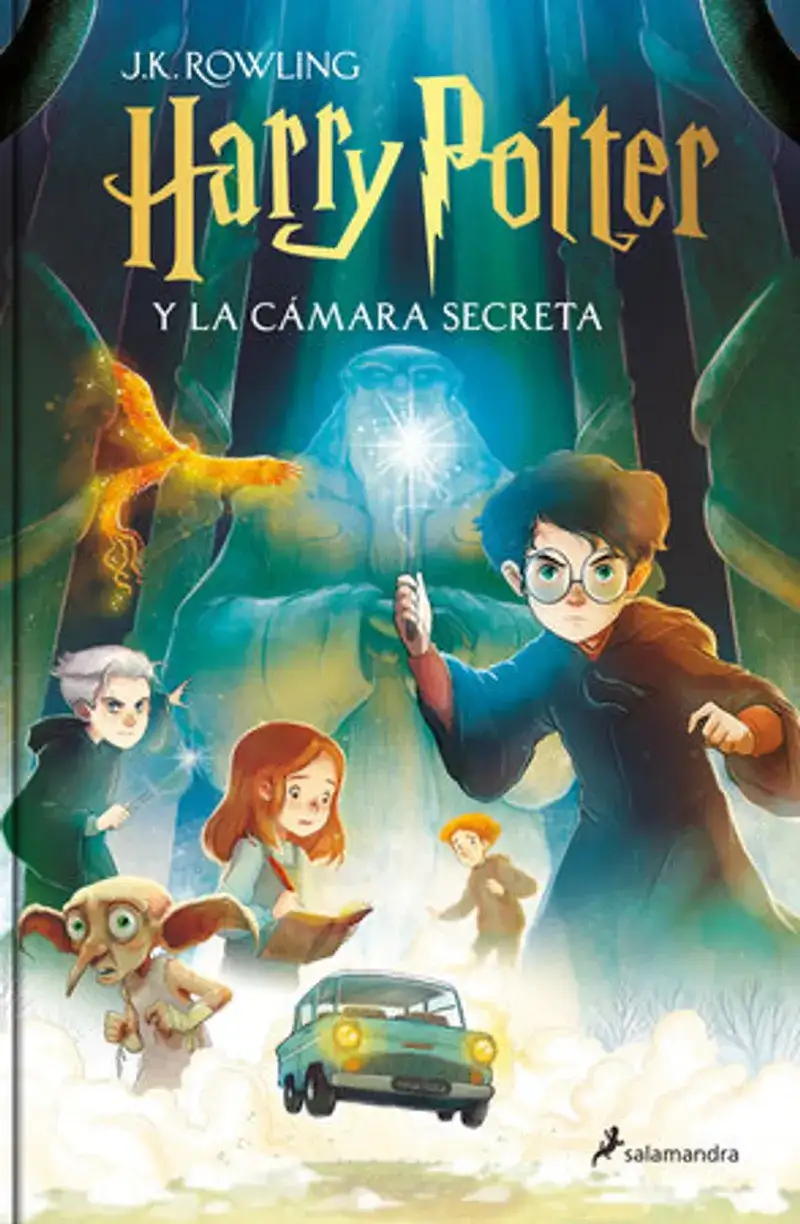
Harry Potter y la cámara secreta (Edición con ilustraciones de Xavier Bonet) / Harry Potter and the Chamber of Secrets Book Review and Summary
Harry Potter y la cámara secreta (Edición con ilustraciones de Xavier Bonet) / Harry Potter and the Chamber of Secrets Author: J.K. RowlingPage Count: UnknownPublication Date: 2024-PRH Harry Potter and the Chamber of Secrets (Illustrated Edition) – A Darker Dance of Magic and Identity Few sequels in literature dare to deepen the shadows while keeping the sparkle alive, but J.K. Rowling’s Harry Potter and the Chamber of Secrets somehow pulls it off. This is not merely a second act; it’s a mirror held up to the first book’s gleaming optimism, revealing cracks in the gilded halls of Hogwarts. In this lavishly reimagined illustrated edition—crafted with devotion by Spanish artist Xavier Bonet—Rowling’s narrative pulse quickens, and the magic becomes not just spellwork, but self-discovery. At its core, The Chamber of Secrets is about fear masquerading as inheritance. The book opens with Harry trapped in the suffocating orbit of the Dursleys, where love is a performance and kindness is a foreign currency. When the elfin Dobby arrives, his warnings are draped in doom—“You will be hurt… or worse… killed”—not as prophecy, but as emotional extraction. Harry is being told, in no uncertain terms, that his identity is both a burden and a target. This theme of inherited danger is echoed in the Chamber itself: a relic of Salazar Slytherin, whose prejudice has festered beneath the school’s polished surface. The “pure-blood” ideology isn’t just villainy—it’s a psychological wound, one that Harry must face not as a hero, but as a boy who doesn’t yet know his own lineage’s weight. Rowling’s genius lies in making ideology feel intimate. The attacks on Muggle-born students aren’t just plot points; they’re emotional landmines. Each petrified victim—Colin Creevey, Justin Finch-Fletchley—represents a fragment of Harry’s growing understanding: that the world he inhabits is not as safe or as just as he believed. The whispers in the corridors, the slashed paintings, the ghostly warnings from Nearly Headless Nick—all of it builds a Gothic atmosphere within the familiar framework of a school story. It’s as if Hogwarts, once a sanctuary, has become a haunted house that Harry can’t escape. And yet, amid the dread, Rowling never abandons humor or heart. The flying Ford Anglia, the bumbling Weasley twins, even Gilderoy Lockhart—each comic relief character serves a purpose. Lockhart, the narcissistic Defense Against the Dark Arts teacher, is not just a joke; he embodies the danger of false authority and performative heroism. His presence reminds us that talent and virtue are not always aligned—and that’s a lesson Harry must learn before facing the true monster in the Chamber. The prose, while retaining its youthful clarity, gains nuance here. Rowling’s descriptions of the Forbidden Forest or the Slytherin common room are richer, more textured. The emotional beats—Harry’s isolation, Ron’s fear of failure, Hermione’s brilliance turned to stone—are rendered with a quiet intensity that lingers. It’s a book where fear and courage are not opposites, but twins: one cannot exist without the other. Enter Xavier Bonet, whose illustrations elevate the text into a visual incantation. Bonet’s style is both delicate and bold—ethereal yet grounded. His depiction of the Basilisk, emerging from the pipes like a gleaming nightmare, is not monstrous in the traditional sense, but unsettling in its serpentine grace. The flying car’s crash into the Whomping Willow is rendered with kinetic energy, capturing the reckless joy of youth in peril. And the Chamber itself—dark, cavernous, illuminated by eerie green light—feels like a descent into the subconscious, where fears take physical form. Bonet’s greatest achievement is giving faces to Rowling’s most elusive characters. Dobby is not just a disembodied voice; he’s a creature of trembling ears and wide, pleading eyes. Ginny Weasley, often overshadowed in memory, is shown with a haunted intensity that foreshadows her later role. Even the portraits—so often dismissed as mere decoration—are alive with personality in Bonet’s hands. This edition is more than a repackaging; it’s a re-illumination. The larger format allows Bonet’s artwork to breathe, turning each page into a portal. The printed endpapers, the chapter-opening illustrations, the full-page spreads—all contribute to an immersive experience that feels like holding a grimoire. It’s not just a book about magic; it’s a magical object itself. In the end, Harry Potter and the Chamber of Secrets is about the cost of self-awareness. Harry learns that being special isn’t a badge of honor—it’s a cross to bear. The Chamber doesn’t just conceal a monster; it reveals a truth Harry has spent his life denying: that he is not an orphan by chance, but by bloodline. And that bloodline carries both power and peril. Rowling’s genius is in making that revelation feel both inevitable and devastating. The horror isn’t in the monster; it’s in the mirror it holds up to Harry—and to every reader who has ever feared not being enough. This illustrated edition, with Bonet’s haunting visions, doesn’t just tell the story again—it deepens it. It turns memory into magic, and fear into understanding. And in doing so, it reminds us why, after all these years, we still believe in the power of the wand… and the story it tells. #HarryPotter #ChamberOfSecrets #J.K.Rowling #XavierBonet #IllustratedEdition #MagicAndIdentity Related InsightsCharlaine Harris Gunnie Rose 4 Book Review and Summary Their Eyes Were Watching God Book Review and Summary World War Z: An Oral History of the Zombie War Book Review and Summary{ "@context": "https://schema.org", "@type": "FAQPage", "mainEntity": [ { "@type": "Question", "name": "What is the main focus of Harry Potter y la cámara secreta (Edición con ilustraciones de Xavier Bonet) / Harry Potter and the Chamber of Secrets Book Review and Summary?", "acceptedAnswer": { "@type": "Answer", "text": "Everything you need to know about Harry Potter y la cámara secreta (Edición con ilustraciones de Xavier Bonet) / Harry Potter and the Chamber of Secrets with our detailed review." } }, { "@type": "Question", "name": "Who authored the comprehensive guide on Harry Potter y la cámara secreta (Edición con ilustraciones de Xavier Bonet) / Harry Potter and the Chamber of Secrets Book Review and Summary?", "acceptedAnswer": { "@type": "Answer", "text": "This detailed article and its insights were carefully researched and authored by Anna Kowalska." } }, { "@type": "Question", "name": "Where can I find more related content about Books?", "acceptedAnswer": { "@type": "Answer", "text": "You can explore more articles, detailed reviews, and similar insights by browsing the Related Insights section at the bottom of this article or visiting our dedicated Books category page." } } ] }