Showing Posts From
Hebei travel
-
 Zola Ndlovu
 - 25 Sep, 2026 21:47
Beyond the Great Wall: Uncovering the Ming Dynasty Watchtowers in Hebei
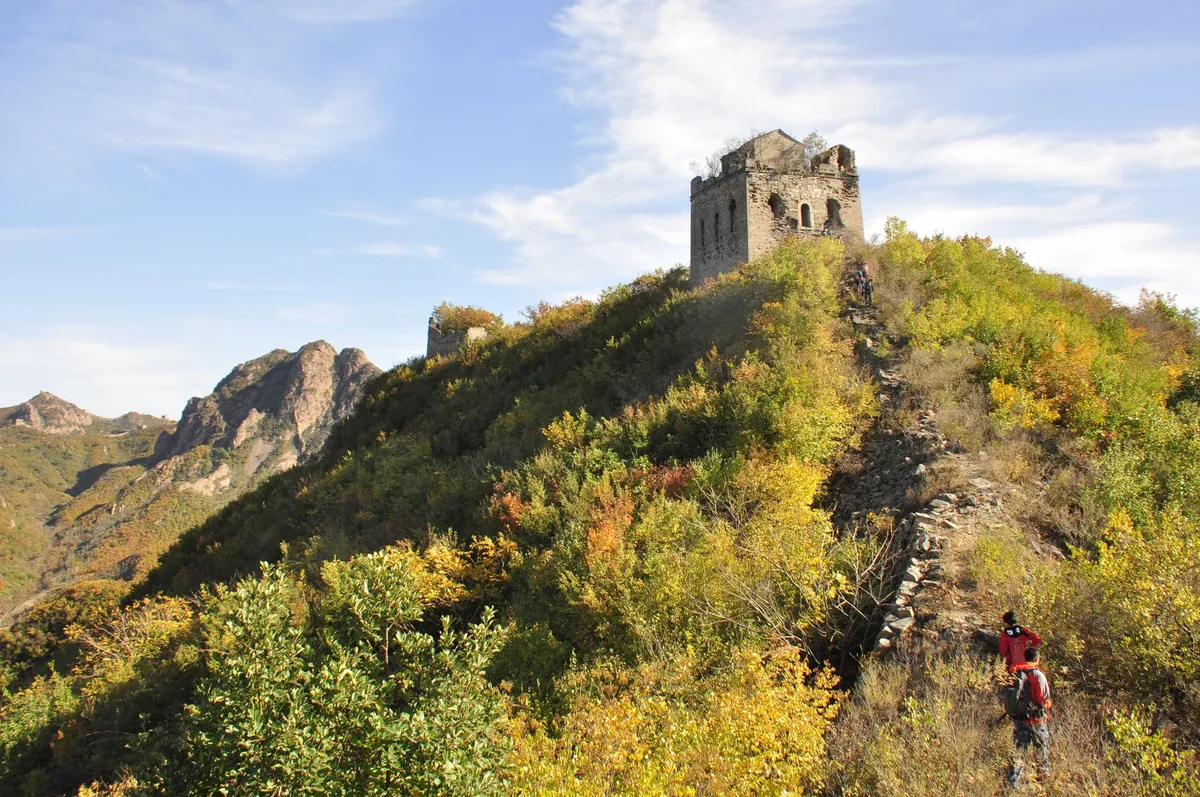
Stone Sentinels of the Northern Frontier The Ming Dynasty (1368‑1644) erected a sprawling network of watchtowers along the northern frontier to guard the empire against Mongol incursions and to relay military signals across vast distances. In Hebei province, this defensive spine reaches its most dramatic expression: a chain of stone and brick towers that cling to ridgelines, peer over river valleys, and punctuate the skyline like silent guardians. Each tower was engineered with a two‑story layout — lower chambers for garrison troops and storage, an upper platform crowned with a beacon brazier that could be lit within minutes. The walls themselves combine kiln‑fired bricks, locally quarried limestone, and tamped‑earth cores, a composite that has resisted centuries of freeze‑thaw cycles and seismic tremors. Strategically, the towers functioned as a visual telegraph. By day, smoke signals rose from the beacon platforms; by night, firelight pierced the darkness, allowing commanders in Beijing to receive intelligence from the frontier within hours rather than days. The spacing — roughly 10 to 15 kilometres apart — was calculated to maintain line‑of‑sight across the undulating topography of the Yanshan and Taihang ranges. This geometry turned the landscape itself into a communication grid, a precursor to modern optical‑fiber networks. Today, many of these sentinels survive in varying states of preservation. The most intact examples — such as the twin towers at Jinshanling and the solitary beacon at Huangyaguan — showcase original crenellations, arrow‑slit windows, and internal staircases that still bear the wear of centuries of boots. Others exist only as foundations, their stones repurposed for village homes during the Qing and Republican eras. Preservation efforts led by the Hebei Cultural Heritage Bureau, in partnership with UNESCO’s “Great Wall Conservation Programme”, have stabilized several at‑risk structures using reversible mortar and discreet steel reinforcements, ensuring that the towers remain both authentic and safe for visitors.Walking among these towers feels like stepping into a living manuscript. The wind whistles through arrow slits, carrying the scent of pine and loess, while the distant hum of modern highways reminds you that the past and present share the same ridge. For the traveler willing to stray from the heavily restored Badaling sector, Hebei’s watchtowers offer an unfiltered encounter with Ming military genius and the raw beauty of northern China’s mountains. Mapping the Hidden Watchtower Trails Beyond the well‑trodden tourist loops, a lattice of footpaths links dozens of lesser‑known towers, creating a multi‑day hiking corridor that rewards the intrepid with solitude and panoramic vistas. The principal arteries run through four clusters: Jinshanling‑Simatai in the northeast, Gubeikou‑Xifengkou in the central corridor, Huangyaguan‑Taipingzhai in the west, and the coastal terminus at Shanhaiguan where the wall meets the Bohai Sea. Each cluster presents distinct terrain — Jinshanling’s steep, brick‑capped ridges; Simatai’s dramatic cliff‑side staircases; Gubeikou’s rolling grasslands dotted with watchtower ruins; Huangyaguan’s restored fortress‑like gatehouse. Navigating these trails demands preparation. Official topographic maps (scale 1:50 000) published by the Chinese State Bureau of Surveying and Mapping mark every numbered tower (e.g., Tower 7‑3, Tower 9‑1) and indicate gradient, water sources, and restricted military zones. GPS tracks downloaded from the “Great Wall Hiking” community forum (verified by local rangers) supplement paper maps, especially where vegetation obscures the path. A permit is required for overnight stays in the “core protection zones” — typically obtained online via the Hebei Tourism Administration portal at least 48 hours before departure. Day‑hikers can enter most sections freely, but the Simatai night‑tour segment mandates a guided group and a separate ticket. A recommended five‑day itinerary begins in Chengde (accessible by high‑speed rail from Beijing in 55 minutes). Day 1: transfer to Jinshanling, hike 12 km to Simatai, overnight in a family‑run guesthouse. Day 2: descend to Gubeikou, explore the twin towers and the ancient “Mongol‑Pass” trail. Day 3: bus to Huangyaguan, climb the restored gatehouse and walk the “Heavenly Ladder” stairway. Day 4: continue west to Taipingzhai, a quieter stretch with wild apricot blossoms in spring. Day 5: travel to Shanhaiguan, visit the “First Pass Under Heaven” museum, then return to Beijing via high‑speed train from Qinhuangdao. This route balances iconic scenery with off‑the‑beaten‑path discovery, allowing you to trace the Ming signal line from mountain to sea.Trail conditions vary seasonally. Spring (April‑May) brings mild temperatures (12‑20 °C) and blooming wildflowers, but occasional rain can make stone steps slick. Summer (June‑August) sees higher heat (25‑30 °C) and thunderstorms; early‑morning starts are advisable. Autumn (September‑October) offers crisp air (10‑18 °C) and spectacular foliage — ideal for photography. Winter (November‑March) transforms the wall into a snow‑clad sculpture; temperatures plunge below ‑10 °C, and some high passes close due to Related InsightsL'Eclissi del Re Sole: Tra gli Specchi e l'Oro di Versailles L'Eterna Seduzione della Costa Azzurra: Tra Scogliere di Porfido e Misteri Belle Époque 新疆火焰山:穿越神话、历史与烈焰的奇幻之旅{ "@context": "https://schema.org", "@type": "FAQPage", "mainEntity": [ { "@type": "Question", "name": "What is the main focus of Beyond the Great Wall: Uncovering the Ming Dynasty Watchtowers in Hebei?", "acceptedAnswer": { "@type": "Answer", "text": "Explore the hidden Ming-era watchtowers of Hebei, their history, hiking routes, and practical travel costs." } }, { "@type": "Question", "name": "Who authored the comprehensive guide on Beyond the Great Wall: Uncovering the Ming Dynasty Watchtowers in Hebei?", "acceptedAnswer": { "@type": "Answer", "text": "This detailed article and its insights were carefully researched and authored by Zola Ndlovu." } }, { "@type": "Question", "name": "Where can I find more related content about Travel?", "acceptedAnswer": { "@type": "Answer", "text": "You can explore more articles, detailed reviews, and similar insights by browsing the Related Insights section at the bottom of this article or visiting our dedicated Travel category page." } } ] }