Showing Posts From
Heroes and toilers
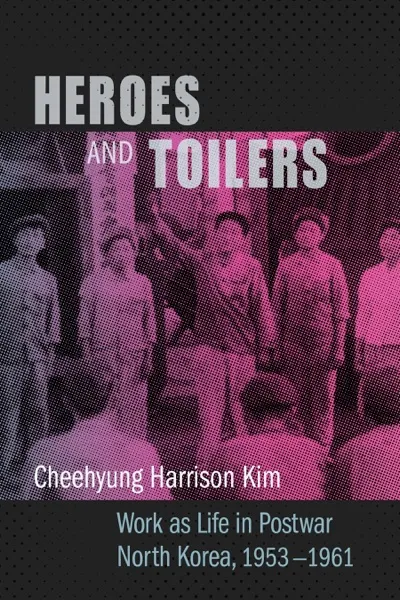

Heroes and Toilers Author: Cheehyung Harrison KimPage Count: UnknownPublication Year: 2019-GB Heroes and Toilers: A Riveting Exploration of Labor, Ideology, and Memory in North Korea Cheehyung Harrison Kim’s Heroes and Toilers is not just a book—it’s a revelation. Published in 2019, this meticulously researched work dismantles the myth of North Korea as a monolithic, inscrutable state, instead offering a vivid portrait of how the regime constructed its identity through labor, propaganda, and collective memory. Kim, an assistant professor of history at the University of Illinois, blends archival rigor with cultural analysis, revealing how ordinary North Koreans were transformed into "heroes" of the state while their toil remained invisible to the outside world. At its core, Heroes and Toilers grapples with a paradox that defines North Korea: the tension between the state’s relentless self-mythologizing and the harsh realities of its people’s lives. Kim argues that the regime’s cult of labor was not merely a tool of propaganda but a lived experience—one where factories, mines, and construction sites became stages for performance, where workers were both actors and audience in the grand narrative of socialist achievement. The book’s strength lies in its refusal to treat North Korea as a black box. Instead, Kim peels back layers of state-sanctioned history to expose the contradictions: the glorification of miners who risked their lives in dangerous tunnels, the erasure of women’s labor in favor of male-dominated narratives, and the way famine and deprivation were recast as heroic sacrifice. Kim’s writing is both accessible and profound, avoiding the dry abstraction often found in academic texts. He weaves together firsthand accounts, state documents, and visual culture—from posters to films—to show how labor was aestheticized. A striking example is the "speed battles" in the 1950s, where workers competed to exceed production quotas, their efforts immortalized in state media as acts of patriotism. Yet behind the fanfare lay exhaustion, scarcity, and the constant pressure to meet impossible targets. Kim’s prose captures this duality with precision: the book is as much about the performative aspect of North Korean socialism as it is about the human cost. One of the book’s most compelling sections examines the role of women, whose labor was systematically marginalized despite their indispensable contributions. Kim highlights how the state celebrated male industrial workers as "heroes" while framing women’s work—often in light industry or agriculture—as secondary. This gendered hierarchy was not incidental but central to the regime’s self-image. By focusing on the untold stories of women who labored in factories and fields, Kim challenges the dominant narrative and forces readers to confront the silences in North Korea’s official history. What makes Heroes and Toilers stand out is its balance between critique and empathy. Kim does not romanticize North Korea’s suffering, nor does he reduce its people to mere victims. Instead, he presents them as active participants in a system that demanded their loyalty even as it failed them. The book’s title itself is a masterstroke: "heroes" are the state’s chosen few, while "toilers" are the unseen many whose labor is never celebrated but always required. Kim’s style is immersive, drawing readers into the world of North Korea’s labor camps, model factories, and propaganda campaigns. His use of personal testimonies—some from defectors, others from state archives—adds a human dimension that elevates the book beyond mere political analysis. There are moments of stark beauty, such as when he describes how workers would carve portraits of Kim Il Sung into mountainsides, transforming the landscape into a monument to the regime’s cult of personality. Yet these acts of devotion were also acts of survival, a way to secure food rations or avoid persecution. Heroes and Toilers is more than a history of labor in North Korea; it’s a meditation on the power of narrative and the price of ideology. Kim’s work is a wake-up call to those who still view North Korea through the lens of Cold War stereotypes. This is a book that demands to be read not just for its insights into the past, but for its urgent relevance today, in an era where labor rights and state propaganda are once again becoming flashpoints. In an age of misinformation, Heroes and Toilers is a rare achievement—a book that informs, unsettles, and enlightens. It is essential reading for anyone seeking to understand the machinery of control behind North Korea’s facade, and the human beings who keep it running. #NorthKorea #LaborHistory #SocialistPropaganda #CultOfPersonality #CheehyungHarrisonKim #WorkersRights Related InsightsDark Restraint Book Review and Summary Now That We Don't Talk Book Review and Summary Before I Fall Book Review and Summary{ "@context": "https://schema.org", "@type": "FAQPage", "mainEntity": [ { "@type": "Question", "name": "What is the main focus of Heroes and Toilers Book Review and Summary?", "acceptedAnswer": { "@type": "Answer", "text": "Everything you need to know about Heroes and Toilers with our detailed review." } }, { "@type": "Question", "name": "Who authored the comprehensive guide on Heroes and Toilers Book Review and Summary?", "acceptedAnswer": { "@type": "Answer", "text": "This detailed article and its insights were carefully researched and authored by Marta Wisniewska." } }, { "@type": "Question", "name": "Where can I find more related content about Books?", "acceptedAnswer": { "@type": "Answer", "text": "You can explore more articles, detailed reviews, and similar insights by browsing the Related Insights section at the bottom of this article or visiting our dedicated Books category page." } } ] }