Showing Posts From
Hiking in georgia
-
 Chloe Tremblay
 - 04 Aug, 2026 09:23
Georgia’s Caucasus Mountains: Where Medieval Villages, Ancient Wine, and Epic Hikes Collide
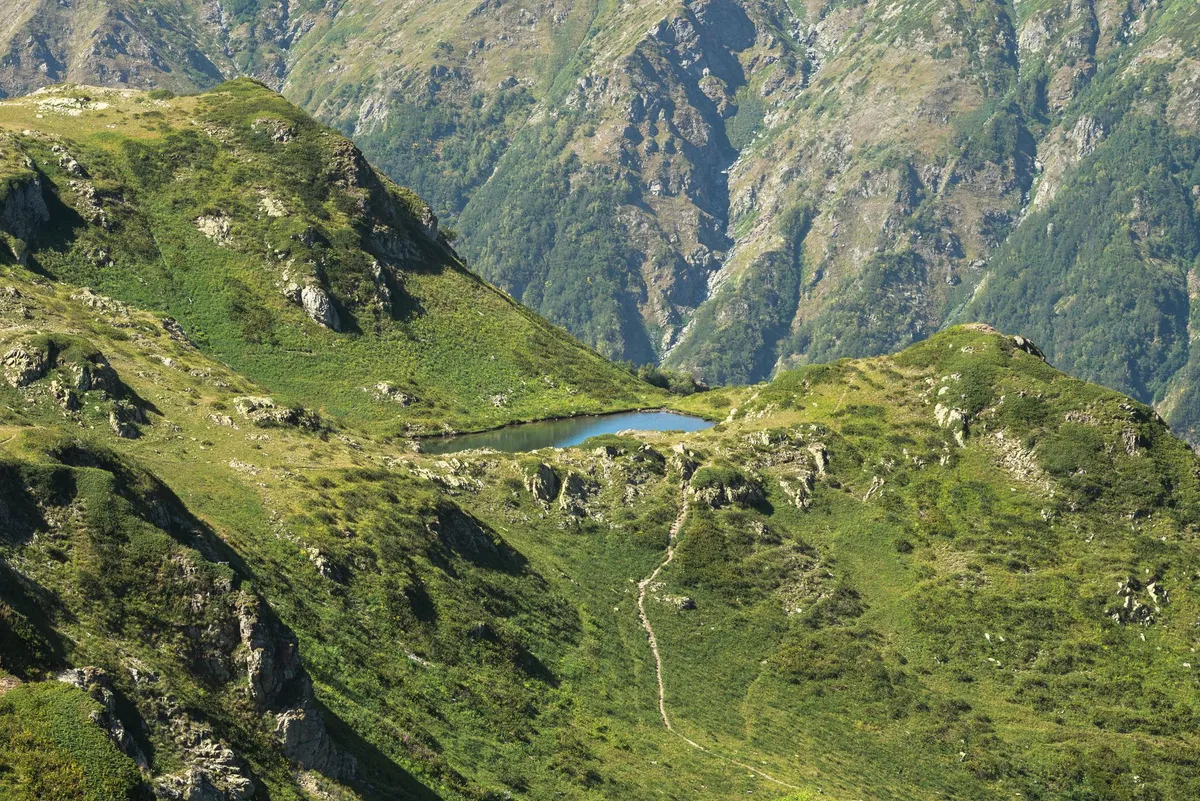
Where Europe Meets Asia in a Landscape of Fire and Stone The Caucasus Mountains rise like a jagged spine between Europe and Asia, a natural fortress where Georgia’s ancient soul still breathes. Here, the air smells of wild thyme and fermenting grapes, while the peaks—some towering over 5,000 meters—cast shadows over villages that have stood since the time of knights and crusaders. This is a land where the past isn’t just remembered; it’s tasted in amber-hued wines, walked upon in centuries-old cobblestone paths, and felt in the crisp alpine air that sharpens every breath.For travelers, the Caucasus offers more than just postcard scenery. It’s a place where you can wake up in a 1,000-year-old stone house, sip wine from amphorae buried underground for years, and end the day with a feast under the stars where toasts last longer than the wine itself. The region’s allure lies in its contradictions: rugged wilderness meets warm hospitality, ancient traditions clash with modern adventure, and every turn in the trail reveals another layer of Georgia’s story. But this isn’t just a destination for history buffs or wine connoisseurs. The Caucasus is a playground for hikers, with trails that range from gentle valley strolls to multi-day treks that test even the most seasoned adventurers. Whether you’re here for the wine, the culture, or the sheer thrill of the mountains, Georgia’s Caucasus promises an experience that lingers long after you’ve left.The Ancient Wine Roads: Georgia’s 8,000-Year-Old Secret Long before Bordeaux or Napa Valley became synonymous with wine, Georgia was fermenting its grapes in clay vessels called qvevri. Buried underground for months or even years, these amphorae transform juice into liquid gold, yielding wines with a depth and complexity that modern techniques often struggle to replicate. The Kakheti region, Georgia’s wine heartland, is where this tradition thrives, with vineyards sprawling across rolling hills and medieval monasteries standing sentinel over the vines.To truly understand Georgia’s wine culture, start in Sighnaghi, a charming hilltop town with cobblestone streets and pastel-colored houses. Known as the "City of Love," Sighnaghi is also the gateway to Kakheti’s vineyards. Here, you can tour family-run wineries like Pheasant’s Tears, where the owner, a former musician, crafts natural wines using grapes grown in the Alazani Valley. The tasting room, housed in a 19th-century building, feels like stepping into a scene from a Tolstoy novel—except the wine is poured from hand-blown glass, and the stories are as rich as the flavors. For a deeper dive, head to Tsinandali Estate, a historic winery owned by the noble Chavchavadze family. The estate’s museum showcases the family’s role in preserving Georgia’s wine heritage, while the vineyards stretch out like a patchwork quilt of green. The estate’s white wines, particularly the Rkatsiteli, are crisp and mineral-driven, a perfect foil to the bold reds like Saperavi, which packs flavors of blackberry and spice. But the real magic happens in the villages. In Khashmi, a tiny hamlet near Telavi, you can stay in a guesthouse run by a winemaker’s family. Here, dinner is a supra—a traditional Georgian feast—where platters of khachapuri (cheese-filled bread), grilled meats, and fresh herbs are accompanied by endless glasses of wine. The rule is simple: you drink, you eat, you toast. Refusing is considered rude, but the hospitality is so genuine that even the most reluctant drinker will find themselves raising a glass to the mountains. Georgia’s wine roads aren’t just about tasting; they’re about connection. Whether you’re sipping amber wine in a 1,000-year-old cellar or sharing stories with a winemaker whose family has tended the same vines for generations, you’re part of a tradition that’s older than most countries.Hiking the Caucasus: Trails That Carve Through Time The Caucasus Mountains are a hiker’s paradise, offering trails that cater to every level of experience. From gentle day hikes through alpine meadows to multi-day treks that traverse glaciers and high passes, the region’s diversity is staggering. One of the most iconic routes is the Truso Valley, a high-altitude wonderland where turquoise rivers carve through volcanic rock, and hot springs bubble up from the earth.The Truso Valley hike begins in the village of Abano, where the air is thin and the scent of sulfur from the hot springs fills your lungs. The trail winds through a lunar landscape of red and orange cliffs, past abandoned Soviet-era buildings, and into a valley where yurts dot the grassy plains. Along the way, you’ll encounter shepherds tending flocks of sheep, their dogs barking in warning as you pass. The highlight? The Keli Plateau, a vast expanse of wildflowers and crystal-clear streams where you can camp under a sky so clear it feels like you’re floating in space. For those seeking a challenge, the Kazbegi to Gergeti Trinity Church trek is a must. This 12-kilometer round-trip hike takes you through alpine meadows and past waterfalls before culminating at the iconic Gergeti Trinity Church, a 14th-century monastery perched on a hilltop with views of Mount Kazbek, a dormant volcano. The trail is steep in sections, but the reward—a panoramic vista of snow-capped peaks and the church’s golden domes—is worth every step. If you’re up for a multi-day adventure, the Greater Caucasus Traverse is one of the most epic hikes in the world. This 200-kilometer route takes you from the Georgian-Russian border to the Georgian-Azerbaijani border, crossing high passes and glaciers along the way. It’s a test of endurance, but the solitude and raw beauty of the mountains make it unforgettable. Most hikers complete the trek in 10-14 days, camping under the stars or staying in remote guesthouses. But you don’t need to be an expert to enjoy Georgia’s trails. The Borjomi-Kharagauli National Park offers well-marked paths through dense forests and along rivers, with options for both day hikes and overnight stays in cozy lodges. The Turtle Lake Trail in Tbilisi is a favorite among locals, a gentle loop that offers stunning views of the capital city below. No matter which trail you choose, hiking in the Caucasus is about more than just exercise. It’s a journey through time, where every step echoes the footsteps of ancient traders, shepherds, and pilgrims. The mountains here don’t just challenge your body—they awaken your soul.Medieval Villages: Stone Houses, Secret Passages, and Stories That Won’t Quit Georgia’s medieval villages are like something out of a fairy tale. Built from honey-colored stone, their narrow streets wind past crumbling churches, hidden courtyards, and houses with wooden balconies draped in ivy. These villages aren’t just relics of the past; they’re living, breathing communities where traditions are preserved with pride.One of the most enchanting is Ushguli, a cluster of four villages in the Svaneti region, often called the "roof of Europe." Ushguli is Europe’s highest permanently inhabited settlement, perched at 2,200 meters above sea level. The village’s stone towers, built in the 9th century as both homes and defensive structures, rise like sentinels against the backdrop of the Caucasus. The most famous is the Tower of Queen Tamar, named after the legendary Georgian queen who ruled in the 12th century. Inside, the walls are covered in faded frescoes, and the air is thick with the scent of woodsmoke and fresh bread. Staying in Ushguli is an experience in itself. Guesthouses like Hotel Tetnuld offer simple but cozy rooms with views of the Enguri River Valley. The hosts, often descendants of the tower’s original builders, will feed you khinkali (Georgian dumplings) until you can’t eat another bite and ply you with homemade chacha (a grape pomace brandy) until the stars blur together. Nearby, the village of Mestia serves as the gateway to Svaneti. Here, the Svaneti Museum of History and Ethnography houses a collection of medieval artifacts, including crosses, icons, and manuscripts. The museum’s most prized possession? A 12th-century silver reliquary said to contain the remains of Saint George, the patron saint of Georgia. But the real magic of Georgia’s medieval villages lies in their people. In Shatili, a fortress village in the Pankisi Gorge, you’ll meet families who have lived in the same stone houses for centuries. The village is a maze of narrow alleys and hidden staircases, with houses stacked on top of each other like a giant’s Lego set. The locals are warm and welcoming, often inviting travelers into their homes for tea and stories. Ask about the village’s history, and you’ll hear tales of bandits, wars, and secret love affairs that played out in these very streets. For a taste of Georgia’s medieval past, visit Vardzia, a cave city carved into the cliffs of the Erusheti Mountains. Built in the 12th century by Queen Tamar, Vardzia was designed as a fortress and a monastery, with over 600 rooms connected by tunnels and staircases. Today, it’s a hauntingly beautiful ruin, where the echoes of monks’ chants still seem to linger in the air. The highlight? The Church of the Dormition, with its stunning frescoes and a balcony that offers a breathtaking view of the Mtkvari River Valley. These villages aren’t just stops on a map; they’re gateways to another time. Walking their streets, you can almost hear the clatter of hooves on cobblestones and the murmur of prayers in ancient churches. Georgia’s medieval villages are where history isn’t just remembered—it’s lived.The Practical Side of Paradise: Costs, Visas, and How to Make the Most of Your Trip Georgia is a dream for travelers, but like any destination, it pays to be prepared. The country’s visa policies are famously liberal—US citizens can stay for up to 365 days visa-free, while citizens of the EU, UK, and many other countries can enter visa-free for 90 days. Tax residency kicks in after 183 days, so if you’re planning a long stay, keep track of your days. Banking is straightforward, with ATMs widely available and cards accepted in most places, though it’s wise to carry some cash for rural areas.Living costs in Georgia are a fraction of what you’d pay in Western Europe or North America. In Tbilisi, you can rent a modern apartment for as little as $400 per month, while a meal at a mid-range restaurant will set you back around $10. In smaller towns like Sighnaghi or Mestia, costs are even lower, with guesthouses charging $20-$30 per night and local meals costing just a few dollars. A budget of $800-$1,800 per month is enough to live comfortably, whether you’re a digital nomad working from a café or a traveler exploring the countryside. Healthcare in Georgia is affordable and accessible. The country has a mix of public and private hospitals, with private clinics offering high-quality care at reasonable prices. It’s recommended to have travel insurance that covers medical evacuation, especially if you’re planning to hike in remote areas. Pharmacies are well-stocked, and many medications can be purchased over the counter. Getting around Georgia is easy, thanks to a network of marshrutkas (minibuses) that connect cities and towns. For longer distances, trains are a comfortable option, with sleeper trains running between Tbilisi and Batumi. Renting a car is also a great way to explore, though be prepared for narrow mountain roads and aggressive driving habits. Here’s a breakdown of what you can expect to spend on a typical trip:Expense Cost (USD)Budget guesthouse per night $20-$40Mid-range restaurant meal $8-$15Local beer $1-$2Wine tasting tour $15-$30Marshrutka (minibus) ticket $2-$10SIM card with data $5-$10Taxi (short ride) $3-$8For digital nomads, Georgia is a rising star. The country has a thriving tech scene, with Tbilisi’s Impact Hub and Terminal offering co-working spaces and networking events. Cafés like Entree and Café Linville are popular spots to work, with fast Wi-Fi and excellent coffee. The time zone (GMT+4) is convenient for those working with Europe or the Middle East. One of the biggest draws for expats and travelers is Georgia’s supra, a traditional feast that’s as much about community as it is about food. A supra can last for hours, with toasts led by a tamada (toastmaster) who keeps the conversation flowing. The food is hearty and flavorful—think grilled meats, fresh herbs, and endless rounds of khachapuri (cheese-filled bread) and khinkali (dumplings). The rule is simple: you eat, you drink, you toast. Refusing is considered rude, but the hospitality is so genuine that even the most reluctant participant will find themselves raising a glass to the mountains.When to Go and What to Pack: Your Caucasus Survival Guide Georgia’s Caucasus Mountains are a year-round destination, but the best time to visit depends on what you want to do. For hiking, June to September is ideal, when the trails are clear of snow and the weather is warm. Wildflowers carpet the alpine meadows in July, and the vineyards of Kakheti are lush and green. If you’re here for wine, October is harvest season, a magical time when the air is thick with the scent of fermenting grapes and the villages buzz with activity. Winter (December to February) transforms the Caucasus into a snowy wonderland, with ski resorts like Gudauri offering world-class slopes. The village of Kazbegi is a popular base for winter hikes, with views of Mount Kazbek dusted in snow. Spring (March to May) is a quieter time, with wildflowers blooming and fewer tourists. It’s a great season for photography, with the landscapes coming alive in shades of green and gold.Packing for the Caucasus depends on the season, but there are a few essentials you’ll need year-round. Sturdy hiking boots are a must, especially if you’re planning to tackle trails like Truso Valley or Kazbegi. Layers are key—temperatures can vary wildly, from hot days in the valleys to freezing nights in the mountains. A good-quality down jacket, thermal base layers, and a waterproof shell are essential. Don’t forget a hat, gloves, and a scarf for the colder months. For wine lovers, bring a reusable bottle—many wineries offer discounts if you bring your own container. A phrasebook or translation app is helpful, as English isn’t widely spoken outside of Tbilisi and Batumi. Georgians are incredibly hospitable, so a small gift from your home country (like chocolates or postcards) is a thoughtful gesture if you’re invited into someone’s home. If you’re planning to hike, consider joining a guided tour, especially for multi-day treks. Local guides know the terrain, the best campsites, and the safest routes. They can also introduce you to communities along the way, offering a deeper connection to the land and its people.The Last Toast: Why Georgia’s Caucasus Will Steal Your Heart Georgia’s Caucasus Mountains are more than just a destination—they’re a feeling. It’s the warmth of a supra feast shared with strangers who become friends in a single evening. It’s the awe of standing atop a mountain pass, looking down at a valley where medieval villages cling to the cliffs. It’s the taste of wine that’s been fermented in clay for years, rich and complex and alive with history. This is a land where adventure and tradition walk hand in hand. Where every hike tells a story, every village hides a secret, and every glass of wine is a toast to a culture that has endured for millennia. Georgia doesn’t just welcome travelers—it embraces them, feeds them, and sends them home with memories that linger like the scent of wild thyme on a mountain breeze. So pack your bags, lace up your boots, and prepare to fall in love. The Caucasus is waiting.#GeorgiaTravel #CaucasusAdventure #WineAndWanderlust Related InsightsWhere the Wild Things Roam: The World’s Most Unforgettable Wildlife Encounters Kazan Kremlin Zeugma Mosaic Museum{ "@context": "https://schema.org", "@type": "FAQPage", "mainEntity": [ { "@type": "Question", "name": "What is the main focus of Georgia’s Caucasus Mountains: Where Medieval Villages, Ancient Wine, and Epic Hikes Collide?", "acceptedAnswer": { "@type": "Answer", "text": "Discover Georgia’s Caucasus Mountains—where medieval stone villages, 8,000-year-old wine traditions, and breathtaking hikes await. Your ultimate guide to adventure and culture." } }, { "@type": "Question", "name": "Who authored the comprehensive guide on Georgia’s Caucasus Mountains: Where Medieval Villages, Ancient Wine, and Epic Hikes Collide?", "acceptedAnswer": { "@type": "Answer", "text": "This detailed article and its insights were carefully researched and authored by Chloe Tremblay." } }, { "@type": "Question", "name": "Where can I find more related content about Travel?", "acceptedAnswer": { "@type": "Answer", "text": "You can explore more articles, detailed reviews, and similar insights by browsing the Related Insights section at the bottom of this article or visiting our dedicated Travel category page." } } ] }