Showing Posts From
His dark materials t
-
 Carmen Martinez
 - 30 May, 2026 00:15
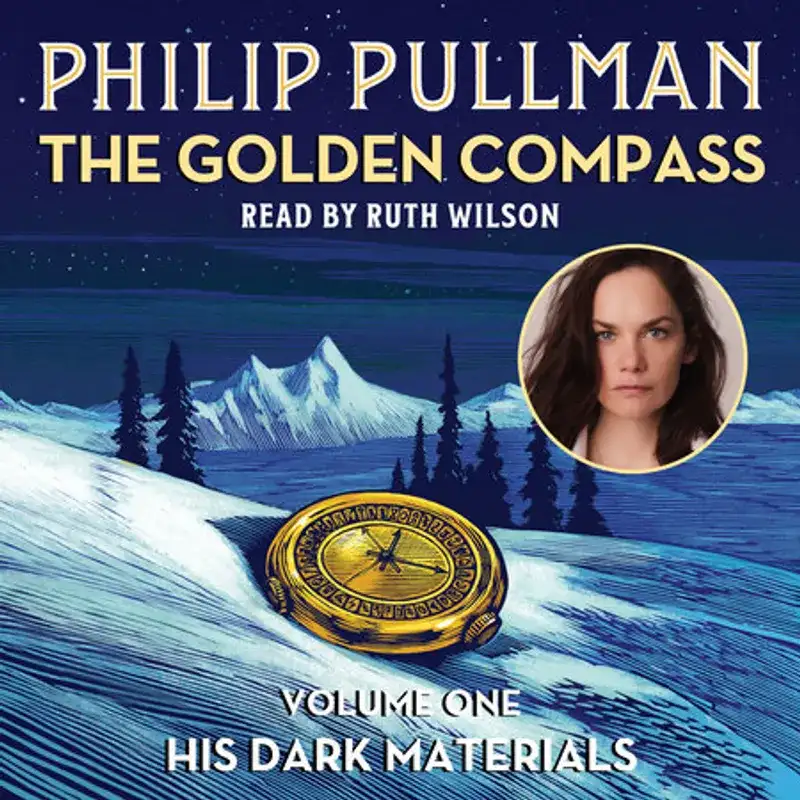
His Dark Materials: The Golden Compass (Book 1) Book Review and Summary
His Dark Materials: The Golden Compass (Book 1) Author: Philip PullmanPage Count: UnknownPublication Date: 2024-PRH A Masterpiece of Fantasy: The Golden Compass by Philip Pullman Few works of modern fantasy have left as indelible a mark on literature as Philip Pullman’s The Golden Compass, the first installment in the His Dark Materials trilogy. Originally published in 1995, its enduring power has only grown stronger with time, cementing its place as a cornerstone of young adult fiction—though its themes resonate far beyond any single age group. Pullman crafts a world where the boundaries between myth and reality blur, where every character carries a dæmon (a physical manifestation of their soul in animal form), and where the struggle for knowledge and power unfolds across parallel universes. It is a story of defiance, curiosity, and the moral weight of choice—one that challenges readers to question authority, embrace rebellion, and find their own compass in a world that often feels darkly predetermined. At the heart of The Golden Compass lies a deceptively simple question: Who gets to decide the truth? The novel follows Lyra Belacqua, a wild, quick-witted girl living in a parallel Oxford where scholars and theologians wield immense influence. Lyra’s world is one where children are being mysteriously abducted by the sinister "Gobblers," where armored bears rule the frozen North, and where her uncle, Lord Asriel, conducts dangerous experiments to bridge the gap between worlds. Yet Lyra, with her untamed spirit and unshakable loyalty to her friend Roger, refuses to accept the answers handed to her. She is a thief of secrets, a liar when necessary, and a champion of the lost—qualities that make her both endearing and dangerous in a world that rewards obedience above all else. Pullman’s genius lies in his ability to weave grand philosophical themes into a gripping, accessible narrative. The dæmon system, for instance, is not just a whimsical fantasy device but a profound metaphor for identity, maturation, and the human soul. A child’s dæmon can change form freely, reflecting their fluid sense of self, while an adult’s dæmon settles into a fixed shape—a visual metaphor for the constraints of adulthood. This detail alone elevates the story from mere adventure to a meditation on growth and autonomy. Meanwhile, the concept of "Dust," a mysterious cosmic particle that connects all living things, serves as a stand-in for the unknowable forces of the universe, inviting readers to ponder whether truth is something to be discovered or something to be fought for. Pullman’s prose is both elegant and unadorned, allowing the story’s weight to rest in its ideas rather than in florid description. His world-building is immersive yet never overly explained—a rare feat in fantasy, where infodumps often bog down the narrative. Instead, Pullman trusts his readers to infer meaning, to sit with ambiguity, and to feel the tension between Lyra’s impulsive daring and the creeping dread of a world that seeks to control her. The emotional core of the novel lies in Lyra’s relationships: her bond with her dæmon Pantalaimon, her fraught alliance with the armored bear Iorek Byrnison, and her unwitting betrayal of Roger in her quest for answers. These dynamics are rendered with such raw sincerity that the reader cannot help but root for Lyra, even as her choices grow increasingly perilous. One of the most striking aspects of The Golden Compass is its subversion of traditional fantasy tropes. Where many such stories glorify destiny and prophecy, Pullman presents them as tools of manipulation. The Magisterium (the dominant religious authority in Lyra’s world) twists doctrine to justify oppression, while scholars and politicians play god with children’s lives. Lyra, in contrast, operates on instinct, instinct that often leads her into trouble but also toward the truth. Her journey is not about fulfilling a grand design but about forging her own path—one that may require her to betray even those she loves most. Pullman’s writing is also laced with wit and subversive humor, particularly in Lyra’s voice. She is a liar, a thief, and a troublemaker, yet her charm lies in her refusal to be tamed. When she outsmarts a powerful bear king or tricks a witch into revealing secrets, the reader delights in her cunning. This balance of darkness and playfulness is what makes The Golden Compass so enduring. It is a book that can be enjoyed purely as a swashbuckling adventure, yet it lingers in the mind as a critique of dogma, a celebration of intellectual freedom, and a poignant exploration of what it means to grow up. In an era where fantasy often defaults to either saccharine heroism or grimdark brutality, Pullman’s work stands apart for its moral complexity. His Dark Materials is not a series that offers easy answers; it is a series that demands that its readers think, question, and—like Lyra—rebel. And perhaps that is why, nearly three decades after its publication, The Golden Compass remains as vital and thought-provoking as ever. If you seek a fantasy that challenges as much as it entertains, if you crave a heroine who is flawed yet fearless, if you long for a story that dares to ask why—then let Philip Pullman be your guide. Open the book, and let your own dæmon lead you into the unknown. #HisDarkMaterials #PhilipPullman #FantasyClassic #YoungAdultFiction #BookReview #ParallelUniverses Related InsightsThe Prince Book Review and Summary Mokradla Book Review and Summary Final Fantasy XIV: Stormblood -- The Art of the Revolution -Western Memories- Book Review and Summary{ "@context": "https://schema.org", "@type": "FAQPage", "mainEntity": [ { "@type": "Question", "name": "What is the main focus of His Dark Materials: The Golden Compass (Book 1) Book Review and Summary?", "acceptedAnswer": { "@type": "Answer", "text": "Everything you need to know about His Dark Materials: The Golden Compass (Book 1) with our detailed review." } }, { "@type": "Question", "name": "Who authored the comprehensive guide on His Dark Materials: The Golden Compass (Book 1) Book Review and Summary?", "acceptedAnswer": { "@type": "Answer", "text": "This detailed article and its insights were carefully researched and authored by Carmen Martinez." } }, { "@type": "Question", "name": "Where can I find more related content about Books?", "acceptedAnswer": { "@type": "Answer", "text": "You can explore more articles, detailed reviews, and similar insights by browsing the Related Insights section at the bottom of this article or visiting our dedicated Books category page." } } ] }