Showing Posts From
Historical
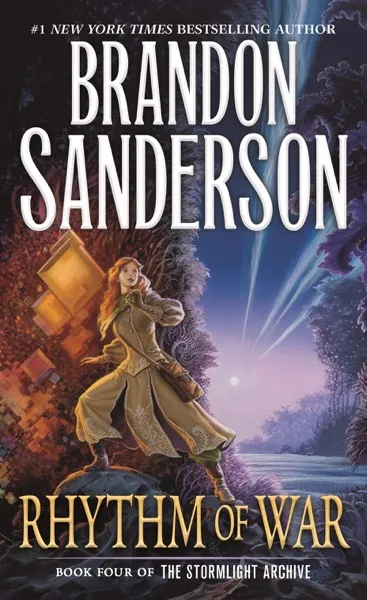
Rhythm of War Part Two Author: Brandon SandersonPage Count: UnknownPublication Year: 2022-GB Brandon Sanderson's "Rhythm of War Part Two" is a monumental achievement in epic fantasy, a sweeping narrative that cements the author's reputation as a master world-builder and weaver of intricate, suspenseful storylines. The latest installment in the Stormlight Archive series is a testament to Sanderson's boundless creativity and his ability to craft characters that resonate deeply with readers. At its core, "Rhythm of War Part Two" is a thought-provoking exploration of the human condition, delving into themes of trauma, power, and the complexities of morality. Sanderson's world, Roshar, is a richly detailed and immersive environment, where the rhythms of nature and the pulse of magic are inextricably linked. The author's unique magic system, based on the concept of "Surgebinding," continues to evolve and expand, adding depth and complexity to the narrative. One of the standout features of "Rhythm of War Part Two" is its diverse cast of characters, each with their own distinct voice and agency. Sanderson's character development is a hallmark of his writing style, and this installment is no exception. The relationships between characters are multifaceted and nuanced, with a deep emotional resonance that makes it easy to become invested in their struggles and triumphs. Sanderson's writing style is characterized by his ability to balance action, suspense, and introspection, creating a narrative that is both propulsive and contemplative. His prose is economical and evocative, conjuring vivid images of the world and its inhabitants. The pacing is expertly managed, with a keen sense of tension and release that keeps the reader engaged and eager to turn the page. One of the most impressive aspects of "Rhythm of War Part Two" is its thematic depth. Sanderson explores a range of complex ideas, from the nature of power and corruption to the consequences of trauma and the importance of empathy and understanding. The narrative is layered with subtle symbolism and foreshadowing, adding depth and complexity to the story. Throughout the book, Sanderson's world-building is, as always, meticulous and detailed. The history and mythology of Roshar are slowly revealed, adding richness and texture to the narrative. The author's use of mythology and folklore is particularly noteworthy, drawing on a range of cultural influences to create a unique and captivating world. In conclusion, "Rhythm of War Part Two" is a triumph of epic fantasy, a book that will appeal to fans of the genre and newcomers alike. Sanderson's writing is masterful, his world-building is meticulous, and his characters are complex and nuanced. This is a book that will keep you up late at night, turning the pages with a sense of wonder and awe. If you're a fan of fantasy, or just looking for a compelling and immersive read, "Rhythm of War Part Two" is an absolute must-read. #EpicFantasy #BrandonSanderson #StormlightArchive #RhythmOfWar #FantasyBookReview Related InsightsThe Left Hand of Darkness Book Review and Summary No Longer Allowed In Another World Vol. 6 Book Review and Summary Best Crime Stories of the Year Volume 3 Book Review and Summary{ "@context": "https://schema.org", "@type": "FAQPage", "mainEntity": [ { "@type": "Question", "name": "What is the main focus of **Rhythm of War Part Two** Book Review and Summary?", "acceptedAnswer": { "@type": "Answer", "text": "Everything you need to know about **Rhythm of War Part Two** with our detailed review." } }, { "@type": "Question", "name": "Who authored the comprehensive guide on **Rhythm of War Part Two** Book Review and Summary?", "acceptedAnswer": { "@type": "Answer", "text": "This detailed article and its insights were carefully researched and authored by Emma Thompson." } }, { "@type": "Question", "name": "Where can I find more related content about Books?", "acceptedAnswer": { "@type": "Answer", "text": "You can explore more articles, detailed reviews, and similar insights by browsing the Related Insights section at the bottom of this article or visiting our dedicated Books category page." } } ] }
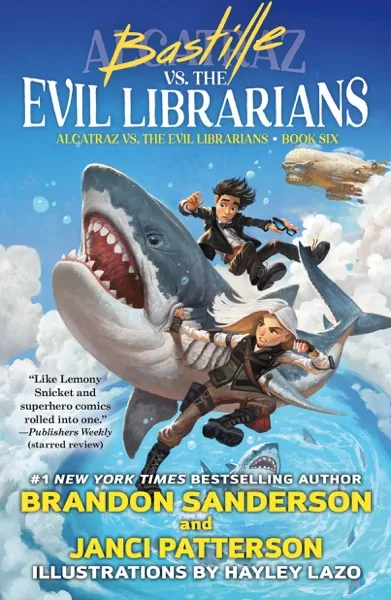
Bastille vs. the Evil Librarians Author: Brandon SandersonPage Count: UnknownPublication Year: 2022-GB Bastille vs. the Evil Librarians: A Whirlwind of Wit, Wonder, and World-Building Imagine a world where librarians aren’t just gatekeepers of knowledge—they’re sinister overlords, hoarding books not to preserve history, but to control it. Now picture a hero who’s equal parts rebellious teenager and reluctant savior, armed with nothing but a sword, a snarky AI, and an unshakable sense of justice. This isn’t some dystopian fever dream; it’s Bastille vs. the Evil Librarians, Brandon Sanderson’s latest genre-bending masterpiece that proves why he’s a titan of modern fantasy. Sanderson, best known for his sprawling, meticulously crafted epics like Mistborn and The Stormlight Archive, takes a sharp left turn into high-energy, fast-paced adventure with this standalone novel. At its core, Bastille vs. the Evil Librarians is a love letter to books, rebellion, and the idea that knowledge is power—literally. The story follows Charlie, a 13-year-old orphan who stumbles upon a secret war between the free-thinking "Good Guys" and the tyrannical "Evil Librarians," who manipulate history to maintain their control. With the help of Bastille, a legendary warrior-mage, Charlie must uncover his true identity and wield his newfound powers before the librarians erase the truth forever. What makes this book soar is Sanderson’s ability to blend humor, heart, and high-stakes action into a narrative that feels both fresh and nostalgic. The prose is crisp and accessible, making it a perfect entry point for younger readers while still offering layers of complexity for adults. Sanderson’s signature world-building is on full display, but here, it’s distilled into a tight, propulsive plot that never loses sight of its emotional core. The world of the Evil Librarians is a delightfully absurd yet eerily plausible dystopia, where books are weapons, librarians are villains, and the act of reading itself is an act of defiance. The characters are the beating heart of this story. Charlie is an instantly relatable protagonist—awkward, curious, and burdened by self-doubt, yet determined to do what’s right. His journey from an overlooked orphan to a key player in a cosmic struggle is both inspiring and deeply human. Bastille, meanwhile, is a force of nature: a warrior with a sharp tongue, a dry wit, and a hidden vulnerability that makes her far more than just a mentor figure. The dynamic between them crackles with chemistry, blending mentorship with genuine friendship. Even the supporting cast, from the enigmatic AI named Nalzac to the morally gray librarians, are vividly drawn, each serving a purpose that enriches the larger narrative. Sanderson’s writing style here is a masterclass in balancing wit and wonder. The dialogue crackles with humor, often laced with pop-culture references that feel organic rather than forced. The action sequences are kinetic, with fight scenes that are as clever as they are thrilling. Yet, beneath the humor and adventure, there’s a deeper message about the power of stories and the importance of questioning authority. The book doesn’t shy away from exploring themes of identity, belonging, and the cost of truth—all while keeping the tone light enough to feel like a joyride. One of the most impressive aspects of Bastille vs. the Evil Librarians is its ability to stand on its own while also feeling like part of a larger universe. Sanderson doesn’t rely on extensive lore dumps; instead, he weaves in world-building organically, letting the story unfold through action and character interactions. This makes the book accessible to newcomers while still offering enough depth to satisfy long-time fans. The pacing is relentless, with each chapter ending on a hook that makes it nearly impossible to put down. For readers who love fantasy but are tired of bloated, doorstopper-sized novels, this book is a breath of fresh air. It’s a reminder that fantasy doesn’t have to be slow or overly complex to be immersive. Sanderson proves that a tight, well-crafted story with a compelling protagonist and a dash of humor can be just as satisfying as a 1,000-page epic. In a literary landscape crowded with retellings and recycled tropes, Bastille vs. the Evil Librarians feels like a breath of fresh air. It’s a book that celebrates the joy of reading, the thrill of adventure, and the power of standing up against oppression—all while delivering a story that’s as fun as it is thought-provoking. Whether you’re a die-hard Sanderson fan or a casual reader looking for your next great read, this book is a must-have. #FantasyBooks #BrandonSanderson #BookReview #MiddleGradeFantasy #EvilLibrarians Related InsightsUnapologetic Love Story Book Review and Summary Off Balance (The Heights, #2) Book Review and Summary Down Bad (The New Romantics, #2) Book Review and Summary{ "@context": "https://schema.org", "@type": "FAQPage", "mainEntity": [ { "@type": "Question", "name": "What is the main focus of **Bastille vs. the Evil Librarians** Book Review and Summary?", "acceptedAnswer": { "@type": "Answer", "text": "Everything you need to know about **Bastille vs. the Evil Librarians** with our detailed review." } }, { "@type": "Question", "name": "Who authored the comprehensive guide on **Bastille vs. the Evil Librarians** Book Review and Summary?", "acceptedAnswer": { "@type": "Answer", "text": "This detailed article and its insights were carefully researched and authored by Emma Thompson." } }, { "@type": "Question", "name": "Where can I find more related content about Books?", "acceptedAnswer": { "@type": "Answer", "text": "You can explore more articles, detailed reviews, and similar insights by browsing the Related Insights section at the bottom of this article or visiting our dedicated Books category page." } } ] }
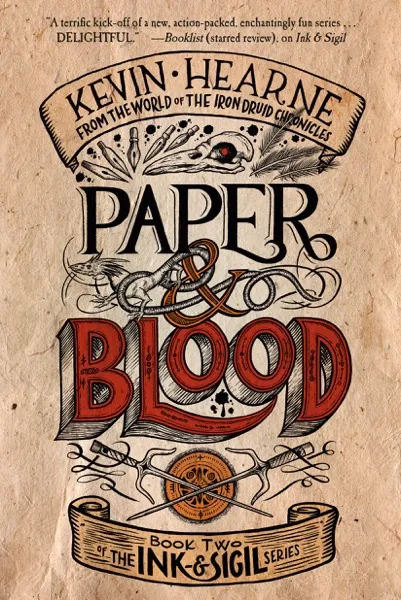
Paper and Blood Author: Kevin HearnePage Count: UnknownPublication Year: 2021-GB Kevin Hearne’s Paper and Blood is a masterclass in blending mythic grandeur with razor-sharp modern wit, a novel that proves the best fantasy isn’t just about escaping reality—it’s about confronting it with a sword, a grin, and more than a little sarcasm. Published in 2021, this installment in Hearne’s The Seven Kennings series (though it can stand alone for new readers) cements his reputation as a writer who can weave Norse mythology, political intrigue, and gut-busting humor into a narrative that feels both timeless and urgently alive. If you’ve ever wanted a story where gods scheme like backstabbing bureaucrats and warriors crack jokes mid-battle, this is your book. At its core, Paper and Blood explores the cost of legacy—what it means to inherit power, the weight of expectations, and the messy business of forging your own path when the world insists you walk an old one. The story follows the irrepressible Sigrud je Harkvaldsson, a man whose life has been defined by violence, loss, and an uncanny knack for surviving the impossible. Now, after decades of wandering the world as a mercenary and protector, Sigrud finds himself drawn back into the affairs of his homeland, Vinnmark, where a fragile peace is crumbling under the weight of political assassinations, supernatural threats, and the resurgence of an ancient enemy. The title itself is a nod to the dual nature of power—paper represents the fragile, temporary deals of kings and councils, while blood is the unyielding, eternal force of survival and vengeance. Hearne’s genius lies in making this theme feel personal; Sigrud isn’t just fighting for a kingdom—he’s fighting for the right to define his own legacy, free from the ghosts of his father’s sins and the expectations of gods who see mortals as pawns. Hearne’s prose is as unpredictable as his characters. One moment, you’re laughing at Sigrud’s dry, deadpan observations about the absurdity of fate ("Of course the gods would pick now to involve me. It’s practically their job."), and the next, you’re breathless as he dispatches foes with a casual brutality that feels both heroic and horrifyingly real. His dialogue crackles with energy, whether it’s Sigrud’s gruff, no-nonsense manner or the sharp, biting wit of other characters like the enigmatic Velline or the morally flexible Chancellor Orsine. Hearne doesn’t just write action—he writes feeling. The weight of Sigrud’s exhaustion, the searing guilt of his past, the reluctant tenderness he shows toward those he protects—it’s all rendered with a tactile immediacy that pulls you into the story and refuses to let go. What sets Paper and Blood apart from run-of-the-mill fantasy is its refusal to romanticize power. The gods here aren’t distant, awe-inspiring figures; they’re meddling, petty, and often downright stupid, more concerned with their own games than the lives of mortals. The political intrigue isn’t a backdrop—it’s a living, breathing force that dictates lives and deaths in equal measure. Hearne’s world feels lived-in, with every kingdom, faction, and individual operating under complex, often contradictory motivations. The result is a story that’s as much about the cost of leadership as it is about the thrill of adventure. Sigrud, for all his toughness, is a deeply human protagonist—a man who’s seen too much, lost too much, and yet still finds the strength to stand when the world demands he kneel. His journey isn’t about becoming a legend; it’s about learning that legends are just stories people tell about the dead. Hearne’s style is also notable for its fluidity. The novel moves seamlessly between genres—at times it’s a political thriller, at others a supernatural horror, and always a darkly comedic character study. The pacing never drags, even as the stakes grow higher. Whether he’s describing a brutal assassination, a tense negotiation, or a quiet moment of reflection, Hearne’s writing is always crisp and engaging. There’s a rare balance here between depth and accessibility; the book never talks down to its audience, but it also doesn’t assume prior knowledge of Norse mythology (though familiarity with it adds extra layers). The world-building is organic, woven into the narrative rather than dumped in infodumps, making the setting feel immersive without ever overwhelming. For readers who love their fantasy with a side of realism and a dash of irreverence, Paper and Blood is a standout. It’s a book that understands the weight of history but isn’t afraid to laugh at it. It’s a story about the lies we tell ourselves to survive and the truths we cling to when the world tries to break us. And most of all, it’s a reminder that even in the darkest times, there’s room for defiance—and maybe even a little hope. If you’ve ever wanted a fantasy novel that feels like it was written by a warrior who’s also a stand-up comedian, this is it. #PaperAndBlood #SigrudjeHarkvaldsson #NorseFantasy #KevinHearne #EpicFantasy #DarkHumor Related InsightsHigh-Rise Book Review and Summary The Odyssey Book Review and Summary Echoes in Ink and Image: Unearthing the Bespoke Artistry of Extra-Illustration{ "@context": "https://schema.org", "@type": "FAQPage", "mainEntity": [ { "@type": "Question", "name": "What is the main focus of Paper and Blood Book Review and Summary?", "acceptedAnswer": { "@type": "Answer", "text": "Everything you need to know about Paper and Blood with our detailed review." } }, { "@type": "Question", "name": "Who authored the comprehensive guide on Paper and Blood Book Review and Summary?", "acceptedAnswer": { "@type": "Answer", "text": "This detailed article and its insights were carefully researched and authored by Emma Thompson." } }, { "@type": "Question", "name": "Where can I find more related content about Books?", "acceptedAnswer": { "@type": "Answer", "text": "You can explore more articles, detailed reviews, and similar insights by browsing the Related Insights section at the bottom of this article or visiting our dedicated Books category page." } } ] }
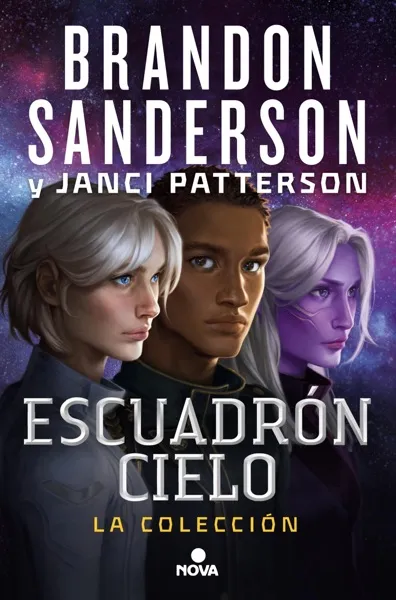
Escuadrón Cielo Author: Brandon SandersonPage Count: UnknownPublication Year: 2022-GB Unraveling the Skies: A Masterclass in Cosmic Adventure with Escuadrón Cielo Few authors command the imagination like Brandon Sanderson. With a bibliography that spans epic fantasy, hard sci-fi, and everything in between, Sanderson has carved a niche as a modern titan of speculative fiction. His 2022 release, Escuadrón Cielo, is no exception—an audacious blend of high-stakes aerial combat, deep philosophical inquiry, and the kind of world-building that leaves readers breathless. If you’ve ever looked up at the stars and wondered what lies beyond the clouds, this book is your boarding pass. At its core, Escuadrón Cielo is a story about legacy, sacrifice, and the weight of destiny. Sanderson crafts a universe where humanity has taken to the skies in colossal, biomechanical war machines known as "Cielos," piloted by elite squadrons tasked with defending the world from an enigmatic and relentless enemy. The narrative follows a diverse cast of characters, each grappling with their own demons while navigating the brutal realities of war. Among them is a protagonist whose journey from reluctant recruit to hardened warrior mirrors the broader themes of growth and resilience that permeate the novel. One of Sanderson’s greatest strengths lies in his ability to weave intricate world-building without sacrificing narrative momentum. Escuadrón Cielo is no different. The setting is a meticulously crafted dystopian future where technology and nature have merged in unexpected ways. The Cielos themselves are marvels of engineering—each one a unique, living extension of its pilot, capable of evolving and adapting in battle. Sanderson’s attention to detail extends beyond the machinery, delving into the cultural and political landscapes that shape his characters’ lives. The result is a world that feels both expansive and intimate, where every decision carries weight. The characters in Escuadrón Cielo are the heart of the story. Sanderson excels at crafting protagonists who are deeply flawed yet undeniably compelling. The pilots of the titular squadron are a microcosm of human nature—some driven by duty, others by vengeance, and a few by sheer survival. Their interactions are charged with tension, camaraderie, and the occasional spark of conflict, making their relationships feel authentic and engaging. The antagonist, too, is a masterstroke of ambiguity, challenging the reader’s perceptions of morality and heroism. Sanderson’s writing style is a blend of precision and poetry. His prose is clean and accessible, yet rich with subtext and thematic depth. He has a knack for balancing action sequences with introspective moments, ensuring that the reader is never overwhelmed by spectacle at the expense of character development. The dialogue crackles with authenticity, and the pacing is relentless, pulling the reader through the story with an almost cinematic urgency. What sets Escuadrón Cielo apart from other works in the genre is its exploration of existential questions. Sanderson doesn’t shy away from asking what it means to be human in a world where humanity is both the aggressor and the victim. The novel grapples with themes of identity, purpose, and the cost of progress, all while delivering the kind of high-octane action that fans of military sci-fi crave. It’s a rare feat to marry philosophical depth with blockbuster entertainment, but Sanderson pulls it off with aplomb. For readers new to Sanderson’s work, Escuadrón Cielo serves as an excellent introduction to his signature style. Those familiar with his other works will recognize his signature blend of intricate magic systems (or in this case, biomechanical marvels) and emotionally resonant storytelling. The novel stands on its own as a thrilling adventure, but it also rewards those who dig deeper, offering layers of meaning that linger long after the final page. In an era where blockbuster fiction often prioritizes spectacle over substance, Escuadrón Cielo is a refreshing reminder of the power of great storytelling. Sanderson doesn’t just write books; he crafts experiences that challenge, inspire, and entertain in equal measure. Whether you’re a longtime fan or a newcomer to his work, this novel is a must-read—a soaring epic that will leave you looking at the sky with newfound wonder. #BrandonSanderson #EscuadronCielo #SciFiBooks #MilitarySciFi #FantasyAdventure Related InsightsAngelfall Book Review and Summary Desert Star Book Review and Summary Cutting for Stone Book Review and Summary{ "@context": "https://schema.org", "@type": "FAQPage", "mainEntity": [ { "@type": "Question", "name": "What is the main focus of **Escuadrón Cielo** Book Review and Summary?", "acceptedAnswer": { "@type": "Answer", "text": "Everything you need to know about **Escuadrón Cielo** with our detailed review." } }, { "@type": "Question", "name": "Who authored the comprehensive guide on **Escuadrón Cielo** Book Review and Summary?", "acceptedAnswer": { "@type": "Answer", "text": "This detailed article and its insights were carefully researched and authored by Emma Thompson." } }, { "@type": "Question", "name": "Where can I find more related content about Books?", "acceptedAnswer": { "@type": "Answer", "text": "You can explore more articles, detailed reviews, and similar insights by browsing the Related Insights section at the bottom of this article or visiting our dedicated Books category page." } } ] }

B2 And now you're speaking Author: Elisabeth Soltho DouglasPage Count: UnknownPublication Year: 2019-GB Elisabeth Soltho Douglas’s B2 And Now You’re Speaking is more than just a language textbook—it’s a masterclass in making complex linguistic concepts feel intuitive, engaging, and even transformative. Published in 2019, this global bestseller has earned its reputation not just for its educational rigor but for its ability to turn the often-daunting task of language learning into an immersive, almost joyful experience. Douglas, a linguist and educator with a knack for demystifying grammar, does something rare in the world of language instruction: she makes you want to speak, not just study. At its core, B2 And Now You’re Speaking targets intermediate learners—those who’ve moved past the basics but still grapple with fluency. The book’s genius lies in its structure: it doesn’t just teach grammar in isolation; it weaves grammatical concepts into real-life scenarios, forcing the reader to use the language, not just memorize it. Douglas understands that language isn’t a set of rules to be drilled—it’s a living, breathing tool for communication. And she designs her lessons accordingly. Whether it’s navigating a business meeting, debating current events, or expressing nuanced emotions, the book constantly reminds learners that language is about meaning, not just correctness. One of the most striking aspects of Douglas’s style is her conversational tone. This isn’t a dry, academic tome; it’s a dialogue. She anticipates the frustrations of learners, addresses them directly, and even pokes fun at the absurdities of language (ever wondered why English has so many irregular verbs? Douglas does—and she makes it entertaining). Her explanations are concise yet vivid, often using analogies or visual cues to cement understanding. For example, when tackling the subjunctive mood, she might compare it to a "mood ring" of verbs—simple, memorable, and effective. The book’s progression is meticulously paced. Each unit builds on the last, introducing new structures while reinforcing old ones through varied exercises—role-plays, writing prompts, listening tasks, and even humor. Douglas doesn’t shy away from complexity; instead, she breaks it down into digestible chunks. The B2 level demands sophistication, and this book rises to the challenge by exposing learners to advanced vocabulary, idiomatic expressions, and cultural nuances without overwhelming them. What sets B2 And Now You’re Speaking apart is its emphasis on active learning. Douglas doesn’t let readers passively absorb information; she pushes them to produce language from the start. The exercises are designed to mimic real conversations, forcing learners to think on their feet. This approach mirrors the way children acquire language—by trial and error, immersion, and constant practice. The result? A book that doesn’t just teach a language but helps learners embody it. Another standout feature is the book’s integration of cultural context. Language isn’t taught in a vacuum, and Douglas ensures her readers understand the why behind the words. Whether it’s the importance of politeness in different cultures or the subtle differences in humor across languages, she grounds linguistic concepts in real-world relevance. This makes the learning process not just educational but enriching. Critics and learners alike have praised B2 And Now You’re Speaking for its clarity and effectiveness. It’s no surprise it became a global bestseller—it’s the kind of book that makes you feel like you’re making progress with every page. By the end, readers don’t just know more grammar; they feel more fluent. They’re not just speaking a language; they’re owning it. For anyone serious about advancing their language skills, this book is a game-changer. It’s proof that learning a language doesn’t have to be a chore—it can be an adventure. And Douglas? She’s the guide you didn’t know you needed. #B2LanguageLearning #FluentInNoTime #LanguageMastery #SpeakWithConfidence #GrammarHacks #LearnWithJoy Related InsightsLast Mission to Paris Book Review and Summary The Trumpet of the Swan Book Review and Summary Collided Book Review and Summary{ "@context": "https://schema.org", "@type": "FAQPage", "mainEntity": [ { "@type": "Question", "name": "What is the main focus of B2 And now you're speaking Book Review and Summary?", "acceptedAnswer": { "@type": "Answer", "text": "Everything you need to know about B2 And now you're speaking with our detailed review." } }, { "@type": "Question", "name": "Who authored the comprehensive guide on B2 And now you're speaking Book Review and Summary?", "acceptedAnswer": { "@type": "Answer", "text": "This detailed article and its insights were carefully researched and authored by Marco Conti." } }, { "@type": "Question", "name": "Where can I find more related content about Books?", "acceptedAnswer": { "@type": "Answer", "text": "You can explore more articles, detailed reviews, and similar insights by browsing the Related Insights section at the bottom of this article or visiting our dedicated Books category page." } } ] }
-
 Emma Thompson
 - 07 Jun, 2025 00:03
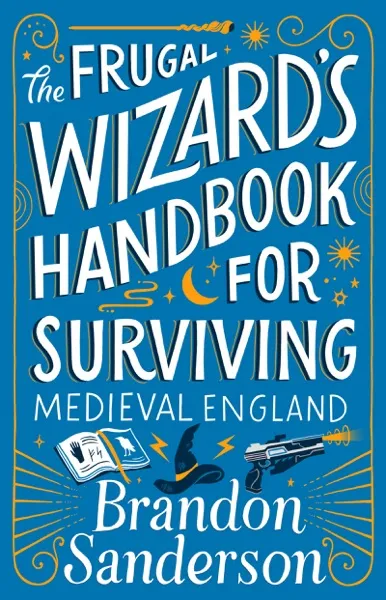
**The Frugal Wizard’s Handbook for Surviving Medieval England** Book Review and Summary
The Frugal Wizard’s Handbook for Surviving Medieval England Author: Brandon SandersonPage Count: UnknownPublication Year: 2023-GB Imagine being transported to a world where magic and myth collide with the harsh realities of medieval life, where the struggle to survive is a daily battle and the line between good and evil is constantly blurred. This is the world that Brandon Sanderson masterfully crafts in his latest masterpiece, The Frugal Wizard’s Handbook for Surviving Medieval England, a sweeping tale that has captivated readers worldwide and solidified its place as a global bestseller in 2023. With his unique blend of fantasy, adventure, and historical fiction, Sanderson has once again proven why he is one of the most beloved and respected authors of his generation. At its core, The Frugal Wizard’s Handbook for Surviving Medieval England is a story about resilience, adaptability, and the human spirit's capacity to persevere in the face of overwhelming adversity. The novel is set against the backdrop of medieval England, a time of great social, economic, and cultural upheaval, where the old certainties are crumbling and new forces are emerging to shape the destiny of the kingdom. Through the eyes of its protagonist, a resourceful and enigmatic wizard, the reader is immersed in a world of magic, mystery, and intrigue, where the boundaries between reality and myth are constantly shifting. One of the key strengths of Sanderson's writing is his ability to create complex, multi-dimensional characters that leap off the page and capture the reader's imagination. The wizard at the heart of the story is a perfect example of this, a flawed and fascinating figure whose motivations and desires are gradually revealed over the course of the narrative. With his distinctive voice, sly wit, and deep understanding of the human condition, Sanderson brings his characters to life with a level of nuance and sophistication that is all too rare in contemporary fantasy. Sanderson's writing style is, as always, a major part of the book's appeal. His prose is crisp, engaging, and effortlessly readable, with a narrative that flows like a river and carries the reader along on a tide of excitement and discovery. He has a remarkable ability to balance action, suspense, and humor, creating a story that is both thrilling and emotionally resonant. Whether he is describing a bloody battle, a tense confrontation, or a quiet moment of introspection, Sanderson's writing is always vivid, immersive, and utterly compelling. Throughout the book, Sanderson explores a range of themes that are both timely and timeless, from the nature of power and authority to the importance of community, friendship, and love. He is particularly interested in the tensions between tradition and innovation, as embodied by the conflicting demands of the medieval world and the emerging forces of change that are transforming it. As the story unfolds, these themes are woven together into a rich tapestry that is both deeply thoughtful and utterly entertaining. In conclusion, The Frugal Wizard’s Handbook for Surviving Medieval England is a triumph, a breathtakingly imaginative and deeply satisfying novel that will appeal to fans of fantasy, adventure, and historical fiction alike. With its unique blend of magic, mystery, and humor, it is a story that will captivate and inspire readers, leaving them eager to return to the world that Sanderson has created. Whether you are a longtime fan of the author or just discovering his work, this book is an absolute must-read, a true masterpiece of contemporary fantasy that will stay with you long after the final page has been turned. #TheFrugalWizardsHandbook #BrandonSanderson #MedievalFantasy #FantasyBookReview #NewRelease Related InsightsTo Begin the World Anew Book Review and Summary Divine Secrets of the Ya-Ya Sisterhood Book Review and Summary Infinite Wisdom: A Novel Book Review and Summary{ "@context": "https://schema.org", "@type": "FAQPage", "mainEntity": [ { "@type": "Question", "name": "What is the main focus of **The Frugal Wizard’s Handbook for Surviving Medieval England** Book Review and Summary?", "acceptedAnswer": { "@type": "Answer", "text": "Everything you need to know about **The Frugal Wizard’s Handbook for Surviving Medieval England** with our detailed review." } }, { "@type": "Question", "name": "Who authored the comprehensive guide on **The Frugal Wizard’s Handbook for Surviving Medieval England** Book Review and Summary?", "acceptedAnswer": { "@type": "Answer", "text": "This detailed article and its insights were carefully researched and authored by Emma Thompson." } }, { "@type": "Question", "name": "Where can I find more related content about Books?", "acceptedAnswer": { "@type": "Answer", "text": "You can explore more articles, detailed reviews, and similar insights by browsing the Related Insights section at the bottom of this article or visiting our dedicated Books category page." } } ] }

Run Away Author: Harlan CobenPage Count: UnknownPublication Year: 2019-GB Harlan Coben’s Run Away is a masterclass in suspense, blending the relentless pacing of a thriller with the emotional depth of a family drama. Published in 2019, this novel cements Coben’s reputation as a master of modern mystery, where every twist feels inevitable yet shocking, and every character is a potential victim—or perpetrator. If you’ve ever wondered how far a parent will go to protect their child, or how easily a family can unravel under pressure, Run Away will grip you by the throat and refuse to let go until the very last page. At its core, Run Away explores the fragility of family bonds when faced with betrayal, fear, and the dark secrets that lurk beneath the surface of even the most ordinary lives. The story follows Simon and his wife, Paige, as they navigate the nightmare of their teenage son, Matthew, vanishing without a trace. But this isn’t your typical missing-person thriller. Matthew isn’t just absent—he’s gone, and the clues he leaves behind suggest he’s not the victim but the perpetrator of something far more sinister. Coben flips the script early, making the reader question who to trust: the worried parents, the rebellious teenager, or the enigmatic strangers who seem to know more than they’re letting on. What makes Run Away so compelling is Coben’s razor-sharp ability to weave multiple perspectives into a single, cohesive narrative. The novel alternates between Simon’s desperate search for answers, Paige’s growing paranoia, and Matthew’s own chilling account of what really happened. This structure keeps the reader off-balance, constantly second-guessing motives and alliances. Coben’s prose is tight and uncluttered, allowing the tension to build organically rather than through over-the-top melodrama. His dialogue crackles with authenticity, whether it’s the raw desperation in Simon’s voice or the cold calculation in Matthew’s words. The author’s signature style—fast-paced, twist-laden, and deeply psychological—is on full display here. Coben excels at planting seeds of doubt early on, only to have them bloom into full-blown revelations later. The pacing is relentless, with each chapter ending on a hook that demands the next. Yet, amidst the whirlwind of action, Coben never loses sight of the human cost. The emotional weight of the story lingers, particularly in the way he portrays the erosion of trust within a family. When Simon and Paige’s marriage starts to fracture under the strain, it’s as heartbreaking as it is suspenseful. Coben also plays with the theme of perception versus reality, a recurring motif in his work. Is Matthew a runaway, a victim, or something worse? Are the adults around him truly protective, or do they have their own agendas? The novel’s title, Run Away, takes on multiple meanings—escape, abandonment, and the irreversible consequences of choices. By the time the full picture emerges, the reader is left reeling, realizing that every character, including the protagonists, has been running from something. What sets Run Away apart from many thrillers is its refusal to offer easy answers. Coben doesn’t tie everything up in a neat bow; instead, he leaves room for interpretation, forcing the reader to grapple with the moral ambiguity of the characters’ actions. The ending is satisfying yet unsettling, a testament to Coben’s skill in crafting stories that linger long after the final page. If you’re a fan of psychological thrillers that challenge your assumptions while keeping you on the edge of your seat, Run Away is a must-read. Harlan Coben once again proves that he’s not just a storyteller but an architect of suspense, building worlds where the line between hero and villain is as thin as a knife’s edge. #HarlanCoben #RunAway #ThrillerBooks #MysteryNovel #FamilyDrama #PageTurner Related InsightsThe Quiet American Book Review and Summary The Night Circus Book Review and Summary The Shack: Where Tragedy Confronts Eternity Book Review and Summary{ "@context": "https://schema.org", "@type": "FAQPage", "mainEntity": [ { "@type": "Question", "name": "What is the main focus of Run Away Book Review and Summary?", "acceptedAnswer": { "@type": "Answer", "text": "Everything you need to know about Run Away with our detailed review." } }, { "@type": "Question", "name": "Who authored the comprehensive guide on Run Away Book Review and Summary?", "acceptedAnswer": { "@type": "Answer", "text": "This detailed article and its insights were carefully researched and authored by Emma Thompson." } }, { "@type": "Question", "name": "Where can I find more related content about Books?", "acceptedAnswer": { "@type": "Answer", "text": "You can explore more articles, detailed reviews, and similar insights by browsing the Related Insights section at the bottom of this article or visiting our dedicated Books category page." } } ] }
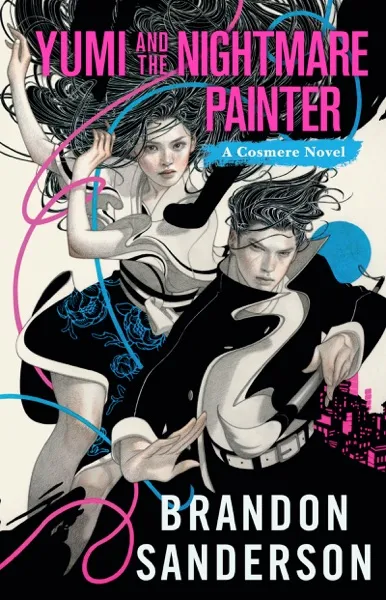
Yumi and the Nightmare Painter Author: Brandon SandersonPage Count: UnknownPublication Year: 2023-GB In the realm of fantasy literature, few authors have managed to captivate audiences quite like Brandon Sanderson, and his latest masterpiece, "Yumi and the Nightmare Painter," is no exception. This global bestseller has been making waves in the literary world, and for good reason – it's a thought-provoking, visually stunning, and deeply unsettling tale that will leave even the most seasoned readers sleeping with the lights on. At its core, "Yumi and the Nightmare Painter" is a story about the power of art to shape reality, and the devastating consequences that can occur when that power is wielded by the wrong hands. Sanderson's protagonist, Yumi, is a complex and deeply relatable character – a talented young artist struggling to find her place in a world that seems determined to stifle her creativity. As she becomes increasingly entangled in a mysterious world of nightmare-inspired art, Yumi must confront the darkest corners of her own psyche, and the true horror that lurks within. One of the standout features of "Yumi and the Nightmare Painter" is its cast of characters, each of whom is meticulously crafted to be both fascinating and terrifying. From the enigmatic Nightmare Painter himself, to the sinister forces that seek to exploit Yumi's talents, every character in this novel is a masterclass in psychological complexity. Sanderson's writing is, as always, superb – his prose is crisp, evocative, and effortlessly engaging, making it easy to become fully immersed in the world he's created. But what truly sets "Yumi and the Nightmare Painter" apart is its exploration of the human condition. This is a novel that delves deep into the darkest recesses of the human experience, tackling themes of trauma, mental illness, and the blurred lines between reality and fantasy. Sanderson's handling of these themes is both sensitive and unflinching, resulting in a narrative that is both deeply unsettling and profoundly thought-provoking. Throughout the novel, Sanderson's writing style is, as always, a marvel to behold. His use of language is masterful, conjuring vivid images and emotions with ease. The world-building in "Yumi and the Nightmare Painter" is similarly impressive, with a richly detailed landscape that's both fantastical and eerily familiar. Whether he's describing the surreal landscapes of Yumi's nightmares, or the mundane horrors of her waking life, Sanderson's prose is always engaging, always evocative, and always utterly captivating. In short, "Yumi and the Nightmare Painter" is a masterpiece of modern fantasy literature – a gripping, thought-provoking, and deeply unsettling tale that will appeal to fans of Neil Gaiman, Joe Hill, and Clive Barker. With its complex characters, masterful world-building, and exploration of the human condition, this novel is an absolute must-read for anyone who loves fantasy, horror, or just great storytelling in general. #YumiAndTheNightmarePainter #BrandonSanderson #FantasyLiterature #HorrorFiction #BookReview
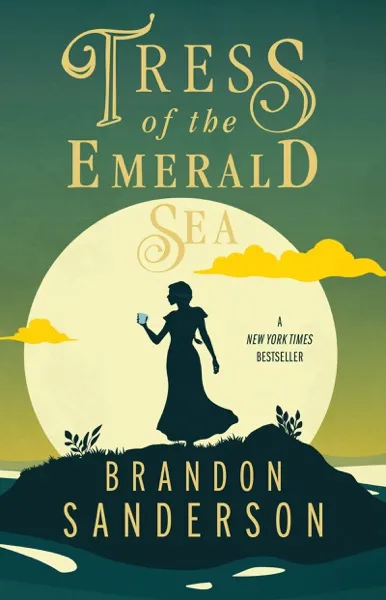
Tress of the Emerald Sea Author: Brandon SandersonPage Count: UnknownPublication Year: 2023-GB Dive Into Adventure: Why Tress of the Emerald Sea is Brandon Sanderson’s Most Captivating Fantasy Yet Few authors can weave a tale as expansive and immersive as Brandon Sanderson, and with Tress of the Emerald Sea, he delivers yet another masterpiece that cements his place as a titan of modern fantasy. Released in 2023, this standalone novel is a dazzling escapade across a vast, waterlogged world where danger lurks beneath every wave and courage is measured in the smallest of choices. If you’ve ever craved a story that blends wit, heart, and relentless adventure, Sanderson’s latest is a must-read—one that will leave you breathless and begging for more. At its core, Tress of the Emerald Sea is a swashbuckling adventure, but it’s also a story about resilience, found family, and the power of defying expectations. The protagonist, Tress, is a young woman who has spent her life on a floating island, dreaming of adventure beyond the horizon. When her home is threatened by a sinister force, she sets sail on a perilous journey across the emerald expanse, encountering a motley crew of misfits along the way. Sanderson’s genius lies in his ability to craft characters who feel both deeply human and larger-than-life, their flaws and triumphs making them impossible to forget. One of the most striking aspects of Sanderson’s writing is his worldbuilding. The Emerald Sea is a breathtaking setting, a world where the sky is a vast ocean and the land is a rare and precious commodity. Sanderson’s vivid descriptions bring this world to life, making it feel as tangible as our own. Yet, what truly sets Tress of the Emerald Sea apart is its tone. Unlike the dense, multi-book epics of Sanderson’s other works, this novel is a breath of fresh air—lighter in some ways, but no less rich in substance. It’s a story that revels in the joy of adventure, where every chapter feels like a new discovery. The themes of the novel are deftly woven into the narrative, exploring the idea of what it means to be a hero. Tress is not a warrior or a sorcerer; she’s a gardener, a dreamer, and a survivor. Her journey is one of quiet courage, proving that heroism isn’t about strength alone but about heart and determination. Sanderson also delves into the complexities of found family, as Tress and her crew navigate their differences and forge bonds that withstand the test of time and peril. These themes resonate deeply, making the story feel both personal and universal. Sanderson’s writing style is another standout feature. Known for his intricate magic systems and intricate plotting, he delivers a more streamlined experience here without sacrificing depth. The prose is sharp, the dialogue snappy, and the pacing relentless. Fans of Sanderson’s other works will recognize his signature wit and clever twists, but Tress of the Emerald Sea feels like a love letter to adventure itself. It’s a book that reminds us why we fell in love with fantasy in the first place—a tale where the journey is just as important as the destination. For readers new to Sanderson, this novel is the perfect introduction to his world. It’s accessible, engaging, and packed with the kind of adventure that keeps you turning pages late into the night. Whether you’re a seasoned fantasy fan or a casual reader looking for a thrilling escape, Tress of the Emerald Sea delivers in spades. In a genre often dominated by sprawling series, Sanderson’s ability to craft a standalone story that feels both complete and expansive is nothing short of remarkable. Tress of the Emerald Sea is more than just a book—it’s an experience, one that will leave you eager to set sail on your own adventures. #BrandonSanderson #FantasyBooks #TressOfTheEmeraldSea #BookReview #AdventureFiction
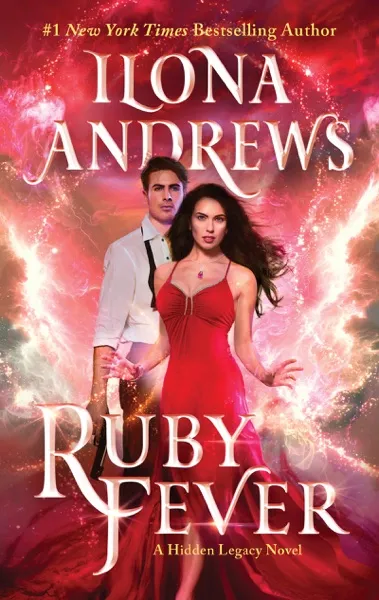
Ruby Fever Author: Ilona AndrewsPage Count: UnknownPublication Year: 2022-GB Ilona Andrews’ Ruby Fever is a dazzling explosion of fantasy, romance, and raw, unfiltered passion—a book that crackles with the same electric energy as a lightning storm. As the third installment in the Hidden Legacy series, it doesn’t just meet the high expectations set by its predecessors; it obliterates them, delivering a story that is as emotionally devastating as it is thrillingly entertaining. Andrews, a master of blending intricate world-building with deeply personal stakes, crafts a narrative that feels both epic in scope and intimately human in its focus. At its core, Ruby Fever is a story about power—not just the kind that can level buildings or topple governments, but the kind that lives in the veins, the kind that whispers in the dark and demands to be acknowledged. The novel explores the consequences of wielding immense power, the loneliness of being untouchable, and the terrifying vulnerability of loving someone who could, at any moment, become your greatest threat. The theme is timeless but rendered fresh through Andrews’ razor-sharp prose and her refusal to shy away from the messy, often brutal realities of power dynamics—both magical and romantic. The protagonist, Nevada Baylor, is a woman who has spent her life fighting to be taken seriously in a world that constantly underestimates her. A “lie detector” with a rare magical gift, she’s used to being the smartest person in the room—until she isn’t. When she’s thrust into a high-stakes mission involving the dangerous and enigmatic Prince of Beasts, her world tilts on its axis. The dynamic between Nevada and the prince is electric, a push-and-pull of attraction and antagonism that feels both dangerous and inevitable. Andrews excels at writing relationships that are as combustible as they are tender, and this book is no exception. Their chemistry isn’t just flirtatious banter or convenient tension—it’s a slow-burning fire that threatens to consume them both. What sets Andrews apart is her ability to weave action and emotion into a seamless tapestry. Fight scenes in Ruby Fever are not just choreographed spectacles; they’re visceral, emotional experiences that leave the reader breathless. The magic system, already rich and complex in prior books, deepens here, revealing layers that are as awe-inspiring as they are terrifying. The world of the Bakrens—shapeshifters, mages, and ancient beings—feels alive, a place where every choice has weight and every secret has a price. But the true heart of the book lies in its exploration of vulnerability. Nevada, a woman who has built walls around her heart, finds herself forced to confront the parts of herself she’s buried—the fear of losing control, the terror of being truly seen, and the unbearable hope of being loved despite her flaws. The prince, too, is stripped bare, his cold exterior melting under the heat of Nevada’s relentless honesty. Their relationship is a masterclass in slow-burn romance, where trust is earned through blood, sweat, and sacrifice, not just declarations of love. Andrews’ prose is lush but never overwrought, her dialogue sharp enough to cut glass. She balances humor and heartbreak with a deft hand, ensuring that even the darkest moments are leavened by moments of levity. The pacing is relentless, pulling the reader through a story that feels both sprawling and intimate. There are no wasted pages here, no filler—just a relentless drive toward a climax that is as satisfying as it is heart-stopping. Ruby Fever is not just a book about power or love or survival—it’s a book about what it means to be human in a world that constantly tries to reduce you to something less than that. It’s a story that demands you feel, demands you care, and then punches you in the gut with the weight of its emotional truths. By the final page, you won’t just be invested in the characters; you’ll be desperate for their happiness, willing them to find a way to make it work despite the odds stacked against them. If you’ve followed the Hidden Legacy series from the beginning, Ruby Fever will feel like coming home to a story you’ve been waiting to see fully unfold. If you’re new to Andrews’ work, prepare to be swept away by a narrative that is as intellectually stimulating as it is emotionally gripping. This is fantasy at its finest—bold, unapologetic, and utterly unforgettable. #HiddenLegacy #IlonaAndrews #FantasyRomance #MagicAndMayhem #SlowBurnRomance #BookReview Related InsightsLucy Kline, Necromancer Book Review and Summary A reaper at the gates Book Review and Summary Voyager Book Review and Summary{ "@context": "https://schema.org", "@type": "FAQPage", "mainEntity": [ { "@type": "Question", "name": "What is the main focus of Ruby Fever Book Review and Summary?", "acceptedAnswer": { "@type": "Answer", "text": "Everything you need to know about Ruby Fever with our detailed review." } }, { "@type": "Question", "name": "Who authored the comprehensive guide on Ruby Fever Book Review and Summary?", "acceptedAnswer": { "@type": "Answer", "text": "This detailed article and its insights were carefully researched and authored by Marco Conti." } }, { "@type": "Question", "name": "Where can I find more related content about Books?", "acceptedAnswer": { "@type": "Answer", "text": "You can explore more articles, detailed reviews, and similar insights by browsing the Related Insights section at the bottom of this article or visiting our dedicated Books category page." } } ] }
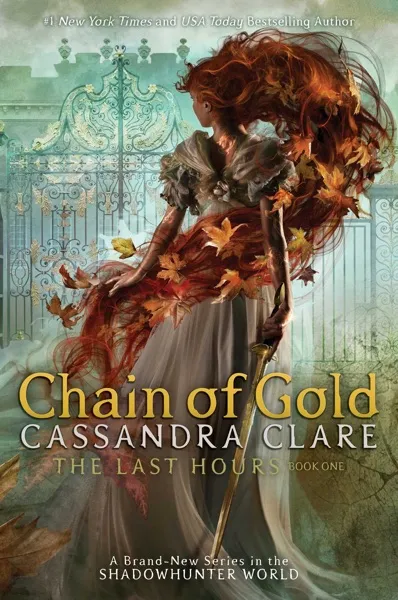
Chain of Gold Author: Cassandra ClarePage Count: UnknownPublication Year: 2019-GB Cassandra Clare’s Chain of Gold is a glittering tapestry of shadows, secrets, and silver—where the glint of a shadowhunter’s blade meets the shimmer of Jazz Age glamour. Published in 2019, this enthralling entry in the The Last Hours series transports readers to a world where demons lurk beneath the polished floors of London’s high society, and where love, betrayal, and destiny are woven into the very fabric of the city’s elite. Clare, a master of modern fantasy, once again proves why she remains a titan of the genre, crafting a narrative that is as much a love letter to historical romance as it is a pulse-pounding paranormal thriller. At its core, Chain of Gold explores the weight of legacy—both personal and familial. The story unfolds in 1920s London, a decade of liberation and repression, where the aftermath of World War I lingers like a ghost in the gaslit streets. The protagonist, James Herondale, is the son of the infamous Will and Tessa Herondale, and he carries the burden of his parents’ legend with a quiet intensity. Clare doesn’t just ask what it means to live in the shadow of greatness; she dissects the fear of repeating history, the pressure to meet impossible expectations, and the gnawing question of whether destiny is something we shape or something that shapes us. James’s journey is one of self-discovery, fraught with the kind of emotional turbulence that only a Clare protagonist can endure—think brooding angst meets dashing charm, all wrapped in the kind of moral ambiguity that makes you root for him even when you want to shake him. Clare’s prose is a masterclass in atmospheric storytelling. She doesn’t just describe a setting; she immerses you in it. The London of Chain of Gold is a character in its own right—cold and fog-drenched, yet pulsing with the heat of jazz clubs and the electric charge of forbidden romance. Her dialogue crackles with wit and tension, whether it’s the sharp banter between James and his parabatai, Matthew Fairchild, or the charged silences between James and Cordelia Carstairs, the fierce and brilliant heroine whose own legacy is equally fraught. Clare’s ability to balance humor, heartache, and high-stakes action is nothing short of alchemical. A single scene might shift from a tense confrontation with a Greater Demon to a witty repartee over tea at a high-society ball, all while maintaining a relentless pace that ensures you’re never bored. The romance in Chain of Gold is as layered as the plot itself. James and Cordelia’s relationship is a slow burn, simmering with mutual respect and that delicious push-and-pull of attraction and frustration. Their dynamic is refreshingly modern for a historical fantasy—Cordelia is no damsel in distress, but a warrior in her own right, and her chemistry with James is built on a foundation of shared values rather than mere infatuation. Meanwhile, the love story between Lucie Herondale and Jesse Blackthorn adds a layer of gothic tragedy that only deepens the emotional stakes. Clare excels at writing relationships that feel real, messy, and deeply human, even within the confines of a supernatural world. What truly sets Chain of Gold apart, however, is its exploration of found family. The bond between shadowhunters—parabatai, friends, and chosen kin—is central to the story, and Clare crafts these relationships with a tenderness that makes the stakes feel even higher. The loyalty between James, Matthew, and Thomas is a balm in a world filled with danger and deceit, and it’s this warmth that keeps the darker elements of the story from becoming overwhelming. Clare understands that in a world of demons and curses, the real magic lies in the connections we forge. Clare’s worldbuilding is, as always, meticulous and immersive. The Downworlders—werewolves, warlocks, and faeries—are not mere background players but fully realized individuals with their own agendas and complexities. The political intrigue between the Clave and the Downworlders adds a layer of sophistication to the story, elevating it beyond a simple good-vs-evil narrative. Clare’s ability to weave mythology, history, and modern fantasy into a cohesive whole is nothing short of impressive. If there’s a criticism to be leveled, it’s that Chain of Gold occasionally indulges in melodrama, particularly in its latter acts. The pacing stumbles slightly as the plot races toward its climax, and some emotional beats feel overly dramatic, almost to the point of distraction. However, this is a minor quibble in a story that otherwise delivers on every front. Clare’s writing is so engaging that even the occasional misstep is forgiven in favor of the sheer joy of being immersed in her world. In the end, Chain of Gold is a triumph of storytelling—a book that understands that the best fantasies are not just about saving the world, but about what it means to be human within it. Whether you’re a longtime fan of Clare’s work or a newcomer to the Shadowhunter universe, this novel is a must-read. It’s a story of love and loss, of destiny and defiance, and of the unbreakable chains—both literal and metaphorical—that bind us. And, as always with Clare, it’s impossible to put down until the very last page. #Shadowhunters #CassandraClare #FantasyRomance #TheLastHours #YAFantasy #BookReview Related InsightsInstant Classic Book Review and Summary The First Flame (The Aerimander Chronicles #2) Book Review and Summary Snow This is Love: Meant to Be Holiday Tales Book Review and Summary{ "@context": "https://schema.org", "@type": "FAQPage", "mainEntity": [ { "@type": "Question", "name": "What is the main focus of Chain of Gold Book Review and Summary?", "acceptedAnswer": { "@type": "Answer", "text": "Everything you need to know about Chain of Gold with our detailed review." } }, { "@type": "Question", "name": "Who authored the comprehensive guide on Chain of Gold Book Review and Summary?", "acceptedAnswer": { "@type": "Answer", "text": "This detailed article and its insights were carefully researched and authored by Emma Thompson." } }, { "@type": "Question", "name": "Where can I find more related content about Books?", "acceptedAnswer": { "@type": "Answer", "text": "You can explore more articles, detailed reviews, and similar insights by browsing the Related Insights section at the bottom of this article or visiting our dedicated Books category page." } } ] }
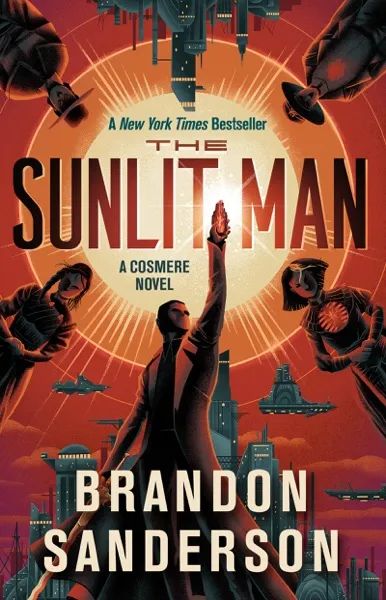
The Sunlit Man Author: Brandon SandersonPage Count: UnknownPublication Year: 2023-GB The Sunlit Man: Brandon Sanderson’s Masterful Blend of Mystery, Magic, and Humanity Brandon Sanderson has long been a titan of modern fantasy, crafting sprawling epics that redefine the genre while keeping readers breathless with twists, worldbuilding, and emotional depth. With The Sunlit Man, his latest 2023 release, Sanderson once again proves why he remains a must-read author for both die-hard fans and newcomers alike. This novel, a standalone within his broader Cosmere universe, is a dazzling exploration of identity, power, and the choices that define us—all wrapped in a narrative that’s as intellectually stimulating as it is compulsively readable. At its core, The Sunlit Man is a story about perception versus reality. Sanderson challenges the reader to question what they see, what they believe, and how those beliefs shape their world. The protagonist, a man named Rayse, is a figure shrouded in mystery, his past as elusive as the magic he wields. Sanderson’s signature prose—clear, immersive, and laced with dry humor—guides us through a world where the line between hero and villain blurs with every revelation. The novel’s themes of redemption, sacrifice, and the burden of knowledge resonate deeply, making it more than just a fantasy adventure; it’s a meditation on what it means to be human in a universe that often feels indifferent. One of Sanderson’s greatest strengths is his ability to create characters who feel real, even in the most fantastical settings. Rayse is a particularly compelling figure—not because he’s immediately likable, but because he’s human. His flaws, his doubts, and his quiet resilience make him a protagonist worth investing in. Sanderson populates the story with a rich cast of supporting characters, each with their own arcs and motivations, though it’s Rayse’s journey that lingers longest in the mind. The dialogue crackles with wit and tension, a testament to Sanderson’s skill in balancing humor with high-stakes drama. The magic system in The Sunlit Man is, as always, a marvel of Sanderson’s worldbuilding. Drawing from the Cosmere’s intricate lore, he introduces a form of power that feels both ancient and fresh, tied intricately to the novel’s themes. The mechanics of this magic are explained with just enough detail to satisfy curious readers without overwhelming those who prefer to lose themselves in the story. It’s a delicate balance, and Sanderson executes it flawlessly. The result is a world that feels lived-in, where every spell cast and every power used has weight and consequence. Sanderson’s writing style is another standout feature. His prose is accessible yet sophisticated, making his books accessible to a wide audience without sacrificing depth. He has a knack for pacing that keeps readers glued to the page, with cliffhangers and revelations that arrive at just the right moments. The novel’s structure is tight, with each chapter building on the last, leading to a climax that feels both earned and surprising. It’s a testament to Sanderson’s craft that even readers familiar with his work will find The Sunlit Man to be a fresh and invigorating experience. Beyond its entertainment value, The Sunlit Man also serves as a reflection on the power of stories themselves. Sanderson weaves in meta-commentary on how narratives shape our understanding of the world, how villains and heroes are often just different sides of the same coin. It’s a theme that feels particularly relevant in today’s world, where perception and reality are increasingly difficult to untangle. The novel’s title itself is a clue to its deeper meanings, hinting at the duality of light and shadow, truth and illusion. For fans of Sanderson’s previous works, The Sunlit Man delivers everything they’ve come to expect: intricate worldbuilding, complex characters, and a plot that keeps them guessing. But it also stands on its own as a compelling story, one that can be enjoyed by readers new to the Cosmere. Sanderson’s ability to craft a narrative that feels both personal and epic is what sets him apart, and The Sunlit Man is no exception. In an era where fantasy often leans toward either bloated series or forgettable standalone novels, The Sunlit Man is a breath of fresh air. It’s a book that respects its readers’ intelligence while still delivering the thrills and emotional payoffs they crave. Sanderson has once again proven why he’s one of the most important voices in modern fantasy, and The Sunlit Man is a must-read for anyone who loves a story that lingers long after the last page is turned. #BrandonSanderson #TheSunlitMan #Cosmere #FantasyBooks #BookReview Related InsightsCity of Last Chances Book Review and Summary Framed in Death Book Review and Summary Murder Under the Mistletoe (Cleopatra Fox Mysteries Book 13) Book Review and Summary{ "@context": "https://schema.org", "@type": "FAQPage", "mainEntity": [ { "@type": "Question", "name": "What is the main focus of **The Sunlit Man** Book Review and Summary?", "acceptedAnswer": { "@type": "Answer", "text": "Everything you need to know about **The Sunlit Man** with our detailed review." } }, { "@type": "Question", "name": "Who authored the comprehensive guide on **The Sunlit Man** Book Review and Summary?", "acceptedAnswer": { "@type": "Answer", "text": "This detailed article and its insights were carefully researched and authored by Emma Thompson." } }, { "@type": "Question", "name": "Where can I find more related content about Books?", "acceptedAnswer": { "@type": "Answer", "text": "You can explore more articles, detailed reviews, and similar insights by browsing the Related Insights section at the bottom of this article or visiting our dedicated Books category page." } } ] }
Interdependency Boxed Set Author: John ScalziPage Count: UnknownPublication Year: 2021-GB John Scalzi’s Interdependency Boxed Set is a masterclass in blending sharp wit, political intrigue, and high-stakes science fiction—all wrapped in a narrative that feels as urgent as it is entertaining. Compiled into a single volume, this trilogy (The Collapsing Empire, The Consuming Fire, and The Last Emperox) delivers a sprawling, thought-provoking exploration of power, adaptation, and the fragility of systems we take for granted. At its core, the story asks a deceptively simple question: What happens when the foundation of your society cracks? The answer, Scalzi suggests, is as much about human nature as it is about physics. The Interdependency—an alliance of planets connected by wormholes, each dependent on the others for trade, culture, and survival—is a brilliant metaphor for our own world. Scalzi uses this setup to dissect the dangers of complacency, the illusions of stability, and the messy reality of leadership when every choice is a gamble. The empire isn’t collapsing because of external threats (though those exist); it’s crumbling from within, corroded by bureaucracy, corruption, and the refusal to adapt until it’s too late. This isn’t just space opera—it’s a cautionary tale disguised as adventure, and it lands with startling relevance. Scalzi’s greatest strength here is his ability to balance big ideas with razor-sharp humor and deeply human characters. His prose is crisp, his dialogue crackles with sarcasm and intelligence, and his worldbuilding is meticulous without ever feeling like a lecture. The Interdependency’s political landscape is a labyrinth of shifting alliances, where every planet (and every faction within it) has its own agenda. Scalzi navigates this complexity with ease, making the reader care about trade disputes and wormhole physics as much as they do about the personal dramas of his characters. At the heart of the story is Marce Claremont, the heir to the Imperial throne, and Kiva Lagos, a sharp-tongued historian with a knack for uncovering uncomfortable truths. Their dynamic is the emotional core of the trilogy, grounding the high-concept stakes in relatable stakes: love, loyalty, and the weight of legacy. Scalzi excels at making his protagonists flawed but compelling—characters who grow not because they’re destined to be heroes, but because they’re forced to confront the consequences of their (and others’) mistakes. The trilogy’s villain, the enigmatic and ruthless Grayland II, is a standout—a character who embodies the worst excesses of institutional power. Her arc is a masterclass in slow-burn villainy, where malice is less about personal hatred and more about the cold, calculated preservation of a system that benefits her, no matter the cost to others. Scalzi doesn’t let her off the hook, but he also refuses to reduce her to a caricature, making her one of the most chilling antagonists in recent sci-fi. What makes Interdependency truly special, though, is its refusal to offer easy answers. The wormholes aren’t just a plot device; they’re a metaphor for the interconnectedness of modern life, where collapse in one corner of the galaxy can ripple outward in ways no one anticipates. Scalzi challenges the reader to consider: Are we doomed to repeat the mistakes of the past, or can we break the cycle? The answer, like the story itself, is messy, uncertain, and ultimately hopeful in its own flawed way. Scalzi’s style is deceptively effortless—you’ll laugh out loud at his characters’ banter, then suddenly find yourself staring at the page, heart pounding, as you realize the full weight of what’s at stake. He has a rare gift for making complex ideas accessible without dumbing them down, and his pacing is relentless. The trilogy hurtles forward with the momentum of a collapsing empire, each book upping the ante until the final confrontation feels both inevitable and devastating. If you loved the political intrigue of Game of Thrones meets the cerebral sci-fi of The Expanse, or if you’ve ever wondered what would happen if global supply chains suddenly vanished overnight, Interdependency is for you. It’s a story about change, about the stubbornness of tradition, and about the people who dare to see the world as it is instead of how it should be. In an era where stability feels increasingly fragile, Scalzi’s trilogy is both a warning and a rallying cry. For fans of intelligent, character-driven sci-fi, this is a must-read. For everyone else? It’s a masterclass in how to make you care about wormholes. #Interdependency #JohnScalzi #SciFiTrilogy #SpaceOpera #SciFiBooks #MustReadSciFi Related InsightsThe Call of Crowns: Book Two of Birth of a Dynasty – Electrifying Fantasy Sequel Where a Kingdom Fractures and Loyalty Becomes a Dangerous Gamble Book Review and Summary Historias probables Book Review and Summary Interpreter of Maladies Book Review and Summary{ "@context": "https://schema.org", "@type": "FAQPage", "mainEntity": [ { "@type": "Question", "name": "What is the main focus of Interdependency Boxed Set Book Review and Summary?", "acceptedAnswer": { "@type": "Answer", "text": "Everything you need to know about Interdependency Boxed Set with our detailed review." } }, { "@type": "Question", "name": "Who authored the comprehensive guide on Interdependency Boxed Set Book Review and Summary?", "acceptedAnswer": { "@type": "Answer", "text": "This detailed article and its insights were carefully researched and authored by Marco Conti." } }, { "@type": "Question", "name": "Where can I find more related content about Books?", "acceptedAnswer": { "@type": "Answer", "text": "You can explore more articles, detailed reviews, and similar insights by browsing the Related Insights section at the bottom of this article or visiting our dedicated Books category page." } } ] }
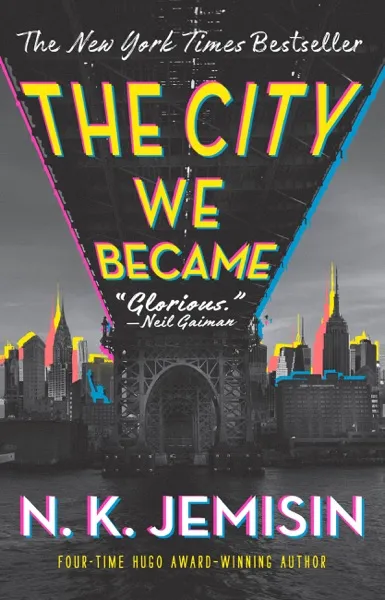
The City We Became Author: N. K. JemisinPage Count: UnknownPublication Year: 2020-GB N. K. Jemisin’s The City We Became is a seismic reimagining of New York City—not as a place, but as a living, breathing entity, a sentient force of history, culture, and identity. Published in 2020, this novel arrives at a moment when cities are both celebrated and embattled, when their souls are treated as battlegrounds between progress and erasure. Jemisin, a master of speculative fiction and a three-time Hugo Award winner for her Broken Earth trilogy, once again bends reality to confront uncomfortable truths about race, power, and belonging. This is not just a book about a city becoming aware of itself; it’s a manifesto disguised as a novel, a love letter to the communities that define urban life, and a warning about the forces that seek to destroy them. At its core, The City We Became explores the idea that cities are more than bricks and mortar—they are the collective consciousness of the people who inhabit them. New York, in Jemisin’s rendering, is not one monolithic entity but six distinct boroughs, each represented by a human avatar: Manhattan, an uptown Black artist struggling with fame; Brooklyn, a young Puerto Rican woman navigating gentrification and her own identity; Queens, a Guyanese immigrant dealing with generational trauma; the Bronx, a Black gay man reclaiming his roots; Staten Island, a Korean adoptee searching for connection; and the mysterious core of the city itself, a sentient force that emerges when the boroughs come together. When an ancient, Lovecraftian horror—manifested as a white supremacist entity known as the Enemy or The Woman in White—threatens to consume New York, these avatars must awaken to their roles as protectors of the city’s soul. Jemisin’s brilliance lies in her ability to weave personal and political struggles into a mythic framework. The novel is, on one level, a superhero origin story, where the boroughs’ avatars develop powers tied to their identities—Manhattan’s ability to manipulate space and time through art, Brooklyn’s command over rhythm and rebellion, the Bronx’s unbreakable connection to the land. But it’s also a sharp critique of how cities are commodified, how their histories are whitewashed, and how marginalized communities are erased in the name of "revitalization." Jemisin doesn’t shy away from the contradictions of urban life: the way gentrification displaces long-time residents, how art can both liberate and gentrify, the tension between individual ambition and collective survival. Her prose is electric, blending lyrical beauty with biting satire. Jemisin’s New York is a character in itself, a patchwork of languages, flavors, and histories that refuse to be homogenized. She writes with a poet’s precision and a scholar’s depth, referencing everything from hip-hop to classical music, from the Harlem Renaissance to the erasure of indigenous Lenape land. The dialogue crackles with authenticity, whether it’s the banter between the boroughs’ avatars or the internal monologues of characters grappling with their place in the world. And yet, for all its depth, the novel never feels like a dry lecture—it’s a page-turner, a battle against cosmic forces where the stakes feel both mythic and urgently real. One of the book’s most striking elements is its treatment of memory and erasure. The Enemy doesn’t just want to destroy New York; it wants to unmake it, to strip it of its Black, brown, immigrant, and queer histories and reduce it to a sanitized, corporate-friendly shell. This is a direct metaphor for the ways cities are rewritten by those in power, how public art becomes a tool of displacement, and how the voices of the marginalized are silenced in the name of progress. Jemisin forces her readers to confront the idea that a city’s soul is worth fighting for—a radical notion in an era where urban spaces are increasingly designed for the wealthy and the transient. The novel also excels in its exploration of identity. Each borough’s avatar is deeply rooted in their community’s struggles, yet they must also confront their own limitations. Manhattan, for example, is a Black man who has internalized the idea that his worth is tied to his artistic success, while the Bronx grapples with the weight of representing a borough that has been both celebrated and neglected. These characters are not just symbols; they are fully realized people, flawed and human, which makes their battles all the more compelling. Jemisin’s style is unapologetically political, but it never feels preachy. She trusts her readers to engage with the ideas on their own terms, and the result is a novel that is both entertaining and thought-provoking. The City We Became is a love letter to the cities we love and the people who make them alive—and a warning about what we stand to lose if we let those cities be hollowed out. In a world where cities are increasingly seen as profit centers rather than living ecosystems, Jemisin’s novel is a necessary reminder that urban spaces are, at their best, collaborative works of art, shaped by the people who call them home. It’s a call to arms for anyone who believes in the power of community, the importance of memory, and the unbreakable spirit of a place that refuses to be forgotten. #TheCityWeBecame #NKJemisin #UrbanFantasy #SpeculativeFiction #LoveLetterToNYC #CitiesHaveSouls Related InsightsThe Giver Book Review and Summary I Am Legend and Other Stories Book Review and Summary A Tree Grows in Brooklyn Book Review and Summary{ "@context": "https://schema.org", "@type": "FAQPage", "mainEntity": [ { "@type": "Question", "name": "What is the main focus of The City We Became Book Review and Summary?", "acceptedAnswer": { "@type": "Answer", "text": "Everything you need to know about The City We Became with our detailed review." } }, { "@type": "Question", "name": "Who authored the comprehensive guide on The City We Became Book Review and Summary?", "acceptedAnswer": { "@type": "Answer", "text": "This detailed article and its insights were carefully researched and authored by Emma Thompson." } }, { "@type": "Question", "name": "Where can I find more related content about Books?", "acceptedAnswer": { "@type": "Answer", "text": "You can explore more articles, detailed reviews, and similar insights by browsing the Related Insights section at the bottom of this article or visiting our dedicated Books category page." } } ] }
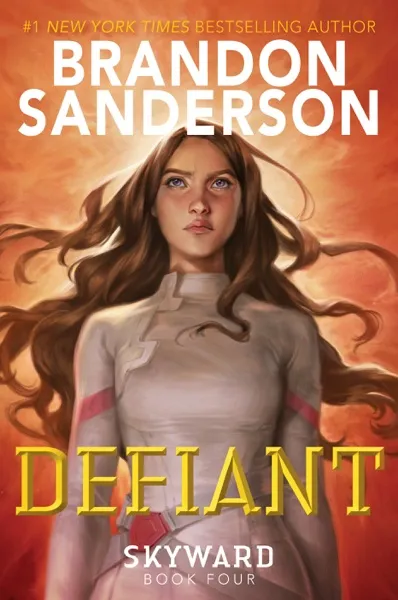
Defiant Author: Brandon SandersonPage Count: UnknownPublication Year: 2023-GB In a world where the boundaries of reality are constantly being pushed, one author has managed to defy the odds and create a masterpiece that will leave readers breathless - Brandon Sanderson's latest novel, Defiant, is a game-changer. This highly acclaimed global bestseller has taken the literary world by storm, and for good reason. With its unique blend of action, suspense, and thought-provoking themes, Defiant is a must-read for anyone looking to escape into a world of wonder and awe. At its core, Defiant is a story about resilience, hope, and the unyielding human spirit. Sanderson masterfully weaves together a complex tapestry of characters, each with their own distinct voice and motivations, to create a narrative that is both deeply personal and universally relatable. The main characters are multi-dimensional and expertly crafted, with rich backstories and nuanced personalities that leap off the page. From the courageous and determined protagonist to the enigmatic and complex supporting cast, each character plays a vital role in driving the story forward and exploring the novel's central themes. One of the most striking aspects of Defiant is its thought-provoking exploration of power, identity, and the consequences of playing with forces beyond human control. Sanderson poses fundamental questions about the nature of reality, free will, and the human condition, inviting readers to ponder the implications of emerging technologies and the ethics of scientific discovery. Through his characters' struggles and triumphs, Sanderson sheds light on the darker aspects of human nature, revealing the capacity for both good and evil that lies within us all. Sanderson's writing style is, as always, a hallmark of his work. His prose is crisp, engaging, and effortlessly paced, making it easy to become fully immersed in the world he has created. The author's use of language is deliberate and evocative, conjuring vivid images and emotions that linger long after the story has ended. With Defiant, Sanderson once again demonstrates his remarkable ability to craft compelling narratives that are both entertaining and intellectually stimulating. The world-building in Defiant is, as expected, superb. Sanderson has a remarkable talent for creating richly detailed, immersive environments that draw readers in and refuse to let go. The novel's unique magical system, with its intricate rules and consequences, is a marvel of imagination and creativity. From the sprawling landscapes to the intricate workings of the story's internal logic, every aspect of the world feels meticulously crafted and thoroughly realized. What sets Defiant apart from other novels in the genre is its ability to balance action, suspense, and emotional depth. The story is expertly paced, with a narrative that unfolds at a breakneck speed without ever feeling rushed or frenetic. Sanderson's handling of plot twists and reveals is masterful, keeping readers on the edge of their seats as they try to anticipate what will happen next. And yet, despite the many surprises and surprises, the story never feels manipulative or contrived - every twist and turn feels earned, the result of careful plotting and character development. As the latest installment in a long line of bestsellers, Defiant is a testament to Brandon Sanderson's boundless imagination and skill as a storyteller. With its unique blend of action, suspense, and thought-provoking themes, this novel is sure to captivate readers and leave them eagerly anticipating the author's next move. Whether you're a longtime fan of Sanderson's work or just discovering his novels, Defiant is an absolute must-read - a thrilling, emotionally resonant, and deeply satisfying story that will linger in your mind long after the final page has been turned. #BrandonSanderson #Defiant #FantasyLiterature #BookReview #BestsellerNovels Related InsightsKing of Wrath / King of Pride / King of Greed Book Review and Summary Someone to Trust Book Review and Summary Dead Until Dark Book Review and Summary{ "@context": "https://schema.org", "@type": "FAQPage", "mainEntity": [ { "@type": "Question", "name": "What is the main focus of **Defiant** Book Review and Summary?", "acceptedAnswer": { "@type": "Answer", "text": "Everything you need to know about **Defiant** with our detailed review." } }, { "@type": "Question", "name": "Who authored the comprehensive guide on **Defiant** Book Review and Summary?", "acceptedAnswer": { "@type": "Answer", "text": "This detailed article and its insights were carefully researched and authored by Emma Thompson." } }, { "@type": "Question", "name": "Where can I find more related content about Books?", "acceptedAnswer": { "@type": "Answer", "text": "You can explore more articles, detailed reviews, and similar insights by browsing the Related Insights section at the bottom of this article or visiting our dedicated Books category page." } } ] }
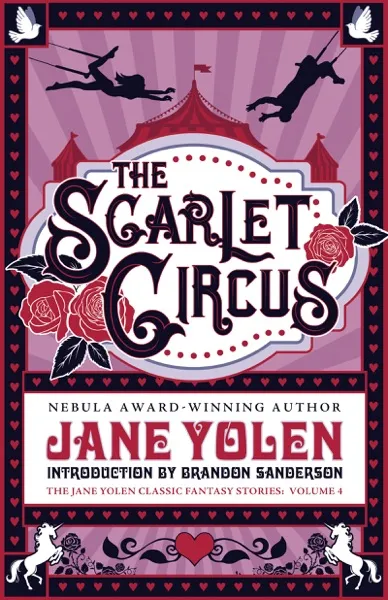
Scarlet Circus Author: Jane YolenPage Count: UnknownPublication Year: 2023-GB Jane Yolen’s Scarlet Circus: A Darkly Enchanting Masterpiece That Redefines Storytelling Few authors possess the alchemy to turn folklore into something both haunting and heartfelt, but Jane Yolen has done it again with Scarlet Circus, a 2023 global bestseller that cements her reputation as a literary sorceress. This isn’t just a book—it’s an experience, a labyrinth of wonder and unease where the past whispers through the present, and every page crackles with the kind of magic that lingers long after the final sentence. If you’ve ever been captivated by the eerie allure of circuses, the weight of hidden histories, or the way stories shape our souls, Scarlet Circus will burrow into your imagination and refuse to let go. At its core, Scarlet Circus is a meditation on legacy—how the stories we inherit define us, how the past haunts the present, and how the line between reality and myth blurs until it vanishes entirely. Yolen, a master of blending the macabre with the magical, crafts a narrative that feels like a dusty, half-remembered dream: vivid yet elusive, beautiful yet unsettling. The circus itself is more than a setting; it’s a character, a living entity with its own secrets, sorrows, and seductions. Through its striped tents and flickering lights, Yolen explores themes of identity, belonging, and the cost of keeping—or breaking—promises. The story unfolds through a series of interconnected vignettes, each narrated by a different voice, from the ringmaster to the trapeze artist to the quiet observer in the stands. This mosaic structure isn’t just a stylistic choice—it’s a deliberate invitation to piece together the puzzle of the circus’s true nature. Yolen’s prose is lush yet precise, her sentences shimmering with the kind of lyrical economy that makes every word feel deliberate. She doesn’t just describe a scene; she immerses you in it, so that the scent of popcorn and sawdust becomes as real as the ache in your chest when a character’s fate unfolds. One of the most striking aspects of Scarlet Circus is its refusal to shy away from darkness. Yolen doesn’t flinch from the grotesque or the tragic, yet she tempers it with a tenderness that makes the revelations all the more poignant. The characters—each flawed, complex, and deeply human—are drawn with a deft hand that avoids cliché. There’s no clear line between hero and villain here; instead, Yolen presents a world where everyone carries their own scars, their own reasons for staying or leaving. The result is a story that feels achingly real, even as it dances on the edge of the surreal. Yolen’s writing style is a masterclass in economy and atmosphere. She trusts her readers to fill in the gaps, to sense the unspoken between the lines. Her dialogue crackles with subtext, and her descriptions are so vivid they feel like incantations. Whether she’s painting the glow of a circus tent against a moonless sky or capturing the quiet devastation of a character’s realization, her prose is both evocative and understated—a rare balance that elevates Scarlet Circus from mere storytelling to something closer to mythmaking. What makes Scarlet Circus particularly compelling is its timelessness. Though set in a world that feels both old and eternal, the themes it explores—memory, loss, the stories we tell to survive—are universal. Yolen doesn’t date her narrative with contemporary references; instead, she crafts a fable that could have been told a hundred years ago or a hundred years from now. This universality is part of what makes the book so resonant, a quality that explains its meteoric rise to global bestseller status. For readers who adore literary fiction with a touch of the uncanny, Scarlet Circus is a must-read. It’s the kind of book that lingers in your thoughts, that makes you pause mid-sentence to savor a particularly striking phrase. It’s also a book that rewards rereading, revealing new layers with each encounter. Whether you’re a longtime fan of Yolen’s work or new to her spellbinding world, Scarlet Circus is a journey worth taking—one that will leave you changed, haunted, and perhaps a little bit in love with the magic of stories themselves. Jane Yolen has once again proven why she’s a titan of modern literature. Scarlet Circus isn’t just a book; it’s an invitation to step into a world where the extraordinary and the everyday collide, where every shadow holds a story, and where the past is never truly buried. Don’t just read it—experience it. #JaneYolen #ScarletCircus #DarkFantasy #LiteraryMagic #MustReadBooks Related InsightsVenus, Vanishing: A Novel Book Review and Summary Go Ask Alice Book Review and Summary Bonded in Death Book Review and Summary{ "@context": "https://schema.org", "@type": "FAQPage", "mainEntity": [ { "@type": "Question", "name": "What is the main focus of **Scarlet Circus** Book Review and Summary?", "acceptedAnswer": { "@type": "Answer", "text": "Everything you need to know about **Scarlet Circus** with our detailed review." } }, { "@type": "Question", "name": "Who authored the comprehensive guide on **Scarlet Circus** Book Review and Summary?", "acceptedAnswer": { "@type": "Answer", "text": "This detailed article and its insights were carefully researched and authored by Emma Thompson." } }, { "@type": "Question", "name": "Where can I find more related content about Books?", "acceptedAnswer": { "@type": "Answer", "text": "You can explore more articles, detailed reviews, and similar insights by browsing the Related Insights section at the bottom of this article or visiting our dedicated Books category page." } } ] }
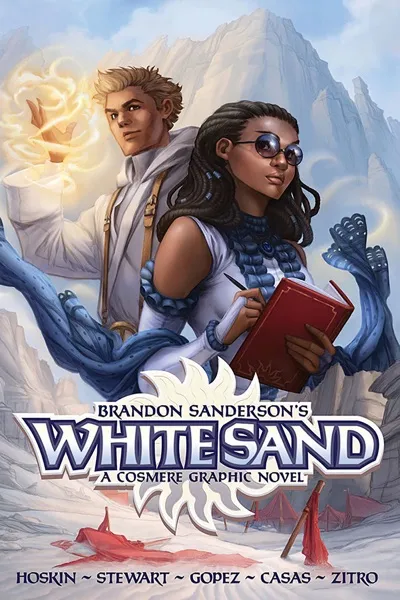
Brandon Sanderson's White Sand Omnibus Author: Brandon SandersonPage Count: UnknownPublication Year: 2023-GB White Sand Omnibus: A Masterclass in Worldbuilding and Epic Fantasy Few authors can weave a tapestry as intricate and immersive as Brandon Sanderson. With the White Sand Omnibus, he delivers not just a novel, but an entire universe—one that demands to be explored, dissected, and revisited. This omnibus, a compilation of the original White Sand prose novel and its graphic novel adaptation, is a testament to Sanderson’s unparalleled ability to craft a fantasy realm that feels both alien and deeply human. If you’ve ever craved a world where magic is as scientific as it is mystical, where political intrigue simmers beneath the surface of dazzling sand-skiing spectacles, and where characters evolve with the weight of their choices, then White Sand is your next obsession. At its core, White Sand explores the collision of tradition and progress, power and responsibility, and the indomitable spirit of those who dare to defy the status quo. The story unfolds in the desert world of Taldain, where a rare mineral called dust grants its wielders extraordinary abilities—but at a cost. The ruling class, the Sand Masters, hoard this power, while the oppressed lower castes toil under their rule. Enter Khriss, a scholar from another world, whose arrival disrupts the fragile balance of Taldain’s society. Her journey is one of discovery, not just of the planet’s secrets, but of her own place within its grand design. Sanderson’s genius lies in making Khriss’s outsider perspective a lens through which readers experience the wonder and brutality of Taldain, a world where survival depends on mastering the shifting sands—both literal and metaphorical. Sanderson’s characters are the beating heart of White Sand. Khriss is a protagonist who defies the typical fantasy hero mold; she’s intelligent, curious, and flawed, making her relatable despite her otherworldly origins. Her interactions with the native characters, particularly the enigmatic Sand Masters and the rebellious lower-caste citizens, add layers of complexity to the narrative. The supporting cast is equally compelling, from the cunning politician to the rebellious artisan, each playing a pivotal role in the unfolding drama. What makes Sanderson’s character work so effective is his ability to ground them in relatable emotions and motivations, even within the most fantastical settings. Their struggles feel real, their triumphs earned, and their failures poignant. One of the most striking aspects of White Sand is Sanderson’s worldbuilding. Taldain is a planet where the environment itself is a character—its vast deserts, towering rock formations, and the ever-present threat of the deadly highstorms shape the lives of its inhabitants. The magic system, rooted in the manipulation of dust, is both innovative and intricately designed. Sanderson doesn’t just tell us how the magic works; he shows us through vivid descriptions and strategic storytelling. The result is a world that feels alive, where every detail—from the architecture to the social hierarchies—serves a purpose. This is the hallmark of Sanderson’s writing: a universe so rich and detailed that it lingers in the mind long after the last page is turned. Sanderson’s prose is another standout feature of White Sand. His writing is clear, engaging, and devoid of unnecessary flourish, allowing the story and its themes to shine. He balances action sequences with introspective moments, ensuring that the pacing never feels rushed or sluggish. The dialogue crackles with wit and tension, while the descriptions of Taldain’s landscapes are so vivid they transport the reader directly into the story. Whether he’s describing the exhilarating rush of sand-skiing or the quiet despair of oppression, Sanderson’s prose is always precise and evocative. The White Sand Omnibus also includes the graphic novel adaptation, which serves as a stunning visual companion to the prose. The artwork is breathtaking, capturing the alien beauty of Taldain and the dynamic energy of its characters. For readers who appreciate the interplay between text and imagery, this omnibus offers a unique and immersive experience. The graphic novel doesn’t just retell the story; it expands upon it, adding new layers of depth and nuance that complement the original novel. For fans of Sanderson’s other works, White Sand offers a fresh yet familiar experience. It’s a story that stands on its own while also fitting seamlessly into the broader Cosmere universe—a sprawling multiverse of interconnected stories. Sanderson’s ability to weave these narratives together is nothing short of masterful, and White Sand is no exception. It’s a testament to his skill as a storyteller that he can create a world so vivid and characters so compelling that readers will eagerly dive into the next Cosmere installment. In an era where fantasy often leans toward the familiar, White Sand is a breath of fresh air. It’s a story that challenges conventions, explores complex themes, and delivers an experience that is as intellectually stimulating as it is entertaining. Whether you’re a longtime Sanderson fan or a newcomer to his work, White Sand Omnibus is a must-read. It’s more than just a book; it’s an invitation to explore a world where the sands of fate are always shifting, and where the only constant is the indomitable will of those who dare to defy them. #BrandonSanderson #WhiteSand #FantasyBooks #EpicFantasy #Cosmere Related InsightsKaren M. Mcmanus Boxset Book Review and Summary Empire Book Review and Summary The Best American Mystery Stories 2020 Book Review and Summary{ "@context": "https://schema.org", "@type": "FAQPage", "mainEntity": [ { "@type": "Question", "name": "What is the main focus of **Brandon Sanderson's White Sand Omnibus** Book Review and Summary?", "acceptedAnswer": { "@type": "Answer", "text": "Everything you need to know about **Brandon Sanderson's White Sand Omnibus** with our detailed review." } }, { "@type": "Question", "name": "Who authored the comprehensive guide on **Brandon Sanderson's White Sand Omnibus** Book Review and Summary?", "acceptedAnswer": { "@type": "Answer", "text": "This detailed article and its insights were carefully researched and authored by Emma Thompson." } }, { "@type": "Question", "name": "Where can I find more related content about Books?", "acceptedAnswer": { "@type": "Answer", "text": "You can explore more articles, detailed reviews, and similar insights by browsing the Related Insights section at the bottom of this article or visiting our dedicated Books category page." } } ] }
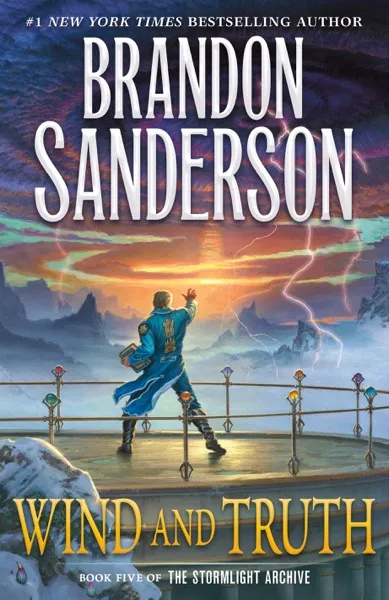
Wind and Truth Author: Brandon SandersonPage Count: UnknownPublication Year: 2024-GB Wind and Truth: Brandon Sanderson’s Masterclass in Epic Fantasy Few authors command the vast, intricate worlds of fantasy like Brandon Sanderson does, and with Wind and Truth, the fourth installment in his sprawling Stormlight Archive series, he once again proves why he’s a titan of modern epic fantasy. Set against the backdrop of a world ravaged by supernatural storms and ancient conflicts, this novel weaves together destiny, betrayal, and the relentless pursuit of truth—both personal and cosmic. Sanderson’s signature blend of deep lore, intricate magic systems, and emotionally resonant storytelling makes Wind and Truth not just a book to read, but an experience to savor. At its core, Wind and Truth explores the weight of legacy and the burden of expectation. The story follows Kaladin Stormblessed, a man haunted by his past and the ghosts of those he couldn’t save, as he grapples with the responsibilities thrust upon him. Sanderson masterfully delves into themes of duty versus desire, showing how even the strongest individuals can be torn between what they must do and what they long to do. The novel also examines the nature of truth—how it is perceived, distorted, and ultimately revealed—through the eyes of characters like Shallan Davar, whose journey is as much about unraveling mysteries as it is about confronting her own flaws. Sanderson’s cast of characters continues to evolve in ways that feel both surprising and inevitable. Kaladin’s internal struggles are rendered with raw intensity, making his triumphs and failures deeply personal. Meanwhile, Shallan’s narrative arc deepens, revealing layers of complexity that challenge her past decisions and future path. New characters, including those with hidden agendas, add fresh dynamics to the story, ensuring that the world of Roshar remains as unpredictable as it is vast. The author’s ability to balance large-scale conflicts with intimate character moments is a testament to his storytelling prowess. One of Sanderson’s greatest strengths is his worldbuilding, and Wind and Truth is no exception. The planet of Roshar is a character in its own right, with its unique ecosystems, cultures, and the ever-present threat of the Highstorms. The magic system, rooted in the manipulation of wind and storms, is both innovative and deeply integrated into the narrative. Sanderson’s prose is meticulous, yet never overwhelming, allowing readers to immerse themselves fully in this richly detailed universe. His writing style is accessible yet sophisticated, making complex concepts digestible without sacrificing depth. The pacing of Wind and Truth is another standout feature. Sanderson deftly balances action sequences with quieter, introspective moments, ensuring that the story never feels rushed or stagnant. The stakes are constantly raised, keeping readers on the edge of their seats while also giving them moments to breathe and reflect. The novel’s structure, alternating between multiple perspectives, allows for a comprehensive exploration of the world and its conflicts, making the story feel both expansive and deeply personal. For fans of Sanderson’s work, Wind and Truth delivers everything they’ve come to expect—grand battles, intricate magic, and characters who feel like real people with real struggles. For newcomers, it serves as an excellent entry point into the Stormlight Archive, offering a self-contained experience while also setting the stage for future installments. Sanderson’s ability to craft a story that is both intellectually engaging and emotionally compelling is what sets him apart, and Wind and Truth is a shining example of his talent. In a genre often criticized for its lack of originality, Sanderson continues to push boundaries, proving that epic fantasy can be both deeply personal and universally resonant. Wind and Truth is more than just a book; it’s a testament to the power of storytelling and the enduring appeal of fantasy. Whether you’re a longtime fan or a first-time reader, this novel is sure to leave you eagerly awaiting the next chapter in Roshar’s saga. #BrandonSanderson #StormlightArchive #EpicFantasy #WindAndTruth #FantasyBooks
Glances at Germany, Poland, and the Euxine Author: Margaret AtwoodPage Count: UnknownPublication Year: 2019-GB Margaret Atwood’s Glances at Germany, Poland, and the Euxine is a deceptively slender volume that belies its depth—a rare gem where travelogue, history, and personal reflection coalesce into something far more potent than mere observation. Published in 2019, long after the haunting landscapes of The Handmaid’s Tale and The Blind Assassin had cemented her reputation as a literary seer, this book feels less like a travel diary and more like a séance with the ghosts of Europe’s fractured past. Atwood, ever the shrewd architect of dystopian futures, turns her gaze eastward not to prognosticate disaster but to excavate the bones of atrocities and resilience buried beneath the surface of nations. The book’s title alone is a clue to its thematic obsession: the Euxine, the ancient Greek name for the Black Sea, evokes both myth and marginality, a body of water that has long been a crossroads of empires, trade, and sorrow. Here, Atwood is not merely visiting; she is listening. The three nations—Germany, Poland, and the littoral states that border the Euxine—are chosen not for their tourist appeal but for their role as historical pressure points, where the weight of memory presses hardest against the present. This is not a book about postcards or quaint cafés, but about the lingering scars of war, the quiet persistence of language, and the way geography itself can be a kind of prison or a sanctuary. Atwood’s style in Glances is characteristically elliptical yet precise. She avoids the trap of didacticism, instead weaving personal anecdotes with historical fragments so seamlessly that the reader often forgets where fact ends and reflection begins. Her prose is sharp as a scalpel in some passages, lyrical in others, and always freighted with a sense of urgency. She writes of Poland’s "beautiful, broken syntax," a country where language was both weapon and shield during the Nazi occupation, and of Germany’s "architecture of guilt," where memorials to the Holocaust are as much a part of the landscape as the Brandenburg Gate. There is a cold fury in her observations that feels almost surgical in its control—Atwood does not scream; she dissects, and the absence of histrionics makes the horror only more palpable. One of the book’s most striking passages explores the Black Sea’s role as a "dumping ground for empires," from the Ottoman slave trade to Soviet industrial pollution. Atwood’s description of the water as a "silent witness" is chilling in its understatement. She does not need to preach about environmental degradation or historical amnesia; the facts speak for themselves in the cracked concrete of abandoned resorts and the bones of ships that never made it to shore. This is Atwood at her most Atwoodian: the observer who sees the world as a palimpsest, where every layer of history is still legible if you know where to look. What makes Glances so compelling is its refusal to offer easy answers. Atwood does not propose a grand theory of European decline or a path to redemption. Instead, she presents fragments—an old woman in Warsaw knitting sweaters for stray cats, a half-collapsed synagogue in a Romanian village, the eerie symmetry of Auschwitz and Birkenau side by side. These moments are not just descriptive; they are incantatory, as if the land itself is murmuring secrets to those willing to listen. The book feels like a series of dispatches from a world that is simultaneously familiar and alien, where the past is not a distant memory but a living, breathing force. Atwood’s genius lies in her ability to make the personal political without ever losing sight of the human. She recounts her own travels with a mix of self-deprecation and quiet authority, never claiming to be an expert, only a witness. There is a scene where she visits a former Stasi prison in Germany, and the guide’s matter-of-fact recounting of torture techniques leaves her (and the reader) stunned into silence. The power of this moment comes not from Atwood’s reaction but from the realization that such places exist at all—places where systematic cruelty was not an aberration but a policy. The book’s final sections, set along the Black Sea, are perhaps its most haunting. Atwood writes of the "ghost fleet" of ships sunk during wartime, now lying rusting on the seabed, and the way the water has reclaimed what empires tried to erase. There is a sense of cyclical time here, a reminder that no empire lasts forever, but neither does memory—unless it is tended to. This is the book’s quiet thesis: that the work of remembrance is not optional but essential, and that those who ignore history are doomed to repeat its worst mistakes. Glances at Germany, Poland, and the Euxine is not for those seeking escapism or light entertainment. It is a book for the wakeful, the curious, the unafraid to confront the weight of history. Atwood’s genius is in making us care about places we’ve never been and people we’ll never meet, simply by showing us how their stories are our stories. In an era where history is often reduced to soundbites and outrage, this book is a necessary act of defiance—a reminder that the past is not dead, and neither is the duty to remember. #Atwood #TravelLiterature #HistoricalMemory #BlackSea #Poland #Germany Related InsightsMaybe Now Book Review and Summary The Stranger Book Review and Summary Lake of Souls Book Review and Summary{ "@context": "https://schema.org", "@type": "FAQPage", "mainEntity": [ { "@type": "Question", "name": "What is the main focus of Glances at Germany, Poland, and the Euxine Book Review and Summary?", "acceptedAnswer": { "@type": "Answer", "text": "Everything you need to know about Glances at Germany, Poland, and the Euxine with our detailed review." } }, { "@type": "Question", "name": "Who authored the comprehensive guide on Glances at Germany, Poland, and the Euxine Book Review and Summary?", "acceptedAnswer": { "@type": "Answer", "text": "This detailed article and its insights were carefully researched and authored by Marco Conti." } }, { "@type": "Question", "name": "Where can I find more related content about Books?", "acceptedAnswer": { "@type": "Answer", "text": "You can explore more articles, detailed reviews, and similar insights by browsing the Related Insights section at the bottom of this article or visiting our dedicated Books category page." } } ] }

Pack Paula Hawkins Author: Paula HawkinsPage Count: UnknownPublication Year: 2021-GB Paula Hawkins, the masterful weaver of psychological thrillers, has once again delivered a gripping narrative that delves into the darkest recesses of the human psyche. Pack, her latest offering, is a testament to her skill in crafting tales that are both unsettling and mesmerizing. As a global bestseller, this book has already garnered significant attention, and it's easy to see why. From the onset, it's clear that Hawkins is exploring the theme of isolation and the effects it can have on individuals. The story is a slow-burning, atmospheric descent into the world of a character who is struggling to cope with the harsh realities of their life. Hawkins' writing is, as always, evocative and immersive, with a keen sense of pacing that expertly ratchets up the tension. One of the standout features of Hawkins' style is her ability to create complex, multi-dimensional characters. Her protagonists are often flawed and relatable, making it easy for readers to become invested in their journeys. In Pack, this is no exception, as the main character's inner turmoil and conflicts are expertly woven throughout the narrative. Hawkins' prose is also noteworthy for its lyricism and depth. She has a keen eye for detail, and her descriptions of setting and character are always vivid and engaging. The writing is concise and economical, yet still manages to convey a sense of depth and emotion. This is a hallmark of Hawkins' style, and it's something that sets her apart from other writers in the genre. As the story unfolds, Hawkins expertly explores the theme of trauma and its lasting impact on individuals. The narrative is layered and complex, with a series of twists and turns that keep the reader guessing until the very end. It's a testament to Hawkins' skill as a storyteller that she's able to balance multiple plot threads and character arcs with such ease. Throughout the book, Hawkins also touches on the idea of community and the importance of human connection. In a world where people are increasingly isolated, Pack serves as a powerful reminder of the need for empathy and understanding. It's a timely and thought-provoking theme, and one that Hawkins explores with her characteristic nuance and sensitivity. In conclusion, Pack is a gripping and unsettling thriller that showcases Hawkins' mastery of the genre. With its complex characters, atmospheric setting, and thought-provoking themes, this book is sure to appeal to fans of psychological suspense. If you're looking for a narrative that will keep you on the edge of your seat, look no further than Pack. #PsychologicalThriller #PaulaHawkins #BookLovers #ThrillerBooks #MysteryNovels #SuspenseFiction Related InsightsCrooked Kingdom Book Review and Summary By the Light of the Stars Book Review and Summary Anatomía del corazón: Compasión budista para transformar tu vida / A Fearless Heart: How the Courage to Be Compassionate Can Transform Our Lives Book Review and Summary{ "@context": "https://schema.org", "@type": "FAQPage", "mainEntity": [ { "@type": "Question", "name": "What is the main focus of Pack Paula Hawkins Book Review and Summary?", "acceptedAnswer": { "@type": "Answer", "text": "Everything you need to know about Pack Paula Hawkins with our detailed review." } }, { "@type": "Question", "name": "Who authored the comprehensive guide on Pack Paula Hawkins Book Review and Summary?", "acceptedAnswer": { "@type": "Answer", "text": "This detailed article and its insights were carefully researched and authored by Emma Thompson." } }, { "@type": "Question", "name": "Where can I find more related content about Books?", "acceptedAnswer": { "@type": "Answer", "text": "You can explore more articles, detailed reviews, and similar insights by browsing the Related Insights section at the bottom of this article or visiting our dedicated Books category page." } } ] }
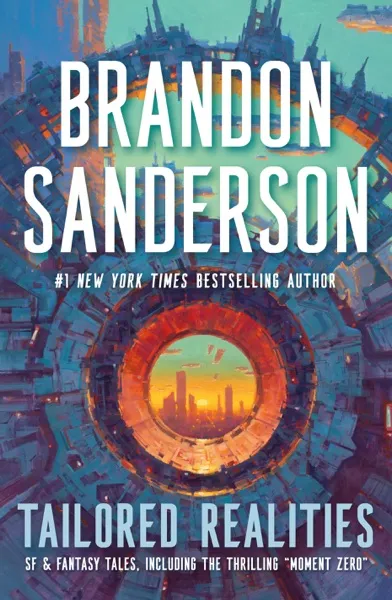
Tailored Realities Author: Brandon SandersonPage Count: UnknownPublication Year: 2025-GB Imagine a world where the fabric of reality is woven with the threads of human perception, and the boundaries between truth and illusion are blurred beyond recognition. Welcome to the mesmerizing realm of Tailored Realities, the latest masterpiece from the visionary author Brandon Sanderson. This global bestseller has taken the literary world by storm, and for good reason – it's a thought-provoking, visually stunning, and deeply unsettling exploration of the human condition. At its core, Tailored Realities is a novel that delves into the complexities of human consciousness and the power of perception in shaping our understanding of the world. Sanderson's masterful storytelling weaves together a rich tapestry of characters, each with their own unique struggles and epiphanies, as they navigate the ever-shifting landscapes of their own realities. The protagonist, a brilliant and enigmatic figure, is on a quest to unravel the mysteries of their own existence, and in doing so, must confront the darkest corners of their own psyche. One of the most striking aspects of Tailored Realities is its thought-provoking exploration of the intersection between technology and human experience. Sanderson's vision of a world where reality is increasingly mediated by artificial intelligence, virtual reality, and other digital technologies is both fascinating and terrifying, raising important questions about the impact of these advancements on our collective future. Through his characters' struggles to distinguish between the real and the simulated, Sanderson sheds light on the profound implications of these technologies on our sense of identity, community, and humanity. Sanderson's writing style is, as always, a hallmark of his genius. His prose is characterized by a unique blend of lyricism, precision, and accessibility, making Tailored Realities an effortless read despite its complex themes and ideas. His world-building is, as expected, meticulous and immersive, transporting readers to a fully realized universe that is both familiar and strange. The pacing is expertly managed, balancing action, introspection, and suspense to create a narrative that is both propulsive and contemplative. The characters in Tailored Realities are multidimensional and relatable, with rich inner lives and motivations that drive the plot forward. Sanderson's characterization is notable for its nuance and depth, eschewing simplistic archetypes in favor of complex, flawed, and ultimately human figures. The supporting cast is equally well-developed, with each character bringing their own distinct perspective and voice to the narrative. Throughout the novel, Sanderson explores a range of themes that are both timely and timeless, including the nature of reality, the impact of technology on society, and the resilience of the human spirit. His exploration of these issues is marked by a characteristic sense of intellectual curiosity and creativity, yielding insights that are both profound and unsettling. Tailored Realities is a novel that will challenge your assumptions, provoke your thoughts, and linger in your mind long after you finish reading it. In short, Tailored Realities is a masterpiece of contemporary science fiction, a novel that showcases Brandon Sanderson's unique vision, intellectual depth, and storytelling prowess. It's a must-read for fans of the genre, and indeed, anyone interested in exploring the complexities of human existence in the 21st century. With its thought-provoking themes, memorable characters, and visionary world-building, Tailored Realities is an unforgettable reading experience that will leave you breathless and eager for more. #BrandonSanderson #TailoredRealities #ScienceFiction #BookReview #Bestseller Related InsightsAs You Wake, Break the Shell Book Review and Summary The Little Prince Book Review and Summary Nebula Awards Showcase 2019 Book Review and Summary{ "@context": "https://schema.org", "@type": "FAQPage", "mainEntity": [ { "@type": "Question", "name": "What is the main focus of **Tailored Realities** Book Review and Summary?", "acceptedAnswer": { "@type": "Answer", "text": "Everything you need to know about **Tailored Realities** with our detailed review." } }, { "@type": "Question", "name": "Who authored the comprehensive guide on **Tailored Realities** Book Review and Summary?", "acceptedAnswer": { "@type": "Answer", "text": "This detailed article and its insights were carefully researched and authored by Emma Thompson." } }, { "@type": "Question", "name": "Where can I find more related content about Books?", "acceptedAnswer": { "@type": "Answer", "text": "You can explore more articles, detailed reviews, and similar insights by browsing the Related Insights section at the bottom of this article or visiting our dedicated Books category page." } } ] }