Showing Posts From
Holes
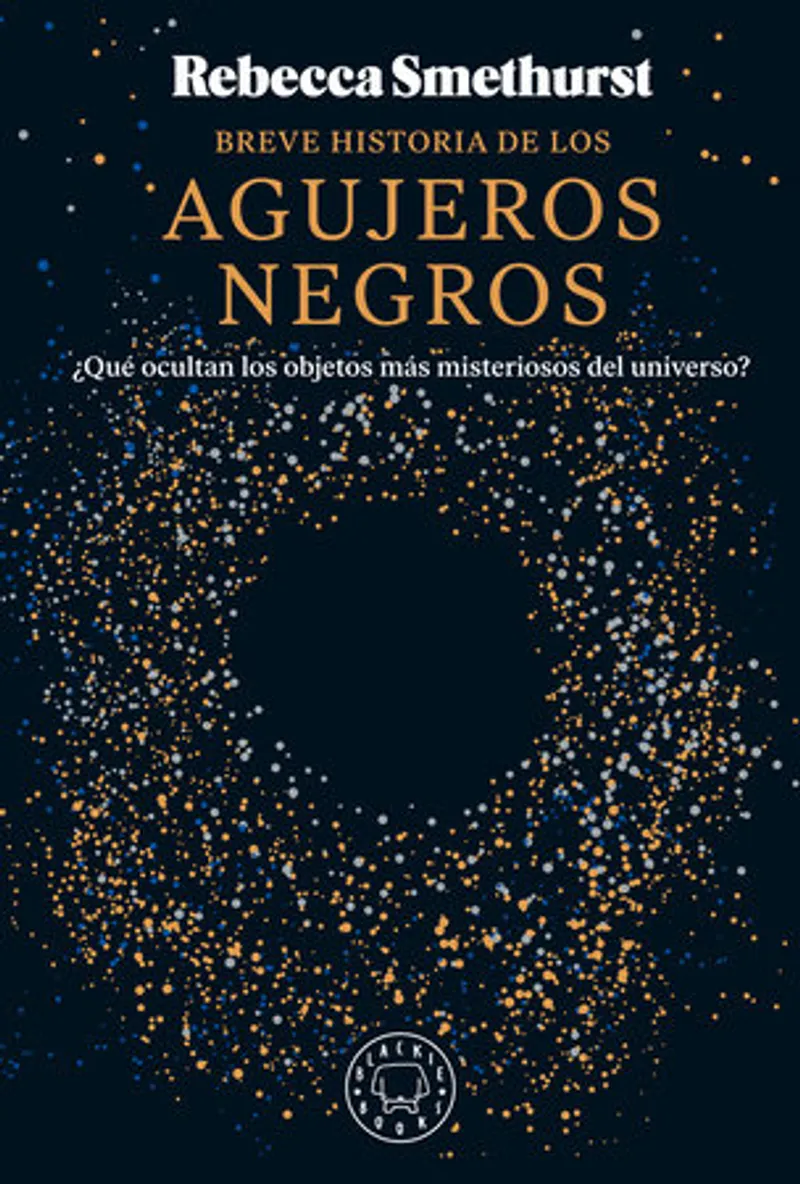
Breve historia de los agujeros negros / A Brief History of Black Holes Author: Rebecca SmethurstPage Count: UnknownPublication Date: 2025-PRH A Cosmic Revelation: A Brief History of Black Holes by Dr. Becky Smethurst Black holes have long been the universe’s most enigmatic celebrities—mysterious, powerful, and shrouded in a cloak of darkness that even light can’t escape. Yet, as Dr. Becky Smethurst, Oxford astrophysicist and one of the UK’s most engaging science communicators, reveals in A Brief History of Black Holes, these cosmic behemoths are far stranger—and far more relatable—than we ever imagined. Smethurst’s book is not just a chronicle of scientific discovery; it’s a love letter to curiosity, a witty dismantling of misconceptions, and a thrilling ride through the history of astronomy. With a voice that’s as sharp as it is playful, she guides readers from the earliest stargazers to the groundbreaking Event Horizon Telescope, all while debunking myths with the ease of a friend explaining a quirky family member. You don’t orbit the Sun—you orbit a black hole. The one at the center of the Milky Way, to be precise. And no, black holes aren’t vacuums; they’re more like “mullida almohada” (fluffy pillows), as she charmingly puts it in the Spanish edition. What makes Smethurst’s approach so refreshing is her ability to blend rigorous science with pop-culture references and self-deprecating humor. She doesn’t just tell you about the spaghettification that awaits the unlucky traveler who ventures too close to a black hole; she makes you feel the absurdity of it. (“You never want to be ‘spaghettified,’” she warns, with the gravity of a parent scolding a child for eating too much candy.) Her analogies are vivid—black holes aren’t cosmic vacuum cleaners but rather “sofa cushions” that warp space-time around them. This isn’t dry astrophysics; it’s a conversation with a brilliant, slightly goofy guide who makes you laugh while expanding your mind. The book’s structure mirrors its subject: dense, yet somehow light. Smethurst traces the evolution of our understanding of black holes—from John Michell’s 18th-century musings about “dark stars” to Einstein’s relativity, from Karl Schwarzschild’s war-time calculations to the first direct image of a black hole in 2019. Along the way, she weaves in her own research, making the narrative feel personal. It’s as if she’s not just recounting history but inviting you into her lab, where the mysteries of the universe unfold in real time. Her tone is disarmingly conversational, as if she’s sitting across from you at a café, gesturing wildly with her coffee cup while explaining event horizons. Yet beneath the humor lies a deep respect for the unknown. Black holes, she reminds us, are not just objects of study but windows into the fundamental laws of physics. They challenge our notions of time, space, and reality itself. And yet, for all their power, they’re governed by simple, elegant rules—once you strip away the jargon. Smethurst’s genius lies in making the incomprehensible feel intimate. She doesn’t just describe the first photograph of a black hole (a blurry orange ring that went viral in 2019); she makes you see the awe of the scientists who captured it. She doesn’t just explain Hawking radiation; she turns it into a cosmic drama where black holes slowly evaporate, like a candle flickering out. And she doesn’t just tell you about the Milky Way’s supermassive black hole, Sagittarius A*; she makes you feel the vertigo of orbiting something so massive that it bends space and time. This is science writing at its best: accessible without being simplistic, profound without being pretentious. Smethurst’s book is a reminder that the universe isn’t just out there—it’s in here, in our questions, our fears, and our capacity to wonder. And if you’re lucky, by the end of her journey, you’ll look up at the night sky and see not just stars, but the invisible giants that anchor our galaxy, pulling us along in a dance as old as time itself. A Brief History of Black Holes is more than a book about black holes. It’s a celebration of human curiosity, a testament to the power of asking “why,” and a guide to finding wonder in the darkest corners of the cosmos. #BlackHoles #Astrophysics #ScienceCommunication #CosmicWonders #DrBecky #SpaceExploration Related InsightsCarved in the Shadows Book Review and Summary Sophie’s World Book Review and Summary Don't Let Him In Book Review and Summary{ "@context": "https://schema.org", "@type": "FAQPage", "mainEntity": [ { "@type": "Question", "name": "What is the main focus of Holes Book Review and Summary?", "acceptedAnswer": { "@type": "Answer", "text": "Everything you need to know about Holes with our detailed review." } }, { "@type": "Question", "name": "Who authored the comprehensive guide on Holes Book Review and Summary?", "acceptedAnswer": { "@type": "Answer", "text": "This detailed article and its insights were carefully researched and authored by Louis Sachar." } }, { "@type": "Question", "name": "Where can I find more related content about Books?", "acceptedAnswer": { "@type": "Answer", "text": "You can explore more articles, detailed reviews, and similar insights by browsing the Related Insights section at the bottom of this article or visiting our dedicated Books category page." } } ] }