Showing Posts From
Homo deus breve hist
-
 Klaus Weber
 - 02 Feb, 2026 23:47
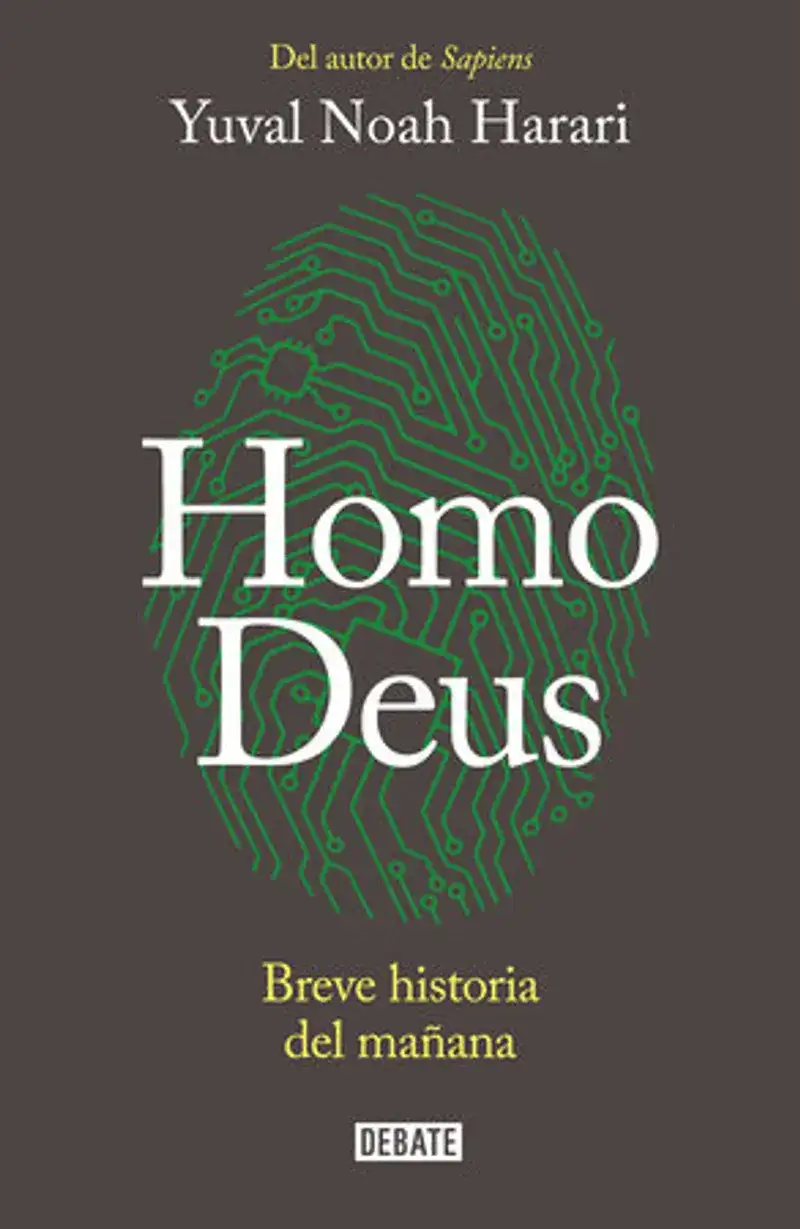
Homo Deus: Breve historia del mañana / Homo deus. A history of tomorrow Book Review and Summary
Homo Deus: Breve historia del mañana / Homo deus. A history of tomorrow Author: Yuval Noah HarariPage Count: UnknownPublication Date: 2018-PRH Yuval Noah Harari’s Homo Deus is a provocative and unsettling sequel to his global phenomenon Sapiens, offering not just a glimpse into the future but a jarring mirror held up to our present. Published in 2016 (originally in Hebrew) and translated widely by 2018, the book dissects humanity’s triumphalist narrative—declaring victory over famine, plague, and war—only to reveal that our new gods (Homo Deus: man the divine) are about to face even more formidable challenges. Harari doesn’t predict the future; he dissects the cultural, technological, and philosophical tectonic shifts already in motion, forcing us to confront what it means to be human when we stand on the brink of engineering our own evolution. The central theme of Homo Deus is deceptively simple: humanity’s next project is to transcend its biological limits and achieve godlike status. Harari argues that once we eliminated the great scourges of mortality—famine, plague, and war—we began to focus on immortality, happiness, and divinity itself. But this pursuit is not a triumphant march forward; it’s a precarious tightrope walk. As Harari writes, “The most important question in 21st-century economics may well be: What will we do with ourselves once we no longer need to worry about famine, plague, and war?” The answer isn’t utopia. It’s a world where data reigns supreme, algorithms know us better than we know ourselves, and inequality becomes a cosmic divide between the upgraded and the obsolete. Harari’s genius lies in his ability to weave grand historical narratives with biting, contemporary satire. He treats no sacred cow with deference—whether it’s the myth of free will, the illusion of human exceptionalism, or the religion of liberal humanism. His prose is both sweeping and razor-sharp, blending the cool detachment of a historian with the moral urgency of a philosopher. He doesn’t just describe trends; he exposes their absurdity and danger. For instance, he points out that today, more people die from eating too much than from famine—a statistic that should make us question the very meaning of progress. One of the book’s most chilling sections explores the rise of artificial intelligence and the potential obsolescence of human labor. Harari posits a future where algorithms make better decisions than humans—about careers, relationships, even governance. “When your smartphone knows you better than you know yourself,” he writes, “will you still trust your own choices?” This isn’t dystopian sci-fi; it’s extrapolation from current trends in big data, surveillance capitalism, and machine learning. Harari doesn’t predict a robot apocalypse, but he warns of a society where meaning is outsourced to algorithms, and human agency becomes a quaint relic. The book also tackles the ultimate taboo: death. Harari frames immortality not as a fantasy but as an engineering project. With advances in biotechnology, cryonics, and consciousness uploading, death may soon be optional. But what happens when only the rich can afford to live forever? Will immortality deepen inequality or redefine it entirely? Harari doesn’t offer answers, but his questions linger like a shadow over Silicon Valley’s quest to “solve death.” Harari’s style is what makes Homo Deus so gripping. He balances erudition with accessibility, quoting everything from ancient religious texts to modern tech manifestos. His arguments are built on a foundation of data, yet he never loses sight of the human story beneath. He critiques liberal humanism not as a villain but as a belief system that may not survive the 21st century—replaced by dataism, a new religion that worships information flow above all else. It’s a radical idea, delivered with such clarity that it feels inevitable. Yet, for all its foresight, Homo Deus is not without flaws. Some critics argue that Harari’s predictions are too deterministic, underestimating humanity’s capacity for resistance and reinvention. Others find his vision of liberal democracy’s decline overly bleak. But these critiques miss the point: Harari isn’t writing a prophecy; he’s writing a warning. He’s not saying the future will be exactly as he describes—he’s saying it could be, if we continue on our current trajectory without questioning where we’re headed. Ultimately, Homo Deus is a book that demands to be argued with, debated, and feared. It’s a challenge to rethink everything—from the nature of consciousness to the purpose of society. Harari doesn’t just ask “What will the future look like?” He asks, “Do we even want to live in a world where the answers to that question are controlled by algorithms and billionaires?” In an era where technology outpaces ethics, where data is the new oil, and where the line between human and machine blurs daily, Homo Deus is less a book about tomorrow and more a mirror reflecting today’s most dangerous illusions—and the uncomfortable truths we’ve yet to confront. #HomoDeus #YuvalNoahHarari #FutureOfHumanity #AIandHumanity #Transhumanism #EthicsInTechnology Related InsightsHouse of Flame and Shadow Book Review and Summary DK Super Readers Level 1 A Day in the Life of a Pilot Book Review and Summary Normal People, the scripts Book Review and Summary{ "@context": "https://schema.org", "@type": "FAQPage", "mainEntity": [ { "@type": "Question", "name": "What is the main focus of Homo Deus: Breve historia del mañana / Homo deus. A history of tomorrow Book Review and Summary?", "acceptedAnswer": { "@type": "Answer", "text": "Everything you need to know about Homo Deus: Breve historia del mañana / Homo deus. A history of tomorrow with our detailed review." } }, { "@type": "Question", "name": "Who authored the comprehensive guide on Homo Deus: Breve historia del mañana / Homo deus. A history of tomorrow Book Review and Summary?", "acceptedAnswer": { "@type": "Answer", "text": "This detailed article and its insights were carefully researched and authored by Klaus Weber." } }, { "@type": "Question", "name": "Where can I find more related content about Books?", "acceptedAnswer": { "@type": "Answer", "text": "You can explore more articles, detailed reviews, and similar insights by browsing the Related Insights section at the bottom of this article or visiting our dedicated Books category page." } } ] }