Showing Posts From
I am legend and othe
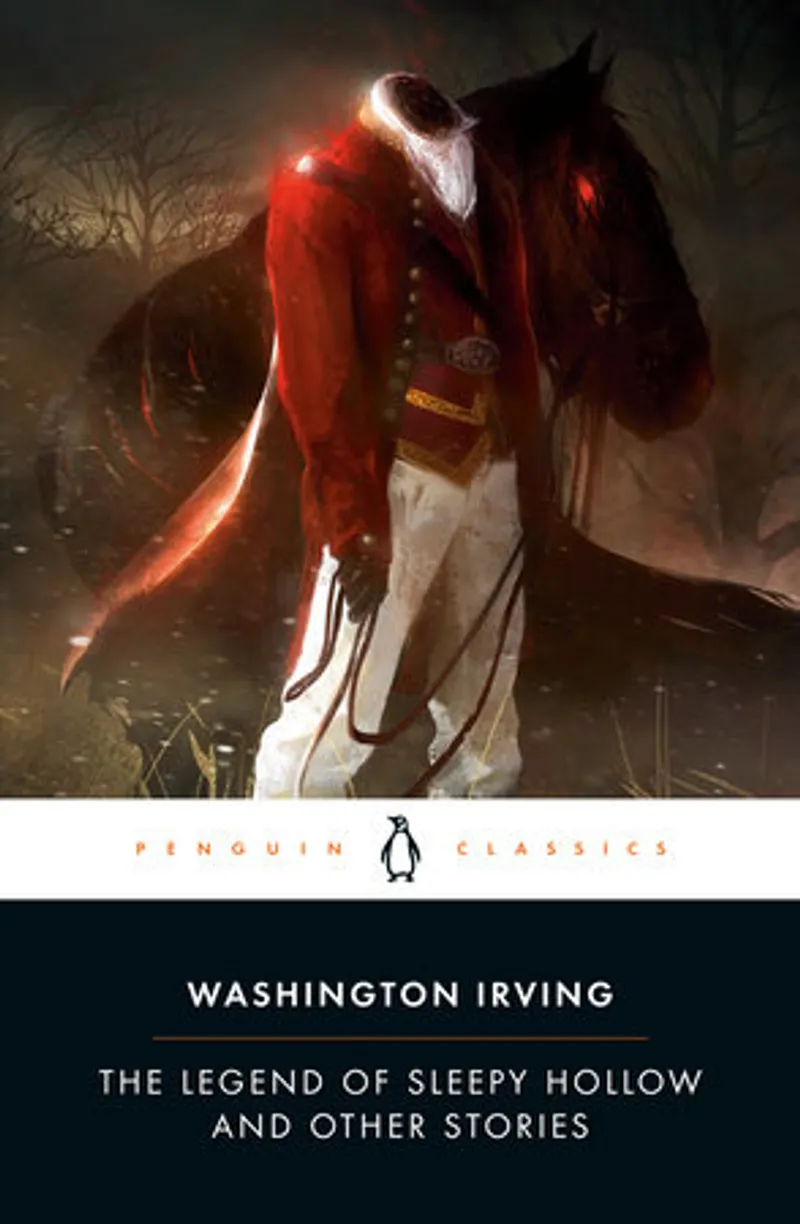
The Legend of Sleepy Hollow and Other Stories Author: Washington IrvingPage Count: UnknownPublication Date: 2014-PRH Washington Irving’s The Legend of Sleepy Hollow and Other Stories is more than a collection of ghostly tales—it is the birth of American folklore itself. Published in 1819 under the pseudonym Geoffrey Crayon, this slender volume did something extraordinary: it gave a young nation its own mythology. Before Irving, America was a land of untamed wilderness and fledgling cities, not of legends. But with the introduction of Ichabod Crane, the Headless Horseman, and Rip Van Winkle, he wove the first threads of a uniquely American tapestry, blending European traditions with the eerie charm of the Hudson Valley. More than two centuries later, these stories still haunt us—not just because of their supernatural thrills, but because they capture something essential about the American spirit: the tension between reason and superstition, progress and nostalgia, the known and the unknown. At the heart of these tales lies a preoccupation with the past and its lingering presence. Irving’s stories are steeped in history, yet they feel timeless. "Rip Van Winkle," the most famous of the lot, is a gentle satire on laziness and marital strife, but it is also a meditation on time itself. Rip sleeps through the American Revolution, waking to find a world transformed—his village modernized, his wife dead, his identity almost erased. The tale is both humorous and melancholic, a reminder that change is inevitable, yet the past is never truly gone. Irving doesn’t just tell us a story; he invites us into a world where the past whispers through the trees, where the Dutch settlers of Sleepy Hollow still linger in the mist, and where the supernatural feels as real as the wind rustling through the Catskills. Irving’s style is deceptively simple, yet masterfully evocative. He writes with a conversational ease, as if Geoffrey Crayon himself is leaning over a tavern table, spinning yarns by firelight. His prose is rich with detail but never overwrought, painting vivid scenes with a few well-chosen words. Consider the opening of "The Legend of Sleepy Hollow": "In the bosom of one of those spacious coves which indent the eastern shore of the Hudson, at that broad expansion of the river denominated by the ancient Dutch navigators the Tappan Zee..." Already, we are transported—not just to a place, but to a time when Dutch settlers named the land, when the river was a highway of commerce and mystery, when the very air hummed with the possibility of ghosts. Yet Irving’s genius lies in his ability to balance the supernatural with the mundane. The Headless Horseman is terrifying, but he is also absurd—a Hessian mercenary’s headless ghost, still clinging to his duties centuries later. Ichabod Crane, with his lanky frame and scholarly airs, is a figure of ridicule, yet his terror of the supernatural feels achingly real. Irving never lets us forget that the scariest monsters are often the ones we create in our own minds. The real horror of Sleepy Hollow isn’t the Horseman; it’s the fear of the unknown, the dread of what lurks in the dark corners of a sleepy village where old wives’ tales hold more weight than reason. What makes these stories endure is not just their spookiness, but their humanity. Irving’s characters are flawed, relatable, and deeply human. Rip Van Winkle is a lovable ne’er-do-well; Ichabod Crane is a vain schoolteacher whose downfall is as much his own doing as the Horseman’s. Even the ghosts feel like extensions of the living, reflections of their fears and desires. In "The Adventure of the German Student," a tale of doomed love set during the French Revolution, Irving explores obsession and madness with a psychological depth that feels almost modern. The line between sanity and superstition blurs, and we are left wondering: was the ghost real, or was it the product of a mind unraveling? Irving’s influence on American literature cannot be overstated. He proved that a young nation could produce its own myths, its own ghosts, its own legends. Before him, American writers often aped European styles; after him, they began to carve out a distinctly American voice. Edgar Allan Poe, Nathaniel Hawthorne, and later Stephen King all owe a debt to Irving’s blend of the gothic and the everyday. Even today, when we speak of the Headless Horseman, we are invoking a figure Irving first conjured from the mist. Reading The Legend of Sleepy Hollow and Other Stories is like stepping into a world where the past is never truly dead. Irving’s stories remind us that folklore is not just about monsters and ghosts—it’s about the stories we tell to make sense of a world that is often confusing, frightening, and beautiful. These tales endure because they tap into something universal: the fear of the unknown, the longing for the past, and the uneasy realization that the line between myth and reality is thinner than we think. Washington Irving didn’t just write ghost stories. He wrote the first draft of America’s haunted imagination. #SleepyHollow #WashingtonIrving #ClassicHorror #AmericanFolklore #GothicTales #RipVanWinkle Related InsightsNebula Awards Showcase 56 Book Review and Summary 'The Portrait That Bore the Weight of a Soul: Why Oscar Wilde’s Dorian Gray Still Haunts Us' Chasing the Devil: The Search for Africa's Fighting Spirit Book Review and Summary{ "@context": "https://schema.org", "@type": "FAQPage", "mainEntity": [ { "@type": "Question", "name": "What is the main focus of I Am Legend and Other Stories Book Review and Summary?", "acceptedAnswer": { "@type": "Answer", "text": "Everything you need to know about I Am Legend and Other Stories with our detailed review." } }, { "@type": "Question", "name": "Who authored the comprehensive guide on I Am Legend and Other Stories Book Review and Summary?", "acceptedAnswer": { "@type": "Answer", "text": "This detailed article and its insights were carefully researched and authored by Richard Matheson." } }, { "@type": "Question", "name": "Where can I find more related content about Books?", "acceptedAnswer": { "@type": "Answer", "text": "You can explore more articles, detailed reviews, and similar insights by browsing the Related Insights section at the bottom of this article or visiting our dedicated Books category page." } } ] }