Showing Posts From
Jane eyre
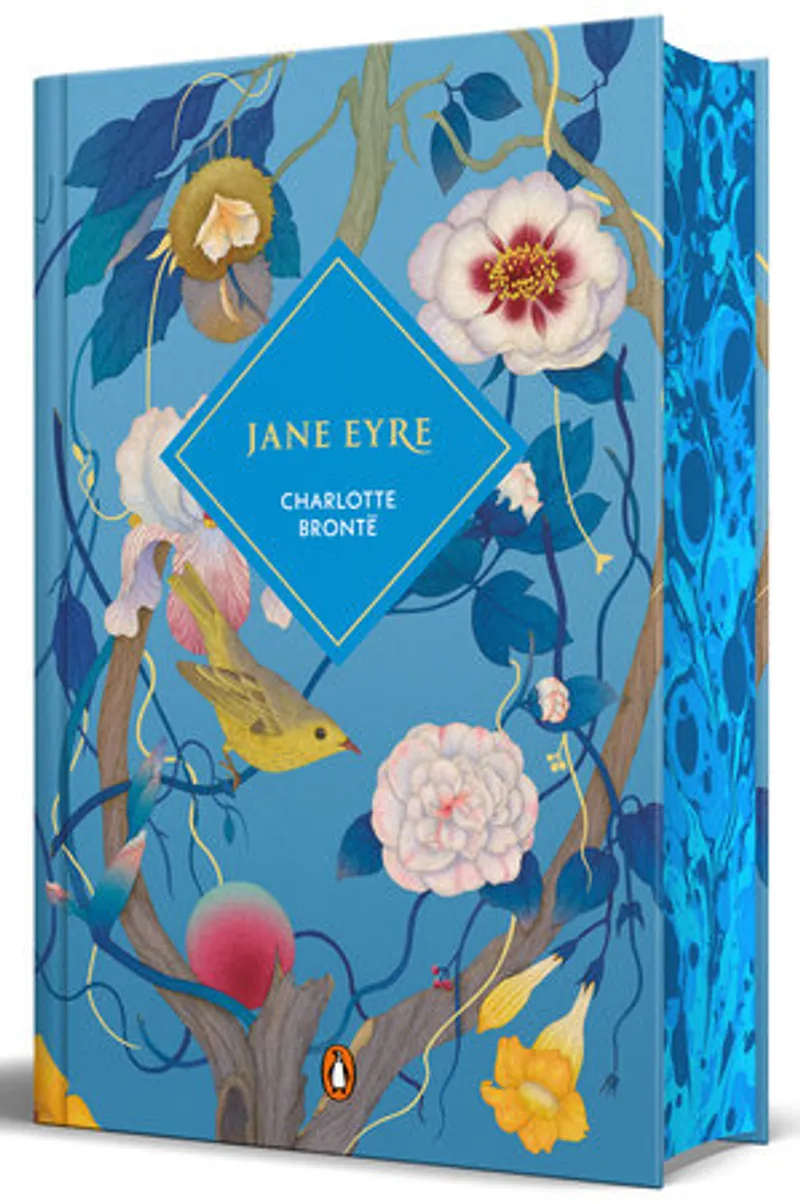
Jane Eyre (edición limitada con cantos pintados) / Jane Eyre (Limited Sprayed Edges Edition) Author: Charlotte BrontëPage Count: UnknownPublication Date: 2026-PRH A Gothic Flame in Gilded Pages: Charlotte Brontë’s Jane Eyre Revisited in Splendor Charlotte Brontë’s Jane Eyre is not merely a novel; it is a tempest in a teacup, a rebellion whispered in corseted prose, a love story that dares to burn before it bends. First published in 1847 under the pseudonym Currer Bell, this tale of an orphaned governess who finds both passion and principle in the brooding halls of Thornfield Hall has endured as a cornerstone of Gothic romance and feminist literature. Now, with the release of the Limited Sprayed Edges Edition—a sumptuous reimagining with painted edges that shimmer like the moors under moonlight—Brontë’s masterpiece is given a visual homage worthy of its emotional intensity. At its core, Jane Eyre is a meditation on autonomy. Jane, the titular heroine, is a woman forged in adversity: neglected by relatives, tormented at Lowood School, and later subjected to the whims of a master who both fascinates and terrifies her. Yet what makes her immortal is not her suffering, but her refusal to be diminished by it. "I am no bird," she declares, "and no net ensnares me." This defiance is the beating heart of the novel, a quiet but unyielding assertion of self-worth in a world that seeks to silence women. Brontë does not write Jane as a victim, but as a survivor who demands dignity, equality, and—crucially—love on her own terms. The novel’s power lies in its duality: it is both a Gothic thriller and a psychological portrait. Thornfield Hall, with its hidden attic, eerie laughter, and the madwoman in the attic (the unforgettable Bertha Mason), is a labyrinth of secrets and suppressed desires. Yet Brontë’s genius is in making the supernatural feel like an extension of the human psyche. The creaking floorboards and flickering candles are not just Gothic tropes; they mirror Jane’s inner turmoil—the fear of losing control, the struggle between duty and desire, the terror of being consumed by passion. When Jane finally confronts Mr. Rochester, her equal in spirit if not in station, their reunion is not just a romantic climax but a triumph of mutual respect. "Reader, I married him," she declares, and in that simple sentence, Brontë dismantles centuries of female subjugation. Brontë’s prose is a study in restraint and rawness. Her sentences are precise, almost austere, yet they crackle with suppressed emotion. There is no melodrama in Jane’s voice, only a steady, unshakable resolve. When she confesses her love for Rochester, it is not with the breathless ardor of a romance novel, but with the quiet certainty of a woman who knows her worth: "I have as much soul as you—and full as much heart!" This economy of language makes the novel’s emotional peaks all the more devastating. Brontë never over-explains; she trusts the reader to feel the weight of Jane’s silences as much as her words. The Limited Sprayed Edges Edition elevates this experience further. The painted edges—deep blues, fiery reds, or muted golds—hint at the novel’s duality: the beauty of Thornfield’s gardens and the darkness of its secrets. Holding the book, one can almost feel the moors’ chill in the fingertips, the weight of Jane’s solitude in the spine’s resistance. It is a tactile reminder that literature is not just read; it is inhabited. Some critics have dismissed Jane Eyre as a product of its time, a Victorian morality tale in Gothic clothing. But Brontë’s subversion is too radical to be contained by era. Jane’s insistence on equality, her rejection of a life of quiet obedience, and her unapologetic sexuality (yes, she admits to loving Rochester before marriage) were radical in 1847—and remain so in many corners of the world today. This is a novel that dares to ask: Can a woman be both passionate and principled? Can she love fiercely without losing herself? The answer, Brontë insists, is yes. In an age where women’s autonomy is still contested, Jane Eyre feels less like a relic and more like a manifesto. The painted edges of this edition are not just decorative; they are a shield, a border between the ordinary and the extraordinary, much like Jane herself. This is a book to be read by candlelight, to be held with reverence, to be quoted in moments of defiance. It is, in every sense, a classic—but not because it is safe. It is a classic because it refuses to be tamed. Charlotte Brontë did not write a love story. She wrote a battle cry. #JaneEyre #GothicRomance #FeministLiterature #ClassicNovel #BrontëSisters #Bookstagram Related InsightsThe Complete Calvin and Hobbes Book Review and Summary The Art of Rivalry Book Review and Summary The City We Became Book Review and Summary{ "@context": "https://schema.org", "@type": "FAQPage", "mainEntity": [ { "@type": "Question", "name": "What is the main focus of Jane Eyre Book Review and Summary?", "acceptedAnswer": { "@type": "Answer", "text": "Everything you need to know about Jane Eyre with our detailed review." } }, { "@type": "Question", "name": "Who authored the comprehensive guide on Jane Eyre Book Review and Summary?", "acceptedAnswer": { "@type": "Answer", "text": "This detailed article and its insights were carefully researched and authored by Charlotte Brontë." } }, { "@type": "Question", "name": "Where can I find more related content about Books?", "acceptedAnswer": { "@type": "Answer", "text": "You can explore more articles, detailed reviews, and similar insights by browsing the Related Insights section at the bottom of this article or visiting our dedicated Books category page." } } ] }