Showing Posts From
John adams
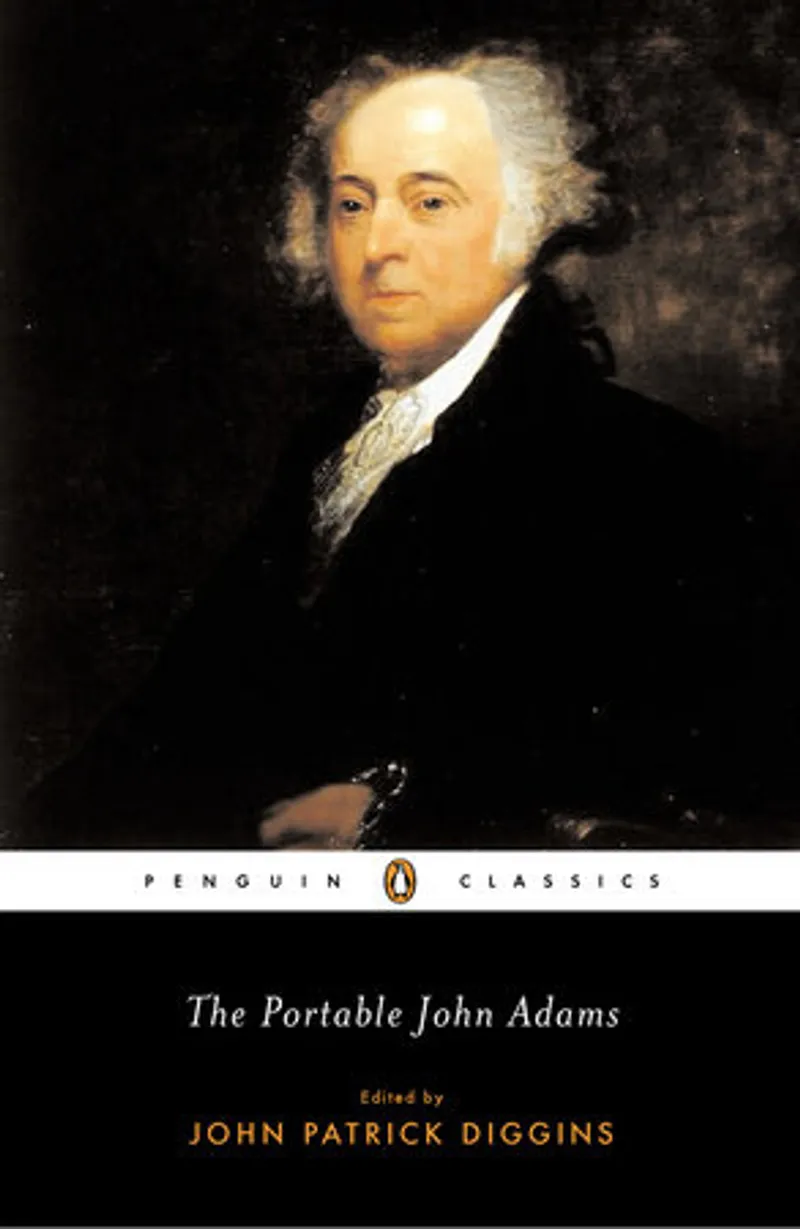
The Portable John Adams Author: John AdamsPage Count: UnknownPublication Date: 2004-PRH John Adams, the second President of the United States, was a man of fiery intellect, unyielding principle, and relentless energy. His mind was a battleground where reason clashed with passion, where the weight of history pressed against the urgency of revolution. The Portable John Adams, edited by John Patrick Diggins, offers a masterful distillation of Adams’ vast and varied writings, presenting a man who was not just a Founding Father but a philosopher of liberty, a critic of power, and a voice of uncompromising integrity. This collection is not merely an anthology; it is a time capsule of revolutionary thought, a testament to the enduring power of Adams’ ideas, and a window into the soul of a man who shaped a nation with his pen as much as with his politics. At the heart of The Portable John Adams lies the theme of liberty—not as an abstract ideal, but as a living, breathing force that Adams fought for with every fiber of his being. His writings are a clarion call against tyranny, whether it be the feudal chains of European monarchy or the creeping authoritarianism of his own time. In "A Dissertation on Canon and Feudal Law," Adams dissects the oppressive structures of medieval Europe, exposing how the alliance of church and state stifled human freedom. His prose is sharp, almost surgical, as he traces the lineage of oppression from the Dark Ages to the colonial era. This is not dry history; it is a manifesto, a warning, and a rallying cry for those who would dare to challenge the status quo. Adams’ style is one of relentless clarity and moral urgency. He writes with the precision of a lawyer and the fervor of a prophet. His sentences are dense with meaning, each word carefully chosen to convey not just information but conviction. When he argues in "Thoughts on Government" that a balanced constitution is the only safeguard against despotism, his words carry the weight of hard-won experience. He had seen the dangers of unchecked power firsthand, both in the colonies and in Europe, and his prose reflects the urgency of a man who knows that ideas have consequences. Yet Adams was not a man of cold abstraction. His correspondence with Abigail Adams is a revelation, offering a glimpse into the man behind the myth. Their letters are a symphony of love, intellect, and mutual respect. Abigail’s sharp wit and political acumen are matched only by John’s own, and their exchanges reveal a partnership that was as much a meeting of minds as it was a marriage. In one letter, Abigail writes, "These are times in which a genius would wish to live. It is not in the still calm of life, or the repose of a pacific station, that great characters are formed." John’s response is equally stirring, a testament to their shared belief in the transformative power of their era. Adams’ political works are equally compelling. In "A Defense of Constitutions," he argues for a system of checks and balances, a radical idea at the time, and one that would become the cornerstone of American governance. His defense of mixed government is not just a theoretical exercise; it is a blueprint for a new kind of society, one where power is diffused and liberty is preserved. His "Novanglus" essays are a masterclass in political persuasion, blending historical analysis with impassioned rhetoric to rally support for the revolutionary cause. Adams was not just a thinker; he was a doer, and his writing reflects that duality. One of the most striking aspects of The Portable John Adams is its unflinching honesty. Adams was not afraid to criticize his allies or to challenge his own beliefs when necessary. His "Discourses in Davila" is a case in point. Written late in his life, it is a meditation on power, ambition, and the fragility of republics. Adams’ tone is somber, almost melancholic, as he reflects on the cycles of history and the dangers of corruption. It is a work that transcends its time, speaking to the perennial challenges of governance and human nature. Diggins’ selection is impeccable, offering a comprehensive overview of Adams’ intellectual journey. From his early legal writings to his later political philosophy, the book traces the evolution of a man who was always thinking, always questioning, always striving for a better world. The inclusion of his personal correspondence adds a human dimension to his public persona, reminding us that behind the statesman was a man of deep feeling and unwavering principle. The Portable John Adams is more than a book; it is an experience. It invites readers to engage with the mind of one of America’s most underappreciated Founding Fathers, to grapple with his ideas, and to feel the weight of his convictions. Adams’ writing is not always easy, but it is always rewarding. He demands our attention, our thought, and our respect. In an era where political discourse is often reduced to soundbites and slogans, Adams’ words are a refreshing reminder of the power of ideas and the importance of intellectual rigor. For anyone interested in the foundations of American democracy, in the mind of a revolutionary thinker, or simply in the art of persuasive writing, The Portable John Adams is an essential read. It is a book that challenges, inspires, and endures. #JohnAdams #FoundingFathers #AmericanRevolution #PoliticalPhilosophy #Liberty #Classics Related InsightsThe Elite Book Review and Summary Hollow Bones Book Review and Summary Bridgerton Boxed Set 5-8 Book Review and Summary{ "@context": "https://schema.org", "@type": "FAQPage", "mainEntity": [ { "@type": "Question", "name": "What is the main focus of John Adams Book Review and Summary?", "acceptedAnswer": { "@type": "Answer", "text": "Everything you need to know about John Adams with our detailed review." } }, { "@type": "Question", "name": "Who authored the comprehensive guide on John Adams Book Review and Summary?", "acceptedAnswer": { "@type": "Answer", "text": "This detailed article and its insights were carefully researched and authored by David McCullough." } }, { "@type": "Question", "name": "Where can I find more related content about Books?", "acceptedAnswer": { "@type": "Answer", "text": "You can explore more articles, detailed reviews, and similar insights by browsing the Related Insights section at the bottom of this article or visiting our dedicated Books category page." } } ] }