Showing Posts From
Katabasis
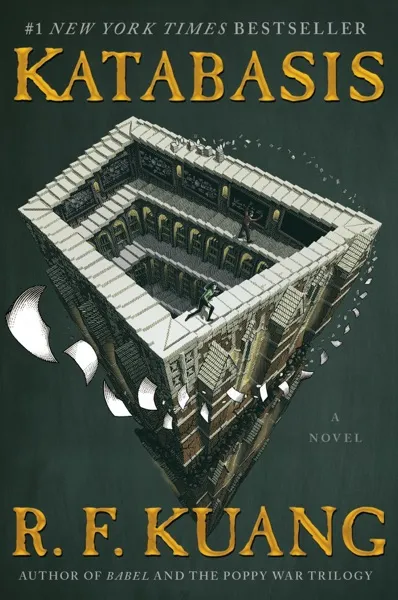

Katabasis Author: R. F. KuangPage Count: UnknownPublication Year: 2025-GB R. F. Kuang’s Katabasis is not just another dark fantasy novel—it is a brutal, luminous descent into myth, power, and the cost of ambition. Set to release in 2025, this highly anticipated work cements Kuang’s reputation as a master of speculative fiction, weaving together the weight of history, the seduction of forbidden knowledge, and the fragility of the human soul. Drawing on Greek mythology, colonial trauma, and psychological horror, Katabasis promises to be a book that lingers long after the final page, both in its grandeur and its scars. At its core, Katabasis explores the ancient concept of the katabasis—a descent, often into the underworld, to retrieve something of value. Kuang reimagines this mythic journey not as a heroic quest but as a personal and cultural reckoning. The protagonist, a scholar from a colonized nation, is drawn into a labyrinth of supernatural forces, academic elitism, and self-destruction as they seek to uncover a lost text said to hold the key to reversing historical oppression. The book interrogates who gets to write history, who controls knowledge, and what it costs to challenge the narratives that have been forced upon the marginalized. Kuang’s prose is a blade—sharp, precise, and unflinching. Her writing in Katabasis is a masterclass in controlled intensity, alternating between clinical detachment and visceral emotional outbursts. The novel’s tone is one of relentless pressure, mirroring the suffocating weight of academic institutions, bureaucratic oppression, and the protagonist’s own unraveling. Kuang doesn’t just describe suffering; she makes the reader feel it, in every bureaucratic delay, every gaslit conversation, every moment of intellectual violation. The world-building is equally impressive. Kuang stitches together real-world historical injustices with speculative elements, creating a setting that feels both eerily familiar and disorientingly alien. The underworld here is not a place of fire and brimstone but a bureaucratic nightmare, a Kafkaesque maze of offices, archives, and unseen forces that dictate who gets to speak and who is silenced. The prose drips with irony—scholars who claim neutrality while propping up systems of oppression, rituals that masquerade as enlightenment but are really tools of control. One of the most striking aspects of Katabasis is its refusal to offer easy redemption. The protagonist’s journey is not about triumph but about endurance. There are no clear victories, only the slow, grinding realization that some battles are fought not to win but to survive. Kuang’s genius lies in her ability to make the reader care deeply about characters who are deeply flawed, whose motives are tangled in ambition, guilt, and the desperate need to be heard. The novel’s structure is deliberately disorienting, much like the katabasis itself. The narrative spirals inward, mimicking the protagonist’s psychological unraveling. Flashbacks, fragmented memories, and unreliable narration pull the reader into the protagonist’s subjective experience, making it impossible to separate fact from delusion. This stylistic choice is not just gimmicky—it’s essential, forcing the reader to confront the same uncertainties and manipulations that the protagonist faces. Katabasis is also a book about language itself—who wields it, who is silenced by it, and what happens when the oppressed weaponize it. The lost text at the heart of the novel is not just a plot device; it’s a metaphor for the stories that have been erased, the voices that have been buried. Kuang’s exploration of linguistic power is particularly resonant in an era where truth itself is a battleground. For all its darkness, Katabasis is not without moments of haunting beauty. There are passages of such lyrical intensity that they feel like incantations, spells cast to ward off oblivion. Kuang’s ability to balance horror with lyricism is rare, and it elevates Katabasis from a mere dark fantasy to something far more profound. In the end, Katabasis is a book that demands to be read slowly, savored, and then re-read. It is a novel that will divide readers—some will find its bleakness exhausting, others will see it as a necessary mirror held up to the world. But one thing is certain: Katabasis will not be forgotten. It is a book that claws at the reader, leaving behind not just memories of its story but the unsettling sense that it has rewritten something inside them. R. F. Kuang has given us a modern myth, one that will stand alongside the greats of speculative fiction. Katabasis is not just a book to read; it is a book to endure. #Katabasis #R.F.Kuang #DarkFantasy #MythicHorror #BookTok #SpeculativeFiction Related InsightsThe Poisonwood Bible Book Review and Summary Spirit Bound Book Review and Summary The House in the Cerulean Sea / Under the Whispering Door / In the Lives of Puppets Book Review and Summary{ "@context": "https://schema.org", "@type": "FAQPage", "mainEntity": [ { "@type": "Question", "name": "What is the main focus of Katabasis Book Review and Summary?", "acceptedAnswer": { "@type": "Answer", "text": "Everything you need to know about Katabasis with our detailed review." } }, { "@type": "Question", "name": "Who authored the comprehensive guide on Katabasis Book Review and Summary?", "acceptedAnswer": { "@type": "Answer", "text": "This detailed article and its insights were carefully researched and authored by William Clark." } }, { "@type": "Question", "name": "Where can I find more related content about Books?", "acceptedAnswer": { "@type": "Answer", "text": "You can explore more articles, detailed reviews, and similar insights by browsing the Related Insights section at the bottom of this article or visiting our dedicated Books category page." } } ] }