Showing Posts From
Khufu
-
 Cemre Seyyah
 - 07 Jul, 2026 17:53
The Immutable Sentinel: Unveiling the Enduring Majesty of Khufu's Great Pyramid
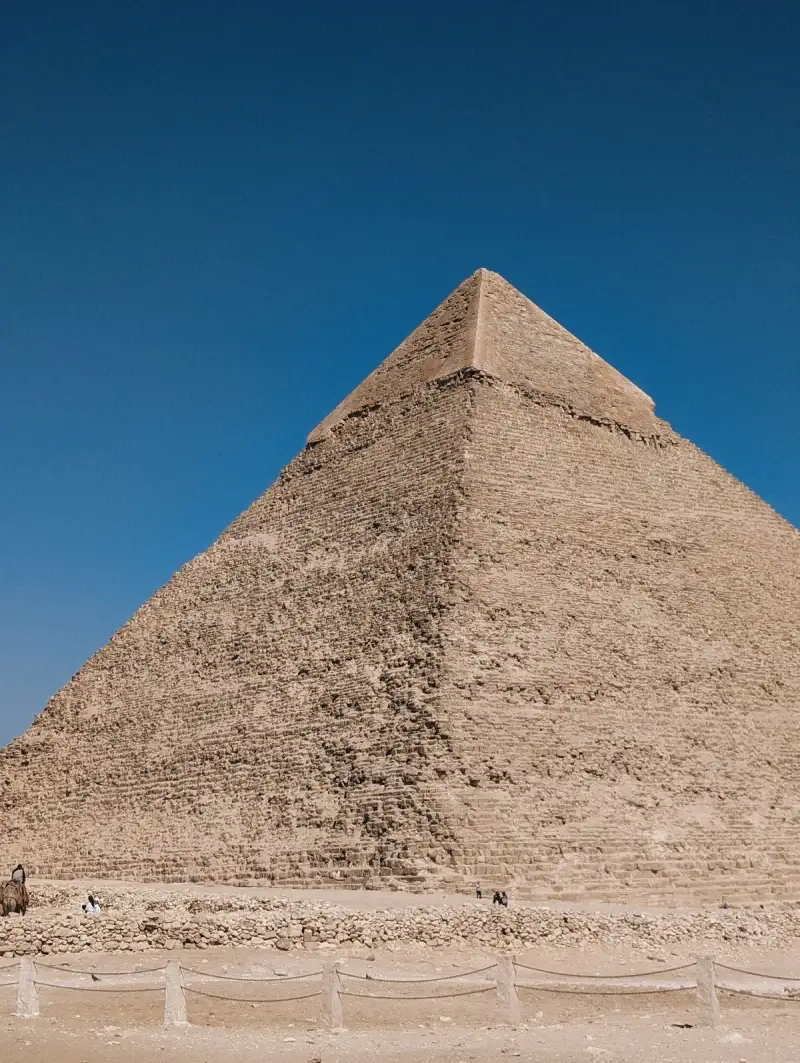
Upon the sun-scorched plains of Giza, where the relentless sands whisper tales of forgotten millennia, stands a monument unlike any other—a stark, immutable sentinel etched against the boundless canvas of the sky. It is a structure born of a will so absolute, an ambition so profound, that it defied the very limits of human endeavor, becoming a beacon of an age shrouded in mystery and unparalleled ingenuity. The Great Pyramid of Giza, a colossal enigma sculpted from the earth itself, does not merely occupy space; it commands time, anchoring our present gaze to the distant horizon of 2600 BC, a silent testament to a civilization that understood eternity not as an abstract concept, but as a tangible architectural imperative. This monolithic edifice, the largest of all Egyptian pyramids and undeniably the most celebrated landmark of the Giza complex, carries the distinction of being the sole survivor among the Seven Wonders of the Ancient World to remain largely intact. It is a singular achievement, a testament to the meticulous planning and unwavering dedication of those who labored under the aegis of Pharaoh Khufu, known to the Greeks as Cheops. For over 3,700 years, this structure held the uncontested title of the world's tallest human-made creation, its apex piercing the heavens as a symbol of divine kingship and an unyielding belief in an afterlife meticulously prepared. Its very existence, a narrative in stone, compels us to ponder the depths of human aspiration and the ephemeral nature of all else. Architectural Grandeur: A Testament in Stone The Great Pyramid, a monumental undertaking spanning approximately 26 years, was constructed around 2600 BC during the Fourth Dynasty of Egypt’s Old Kingdom. Initially, it towered at an astonishing 146.6 meters (481 feet), a height that dwarfed every subsequent human construction for millennia. Today, bereft of its exquisite smooth white limestone casing, which was gradually removed over centuries to be repurposed for other building projects, its height stands at 138.5 meters (454.4 ft). What we behold now is the raw, rugged beauty of its underlying core structure, still capable of instilling awe. The sheer scale of its foundation is equally staggering: each side of its base measures approximately 230.3 meters (755.6 ft) in length. This colossal footprint, combined with its impressive height, yields an estimated volume of roughly 2.6 million cubic meters (92 million cubic feet), a figure that includes a significant internal hillock integrated into its design. The ancient Egyptian architects, working with the royal cubit as their primary unit, crafted a structure with a precise height of 280 royal cubits (146.7 m; 481.4 ft) and a base length of 440 cubits (230.6 m; 756.4 ft). Its slope, a critical element of its iconic silhouette, was meticulously maintained with a seked of 5+1/2 palms, translating to an angle of 51°50'40". Such precision, achieved without the aid of modern surveying tools, speaks volumes about the sophisticated understanding of geometry and engineering possessed by its builders. The construction itself involved the quarrying and placement of an estimated 2.3 million large blocks, collectively weighing an astounding 6 million tonnes. The majority of these stones, primarily local limestone sourced directly from the Giza Plateau, are far from uniform in size or shape, and were only roughly dressed before being set into place. The outer layers, however, were meticulously bound together with a robust mortar, ensuring the stability and longevity of the colossal structure. Beyond the local limestone, specialized materials were imported: shimmering white limestone from the Tura quarries, transported by boat along the Nile, formed the smooth, brilliant casing that once rendered the pyramid a gleaming beacon under the desert sun. For the critical structural elements of the King's Chamber, immense blocks of granite, some weighing up to 80 tonnes, were painstakingly quarried from Aswan, hundreds of kilometers to the south, and floated upstream.While various scientific and alternative hypotheses strive to unravel the exact construction techniques employed—ranging from elaborate ramp systems to internal spiral passages—no definitive consensus has yet been reached. This enduring mystery only deepens the allure of the Great Pyramid, cementing its status as a marvel not just of ancient engineering, but of human problem-solving itself. Khufu's vizier, Hemiunu, is often credited by some scholars as the master architect behind this monumental achievement, a mind capable of orchestrating an endeavor of such unprecedented scale and complexity. A Labyrinth Within: Chambers of the Pharaoh Within the immense stone mass of the Great Pyramid lie three known chambers, each offering a glimpse into the evolving design and profound symbolic significance of the structure. The lowest of these, a chamber cut deep into the bedrock upon which the pyramid was founded, remains unfinished, its rough-hewn surfaces hinting at an altered plan during the construction process. Above ground, nestled within the heart of the pyramid's vast internal structure, are the two principal chambers: the so-called Queen's Chamber and, higher still, the King's Chamber. The King's Chamber, the ultimate destination within this ancient monument, houses a simple yet imposing granite sarcophagus. This austere vessel, carved from the same formidable Aswan granite that characterizes the chamber itself, was designed to contain the earthly remains of Pharaoh Khufu. Intriguingly, unlike the later tombs adorned with elaborate hieroglyphs and vibrant wall paintings, the internal chambers of the Great Pyramid, consistent with the architectural norms for Egyptian tombs of the fourth to late fifth dynasty, are remarkably devoid of inscriptions or decorations. The only exceptions are the occasional work-gang graffiti, simple marks left by the builders, which crucially include the names of Khufu—a silent, yet powerful, attribution. This absence of textual embellishment is particularly notable, given that the pyramid's construction predates the custom of inscribing pyramids with funerary texts by more than two centuries, placing it firmly in an earlier, more reserved artistic and theological tradition. The serene emptiness of these chambers, therefore, is not a sign of incompleteness but rather a reflection of the prevailing mortuary beliefs and artistic conventions of Khufu's time. Beyond the Apex: The Funerary Complex Unveiled The Great Pyramid was never a solitary monument; it was the focal point of an expansive and intricately planned funerary complex, a sacred landscape meticulously designed to serve the pharaoh's journey into the afterlife and sustain his eternal cult. This complex comprised two mortuary temples: one, the pyramid temple, situated immediately adjacent to the eastern face of the pyramid, and another, the valley temple, positioned closer to the life-giving waters of the Nile. These two temples were interconnected by a long, processional causeway, an elevated pathway that likely witnessed countless rituals and ceremonies. Surrounding the central pyramid were smaller, yet significant, structures dedicated to Khufu's immediate family and court. Three smaller pyramids, arrayed to the east of the Great Pyramid, served as the tombs for Khufu's wives, reflecting their elevated status within the royal family. An even smaller "satellite pyramid" was also part of this sacred ensemble, its purpose still pondered by Egyptologists. The landscape was further dotted with extensive cemeteries, containing tombs (mastabas) for the high officials, nobles, and family members who served Khufu during his reign, ensuring their proximity to their divine king in the afterlife. One of the most remarkable discoveries within the complex involves five deeply buried pits, each containing the disassembled components of immense solar barques—ceremonial boats intended to transport the pharaoh's spirit across the heavens with the sun god Ra. These vessels were not merely symbolic; the best-preserved, Khufu's Ship, recovered from its pit, is a masterpiece of ancient shipbuilding, revealing a level of craftsmanship astonishing for its age. This entire sprawling complex, a testament to Khufu's enduring power and the elaborate nature of Old Kingdom funerary beliefs, is a crucial component of the UNESCO World Heritage Site "Memphis and its Necropolis," recognized globally for its outstanding universal value to humanity. The Sacred Purpose: Life Beyond Death The construction of the Great Pyramid, far from being merely an ostentatious display of wealth, was deeply rooted in the core tenets of ancient Egyptian religious belief, serving as the eternal tomb of Pharaoh Khufu. Like other elaborate tombs of the Egyptian elite, it fulfilled four paramount purposes, each intricately linked to the pharaoh's journey into and maintenance of his status in the afterlife. Firstly, it was designed to house the sacred body of the deceased pharaoh and, perhaps more critically, to keep it eternally safe from desecration and the ravages of time. The immense bulk and intricate internal passages were, in essence, an ultimate fortress, safeguarding the vessel through which the pharaoh's ka (life force) and ba (personality) could continue to exist. Secondly, the sheer monumental scale and unparalleled grandeur of the pyramid served as an unequivocal demonstration of the deceased pharaoh's exalted status and that of his royal family. It was an immutable declaration of divine kingship, an architectural assertion of unparalleled power and privilege that resonated across the land. Thirdly, the pyramid ensured the deceased's perpetual place in society, an enduring symbol that reinforced the societal hierarchy even after death. In ancient Egypt, high social status was not merely desirable but was considered an absolutely positive and divinely ordained state. The monumental social inequalities of the era were strikingly symbolized by the gigantic pyramids of kings and queens, towering over the comparatively modest mastaba tombs of officials. Finally, and perhaps most poignantly, the tomb served as a sacred space where offerings could be brought to the deceased, sustaining their spirit in the afterlife. These offerings, ranging from food and drink to precious artifacts, were vital for the pharaoh's continued existence and prosperity in the Field of Reeds. The ancient Egyptian understanding of death was not an end, but a transformation, as eloquently captured in the profound decree: "Make your grave well furnished and prepare thy place in the west. Look, death counts little for us. Look, life is valued highly by us. The house of the dead (the tomb) is for life." This powerful sentiment underscores the pyramid's fundamental role: it was not a monument to death, but a vibrant conduit to eternal life.The precise regulation of funerary architecture, including the allowed dimensions of tombs, was enshrined in royal decrees, reflecting the king's ultimate authority. In the Old Kingdom, the privilege of a pyramid tomb was reserved exclusively for kings and queens, a clear demarcation of their unparalleled divine status. Architectural layout and funeral equipment were also strictly sanctioned and, like access to vital materials and skilled workers, remained entirely at the discretion of the pharaoh, further emphasizing the centralized power structure of the age. Echoes of Khufu: Proving the Builder For centuries, the attribution of the Great Pyramid to Pharaoh Khufu rested largely upon the narratives of classical antiquity's great authors, most notably Herodotus and Diodorus Siculus, whose accounts, though centuries removed from the pyramid's construction, linked the edifice directly to Cheops. However, during the medieval period, as historical memory blurred and new legends arose, other figures were credited with its construction, including biblical characters like Joseph from the Book of Genesis, the mythical king Nimrod, or the legendary Saurid ibn Salhouk, reflecting a fascination with its origins that transcended historical fact. It was not until the intrepid explorations of the 19th century that irrefutable internal evidence began to surface, solidifying the attribution to Khufu. In 1837, the discovery of four previously inaccessible relieving chambers situated above the King's Chamber, accessed through painstaking tunneling, provided a critical breakthrough. The walls of these hidden chambers were adorned with hieroglyphs painted in red ochre—not formal inscriptions, but rather the casual, yet deeply significant, marks left by the work gangs themselves. These "graffiti" included the names of the gangs, often incorporating the pharaoh's name, such as "The gang, The white crown of Khnum-Khufu is powerful." The name of Khufu, spelled out with distinct cartouches, appeared over a dozen times within these chambers, serving as an unambiguous signature of the pyramid's intended owner. Further supporting this, Goyon later discovered similar graffiti on an exterior block from the 4th layer of the pyramid, reinforcing the internal evidence. These inscriptions bear striking resemblance to those found at other sites unequivocally associated with Khufu, such as the alabaster quarry at Hatnub or the harbor at Wadi al-Jarf, and are also present in the pyramids of other pharaohs, establishing a consistent pattern of royal attribution. The twentieth century further cemented Khufu's claim through extensive archaeological excavations of the cemeteries surrounding the pyramid. These burial grounds revealed the tombs of Khufu's closest kin and high-ranking officials, strategically positioned within the complex. The East Field, located south of the causeway, housed members of the immediate family and court, while the West Field contained the tombs of Khufu's wives, children, and grandchildren, as well as significant figures like Hemiunu (the likely architect) and Ankhaf, and even the funerary cache of Hetepheres I, Khufu's revered mother. As the eminent Egyptologist Selim Hassan aptly observed, "From the early dynastic times, it was always the custom for the relatives, friends and courtiers to be buried in the vicinity of the king they had served during life. This was quite in accordance with the Egyptian idea of the Hereafter." The continuous expansion of these cemeteries until the 6th dynasty further underscores the enduring connection between Khufu and his monumental resting place, providing a compelling archaeological argument for his unequivocal ownership. A Cult of Eternity: The Enduring Spirit While the internal chambers of the Great Pyramid remained stark and undecorated, the pyramid complex itself was a vibrant hub of ritual and commemoration. Khufu's two temples, integral to the funerary complex, were lavishly adorned and inscribed, offering a striking contrast to the pyramid's interior. The pyramid temple, situated directly beside the colossal tomb, was specifically dedicated to the Sed festival, an ancient jubilee celebrating a pharaoh's 30th year of rule, intended to rejuvenate his kingship. Surviving scenes within this temple portray Khufu himself, along with officials, priests, and other significant characters, engaged in various vital rituals, reinforcing his divine authority and continuous reign, even in the afterlife. The valley temple, though largely unexcavated to this day, has yielded tantalizing fragments of its original grandeur. Blocks reused by the later pharaoh Amenemhat I depict captivating scenes, including nautical imagery and intriguing personifications of Khufu's royal estates, such as the evocative "Khufu is beautiful." The sustained operation of a dedicated mortuary cult for Khufu, maintained within these very temples for hundreds of years after his passing, serves as powerful historical evidence that he was indeed successfully interred within the Great Pyramid, and that his cult was diligently observed. Further reinforcing this narrative is the presence of the cartouches of Khufu's son and successor, Djedefre, on the blocks that meticulously sealed the boat pits adjacent to the pyramid, indicating his filial responsibility in overseeing his father's funeral rites. Despite these elaborate preparations for eternal peace, the Great Pyramid, like many ancient tombs, was not immune to the passage of time and the covetousness of later generations. It was likely looted as early as the First Intermediate Period, a tumultuous era marked by political instability, and may even have been reused for various purposes thereafter. Arab accounts from the medieval period speak of legendary discoveries within the pyramid, painting vivid pictures of forgotten treasures and ancient mysteries. For instance, the historian Al-Maqrizi (1364–1442) recounts the astounding discovery of three shrouded bodies, a sarcophagus brimming with gold, and even a corpse clad in golden armor, wielding a sword of inestimable value, and bearing a ruby "as large as an egg." While these accounts may be embellished by legend, they underscore the enduring fascination and allure of the Great Pyramid, a structure that has continually sparked the human imagination for millennia. The Great Pyramid of Giza, therefore, is more than just a colossal stone structure. It is a profound architectural statement, an engineering marvel, and a silent narrator of ancient beliefs. It stands as an enduring testament to the human capacity for grand vision and persistent execution, a monument that transcends its original purpose as a tomb to become a symbol of eternity itself. As we gaze upon its weathered form, we are not merely observing an ancient relic, but connecting with a spirit of ambition and faith that shaped one of humanity's most extraordinary achievements, forever binding the sands of Giza to the annals of global wonder.#AncientWonders #EgyptianPyramids #GizaComplex #PharaohKhufu #HistoricalTravel #KhufuPyramid #AncientEgypt #Giza #History #Travel Related Insights'Hallstatt: Where Time Carved Its Name into the Alps and Salt Whispered Eternity' Real Alcázar de Sevilla: Belleza Mudéjar L'Eterna Seduzione della Costa Azzurra: Tra Scogliere di Porfido e Misteri Belle Époque{ "@context": "https://schema.org", "@type": "FAQPage", "mainEntity": [ { "@type": "Question", "name": "What is the main focus of The Immutable Sentinel: Unveiling the Enduring Majesty of Khufu's Great Pyramid?", "acceptedAnswer": { "@type": "Answer", "text": "Journey into the heart of ancient Egypt's most magnificent creation, the Great Pyramid of Giza, a monumental testament to pharaonic power, engineering brilliance, and an enduring mystery that continues to captivate the human spirit." } }, { "@type": "Question", "name": "Who authored the comprehensive guide on The Immutable Sentinel: Unveiling the Enduring Majesty of Khufu's Great Pyramid?", "acceptedAnswer": { "@type": "Answer", "text": "This detailed article and its insights were carefully researched and authored by Cemre Seyyah." } }, { "@type": "Question", "name": "Where can I find more related content about Travel?", "acceptedAnswer": { "@type": "Answer", "text": "You can explore more articles, detailed reviews, and similar insights by browsing the Related Insights section at the bottom of this article or visiting our dedicated Travel category page." } } ] }
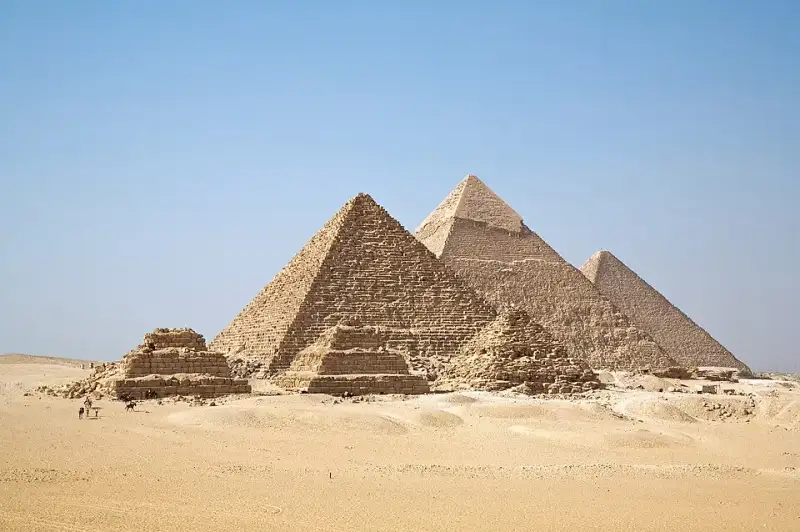

There is a timeless Arab proverb that whispers through the shifting sands of the Sahara: "Man fears Time, yet Time fears the Pyramids." Standing as an eternal sentinel on the rocky Giza plateau, the Great Pyramid of Giza is not merely a structure of stone; it is the ultimate manifestation of human ambition, organization, and spiritual devotion. For over 4,500 years, it has captured the imagination of travelers, conquerors, historians, and scientists alike. As the oldest and only largely intact member of the Seven Wonders of the Ancient World, it continues to surrender its secrets slowly, bridging the seemingly insurmountable gap between the dawn of human civilization and the cutting edge of modern technology. #GreatPyramid #AncientEgypt The Dawn of the Fourth Dynasty: The Vision of Khufu To understand the Great Pyramid, one must first understand the era that birthed it. The Old Kingdom of Egypt, spanning roughly from 2700 to 2200 BC, was a period of unprecedented prosperity, political stability, and centralized administration. At the heart of this golden age was the Fourth Dynasty, a lineage of god-kings who wielded absolute power over the Nile Valley. When Khufu (known to the Greeks as Cheops) ascended the throne around 2589 BC, he inherited a kingdom perfectly poised for monumental undertakings. His father, Sneferu, had already perfected the art of true pyramid building, experimenting with structures like the Bent Pyramid and the Red Pyramid at Dahshur. Khufu, however, envisioned a resting place that would dwarf anything the world had ever seen. To execute this vision, Khufu likely appointed his nephew, the vizier Hemiunu, as the chief architect. Hemiunu was tasked with orchestrating a logistical masterclass, coordinating resources, manpower, and engineering on a scale that defies modern comprehension. The resulting monument would serve not just as a tomb to house the pharaoh's mummified remains, but as a resurrection machine designed to launch Khufu's soul into the heavens to join the imperishable stars. #Khufu #History A Colossus of Stone: Scale, Dimensions, and Materials The sheer scale of the Great Pyramid is staggering. Upon its completion around 2560 BC, the structure reached a breathtaking height of 146.6 meters (481 feet), a record it held for nearly 3,800 years until the completion of the Lincoln Cathedral spire in England in the 14th century. Today, stripped of its protective capstone (pyramidion) and its outer casing, it stands at approximately 138.5 meters (454 feet). The base of the pyramid covers an immense 13 acres, roughly the size of ten American football fields. It is estimated to contain around 2.3 million blocks of stone. The core of the pyramid was constructed using roughly hewn, yellowish limestone quarried directly from the Giza plateau. However, the inner chambers required materials of far greater durability. Massive blocks of pink granite, some weighing up to 80 tons, were meticulously quarried in Aswan and transported nearly 800 kilometers down the Nile River to construct the King's Chamber. Originally, the entire structure was encased in highly polished, blindingly white Tura limestone. These casing blocks were cut with such extreme precision that a knife blade could not be inserted between the joints. When struck by the relentless Egyptian sun, the Great Pyramid would have shone like a brilliant, earthbound star, visible from mountains miles away. #Architecture #WondersOfTheWorld The Master Blueprint: Engineering and Alignment Beyond its sheer mass, the Great Pyramid is a marvel of mathematical precision and astronomical alignment. The structure is aligned almost perfectly to true north, with a margin of error of merely 3/60th of a degree. How ancient Egyptian surveyors achieved such astounding accuracy without the use of a magnetic compass remains a subject of intense debate. Most Egyptologists believe they utilized stellar observations, tracking the circumpolar stars, particularly Thuban, which served as the pole star during that epoch. The leveling of the massive bedrock base is equally miraculous. The maximum deviation from a perfect horizontal plane across the entire 13-acre foundation is a mere 2.1 centimeters (less than an inch). The lengths of the four sides at the base—each stretching over 230 meters—vary by only 58 millimeters. Such incredibly tight tolerances would challenge even modern construction firms equipped with laser levels and GPS technology. The mastery displayed here speaks to a civilization that possessed a profound understanding of geometry, structural engineering, and sheer perseverance. #Giza #Archaeology The Workforce: Dispelling the Myths of Antiquity For centuries, popular culture and the accounts of classical historians like Herodotus propagated the myth that the Great Pyramid was built by the blood, sweat, and tears of millions of brutalized slaves. Modern archaeology has resoundingly dispelled this misconception. The true builders of Khufu’s monument were a highly organized, deeply skilled workforce of Egyptian citizens. Excavations led by prominent Egyptologists such as Mark Lehner and Zahi Hawass have uncovered the remnants of a vast workers' village situated just south of the Giza plateau. This bustling ancient city housed between 20,000 and 30,000 people, including master masons, quarrymen, overseers, bakers, brewers, and physicians. The archaeological record reveals that these workers were well-fed, consuming a high-protein diet of beef, sheep, and copious amounts of bread and beer. Skeletal remains found in the nearby workers' cemetery show healed bone fractures and signs of surgical procedures, indicating that laborers injured on the job received advanced medical care. Working on the pharaoh's pyramid was likely considered a civic duty and an act of religious devotion, a national project that unified a relatively young civilization. #Egyptology #AncientEgypt The Logistics of Immortality: Construction Theories Perhaps the most enduring mystery of the Great Pyramid is the exact method of its construction. How did a Bronze Age society, lacking iron tools, pulleys, or wheels, raise millions of colossal stones hundreds of feet into the air? While countless theories abound, most mainstream archaeologists agree that a system of ramps was utilized. The debate centers on the configuration of these ramps. A straight external ramp extending from the quarry to the top would have eventually needed to be larger than the pyramid itself, making it highly impractical. A zigzagging or spiraling external ramp is more plausible, though it would have obscured the corners of the pyramid, making the precise alignment difficult to maintain. In recent years, the French architect Jean-Pierre Houdin proposed a revolutionary theory: an internal ramp system. Houdin suggests that the lower third of the pyramid was built using a short external ramp, while the remainder was constructed from the inside out via a spiraling, ascending internal tunnel. Evidence from non-invasive microgravimetry surveys has shown low-density anomalies spiraling within the pyramid's core, lending tantalizing credence to Houdin's hypothesis. #Architecture #ScanPyramids Journey into the Underworld: The Internal Layout While most pyramids possess a relatively simple internal structure, the Great Pyramid boasts an incredibly complex network of passages and chambers. The original entrance, located on the northern face about 17 meters above ground level, was perfectly sealed and hidden beneath the casing stones. Today, tourists enter through the "Robber's Tunnel," a jagged passage supposedly carved out by the forces of the Arab Caliph Al-Mamun in the 9th century AD. The original entrance leads to the Descending Passage, a steeply inclined corridor that cuts straight through the masonry and plunges deep into the bedrock beneath the plateau. At the terminus of this passage lies the Subterranean Chamber. Rough, irregular, and distinctly unfinished, the purpose of this chamber is debated. Was it the original intended burial chamber, abandoned due to a change in plans, or a symbolic representation of the underworld? The Ascending Passage and the Queen's Chamber About 28 meters down the Descending Passage, an intersection branches upward. This is the Ascending Passage, originally blocked by massive granite plugs that Al-Mamun's men had to bypass by tunneling through the softer surrounding limestone. Following the Ascending Passage brings one to a level horizontal corridor that leads to the so-called Queen's Chamber. This name is an Arabic misnomer, as Egyptian queens were typically buried in smaller, separate pyramids. The exact function of this chamber, which sits precisely on the east-west axis of the pyramid, remains elusive. It features a distinctive corbelled niche in its eastern wall, which may have once held a ka statue—a spiritual receptacle for the pharaoh's soul. Fascinatingly, the Queen's Chamber contains two narrow "air shafts" in its northern and southern walls. Unlike the shafts in the King's Chamber above, these do not penetrate the exterior of the pyramid. In the 1990s and 2000s, robotic rovers equipped with cameras explored these shafts, discovering mysterious limestone doors adorned with copper pins, hinting at undiscovered spaces lying just beyond. #Archaeology #GreatPyramid The Grand Gallery and the King's Chamber Continuing up the incline from the Ascending Passage, the narrow tunnel suddenly erupts into an architectural masterpiece: the Grand Gallery. Stretching nearly 47 meters long and soaring 8.6 meters high, this towering corridor features a magnificent corbelled vault. Each successive course of stone projects slightly inward, smoothly distributing the crushing weight of the millions of tons of stone pressing down from above. At the top of the Grand Gallery lies a small antechamber, originally equipped with a series of massive granite portcullis slabs intended to seal the tomb forever. Beyond this final defensive mechanism is the ultimate destination: the King's Chamber. Constructed entirely of smooth, unadorned blocks of Aswan granite, the King's Chamber is a room of solemn, stark beauty. Near the western wall sits a large, lidless granite sarcophagus. The sarcophagus is slightly wider than the entrance passage, proving it must have been placed in the chamber during the pyramid's construction, long before the ceiling was completed. When early explorers finally reached this chamber, they found it empty. Whether it was looted in antiquity, or whether Khufu's true body lies elsewhere, remains one of history's great unsolved mysteries. #Pharaohs The Relieving Chambers and the Mark of the King Above the flat granite ceiling of the King's Chamber lies a brilliant feat of engineering designed to protect the room from collapsing under the pyramid's immense weight. There are five low, claustrophobic "relieving chambers," stacked one atop the other, culminating in a peaked, gabled roof of massive limestone blocks. In the 1830s, the British explorer Major-General Richard Howard Vyse blasted his way into these hidden chambers using gunpowder. There, amidst the ancient dust, he discovered something extraordinary: red ochre graffiti left by the original work gangs. The graffiti included names of the crews, such as the "Friends of Khufu Gang." Most importantly, the marks contained the royal cartouche of King Khufu himself. This discovery provided the definitive, undeniable proof linking the Great Pyramid to the second pharaoh of the Fourth Dynasty. The Ship of the Sun: Khufu's Solar Barque The magnificent scale of Khufu's funerary complex was not limited to the pyramid itself. In 1954, archaeologists working at the base of the southern face uncovered a sealed pit carved into the bedrock. Inside, dismantled into exactly 1,224 pieces, lay an astonishingly well-preserved ancient cedar ship. Known as the Khufu solar barque, this 43-meter-long vessel was meticulously reconstructed in a process that took over a decade. It was likely built as a ritual vessel, a magical vehicle designed to carry the resurrected king across the heavens alongside the sun god Ra. It stands as the oldest, largest, and best-preserved vessel from antiquity, showcasing an incredible mastery of ancient shipbuilding. #History The Stripping of the Casing and the Ravages of Time If the Great Pyramid was intended to be eternal, it has certainly suffered the ravages of time and human opportunistic destruction. For millennia, the pyramid retained its smooth, white outer casing. However, in 1303 AD, a massive earthquake centered in Crete violently shook the region, loosening many of the outer Tura limestone blocks. Subsequent rulers, including the Bahri Sultans of Egypt, recognized the pyramid as a convenient, ready-made quarry. The casing stones were systematically stripped away to build the mosques, fortresses, and palaces of a growing Cairo. Today, only a handful of the original casing stones remain in place at the very base, a small glimpse into the breathtaking perfection of the pyramid's original form. The rough, stepped profile we see today is actually the inner structural core of the monument. #Giza Modern Science Meets Ancient Stone: The ScanPyramids Project One might think that after 4,500 years and centuries of intense archaeological scrutiny, the Great Pyramid has yielded all its secrets. Remarkably, this is not the case. In the 21st century, technology has opened an entirely new chapter in Egyptology. In 2015, an international team launched the ScanPyramids project. Bypassing the destructive methods of earlier explorers, the team utilized muon radiography—a technique that measures cosmic particles raining down from space. Since muons pass through empty spaces easier than dense rock, detectors placed inside and around the pyramid can map its internal structure without moving a single stone. The results have been paradigm-shifting. In 2017, the team announced the discovery of the "Big Void," an enormous, previously unknown space located directly above the Grand Gallery. Measuring at least 30 meters in length, its purpose remains a profound mystery. Is it a relieving chamber? A secondary gallery? A hidden storeroom? Furthermore, in 2023, the team confirmed the existence of another hidden space: the North Face Corridor, located just above the original entrance. Endoscopic cameras inserted through tiny joints in the stones revealed an empty corridor with a chevron ceiling, untouched since the day the pyramid was sealed. These breathtaking discoveries remind us that the Great Pyramid is still a living puzzle. #ScanPyramids #Archaeology Conclusion: The Eternal Sentinel The Great Pyramid of Giza is an architectural triumph that transcends the boundaries of its era. It represents a profound convergence of faith, science, administration, and pure human willpower. While Khufu built it to conquer death and secure his place among the stars, he achieved a different kind of immortality. He created a legacy written in millions of tons of stone, a monument that has stood watch over the rise and fall of countless empires. As modern technology allows us to peer deeper into its solid heart, the Great Pyramid continues to challenge our understanding of our ancestors. It demands respect, inspiring awe not just for its monumental size, but for the ingenuity of the minds that conceived it and the hands that built it. As long as humanity continues to gaze upon the Giza plateau, the Great Pyramid will stand as the ultimate testament to what we can achieve when we dare to build for eternity. #GreatPyramid #History #Egyptology #AncientWonders Related InsightsUnraveling the Mysteries of Stonehenge: A Monolithic Marvel of the Ancient World Ghosts of the Tower of London: Betrayal, Blood, and Royal Secrets The Secrets of the Colosseum: Surviving Rome's Bloody Arena{ "@context": "https://schema.org", "@type": "FAQPage", "mainEntity": [ { "@type": "Question", "name": "What is the main focus of The Great Pyramid of Giza: A Timeless Monument to Human Ingenuity?", "acceptedAnswer": { "@type": "Answer", "text": "Explore the fascinating history, architectural brilliance, and modern scientific discoveries surrounding the Great Pyramid of Giza, the last surviving Wonder of the Ancient World." } }, { "@type": "Question", "name": "Who authored the comprehensive guide on The Great Pyramid of Giza: A Timeless Monument to Human Ingenuity?", "acceptedAnswer": { "@type": "Answer", "text": "This detailed article and its insights were carefully researched and authored by Liam Carter." } }, { "@type": "Question", "name": "Where can I find more related content about History?", "acceptedAnswer": { "@type": "Answer", "text": "You can explore more articles, detailed reviews, and similar insights by browsing the Related Insights section at the bottom of this article or visiting our dedicated History category page." } } ] }