Showing Posts From
L a confidential
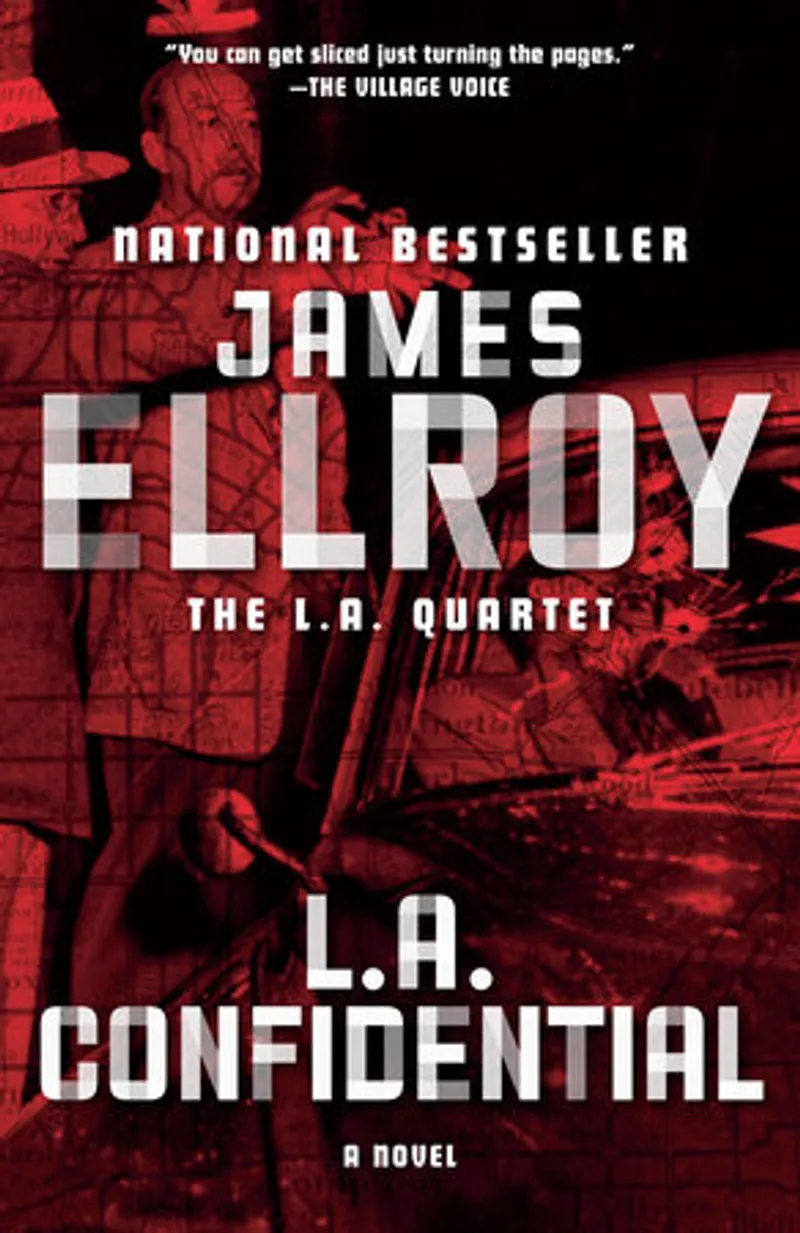
L.A. Confidential Author: James EllroyPage Count: UnknownPublication Date: 2025-PRH James Ellroy’s L.A. Confidential isn’t just a crime novel—it’s a fever dream of corruption, violence, and moral decay, painted in the lurid neon hues of 1950s Los Angeles. Originally published in 1990, this masterpiece of neo-noir fiction has cemented Ellroy’s reputation as the "Demon Dog of American Crime Fiction," a writer who doesn’t just tell stories but dissects the rot beneath the American Dream with a scalpel dipped in blood and bile. If you’re expecting a straightforward whodunit, prepare to be disoriented. Ellroy doesn’t just subvert the genre; he obliterates it, replacing logic with paranoia, heroes with antiheroes, and justice with a grotesque parody of order. At its core, L.A. Confidential is a meditation on the duality of Los Angeles—a city of glittering façades and festering underbellies. The novel unfolds through the perspectives of three deeply flawed LAPD officers, each a prisoner of their own obsessions. There’s Ed Exley, the ambitious, by-the-book detective with a martyr complex; Jack Vincennes, the tabloid-famous narcissist who trades justice for headlines; and Bud White, the brute-force enforcer with a sadistic streak and a twisted sense of loyalty. Together, they become unwitting players in a conspiracy that stretches from Hollywood’s backlots to the city’s most depraved corners, where power, sex, and violence are currency. Ellroy’s genius lies in his ability to weave these disparate narratives into a single, pulsating organism of deceit. His prose is a machine-gun staccato of short, punchy sentences, each one loaded with menace. There’s no room for flowery descriptions here—every word is a bullet, every paragraph a descent into moral squalor. The dialogue crackles with the tension of men who know they’re being watched, manipulated, or hunted. And the violence? It’s not glorified; it’s visceral, ugly, and often sudden, a reminder that in Ellroy’s world, mercy is a myth. The novel’s central theme is the corruption of institutions—police, media, religion—all of which are revealed to be just as rotten as the criminals they’re supposed to oppose. The LAPD, in particular, is a den of hypocrisy, where racism, brutality, and political expediency are the unspoken rules. Exley, the "good cop," is as much a product of this system as Vincennes, the media whore, or White, the thug in a badge. Their quest for truth is less about justice and more about survival, a desperate scramble to outmaneuver forces that are far larger and more sinister than any individual. Ellroy’s Los Angeles is a character in itself—a labyrinth of motels, jazz clubs, and back-alley dealings where the American Dream curdles into nightmare. The city’s obsession with image—its love of glamour, its fear of scandal—is both the setting and the catalyst for the novel’s horrors. The "Nite Owl" massacre, the heart of the plot, is less a crime than a symptom of a society that has traded morality for spectacle. The killers aren’t just murderers; they’re performers, staging their atrocities for an audience that can’t look away. What makes L.A. Confidential endure is its unflinching gaze. Ellroy doesn’t flinch from the ugliness of his characters or the world they inhabit. There’s no redemption arc here, no neat resolution—just the cold, hard truth that power corrupts, and absolute power corrupts absolutely. The novel’s ending is ambiguous, its morality murky, its heroes deeply compromised. But that’s the point. In Ellroy’s Los Angeles, there are no clean hands, only varying degrees of filth. For readers who crave escapism, this book will be a brutal awakening. But for those who appreciate fiction that doesn’t just entertain but unsettles, L.A. Confidential is a masterclass in tension, style, and unrelenting cynicism. It’s a book that lingers like the stench of a crime scene, impossible to forget and impossible to ignore. #LAConfidential #JamesEllroy #NoirFiction #CrimeNovel #DarkCrime #EllroyStyle Related InsightsSweep with Me Book Review and Summary How to Resist Guilt: On What's Holding Women Back Book Review and Summary Harry Potter and the Prisoner of Azkaban Book Review and Summary{ "@context": "https://schema.org", "@type": "FAQPage", "mainEntity": [ { "@type": "Question", "name": "What is the main focus of L.A. Confidential Book Review and Summary?", "acceptedAnswer": { "@type": "Answer", "text": "Everything you need to know about L.A. Confidential with our detailed review." } }, { "@type": "Question", "name": "Who authored the comprehensive guide on L.A. Confidential Book Review and Summary?", "acceptedAnswer": { "@type": "Answer", "text": "This detailed article and its insights were carefully researched and authored by James Ellroy." } }, { "@type": "Question", "name": "Where can I find more related content about Books?", "acceptedAnswer": { "@type": "Answer", "text": "You can explore more articles, detailed reviews, and similar insights by browsing the Related Insights section at the bottom of this article or visiting our dedicated Books category page." } } ] }