Showing Posts From
La llama en la niebl
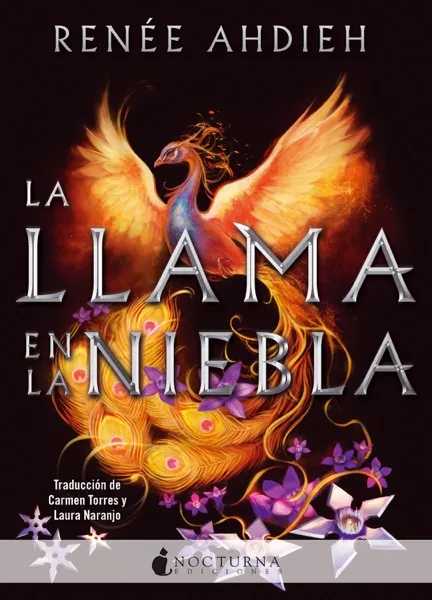

La llama en la niebla Author: Renée AhdiehPage Count: UnknownPublication Year: 2018-GB Renée Ahdieh’s La llama en la niebla (The Flame in the Mist) is a masterful blend of historical intrigue, mythological depth, and lush prose, transporting readers to feudal Japan where loyalty and destiny collide in a world shrouded by mist and deception. Originally published in 2018, this global bestseller cements Ahdieh’s reputation as a storyteller who weaves cultural richness with gripping suspense, crafting a narrative that is as intellectually stimulating as it is emotionally resonant. At its core, La llama en la niebla explores the tension between identity and expectation, set against the backdrop of a society where honor is both a shield and a cage. The protagonist, Mariko, is a young woman of noble birth whose intelligence and ambition defy the rigid gender norms of the Sengoku period. Her journey is not merely one of survival but of self-discovery, as she grapples with the weight of her family’s legacy and the fear of being perceived as an anomaly rather than a visionary. Ahdieh deftly uses Mariko’s internal conflict to interrogate the societal structures that suppress individuality, particularly for women, making the novel a sharp commentary on empowerment within constraint. The title itself—a metaphor for the flickering hope and peril that defines Mariko’s life—encapsitulates the book’s central theme: the struggle to ignite change in a world that prefers the comfort of darkness. The "mist" symbolizes both the uncertainty of fate and the obfuscation of truth, while the "flame" represents the indomitable spirit of those who dare to challenge the status quo. Ahdieh’s allegorical approach elevates the story beyond mere historical fiction, imbuing it with a timeless quality that resonates with modern readers. Stylistically, Ahdieh’s writing is a study in contrasts—lyrical yet precise, opulent yet understated. Her prose is steeped in sensory detail, painting the landscapes of Japan with vivid strokes that make the world feel tangible. The mist is not just a visual metaphor but a tactile presence, clinging to characters’ skin and obscuring their vision, both literally and metaphorically. This attention to detail extends to the dialogue, which is sharp and purposeful, reflecting the characters’ cultural and emotional nuances. Mariko’s internal monologues are particularly compelling, offering glimpses into her sharp wit and vulnerability, while the banter between her and other key characters—such as the enigmatic and morally ambiguous samurai Hiro—adds a layer of wit and tension that keeps the narrative dynamic. Ahdieh’s world-building is another standout feature. The Sengoku period is meticulously researched, with the political intrigues of warring clans, the hierarchical rigidity of the samurai class, and the spiritual beliefs of the time all woven seamlessly into the plot. The inclusion of mythological elements, such as the fox spirits (kitsune) and the lore surrounding the yōkai, adds a layer of mysticism that enhances the story’s atmosphere without overshadowing its historical grounding. This fusion of fact and folklore creates a rich, immersive tapestry that invites readers to lose themselves in the world. One of the novel’s greatest strengths is its ability to balance action with introspection. While La llama en la niebla features sword fights, political maneuvering, and high-stakes confrontations—elements that will appeal to fans of adventure—the heart of the story lies in Mariko’s psychological journey. Ahdieh avoids the pitfall of reducing her protagonist to a mere action hero; instead, Mariko’s strength is rooted in her intellect, her resilience, and her willingness to defy expectations. This makes her not just a compelling heroine but a relatable one, as readers are drawn into her struggles with self-doubt and the fear of failure. The supporting cast is equally well-developed, each character serving as a foil or catalyst for Mariko’s growth. Hiro, with his brooding intensity and hidden compassion, is a standout, embodying the duality of human nature. The antagonist, a complex figure driven by a mix of ambition and trauma, adds depth to the conflict, ensuring that the stakes feel personal rather than purely political. Even minor characters, from Mariko’s protective brother Kenshin to the cunning noblewoman Lady Satomi, are given enough nuance to feel like real people rather than plot devices. Ahdieh’s pacing is another triumph. The novel unfolds with a deliberate rhythm, allowing the tension to build gradually before erupting in moments of high drama. The climax is both satisfying and bittersweet, a testament to Ahdieh’s skill in balancing hope with realism. While the ending sets the stage for sequels—an aspect that may frustrate some readers—it also leaves Mariko’s journey feeling complete in its own right, with enough unresolved threads to ignite curiosity without leaving the story feeling incomplete. In La llama en la niebla, Renée Ahdieh has crafted more than just a historical fantasy; she has created a meditation on the power of defiance, the cost of ambition, and the quiet rebellion of those who refuse to be silenced. It is a novel that lingers in the mind long after the last page, its themes echoing in the reader’s own reflections on identity and agency. For anyone who has ever felt like an outsider in their own story, Mariko’s journey will resonate deeply. #TheFlameInTheMist #HistoricalFantasy #StrongFemaleProtagonist #FeudalJapan #SelfDiscovery #RenéeAhdieh Related InsightsI Know This Much Is True Book Review and Summary Shadows Reel Book Review and Summary The Lion, the Witch and the Wardrobe Book Review and Summary{ "@context": "https://schema.org", "@type": "FAQPage", "mainEntity": [ { "@type": "Question", "name": "What is the main focus of La llama en la niebla Book Review and Summary?", "acceptedAnswer": { "@type": "Answer", "text": "Everything you need to know about La llama en la niebla with our detailed review." } }, { "@type": "Question", "name": "Who authored the comprehensive guide on La llama en la niebla Book Review and Summary?", "acceptedAnswer": { "@type": "Answer", "text": "This detailed article and its insights were carefully researched and authored by Carmen Martinez." } }, { "@type": "Question", "name": "Where can I find more related content about Books?", "acceptedAnswer": { "@type": "Answer", "text": "You can explore more articles, detailed reviews, and similar insights by browsing the Related Insights section at the bottom of this article or visiting our dedicated Books category page." } } ] }