Showing Posts From
Ladies in waiting
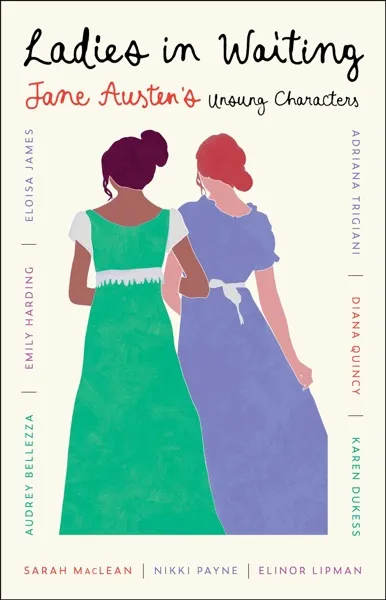

Ladies In Waiting Author: Nikki PaynePage Count: UnknownPublication Year: 2025-GB Nikki Payne’s Ladies in Waiting is a literary masterpiece that redefines contemporary fiction, weaving a tapestry of ambition, resilience, and the quiet power of women who refuse to be defined by the roles they are handed. Published in 2025, this global bestseller has already cemented its place as a modern classic, captivating readers with its razor-sharp prose, emotional depth, and an unflinching exploration of what it means to wait—not in passive expectation, but in fierce preparation for the moment when the world must finally acknowledge you. At its core, Ladies in Waiting is a novel about waiting, but not in the conventional sense. Payne reimagines the term, stripping it of its passive connotations and infusing it with agency. The "ladies" of the title are not mere bystanders in their own lives; they are strategic, patient, and deliberate, playing the long game in a world that has long underestimated them. The story unfolds through the lives of three women—each from different eras but united by the unspoken bond of waiting for their time to shine. There’s Eleanor, a 19th-century noblewoman trapped in a gilded cage of societal expectations; Amara, a 20th-century civil rights activist biding her time for the revolution she knows will come; and Lila, a 21st-century tech entrepreneur who waits in the wings of a male-dominated industry, plotting her ascent. Payne’s genius lies in how she braids their narratives together, revealing the threads of resilience that connect women across time. What makes Ladies in Waiting so compelling is Payne’s ability to balance historical precision with modern sensibilities. Her prose is both elegant and urgent, shifting between the measured cadence of a bygone era and the raw, unfiltered voices of today. She doesn’t merely describe the constraints of the past; she makes them visceral, forcing the reader to sit with the suffocating silence of a drawing room where a woman’s every word is policed, or the quiet fury of a Black woman in the 1960s who knows her ideas will be stolen but persists anyway. And yet, for all its historical weight, the novel never feels like a history lesson. Payne’s writing is alive with the electricity of contemporary fiction, her sentences crackling with wit and understated rebellion. One of the most striking aspects of Payne’s style is her use of perspective. She doesn’t just tell the story; she invites the reader into the minds of her protagonists, layering their thoughts with such intimacy that you feel their heartbeat. Eleanor’s internal monologue is a masterclass in restrained fury, her polite refusals masking a seething determination. Amara’s waiting is laced with the fire of a woman who knows the cost of patience but refuses to pay it indefinitely. And Lila? Her waiting is a strategic game, a chess match where every move is calculated, every risk measured. Payne’s ability to inhabit these voices—so distinct yet thematically linked—is nothing short of virtuoso. The novel’s title, Ladies in Waiting, takes on new meaning as the story progresses. These are not women waiting for rescue or permission; they are women who have redefined waiting as a form of power. They wait not because they have no choice, but because they are preparing for the moment when the world will have no choice but to listen. Payne’s exploration of this theme is both a critique and a celebration. She doesn’t shy away from the loneliness of waiting, the sacrifices it demands, or the moments of doubt that creep in when the world seems determined to keep you in the shadows. And yet, there is triumph here, too—a quiet, insistent kind that doesn’t announce itself with fanfare but with the slow, inevitable rise of the tide. What elevates Ladies in Waiting beyond mere storytelling is Payne’s unapologetic feminist lens. She doesn’t just write about women who wait; she writes about women who refuse to be erased by time. There’s a political edge to her prose, a refusal to let the reader forget the systemic forces that have kept women waiting for centuries. And yet, for all its seriousness, the novel is not without humor. Payne’s wit is dry, her irony sharp, and she wields it like a scalpel, slicing through pretension and hypocrisy with surgical precision. If Ladies in Waiting has a flaw, it is only in its ambition—because Payne sets out to do so much that at times, the novel’s scope feels almost overwhelming. The leap between eras is bold, and while it largely works, there are moments where the historical transitions feel abrupt, as if the reader is being yanked from one world to another. But this is a minor quibble in a novel that otherwise demands to be read in a single, breathless sitting. Payne’s world-building is immersive, her characters indelible, and her themes hauntingly relevant. By the final pages, Ladies in Waiting leaves the reader with a sense of awe—not just for the women who have waited, but for the act of waiting itself. Payne transforms a word often associated with passivity into one of quiet defiance. This is a novel for anyone who has ever been told to wait their turn, to be patient, to accept less than they deserve. It is a rallying cry disguised as a story, a reminder that waiting, when done right, is not surrender. It is strategy. Nikki Payne has written more than a bestseller with Ladies in Waiting. She has written a manifesto for the women who have ever felt invisible, a love letter to those who have bided their time with grace and fury alike. This is a book that will linger in the mind long after the last page is turned, its themes echoing in the quiet spaces where doubt once reigned. In a literary landscape crowded with noise, Payne’s voice is a clarion call—clear, compelling, and impossible to ignore. #LadiesInWaiting #NikkiPayne #FeministFiction #HistoricalFiction #WomenWhoWait #LiteraryMasterpiece Related InsightsThe Restaurant at the End of the Universe Book Review and Summary Duke and I and the Viscount Who Loved Me Book Review and Summary Me Before You Book Review and Summary{ "@context": "https://schema.org", "@type": "FAQPage", "mainEntity": [ { "@type": "Question", "name": "What is the main focus of Ladies In Waiting Book Review and Summary?", "acceptedAnswer": { "@type": "Answer", "text": "Everything you need to know about Ladies In Waiting with our detailed review." } }, { "@type": "Question", "name": "Who authored the comprehensive guide on Ladies In Waiting Book Review and Summary?", "acceptedAnswer": { "@type": "Answer", "text": "This detailed article and its insights were carefully researched and authored by Olivia Harris." } }, { "@type": "Question", "name": "Where can I find more related content about Books?", "acceptedAnswer": { "@type": "Answer", "text": "You can explore more articles, detailed reviews, and similar insights by browsing the Related Insights section at the bottom of this article or visiting our dedicated Books category page." } } ] }