Showing Posts From
Lake of souls
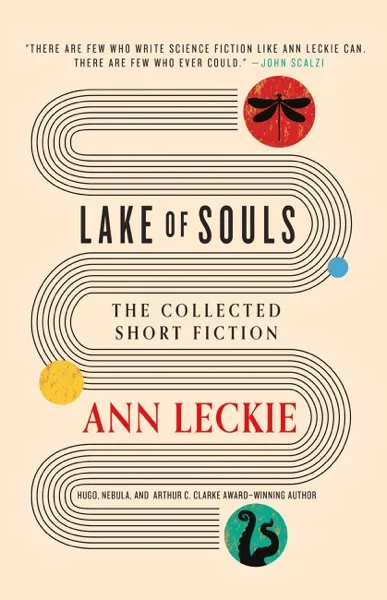

Lake of Souls Author: Ann LeckiePage Count: UnknownPublication Year: 2024-GB Ann Leckie’s Lake of Souls (2024) is a mesmerizing dive into the abyss of identity, memory, and the fragile boundaries between life and death. As a follow-up to her acclaimed Ancillary Justice and the Imperial Radch trilogy, Leckie once again proves herself a master of speculative fiction, weaving a narrative that is as intellectually rigorous as it is emotionally resonant. This novel stands apart, however, with its haunting exploration of the "soul" in a universe where technology, biology, and the very nature of self are constantly reconfigured. At its core, Lake of Souls grapples with a fundamental question: What does it mean to be a person when your memories, experiences, and even your physical form can be altered, copied, or erased? Leckie’s universe is one where consciousness is fluid, where individuals can be "uploaded" into new bodies, where entire civilizations rise and fall based on the whims of gods or machines. The title itself is a clue—a "lake of souls" suggests a vast, dark repository where identities pool and sometimes dissolve, where the past is not a fixed record but a malleable thing, subject to interpretation and revision. The protagonist, a figure known only as "the Speaker," is a fascinating vessel for these themes. Unlike the grand, imperial narratives of Ancillary Justice, Lake of Souls is intimate, almost claustrophobic in its focus. The Speaker is a being (or beings) caught in a cycle of recurrence, reliving the same events, the same traumas, in an endless loop. Their existence is a puzzle—are they one person, many fragments of a shattered whole, or something entirely new? Leckie’s genius lies in refusing to provide easy answers. Instead, she presents the Speaker’s story as a series of overlapping narratives, each one a different version of the same life, each one a different interpretation of the same events. It’s a literary device that mirrors the novel’s central theme: the instability of truth, the subjectivity of memory, and the way identity is constructed through repetition and revision. Leckie’s prose is deceptively simple, lulling the reader into a false sense of security before delivering blows of philosophical depth and emotional weight. Her writing is precise, unadorned, yet capable of conveying vast, disorienting concepts with clarity. There’s a clinical detachment in her descriptions of technology and society, which only makes the rare moments of raw humanity more piercing. The novel’s pacing is deliberate, almost meditative, as if Leckie is inviting the reader to sit with the Speaker in their existential limbo. Yet this is no dry treatise—there are moments of breathtaking beauty, of quiet terror, and of profound sorrow, all rendered with a quiet intensity that lingers long after the last page. One of the most striking aspects of Lake of Souls is its exploration of power and agency. In a universe where gods and machines dictate the terms of existence, where individuals are often mere pawns in larger schemes, the Speaker’s struggle is one of reclaiming autonomy. But Leckie complicates this narrative—what does it mean to be free when your very self is a construct? The novel challenges the reader to consider whether identity is something to be preserved or something to be transcended. Is the Speaker’s suffering a prison, or is it the only thing that gives their existence meaning? These are the kinds of questions that make Lake of Souls more than just a science fiction novel—it’s a work of philosophical fiction, a meditation on what it means to be human in a universe that may not have a place for humanity as we know it. Leckie’s style is also notable for its inclusivity and subtle critique of imperialism and hierarchy. Even in a universe as vast and alien as the one she creates, her characters are diverse in ways that feel organic and unforced. There’s a quiet resistance to the idea that some lives are more valuable than others, that some stories are more worthy of being told. This thematic thread runs through Lake of Souls, reinforcing its message that identity is not a singular, fixed thing but a mosaic of experiences, memories, and interpretations. Ultimately, Lake of Souls is a book about the stories we tell ourselves to survive. It asks whether we are the authors of our own lives or merely characters in someone else’s narrative, whether memory is a chain or a lifeline. Ann Leckie has crafted a novel that is as thought-provoking as it is haunting, a work that lingers in the mind like a half-remembered dream. It’s a book that will appeal to fans of cerebral science fiction, philosophical inquiry, and literary experimentation alike. For those who have followed Leckie’s career, Lake of Souls is a bold and necessary evolution, a work that deepens her exploration of the themes that have defined her writing. For newcomers, it’s an invitation into a universe that is as disorienting as it is dazzling, a place where the boundaries between self and other, life and death, are beautifully, terrifyingly blurred. #LakeOfSouls #LakeOfSoulsAnnLeckie #ScienceFictionBooks #SpeculativeFiction #AnnsBookClub #PhilosophicalScienceFiction Related InsightsBabel Book Review and Summary Very Large Expanse of Sea Book Review and Summary The Little Shop of Merry and Bright Book Review and Summary{ "@context": "https://schema.org", "@type": "FAQPage", "mainEntity": [ { "@type": "Question", "name": "What is the main focus of Lake of Souls Book Review and Summary?", "acceptedAnswer": { "@type": "Answer", "text": "Everything you need to know about Lake of Souls with our detailed review." } }, { "@type": "Question", "name": "Who authored the comprehensive guide on Lake of Souls Book Review and Summary?", "acceptedAnswer": { "@type": "Answer", "text": "This detailed article and its insights were carefully researched and authored by Giulia Ricci." } }, { "@type": "Question", "name": "Where can I find more related content about Books?", "acceptedAnswer": { "@type": "Answer", "text": "You can explore more articles, detailed reviews, and similar insights by browsing the Related Insights section at the bottom of this article or visiting our dedicated Books category page." } } ] }