Showing Posts From
Leaves of grass
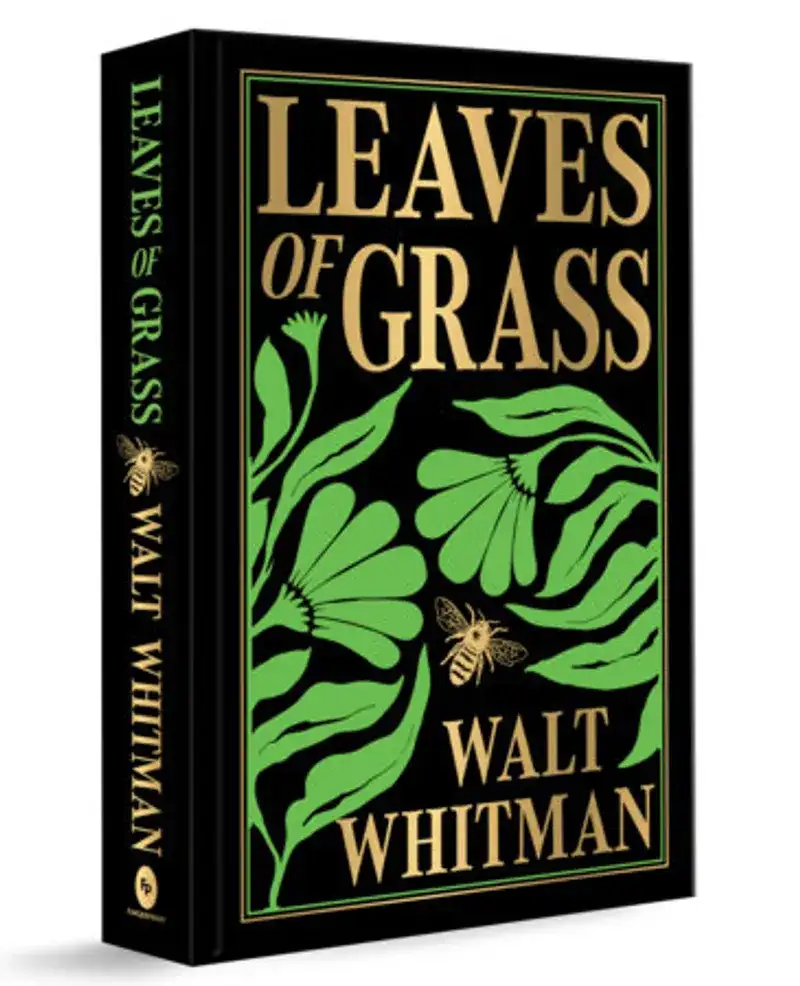

Leaves of Grass Author: Walt WhitmanPage Count: UnknownPublication Date: 2026-PRH Walt Whitman’s Leaves of Grass, published in 2026, is not just a collection of poems—it is a living, breathing manifesto of democracy, sensuality, and the boundless energy of existence. More than a century and a half after its initial appearance, Whitman’s work remains a radical act of defiance against the constraints of traditional poetry, a celebration of the individual within the vast, interconnected web of humanity. This new edition, curated with modern sensibilities yet faithful to the original spirit, reaffirms its place as one of the most transformative works in American literature. At its core, Leaves of Grass is an ode to the self and the collective. Whitman dismantles the barriers between the poet and the world, between the sacred and the profane, between the solitary soul and the teeming multitude. His famous declaration, “I contain multitudes,” is not a boast but a revelation—each person is a universe unto themselves, and poetry is the medium through which these universes communicate. The 2026 edition amplifies this theme with subtle modernizations in language and punctuation, making Whitman’s vision more accessible without diluting its raw power. The poems pulse with an electric vitality, as if written not in ink but in the blood of experience. Whitman’s style is revolutionary in its simplicity and grandeur. He rejects the ornate metaphors and rigid structures of his contemporaries, opting instead for free verse that flows like the Mississippi River—unpredictable, vast, and unstoppable. His lines stretch and contract, mirroring the rhythms of breath, the cadence of speech, the undulating motion of life itself. There is a hypnotic quality to his repetition, a chant-like incantation that draws the reader into a trance of pure sensation. “I celebrate myself, and sing myself,” he begins, and in that declaration, he invites the reader to do the same—not just to read, but to feel, to be. The sensuality of Leaves of Grass is another of its enduring shocks. Whitman writes of the body with a reverence that borders on the sacred. He touches upon flesh not as something to be hidden or ashamed of, but as a source of joy, connection, and divine revelation. “I am large, I contain multitudes,” he writes, and in that line, he embraces every aspect of human experience—pleasure, pain, lust, tenderness—without judgment. This edition’s inclusion of previously suppressed or lesser-known poems further underscores Whitman’s unapologetic eroticism, making the collection even more audacious and relevant in an era where bodily autonomy and self-expression are fiercely contested. Democracy, too, is a central theme. Whitman envisions a nation—and by extension, a world—where every voice is heard, where the laborer and the aristocrat, the slave and the free, the immigrant and the native, all contribute to the grand chorus of humanity. His poems are a call to unity, but not a forced or superficial one. He acknowledges conflict, difference, and even violence, yet insists that these are part of the same tapestry. “Do I contradict myself? / Very well then I contradict myself, / (I am large, I contain multitudes.)” This embrace of contradiction is the essence of democracy—a system that thrives on debate, on the clash of ideas, on the messy, beautiful reality of a people in motion. The 2026 edition’s layout and accompanying essays also deserve praise. The typography breathes, with spaces that invite pauses and line breaks that feel intentional rather than arbitrary. The critical apparatus, while not overwhelming, provides crucial context, tracing Whitman’s influences from Emerson’s transcendentalism to the rough-and-tumble streets of Brooklyn. One particularly striking addition is a series of contemporary responses to Leaves of Grass, written by poets from marginalized communities who grapple with Whitman’s legacy—his blind spots regarding race and gender, his unquestioned whiteness in a time of reckoning. These voices do not diminish Whitman’s genius but place it in a necessary, evolving conversation. If there is a flaw in this edition, it is perhaps in its attempt to modernize Whitman’s language too gently. Some purists may argue that the original’s archaic diction and unorthodox punctuation are part of its charm, and that softening it risks diluting its raw, unfiltered power. Yet the trade-off is worth it—for a new generation of readers, the accessibility of this edition ensures that Whitman’s message does not remain trapped in the past but leaps forward, alive and urgent. Leaves of Grass is more than a book; it is an experience. It is the sound of the ocean in your ears, the thrum of a crowd in a city square, the quiet hum of a solitary walk at dusk. It is a mirror held up to life, unflinching and radiant. Whitman does not offer answers so much as he offers presence—an invitation to be, in all your messy, magnificent complexity. This 2026 edition reminds us why Whitman’s work endures: because it is not just a relic of the 19th century, but a prophecy of what humanity could still become. In a world that often feels fragmented, Leaves of Grass is a balm and a challenge—a reminder that we are all, in the end, leaves of the same grass. #WaltWhitman #LeavesOfGrass #PoetryThatMatters #DemocracyInVerse #SensualityAndSoul #AmericanLiterature Related InsightsUna luna sin miel Book Review and Summary Here One Moment Book Review and Summary Being Ace Book Review and Summary{ "@context": "https://schema.org", "@type": "FAQPage", "mainEntity": [ { "@type": "Question", "name": "What is the main focus of Leaves of Grass Book Review and Summary?", "acceptedAnswer": { "@type": "Answer", "text": "Everything you need to know about Leaves of Grass with our detailed review." } }, { "@type": "Question", "name": "Who authored the comprehensive guide on Leaves of Grass Book Review and Summary?", "acceptedAnswer": { "@type": "Answer", "text": "This detailed article and its insights were carefully researched and authored by Tiago Silva." } }, { "@type": "Question", "name": "Where can I find more related content about Books?", "acceptedAnswer": { "@type": "Answer", "text": "You can explore more articles, detailed reviews, and similar insights by browsing the Related Insights section at the bottom of this article or visiting our dedicated Books category page." } } ] }