Showing Posts From
Loveless
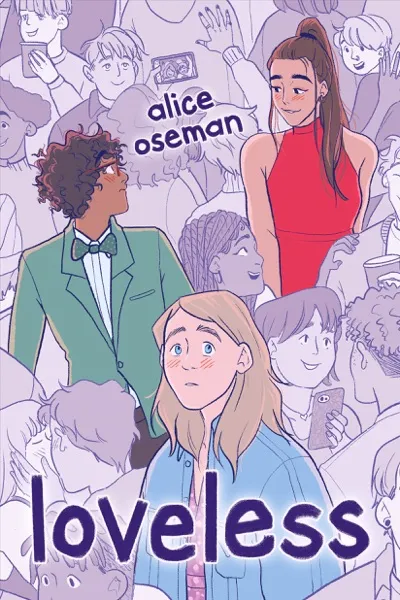

Loveless Author: Alice OsemanPage Count: UnknownPublication Year: 2020-GB Love, Identity, and Belonging: A Powerful Exploration of Asexuality in Loveless Alice Oseman’s Loveless isn’t just a coming-of-age story—it’s a heartfelt, sometimes painful, and ultimately liberating journey through the messy, often confusing landscape of identity, love, and self-acceptance. Published in 2020, this YA novel quickly became a global bestseller, resonating with readers for its raw honesty and unflinching portrayal of asexuality, a topic rarely explored in mainstream literature. At its core, Loveless is about Georgia Warr, a 19-year-old film student who enters her first year at university with two firm convictions: she’s aromantic (feeling no romantic attraction) and asexual (feeling no sexual attraction), and she’s perfectly fine with that. Or so she tells herself. When she arrives at university, however, she finds herself surrounded by the kind of intense romantic and sexual relationships she assumed she’d never crave. Her best friends, Pip and Jason, are in a passionate relationship, and her flatmate, Roo, is navigating a breakup that leaves her questioning her own desires. Georgia, meanwhile, can’t help but feel like an outsider in a world that seems to revolve around love and attraction. Oseman’s genius lies in her ability to weave Georgia’s personal struggles with broader themes of friendship, family, and societal expectations. The novel doesn’t shy away from the awkwardness of Georgia’s journey—her initial denial, her desperate attempts to "fix" herself by dating, and her eventual realization that her asexuality isn’t a problem to be solved but a valid part of her identity. Oseman’s writing is sharp, witty, and deeply empathetic, making Georgia’s frustrations and triumphs feel vividly real. One of the most compelling aspects of Loveless is its exploration of platonic love versus romantic love. Georgia’s relationships with her friends—Pip’s unwavering support, Jason’s quiet understanding, and Roo’s messy, human flaws—highlight how much of our identity is tied to the people we surround ourselves with. Oseman doesn’t romanticize friendship; she portrays it as just as complex, rewarding, and sometimes painful as any other relationship. This nuanced approach makes Loveless more than just a story about asexuality—it’s a story about belonging, about finding your place in a world that often defines you by who you love. Oseman’s prose is both accessible and deeply immersive. Her dialogue crackles with authenticity, and her characters feel like real people, flaws and all. Georgia’s journey isn’t a neat, linear path to self-acceptance; it’s messy, contradictory, and sometimes frustrating, which only makes her eventual breakthrough more satisfying. The novel’s strength lies in its refusal to offer easy answers. Georgia doesn’t magically find "the one" or suddenly discover she’s not asexual. Instead, she learns to embrace the ambiguity of her identity and the people who love her for who she is. What makes Loveless truly special is its ability to educate without feeling like a lecture. Oseman seamlessly integrates discussions about asexuality into the narrative, avoiding didacticism while still providing valuable insights. Georgia’s internal monologue is a masterclass in self-discovery, and her gradual understanding of her own desires—without pressure or judgment—feels both empowering and deeply human. Ultimately, Loveless is a story about learning that love isn’t one-size-fits-all. Whether it’s romantic, platonic, or something in between, love is valid as long as it’s true to who you are. Oseman’s novel is a celebration of identities that don’t fit neatly into boxes, a reminder that being different isn’t a flaw—it’s just part of the beautiful, complicated tapestry of human experience. For anyone who’s ever felt lost in their own skin, Loveless is a beacon of hope. It’s a book that says: You are enough, just as you are. #Loveless #AliceOseman #AsexualRepresentation #YABooks #ComingOfAge #AceRomance Related InsightsCandle and Crow Book Review and Summary The Lightning-Bug and the Lightning: Debunking the Myths of Mark Twain, in His Own Words Book Review and Summary A Madness of Sunshine Book Review and Summary{ "@context": "https://schema.org", "@type": "FAQPage", "mainEntity": [ { "@type": "Question", "name": "What is the main focus of Loveless Book Review and Summary?", "acceptedAnswer": { "@type": "Answer", "text": "Everything you need to know about Loveless with our detailed review." } }, { "@type": "Question", "name": "Who authored the comprehensive guide on Loveless Book Review and Summary?", "acceptedAnswer": { "@type": "Answer", "text": "This detailed article and its insights were carefully researched and authored by Beatriz Costa." } }, { "@type": "Question", "name": "Where can I find more related content about Books?", "acceptedAnswer": { "@type": "Answer", "text": "You can explore more articles, detailed reviews, and similar insights by browsing the Related Insights section at the bottom of this article or visiting our dedicated Books category page." } } ] }