Showing Posts From
Machu picchu
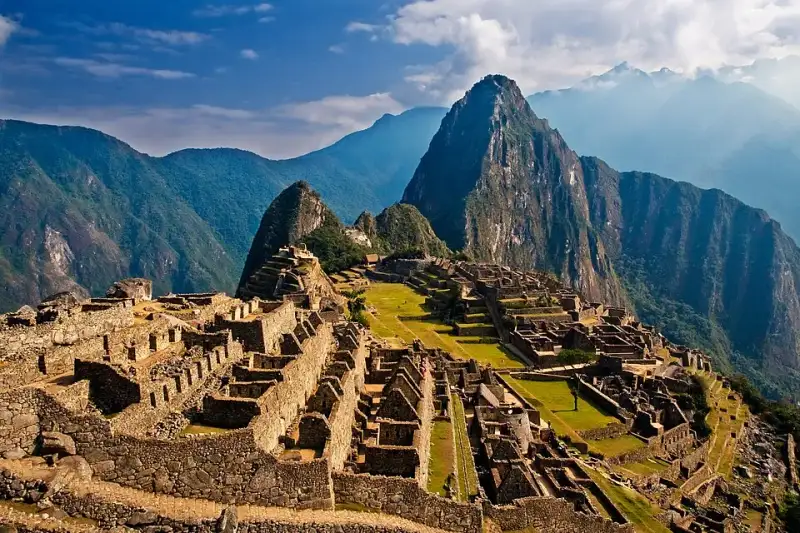

High above the roaring waters of the Urubamba River, enveloped by the perpetual mists of the Peruvian Andes, lies a testament to human ingenuity that has captivated the world’s imagination for over a century. Machu Picchu, often romanticized as the "Lost City of the Incas," is far more than a stunning ruin perched on a dramatic mountain ridge. It is a masterclass in civil engineering, a profound spiritual sanctuary, and a frozen window into the zenith of the Inca Empire—Tawantinsuyu. To stand amidst its perfectly joined stones as the morning fog rolls back is to feel the pulse of a civilization that, despite lacking written language, the wheel, or iron tools, managed to carve out an empire that stretched across the spine of South America. #MachuPicchu #AncientWonders This majestic citadel, nestled at an elevation of 2,430 meters (7,970 feet), has become the ultimate emblem of the Inca civilization. Yet, beneath the postcard-perfect vistas and the countless photographs captured by modern travelers, lies a complex narrative of imperial ambition, staggering labor, astronomical precision, and eventual abandonment. The story of Machu Picchu is not just about the stones themselves, but about the people who quarried them, the ruler who envisioned them, and the mountains that cradle them. #IncaEmpire #TravelPeru The Cradle of the Inca: Geographical Grandeur To understand Machu Picchu, one must first understand its geography. The site is located in the Cusco Region, Urubamba Province, Machupicchu District in Peru. It is situated on a mountain saddle between two prominent peaks: Machu Picchu ("Old Peak" in Quechua) and Huayna Picchu ("New Peak"). This location was no accident; it was chosen with profound geographical and spiritual deliberation. The Inca venerated the landscape, seeing mountains as apus—powerful spirits or deities that governed the natural world. Machu Picchu is surrounded by a pantheon of these sacred peaks, creating a physical and spiritual amphitheater that amplified the site's importance. The environment here is dramatically different from the high-altitude, arid plateau of Cusco, the Inca capital. Machu Picchu sits in a transitional zone where the rugged peaks of the Andes begin to plunge into the lush, verdant Amazon basin. This creates a cloud forest ecosystem—a world of orchids, bromeliads, spectacled bears, and brightly colored tanagers. The constant clash of cold mountain air and warm, moist air rising from the jungle produces the ethereal mists that frequently shroud the citadel. The Urubamba River, known to the Inca as the Vilcanota, tightly coils around the base of the mountain on three sides, creating a natural moat that made the site easily defensible and visually spectacular. #AndesMountains #NatureLovers Pachacuti’s Vision: The Genesis of a Royal Estate Historically, the construction of Machu Picchu is attributed to Pachacuti Inca Yupanqui, the ninth Sapa Inca (emperor), who ruled from 1438 to 1472. Pachacuti was a transformative figure in Inca history, a brilliant military strategist and administrator who expanded a small regional kingdom into a vast empire. Archaeological consensus suggests that Machu Picchu was built as a royal estate for Pachacuti and his lineage. A royal estate in the Inca world served multiple purposes. It was a retreat for the emperor, his family, and his courtiers to escape the bitter cold of the Cusco winter. The warmer climate of the cloud forest allowed for the cultivation of a diverse array of crops, including maize, coca, and various fruits, which could not be grown at higher altitudes. Furthermore, the estate served as an administrative center for the region, asserting imperial control over the newly conquered territories of the Vilcabamba valley. #HistoryBuff #Archaeology The construction of such a monumental site required immense resources, particularly human labor. The Inca utilized a system known as mit'a, a form of compulsory public service exacted from conquered populations. Under the mit'a system, citizens were required to contribute a certain amount of their labor to the state each year. This workforce was responsible for quarrying the massive granite blocks, transporting them up the treacherous mountain slopes, and meticulously carving them into place. It is estimated that thousands of laborers, skilled stonemasons, and engineers were involved in the creation of Machu Picchu, working tirelessly over several decades. Defying Gravity and Earthquakes: Inca Engineering The most visually arresting aspect of Machu Picchu is its architecture. The Inca were master stonemasons, renowned for their use of ashlar—a technique where stones are cut to fit together perfectly without the use of mortar. At Machu Picchu, the finest examples of this masonry can be seen in the most important religious and royal structures. The granite blocks were shaped using harder stones, bronze tools, and sand as an abrasive. The precision is such that even today, a knife blade cannot be slipped between the joints. But this mortarless construction was not merely an aesthetic choice; it was a highly sophisticated engineering solution to the seismic reality of the Andes. Peru is highly prone to earthquakes. When the ground trembles, the mortarless walls of Machu Picchu do not rigidly resist the shockwaves. Instead, the stones are allowed to "dance"—they vibrate and shift slightly, then settle back into their original positions once the tremor has passed. Furthermore, the Inca employed several other anti-seismic features: doors and windows were built with a trapezoidal shape, tilting inward; walls were inclined slightly inward; and L-shaped blocks were used to tie outside corners together. Thanks to these innovations, Machu Picchu has survived centuries of seismic activity while post-conquest colonial buildings in nearby cities have repeatedly collapsed. #EngineeringMarvel #IncaArchitecture The Masterful Hydrology and Agricultural Terracing While the stonework is the most visible marvel, perhaps the true genius of Machu Picchu lies hidden beneath the surface. The mountain receives torrential rainfall during the wet season, and without a sophisticated drainage system, the site would have quickly washed down the steep slopes into the Urubamba River. To prevent this, the Inca engineers expended roughly 60% of their building effort underground. They created a vast, multi-layered drainage system beneath the plazas and buildings, consisting of deep layers of gravel and rock that channeled water safely away. Surrounding the urban sector are hundreds of agricultural terraces, or andenes. These terraces served a dual purpose: they created flat land for farming, and they stabilized the steep mountain slopes, preventing landslides. The terraces were built with stone retaining walls, behind which were layers of large stones, smaller gravel, and finally, nutrient-rich topsoil brought up from the valley floor. Water was brought to the city via an intricately carved stone canal that tapped a natural spring high on the mountain slope. This canal fed a series of sixteen interconnected fountains, providing fresh water to the emperor’s compound first, before flowing down to the rest of the inhabitants. This mastery over water, both in supplying it and draining it away, was absolutely crucial to the survival of the citadel. #SustainableDesign #Agriculture Sacred Stones: The Spiritual Heart of the Citadel Machu Picchu is roughly divided into an agricultural sector and an urban sector, separated by a dry moat and a wall. The urban sector is further divided into a lower, residential area, and an upper, sacred area where the most important temples are located. The Inca religion was deeply tied to astronomy and the observation of the natural world, and the architecture of Machu Picchu reflects this profound spiritual connection. #SpiritualJourney #CulturalHeritage One of the most significant structures is the Temple of the Sun. Built with exquisite, curved masonry, it is situated atop a massive, natural boulder. The temple features a distinctive trapezoidal window that aligns perfectly with the rising sun on the day of the winter solstice. Inside the temple, the natural rock is carved into what is believed to be an altar. Below the temple is a natural cave, finely lined with stonework, which Bingham referred to as the Royal Tomb, though no human remains were ever found there. It is more likely that this space was used for rituals associated with the Earth mother, Pachamama. A short walk from the Temple of the Sun is the Sacred Plaza, home to the Principal Temple and the Temple of the Three Windows. The massive stones used in these structures are among the largest at the site. The three large windows in the latter temple are thought to represent the three realms of the Inca universe: Hanan Pacha (the upper world of the gods), Kay Pacha (the middle world of humans), and Uku Pacha (the underworld of the ancestors). Perhaps the most famous and enigmatic stone at Machu Picchu is the Intihuatana. Often translated as the "Hitching Post of the Sun," this carved granite pillar sits atop a terraced pyramid structure. The Intihuatana served as an astronomical observatory and a calendrical device. By observing the shadows cast by the pillar, the Inca priests could track the solstices and equinoxes, crucial information for timing their agricultural planting and religious festivals. During the winter solstice, the priest would ritually "hitch" the sun to the stone to ensure it would return to warm the earth. #Astronomy #AncientWisdom Another remarkable feature is the Temple of the Condor. Here, the Inca took advantage of a natural rock formation that resembled the outstretched wings of a massive Andean condor. On the ground before the wings, they carved a rock into the shape of the bird's head and neck ruff. The condor was a sacred bird in Inca mythology, representing the upper world, Hanan Pacha. This area was likely used for ceremonies, and the caves behind the "wings" may have been used for ritualistic purposes or even as dungeons, depending on the interpretation. Life in the Clouds: Inhabitants of the Estate Who lived at Machu Picchu? While it was a royal estate, Pachacuti and his royal retinue would have only visited periodically, likely during the warmer months. However, the site was never truly empty. A permanent population was required to maintain the estate, tend the crops, perform religious duties, and guard the site. Estimates suggest that during its peak use, Machu Picchu supported a population of around 500 to 750 people. The majority of these inhabitants were yanaconas, a class of skilled retainers and servants who were dedicated to the service of the emperor and the nobility. These individuals were brought from all over the empire, representing a diverse mix of ethnicities and cultures. Osteological analysis of the skeletal remains found in the burial caves surrounding Machu Picchu confirms this diversity, showing variations in cranial deformation practices and dietary habits that point to origins across Tawantinsuyu. The daily life of these permanent residents was closely tied to the agricultural cycle and the maintenance of the estate. They tended the terraces, cultivating corn, potatoes, and other crops. They maintained the aqueducts, repaired the stonework, and wove textiles. While the royal sections of the city boast the finest ashlar masonry, the residential areas were constructed using a more rustic style known as pirca, where unshaped stones were held together with mud mortar. The roofs of all buildings, royal and residential alike, were originally steeply pitched and covered with thick thatch, giving the city a very different appearance than the bare stone ruins we see today. #Anthropology #AncientLife The Fall of Tawantinsuyu and the Silence of the Citadel Machu Picchu thrived for less than a century. Its active use came to an abrupt end in the 1530s, corresponding with the arrival of the Spanish conquistadors led by Francisco Pizarro. The Spanish invasion unleashed a devastating cascade of events: civil war, the capture and execution of the Sapa Inca Atahualpa, and the collapse of the imperial administration. More devastating than the Spanish swords, however, were the invisible conquerors: European diseases. Smallpox, measles, and influenza swept through the Andes, decimating the indigenous population. It is highly probable that the population of Machu Picchu, or the surrounding valleys that supported it, was severely impacted by these epidemics. As the central authority of Cusco fell, the royal estates lost their purpose and funding. The mit'a labor system broke down, and the supply lines that kept the isolated citadel functioning were severed. The inhabitants of Machu Picchu gradually abandoned the site, returning to their ancestral lands or seeking refuge deeper in the mountains. Remarkably, the Spanish never found Machu Picchu. Unlike many other Inca sites, it was never plundered, its sacred stones were never smashed, and no Catholic church was ever built over its temples. The dense jungle quickly reclaimed the terraces and the buildings, swallowing the city in a cloak of green, hiding it from the outside world for almost four centuries. #LostCity #HistoricalMystery The Myth of the "Lost City" and Hiram Bingham’s Arrival The Western narrative of Machu Picchu often begins in 1911 with the American explorer and Yale historian, Hiram Bingham. Sponsored by Yale University and the National Geographic Society, Bingham was searching for Vilcabamba, the last refuge of the Inca resistance against the Spanish. Guided by a local innkeeper named Melchor Arteaga, Bingham crossed the Urubamba River and climbed the steep, jungle-choked ridge. On July 24, 1911, he was led to the ruins. Bingham was astounded by the sheer scale and quality of the stonework, particularly the Temple of the Sun and the Room of the Three Windows. He believed he had found the legendary "Lost City of the Incas," a moniker that stuck and fueled global fascination, even though later archaeological evidence proved that the true last refuge, Vilcabamba, was located further in the jungle at Espiritu Pampa. #HiramBingham #Exploration However, to say Bingham "discovered" Machu Picchu is to ignore the reality of the local population. The site was never truly lost to the people who lived in the region. When Bingham arrived, he found local Quechua farmers, including the families of Richarte and Alvarez, living amidst the ruins and actively cultivating the ancient Inca terraces. The existence of the ruins was known to local landowners, and a Peruvian explorer named Agustín Lizárraga had even carved his name on the Temple of the Three Windows in 1902, nine years before Bingham’s arrival. Bingham's true achievement was not discovery, but rather scientific documentation and global popularization. Through his writings and the striking photographs published in a dedicated issue of National Geographic magazine in 1913, Bingham brought Machu Picchu to the world's attention. He initiated extensive clearing and excavation, fundamentally changing the site's trajectory from a forgotten ruin to a global icon. #HistoryFacts #NationalGeographic The Artifact Controversy and Repatriation Bingham's expeditions, while scientifically groundbreaking for their time, also sparked a century-long controversy. Between 1912 and 1915, Bingham excavated thousands of artifacts—pottery sherds, skeletal remains, bronze tools, and jewelry—and transported them to Yale University in the United States. He claimed this was done with the permission of the Peruvian government, under a decree that allowed the temporary export of the artifacts for study, with the stipulation that they would eventually be returned. Decades passed, and the artifacts remained at Yale's Peabody Museum. The Peruvian government repeatedly requested their return, leading to a protracted and often bitter legal and diplomatic dispute. Peru argued that the artifacts were an integral part of their national heritage and had been held illegally for nearly a century. Yale argued that they had preserved and studied the artifacts, contributing significantly to global knowledge about the Inca. Finally, in 2010, an agreement was reached. Yale acknowledged Peru's title to the artifacts and agreed to repatriate the entire collection. Between 2011 and 2012, coinciding with the centenary of Bingham's scientific expedition, thousands of pieces were flown back to Peru. Today, they are housed and displayed in the Museo Machu Picchu in the Casa Concha in Cusco, representing a significant victory for cultural heritage repatriation and the right of nations to reclaim their historical treasures. #CulturalHeritage #MuseumStudies Preservation in the Modern Era: Balancing Tourism and Heritage Today, Machu Picchu is one of the most recognized and visited archaeological sites in the world. It was designated a UNESCO World Heritage site in 1983 and was voted one of the New Seven Wonders of the World in 2007. The allure of the citadel draws well over a million visitors annually. However, this immense popularity is a double-edged sword. The relentless foot traffic on the ancient stone paths, the strain on local infrastructure, and the environmental impact on the fragile cloud forest ecosystem pose significant threats to the site's preservation. The very forces that bring people to marvel at Machu Picchu threaten to erode it. #UNESCO #WorldHeritage In recent years, the Peruvian government and international conservation bodies have implemented strict measures to protect the site. Daily visitor numbers are capped, specific circuits have been established to control the flow of foot traffic, and the time visitors can spend in the ruins is limited. There are ongoing efforts to mitigate erosion, stabilize the ancient walls, and monitor the geological fault lines beneath the site. The challenge of managing Machu Picchu is a microcosm of the global struggle in heritage conservation: how to share a profound cultural treasure with the world without destroying it in the process. It requires a delicate balance between accessibility and preservation, between economic benefit for the local region and the sacred integrity of the stones. #Conservation #SustainableTourism Conclusion: The Eternal Echo of the Andes Machu Picchu remains a place of profound mystery and enduring beauty. Despite decades of intensive archaeological study, it still holds secrets. We may never know the names of the master stonemasons who shaped its ashlar walls, or the exact rituals performed upon the Intihuatana. The written language of the Inca, the quipu (a complex system of knotted strings), remains largely undeciphered, leaving us to interpret their world through the stones they left behind and the chronicles of their conquerors. Yet, perhaps it is this very enigma that makes Machu Picchu so captivating. It is a monument to human ambition set against the overwhelming scale of nature. It speaks of a civilization that sought to harmonize its existence with the rugged peaks and the swirling clouds, building not just a city, but an altar to the cosmos. As the sun sets over the Urubamba valley and the shadows lengthen across the Great Plaza, the stones of Machu Picchu seem to resonate with the echoes of the past. They stand as a silent, majestic testament to the genius of the Tawantinsuyu, a dream of empire carved into the granite of the Andes, waiting patiently for the morning mists to rise once more. #Wanderlust #AncientHistory #PeruTravel #MachuPicchu #Inca #Peru #Andes Related InsightsThe Rose Red City: Unveiling the Mysteries of Petra The Colosseum: Echoes of Eternity in the Heart of Rome Ghosts of the Tower of London: Betrayal, Blood, and Royal Secrets{ "@context": "https://schema.org", "@type": "FAQPage", "mainEntity": [ { "@type": "Question", "name": "What is the main focus of Whisper of the Andes: Unraveling the Enigma of Machu Picchu?", "acceptedAnswer": { "@type": "Answer", "text": "A comprehensive exploration of Machu Picchu, delving into the architectural marvels, historical origins, and enduring mysteries of the legendary Inca citadel." } }, { "@type": "Question", "name": "Who authored the comprehensive guide on Whisper of the Andes: Unraveling the Enigma of Machu Picchu?", "acceptedAnswer": { "@type": "Answer", "text": "This detailed article and its insights were carefully researched and authored by Liam Carter." } }, { "@type": "Question", "name": "Where can I find more related content about History?", "acceptedAnswer": { "@type": "Answer", "text": "You can explore more articles, detailed reviews, and similar insights by browsing the Related Insights section at the bottom of this article or visiting our dedicated History category page." } } ] }