Showing Posts From
Mechanicalkeyboards
-
 Aylin Okur
 - 29 Aug, 2026 11:57
The Symphony of Keystrokes: The Ultimate Guide to Mechanical Keyboards
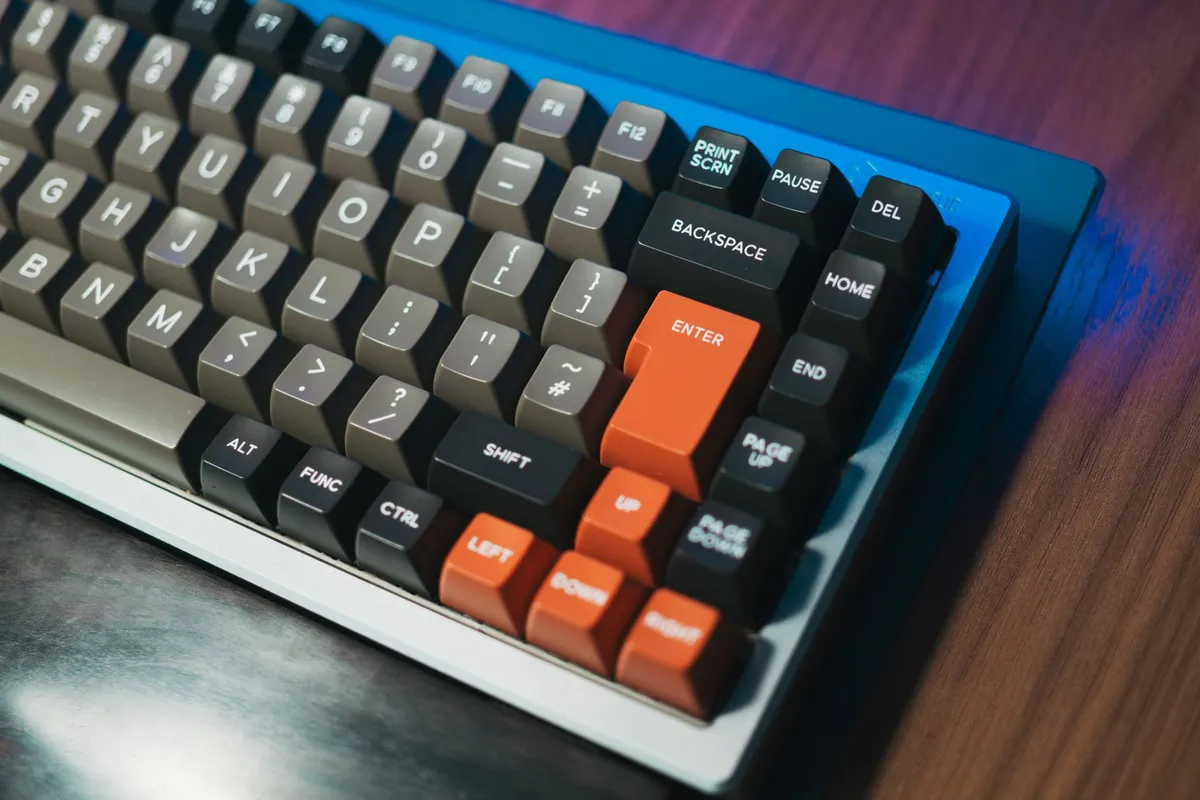
The hum of the modern world is not just a digital frequency; it is a physical, rhythmic pulse vibrating beneath our fingertips. For those of us who spend our lives transmuting thoughts into text, the tool we use to bridge the gap between mind and screen is more than a plastic peripheral—it is an instrument. A mechanical keyboard is not merely a collection of switches; it is a symphony of keystrokes waiting to be composed. To understand the mechanical keyboard is to understand the tactile history of the human-computer interface, a journey where every actuation is a deliberate choice. The Anatomy of a Tactile Revolution In the era of sleek, shallow laptop membranes, the mechanical keyboard stands as a bastion of tactile feedback. At its core, the distinction lies in the switch. Unlike the rubber dome switches that provide a "mushy" bottoming-out sensation, a mechanical switch utilizes a dedicated spring and a physical contact mechanism for each individual key. This design ensures that the feel of the keypress remains consistent through millions of cycles. When we discuss the "symphony," we are truly referring to the mechanics of the switch, generally categorized into three distinct families: Linear, Tactile, and Clicky. Linear Switches: These provide a smooth, uninterrupted descent. There is no tactile "bump" or audible click. They are the choice of many gamers who demand rapid-fire inputs where speed is the only metric of success. Tactile Switches: These feature a perceptible physical "bump" during the press, informing the user that the keystroke has been registered before the key reaches the bottom. This is a rhythmic dance that aids in reducing typing fatigue. Clicky Switches: The high-fidelity performers. These include an integrated mechanism that produces a distinct, crisp "click" sound upon actuation. It is the auditory feedback that reminds us we are truly working.Engineering the Perfect Soundscape The "thock," the "clack," and the "ping"—these are the terms whispered in enthusiast circles, representing the auditory profile of a customized keyboard. A mechanical keyboard is an acoustic environment. The housing material, the plate, and even the type of lubricant applied to the switch stems contribute to the final sound profile. The journey into customization often begins with the "stabilizers"—those small wire-and-housing assemblies that sit beneath large keys like the Spacebar, Enter, and Backspace. A poorly tuned stabilizer rattles, disturbing the symphony. A well-lubricated, properly balanced stabilizer, however, produces a deep, satisfying resonance. Achieving this requires precision engineering, often involving the application of dielectric grease to prevent metal-on-plastic friction. For the modern writer, these sonic qualities are not merely aesthetic; they are meditative. The consistency of the sound creates a rhythmic loop, a flow state that turns a daunting blank page into an inviting landscape of ideas. The Art of the Keycap Profile If the switch is the heart of the keyboard, the keycap is its soul. Keycaps are far more than labels for letters; they are the physical interface through which your skin meets the machine. The profile of the keycap—the shape and height of the surface—dictates the typing experience as much as the switch underneath.Cherry Profile: Widely considered the gold standard for ergonomics, these are sculpted with varying heights across rows, mirroring the natural arc of your fingers. SA Profile: These are tall, spherical, and vintage-inspired. They offer a deep "cup" for your fingers to rest in, evoking the nostalgia of mid-century typewriters. DSA Profile: A uniform, low-profile, spherical set where every row has the same height. This design is favored for its clean, symmetrical look.The material of the keycap matters as much as the shape. PBT (polybutylene terephthalate) plastic, known for its textured finish and resistance to the "shine" that develops on cheaper ABS (acrylonitrile butadiene styrene) caps over time, is the preferred choice for those who value longevity. When you touch a high-quality double-shot PBT keycap, you feel the grain of a tool built to last a lifetime.Beyond the Layout: The 60 Percent Manifesto The evolution of the mechanical keyboard has led to the "smaller is better" movement. The standard full-sized keyboard, complete with a cumbersome number pad and function row, is increasingly viewed as a relic. Enter the "60 percent" keyboard. By stripping away the navigation keys and the numpad, the 60 percent layout keeps the hands closer to the mouse, reducing shoulder strain. The "missing" keys are accessed via "layers"—think of it as a function key that transforms your home row into a set of arrows or media controls. This layered approach is a paradigm shift. It requires a mental recalibration, but once mastered, it removes the need to ever lift your hands from the home row. It is efficiency refined to its purest form. Wiring the Future with Custom Firmware The true power of the modern mechanical keyboard lies in its programmability. Through open-source firmware like QMK (Quantum Mechanical Keyboard) or ZMK, the user can redefine every single key, create complex macros, or implement layers that adapt to the software being used. Imagine a world where your keyboard changes its functionality automatically when you open your writing software versus when you open your browser. This is not science fiction; this is the reality of modern firmware programming. By utilizing a simple configuration file, one can compile a custom layout and flash it to the keyboard's controller, effectively making the hardware an extension of your specific workflow. // Example of a custom keymap entry for a layout // Changing the Caps Lock to Control for better ergonomics #define KC_CAPS KC_LCTLThis level of control transforms the keyboard from a static device into a dynamic partner in creativity. Whether you are a novelist, a coder, or a researcher, your keyboard should be tuned to your unique linguistic cadence. The Ritual of Typing Ultimately, the mechanical keyboard is about the return to the physical. In a digital world of infinite abstraction, the mechanical keyboard brings us back to the tactile. The press of a key is an event. It is a moment of contact. By curating your board—choosing the weight of the spring, the depth of the sound, and the profile of the cap—you are creating a ritual. Each morning, when your fingers land on the home row, you aren't just starting a task; you are beginning a performance. The switches respond with a predictable, satisfying force. The sound builds, the rhythm finds its center, and suddenly, the words are not just appearing on the screen; they are flowing from your consciousness through the mechanism and into the digital ether. Treat your workspace with the respect of a craftsman. Seek out the switches that speak to you. Tune your stabilizers, choose keycaps that feel like home, and embrace the symphony of keystrokes. In this tactile dialogue between human and machine, every word is a masterpiece waiting to be struck.#mechanicalkeyboards #typingexperience #customkeyboards #productivitytools #techlifestyle Related InsightsYour Lips on Mine Book Review and Summary 1Q84 Book Review and Summary Chosen Book Review and Summary{ "@context": "https://schema.org", "@type": "FAQPage", "mainEntity": [ { "@type": "Question", "name": "What is the main focus of The Symphony of Keystrokes: The Ultimate Guide to Mechanical Keyboards?", "acceptedAnswer": { "@type": "Answer", "text": "Discover the tactile world of mechanical keyboards, where precision engineering meets the rhythm of language. Dive into the mechanics of the perfect typing experience." } }, { "@type": "Question", "name": "Who authored the comprehensive guide on The Symphony of Keystrokes: The Ultimate Guide to Mechanical Keyboards?", "acceptedAnswer": { "@type": "Answer", "text": "This detailed article and its insights were carefully researched and authored by Aylin Okur." } }, { "@type": "Question", "name": "Where can I find more related content about Books?", "acceptedAnswer": { "@type": "Answer", "text": "You can explore more articles, detailed reviews, and similar insights by browsing the Related Insights section at the bottom of this article or visiting our dedicated Books category page." } } ] }