Showing Posts From
Nabataeans
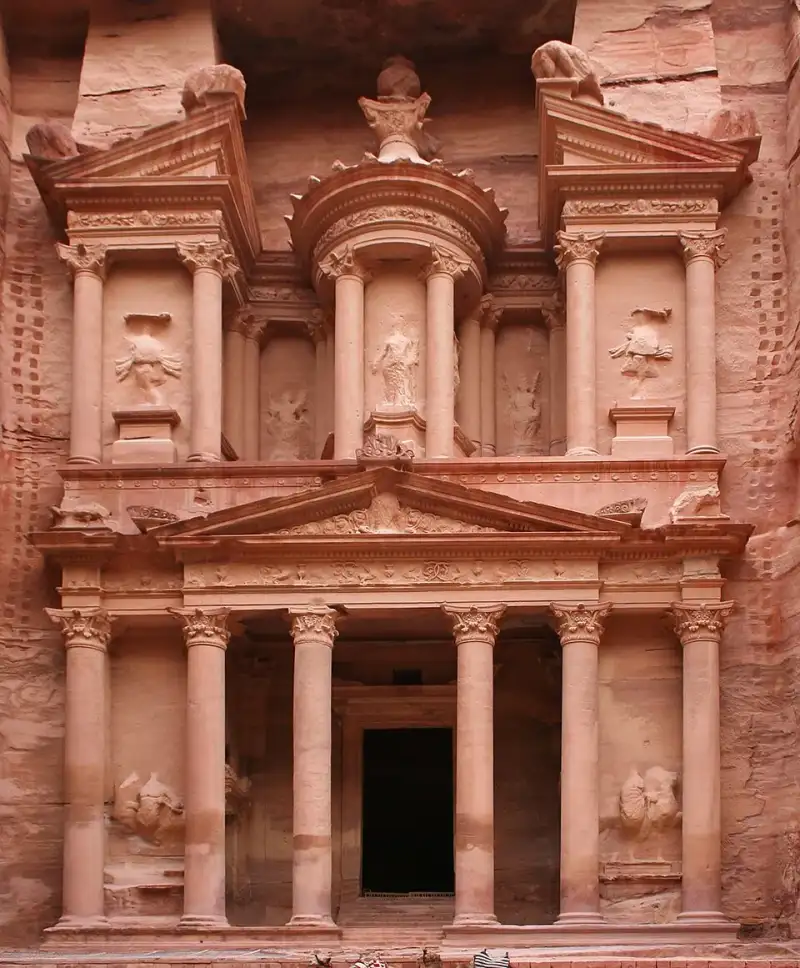

The Rose Red City: Unveiling the Mysteries of Petra There are few places on this planet where the very earth seems to whisper the tales of millennia past, where the marriage of human ingenuity and raw natural beauty is so profoundly realized that it leaves even the most seasoned traveler breathless. Petra is one such place. Tucked away in the rugged, sun-scorched mountains of southern Jordan, this ancient metropolis, often referred to as the Rose City due to the color of the stone out of which it is carved, stands as a testament to the brilliance of a civilization that flourished against all odds. It is a destination that transcends mere tourism; it is a pilgrimage into the depths of human history, an immersion into a world where stone and spirit are inextricably bound. #Petra #Jordan #TravelHistory As you embark on the journey to Petra, the modern world rapidly fades away, replaced by a landscape of stark, unforgiving majesty. The entrance to the city is guarded by the Siq, a narrow, winding gorge that snakes its way through towering cliffs of sandstone. The Siq is not merely a path; it is an experience, a geological wonder shaped by tectonic forces and smoothed by thousands of years of water erosion. The walls soar up to eighty meters high, casting long, cool shadows that provide respite from the blistering desert sun. With every step along the ancient, worn paving stones, anticipation builds. The air is still, save for the occasional echo of footsteps, the snort of a horse, and the distant murmur of voices bouncing off the undulating rock. And then, as if by magic, the narrow canyon walls part, revealing a sliver of sunlight and the breathtaking, sunlit facade of Al-Khazneh—the Treasury. Seeing the Treasury for the first time is a moment etched into the soul of every visitor. The sheer scale of the monument, standing nearly forty meters tall, carved intricately from the sheer rock face, defies belief. It is a masterpiece of Hellenistic architecture, adorned with Corinthian columns, intricate friezes, and statues of mythical figures, including Castor and Pollux. Yet, the Treasury is merely the prologue to a sprawling epic. Beyond it lies a vast city of tombs, temples, theaters, and dwellings, scattered across a rugged landscape that stretches as far as the eye can see. To truly understand Petra, one must delve deep into the history of the people who conceptualized and created it: the enigmatic Nabataeans. #AncientWonders #RoseCity #BucketList The Enigmatic Nabataeans: From Nomads to Masters of Stone The story of Petra is inextricably linked to the Nabataeans, an ancient Arab people whose origins are still shrouded in a degree of mystery. Believed to have migrated from the harsh expanses of the Arabian Peninsula around the 6th century BCE, the Nabataeans were initially nomadic pastoralists. They roamed the vast deserts, surviving in an unforgiving environment through their deep, almost supernatural knowledge of hidden water sources and their sheer resilience. However, as they settled in the region of Edom, they underwent a remarkable transformation. Within a few centuries, they transitioned from tent-dwelling nomads to sophisticated urbanites, master builders, and the foremost traders of the ancient world. #Nabataeans #AncientCivilizations What set the Nabataeans apart from their contemporaries was their extraordinary adaptability. They did not simply conquer the landscape; they collaborated with it. When they chose the site of Petra, originally known to them as Raqmu, they selected a location that was naturally fortified by towering mountains and deep, labyrinthine canyons. It was a fortress city, virtually impregnable to foreign invaders, yet perfectly positioned at the strategic crossroads of the lucrative trade routes that connected Arabia, Egypt, the Levant, and the Mediterranean. The societal structure of the Nabataeans was also notably advanced for its time. Historical accounts by Greek historians like Strabo suggest a relatively egalitarian society, where slavery was uncommon, and kings interacted freely with their subjects, even to the point of serving them at banquets. Women held significant status, evident from the fact that queens were featured alongside kings on Nabataean coinage, and women could inherit and own property. This progressive societal framework fostered a culture of innovation, art, and commerce that propelled Petra into a golden age of unparalleled prosperity. #HistoryFacts #Archaeology Engineering an Oasis: The Mastery of Water To build a grand city in the middle of a desert is a formidable challenge; to sustain a population of over twenty thousand people in such an environment requires sheer genius. The true miracle of Petra lies not just in its magnificent, photogenic facades, but in the highly sophisticated hydrological engineering that made life possible in the arid wasteland. The region receives only a few inches of rain annually, mostly in the form of sudden, violent winter storms that unleash deadly flash floods through the narrow canyons. The Nabataeans, rather than succumbing to these terrifying natural disasters, devised ingenious methods to harness them. They transformed Petra into an artificial oasis through an incredibly complex, city-wide system of dams, cisterns, rock-carved channels, and ceramic pipes. Before the raging floodwaters could tear through the Siq and destroy the city center, they were intercepted by a massive, expertly constructed dam and redirected through a tunnel known as the Muthlim. This not only protected the city from catastrophic destruction but also captured the precious water, storing it safely in vast, subterranean reservoirs. #EngineeringMarvels #WaterManagement Every drop of rain that fell on the surrounding mountains was collected and channeled into the city. The Nabataeans carved intricate conduits along the walls of the Siq, precisely angled—dropping only a few centimeters per kilometer—to maintain a steady, gentle flow of water without causing erosion. They built public fountains, lush, sprawling gardens, and even a massive swimming pool, complete with an island pavilion, in the heart of the desert. This absolute mastery over water was the foundation of Petra's power. It allowed them to provide sustenance and refreshment to weary caravans, solidifying their monopoly over the trade routes. The Nabataeans were not just masters of stone; they were the undisputed lords of water. #DesertOasis #NabataeanIngenuity Carved in Colors: The Architectural Tapestry Walking through the heart of Petra is akin to wandering through a colossal, open-air museum where the canvas is the earth itself. The Nabataeans were a profoundly syncretic people, actively absorbing and integrating the cultural and architectural influences of the many civilizations they encountered through their extensive, globe-spanning trade networks. This cosmopolitan worldview is vividly reflected in the architecture of Petra, a breathtakingly unique fusion of indigenous Arabian styles with Egyptian, Assyrian, Hellenistic, and later, Roman elements. Beyond the awe-inspiring Treasury lies the Street of Facades, a sweeping, dramatic valley lined with towering monumental tombs. The facades here range from simple, unadorned doorways cut into the rock to elaborate, multi-story structures featuring crow-stepped parapets, a distinctively Nabataean architectural motif that represented a stairway to heaven for the departed soul. As the valley opens up, the eye is drawn to the Theatre, a massive amphitheater carved directly into the living bedrock. Capable of seating over 8,000 spectators, it is a testament to the city's vibrant, bustling civic life. What is particularly striking about the Theatre is that its construction involved slicing mercilessly through pre-existing tombs, demonstrating the continuous, dynamic evolution and expansion of the city over centuries. #ArchitectureLovers #MonumentalTombs High above the city floor, carved into the sheer face of the Jabal al-Khubtha mountain, are the spectacular Royal Tombs. This impressive row of massive mausoleums includes the Urn Tomb, recognizable by the giant urn crowning its pediment and its vast, echoing interior; the Silk Tomb, famous for the mesmerizing, swirling colors of its sandstone, which look like draped silk; the Corinthian Tomb, which bears a striking, albeit heavily weathered, resemblance to the Treasury; and the massive Palace Tomb, an ambitious imitation of a Roman palace facade that was so large it required the builders to augment the natural rock with constructed masonry. The colors of the stone in this area—vibrant, shifting hues of red, pink, yellow, orange, and deep purple—change constantly with the movement of the sun, creating a dynamic, living landscape that is never the same from one hour to the next. #RoyalTombs #Geology For those willing to brave the arduous, winding ascent of over 800 rock-cut steps, the ultimate architectural reward awaits: Ad Deir, the Monastery. Larger and arguably more majestic in its raw power than the Treasury, the Monastery stands high in the remote mountains, overlooking the vast expanse of the Wadi Araba. Measuring fifty meters wide and forty-five meters high, its massive, relatively unadorned facade exudes a palpable, imposing grandeur. Originally built as a Nabataean temple, perhaps dedicated to the deified King Obodas I, it later served as a Christian chapel during the Byzantine era, complete with crosses carved into the interior walls, hence its modern name. #AdDeir #TheMonastery #HikingAdventures Little Petra: The Ancient Suburb A short distance from the main city lies Siq al-Barid, commonly known as Little Petra. This narrower, cooler gorge served as an important agricultural center, a trading suburb, and a resupply station for incoming caravans before they entered the main capital. Little Petra is renowned for its well-preserved, multi-story buildings carved into the rock, which include dining halls (triclinia) where merchants likely hosted lavish banquets. One of the most extraordinary discoveries in Little Petra is a remarkably preserved Nabataean fresco found on the ceiling of one of the rock-cut biclinia. Dating back to the 1st century CE, this exquisite painting depicts vines, flowers, birds, and mythological figures, revealing the refined artistic sensibilities of the Nabataeans. It stands as a rare surviving example of Hellenistic painting in the region and provides a vivid glimpse into the opulent, colorful interiors that once characterized the now-bare stone chambers of Petra. #LittlePetra #AncientArt #Frescoes The Crossroads of the Ancient World: Wealth Built on Incense The breathtaking, monumental architecture of Petra was bankrolled by an unimaginable accumulation of wealth, derived directly from the city's highly strategic position on the ancient trade routes. For centuries, the Nabataeans held a virtual monopoly on the trade of frankincense and myrrh, highly prized, aromatic tree resins harvested in the distant lands of southern Arabia (modern-day Yemen and Oman). These precious resins were absolutely essential for religious rituals, cremations, medicinal purposes, and cosmetics across the Egyptian, Greek, and Roman worlds, often commanding prices higher than their weight in gold. In addition to incense, the endless trains of camel caravans passing through Petra carried a dazzling, exotic array of luxury goods: pungent spices from India, shimmering silk from China, fine ivory from Africa, precious metals, and even bitumen from the nearby Dead Sea, which was used by the Egyptians in the mummification process. Petra became a bustling, cosmopolitan hub, a melting pot of cultures where merchants from across the known world converged, negotiated, and traded. The Nabataeans capitalized on this incredible flow of wealth not just by trading, but by providing crucial, life-saving services. They offered safe passage, abundant water, food, and secure shelter to the exhausted caravans after their treacherous desert crossings, in exchange for exorbitant tolls and taxes. Their wealth became the stuff of legend, attracting the envy and ire of neighboring empires. Yet, for a long time, their deep, unparalleled knowledge of the desert terrain and their impenetrable, hidden fortress city kept them safe from subjugation. #SilkRoad #SpiceRoute #AncientEconomy Gods of the Rock: Spirituality and Sacrifice To truly comprehend the essence of Petra, one must look beyond the grand, classical facades and understand the deep spiritual life of its inhabitants. The Nabataean religion was a complex, fascinating tapestry of ancient, indigenous Arabian beliefs seamlessly intertwined with the deities of the cultures they interacted with. Their chief god was Dushara, "the Lord of the Shara Mountain," a powerful deity associated with the sun, storms, and the mountains themselves. His female counterpart was Al-Uzza, an ancient Arabian goddess of power, fertility, and the morning star, who was often equated by visiting merchants with the Greek goddess Aphrodite or the Egyptian Isis. Unlike the Greeks and Romans, who depicted their gods in idealized human form, the Nabataeans originally, and persistently, worshiped their deities through aniconic representations known as betyls—literally translating to "houses of god." These were unadorned, rectangular blocks of stone carved directly into the rock face or set upon prominent altars. Walking through the narrow, hidden side canyons of Petra, an observant visitor can find hundreds of these betyls, silent, enduring witnesses to a deeply rooted, highly abstract form of spirituality that prioritized the divine presence over physical form. #Spirituality #NabataeanGods #Betyls The undisputed religious heart of Petra was the High Place of Sacrifice (Jebel Madhbah). Reached by a steep, exhausting, yet deeply rewarding climb up the mountain, this artificially leveled plateau offers stunning, panoramic views of the entire city below. Here, the Nabataeans carved a massive, chillingly practical altar, complete with intricate channels designed to drain the blood of sacrificed animals—typically sheep or goats—during elaborate religious ceremonies. Two massive obelisks, representing the divine duality of Dushara and Al-Uzza, stand nearby. Astoundingly, these obelisks were not built; they were created by quarrying away the entire top of the mountain until only the two pillars remained. The atmosphere atop the High Place is thick with an ancient, palpable energy, a profound connection to the divine forged in the high, silent, windswept peaks of the desert. #HighPlaceOfSacrifice #AncientRituals The Slow Fade and the Roman Era Despite their vast wealth, diplomatic cunning, and strategic brilliance, the Nabataeans could not hold out against the relentless, expanding power of the Roman Empire forever. In 106 CE, following the death of the last Nabataean King, Rabbel II Soter, the Roman Emperor Trajan annexed the Nabataean kingdom, incorporating it into the newly formed province of Arabia Petraea. The transition appears to have been relatively peaceful, without the destructive sieges that characterized other Roman conquests, and Petra continued to prosper under Roman rule for a considerable time. The Romans inevitably left their indelible mark on the city's urban planning, building a grand colonnaded street, an ornate public fountain known as a nymphaeum, and a monumental arched gate. However, the Roman annexation ultimately marked the beginning of Petra's slow, tragic decline. The Romans increasingly favored and developed sea routes for trade, bypassing the arduous desert journey and shifting the flow of wealth away from the overland caravan routes that had sustained the city for centuries. As maritime trade through the Red Sea and the port of Alexandria flourished, Petra's economic lifeblood slowly drained away. Nature, too, played a devastating role in the city's demise. A catastrophic earthquake in 363 CE destroyed many of the free-standing structures, homes, and, crucially, crippled the city's vital, life-sustaining water management systems. While Petra continued to be inhabited well into the Byzantine era, functioning as a provincial center of Christianity with several large, mosaic-floored churches constructed, its glorious days of immense wealth and power were over. Following another massive, devastating earthquake in 551 CE, and the subsequent Islamic conquest of the region in the 7th century, the city gradually slipped into obscurity. By the time of the Crusades in the 12th century, when Crusaders built a few small outposts in the area, Petra was largely abandoned, its magnificent, rock-cut monuments left to the shifting sands, the howling winds, and the local Bedouin tribes who used the caves for shelter. #RomanEmpire #Earthquake #DeclineAndFall "Rediscovery" and the Romantic Gaze of the West For centuries, the Rose City was "lost" to the Western world, its exact location a closely guarded secret of the local Bedouin tribes who fiercely protected their territory and used Petra's numerous caves for shelter and its hidden valleys for grazing their flocks. It wasn't until the year 1812 that Petra was dramatically reintroduced to the global stage by a daring, brilliant Swiss explorer named Johann Ludwig Burckhardt. Fluent in Arabic and deeply knowledgeable about Islamic customs, Burckhardt disguised himself as a Muslim scholar from India, traveling under the assumed name Sheikh Ibrahim Ibn Abdallah. Hearing persistent, tantalizing rumors of a magnificent, ancient city hidden deep in the impenetrable mountains of Edom, he convinced a local guide to take him there. He used the clever pretext of wishing to sacrifice a goat at the revered tomb of the Prophet Aaron (Jabal Haroun), which is located on a high peak overlooking Petra. As Burckhardt walked through the winding, claustrophobic Siq and laid eyes on the stunning facade of the Treasury, he became the first Westerner in over a millennium to behold the lost city. Though he had to conceal his overwhelming excitement to maintain his disguise and avoid being robbed or killed, his subsequent writings, published posthumously, ignited a firestorm of interest, fascination, and archaeological curiosity in Europe. Petra quickly became the ultimate symbol of the "lost city," a heavily romanticized ideal of ancient, mysterious grandeur. It inspired generations of artists, poets, and adventurers. In 1845, the British poet John William Burgon, who had ironically never even visited the site, immortalized Petra in his famous Newdigate Prize-winning poem, describing it with the now-iconic phrase: "Match me such marvel save in Eastern clime, a rose-red city half as old as time." #Exploration #JohannLudwigBurckhardt #LostCity Cinematic Immortality and Pop Culture In the modern era, Petra's otherworldly beauty has not only captured the attention of archaeologists and tourists but also the imaginations of filmmakers. The city's dramatic landscapes and imposing monuments provide a cinematic backdrop unlike any other on earth. Petra was catapulted into the global pop culture stratosphere in 1989 when it was featured in the climax of Steven Spielberg's blockbuster film, Indiana Jones and the Last Crusade. The iconic shots of Harrison Ford and Sean Connery riding through the Siq and arriving at the Treasury, presented in the film as the secret temple housing the Holy Grail, forever cemented Petra's status as a place of adventure and myth in the public consciousness. Since then, Petra has appeared in numerous other films and television series, including The Mummy Returns, Transformers: Revenge of the Fallen, and Mortal Kombat: Annihilation. This cinematic immortality has undoubtedly fueled the massive surge in tourism, bringing millions of people who wish to step into the frame of their favorite adventures. However, this level of fame brings with it the heavy burden of managing unprecedented crowds in a fragile, ancient environment. #IndianaJones #CinematicHistory #PopCulture The Living City: Bedouins, Tourism, and Conservation Today, Petra is far from lost; it is fiercely found. It is the undisputed jewel in Jordan's tourism crown, designated a UNESCO World Heritage site in 1985 and overwhelmingly voted as one of the New Seven Wonders of the World in 2007. Hundreds of thousands of visitors flock to the site annually, eager to walk in the footsteps of the Nabataeans, to marvel at the stone-carved wonders, and to experience the unique magic of the Rose City. However, the modern era has brought complex, unprecedented challenges. Petra is not merely a sterile, fenced-off archaeological site; it is a living, breathing, dynamic environment. The Bdoul Bedouin tribe inhabited the caves of Petra for centuries, living a traditional pastoral lifestyle until they were relocated to a nearby, purpose-built village (Umm Sayhoun) by the Jordanian government in the 1980s to facilitate tourism and preservation. Today, the Bdoul remain an absolute, integral part of the Petra experience. They run the myriad of souvenir stalls, offer camel, horse, and donkey rides through the sprawling site, and share their deep, ancestral knowledge of the land with visitors. The relationship between heritage preservation, the demands of mass tourism, and the economic livelihoods and cultural rights of the local Bedouin community is deeply complex and requires constant, delicate balancing. #BedouinLife #CulturalHeritage #SustainableTourism The physical preservation of Petra's majestic monuments is an urgent, massive, and incredibly challenging ongoing battle. The soft, porous sandstone that allowed the Nabataeans to carve such intricate, soaring masterpieces is also incredibly vulnerable to the ravages of time and the elements. Salt weathering, a destructive process caused by moisture drawing natural salts to the surface of the stone, is causing the delicate carvings on the facades to blister, crumble, and flake away. Severe wind erosion, increasingly unpredictable and sudden flash floods exacerbated by climate change, and the sheer, physical impact of millions of footsteps, touching hands, and animal hooves are taking a heavy toll. Conservation organizations, such as the Petra National Trust, in close partnership with the Jordanian government and international archaeological teams, are working tirelessly to study the decay, reinforce unstable structures, restore ancient water channels to divert floodwaters, and implement sustainable tourism practices. These efforts are crucial to ensure that Petra endures, not just as a memory, but as a physical reality for future generations to marvel at. #Conservation #UNESCO #ProtectOurHeritage The Flora and Fauna of the Shara Mountains While the awe-inspiring stone monuments are the primary draw, the natural environment of Petra is a wonder in its own right. The rugged Shara Mountains, despite their barren appearance, host a surprising diversity of flora and fauna, adapted to the harsh desert conditions. In the spring, following the winter rains, the valleys and crevices burst into a brief but spectacular bloom. Bright red anemones, delicate wild tulips, and hardy desert shrubs add sudden flashes of vibrant color to the red-rock landscape. The area is also a vital habitat for numerous animal species. The Nubian ibex, with its magnificent, sweeping horns, can occasionally be spotted navigating the impossibly steep cliff faces with casual grace. Rock hyraxes dart among the boulders, while the elusive Blanford's fox hunts in the cool of the night. The skies above Petra are patrolled by majestic birds of prey, including the Bonelli's eagle and the griffon vulture, riding the thermal currents that rise from the deep canyons. This rich biodiversity adds another layer of profound beauty to the Petra experience, reminding visitors that the Rose City is nestled within a living, breathing, ancient ecosystem. #Wildlife #DesertFlora #NatureLovers Conclusion: Echoes in the Canyon To visit Petra is to be profoundly humbled by the vastness of time and the indomitable, soaring spirit of human endeavor. It is a place where history is not confined to the dry pages of textbooks, but is vividly, permanently etched into the very fabric of the earth. From the awe-inspiring, colossal monuments that speak of untold wealth and worldly power to the silent, hidden, wind-scoured betyls that whisper of ancient gods and forgotten prayers, Petra is a breathtaking symphony composed entirely in stone. As the sun begins to set over the sprawling Wadi Musa, casting the towering rock faces into deepening, fiery shades of crimson, burnt orange, and rich violet, a profound, heavy silence descends upon the ancient city. The crowds thin, the heat of the day dissipates, and in that magical, twilight quietude, if you stand still and listen closely, you can almost hear the echoes of the vibrant past. You can imagine the loud, polyglot chatter of merchants haggling in the dusty marketplace, the rhythmic clatter of chariot wheels on the paved Roman streets, the smell of roasting meats and burning frankincense, and the steady, rhythmic chipping of the sculptor's iron chisel against the sandstone. The Nabataeans may be long gone, their empire absorbed into the vast, unforgiving tapestry of the empires that followed, but their legacy stands eternally, boldly and beautifully carved into the rose-red mountains of Jordan. Petra remains, as it always has been, a staggering testament to a civilization that dared to dream in stone, a people who turned a harsh, unyielding desert into an oasis of culture and commerce. They left behind a wonder that will continue to captivate, inspire, and deeply move the hearts of humanity until the very end of time. #TravelInspiration #Wanderlust #UnforgettableJourneys There is an enduring, almost mystical magic to the Rose City, a magnetic pull that draws travelers, dreamers, and seekers from every corner of the globe. It serves as a powerful reminder that even in the harshest, most desolate of environments, human creativity, resilience, and ambition can flourish, creating profound beauty that transcends the ages and speaks to the universal human soul. Whether you are a dedicated archaeology enthusiast, an intrepid explorer seeking the thrill of the unknown, or simply a seeker of beauty and history, Petra promises an experience that is nothing short of transformative. It is a physical journey into the heart of antiquity, and an emotional adventure that leaves an indelible, rose-tinted mark upon the soul. #ExploreTheWorld #HistoryLovers #PetraJordan #MiddleEastTravel Related InsightsUnraveling the Mysteries of Stonehenge: A Monolithic Marvel of the Ancient World 千古绝唱,江水悠悠:探秘乐山大佛的沧桑与辉煌 The Great Pyramid of Giza: A Timeless Monument to Human Ingenuity{ "@context": "https://schema.org", "@type": "FAQPage", "mainEntity": [ { "@type": "Question", "name": "What is the main focus of The Rose Red City: Unveiling the Mysteries of Petra?", "acceptedAnswer": { "@type": "Answer", "text": "Explore the ancient, rock-cut city of Petra in Jordan. Discover the ingenious Nabataean architecture, water management, and the rich history of the Rose City." } }, { "@type": "Question", "name": "Who authored the comprehensive guide on The Rose Red City: Unveiling the Mysteries of Petra?", "acceptedAnswer": { "@type": "Answer", "text": "This detailed article and its insights were carefully researched and authored by Liam Carter." } }, { "@type": "Question", "name": "Where can I find more related content about History?", "acceptedAnswer": { "@type": "Answer", "text": "You can explore more articles, detailed reviews, and similar insights by browsing the Related Insights section at the bottom of this article or visiting our dedicated History category page." } } ] }