Showing Posts From
Navalhistory
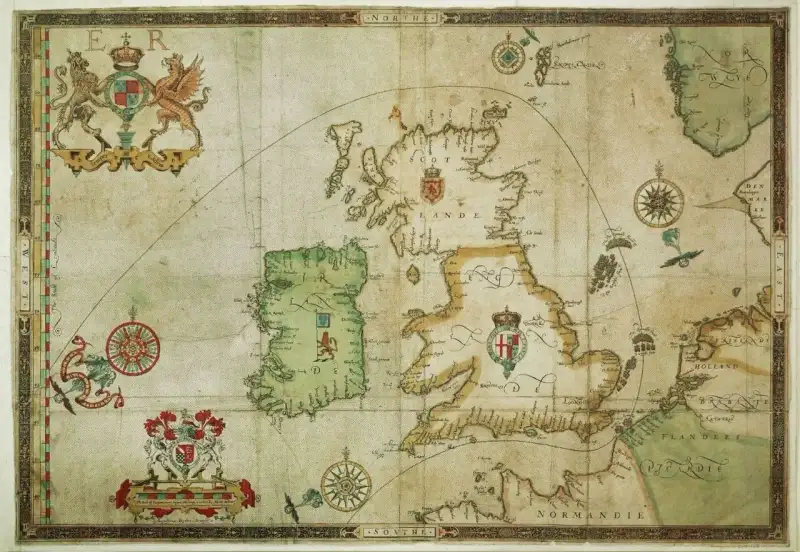

The sea does not suffer fools, nor does it yield to the hubris of kings. It is an ancient, wrathful entity, a theater of war where empires are made and broken upon the foaming waves. In the sweltering summer of 1588, the churning gray waters of the English Channel bore witness to one of the most spectacular, terrifying, and consequential clashes in the annals of human history: the defeat of the "Invincible" Spanish Armada. As a historical author, I have spent countless nights poring over the brittle, ink-stained dispatches of Tudor captains and the tragic, heart-wrenching letters of Spanish commanders, attempting to grasp the sheer magnitude of this confrontation. What transpired during those fateful weeks was not just a battle of ships and cannons, but a collision of two worlds, two religions, and two wildly different visions for the future of the globe. #History #NavalHistory #SpanishArmada The Gathering Storm: Spain's Grand Enterprise To understand the sheer weight of the Armada, one must first step back into the dimly lit corridors of the Escorial, where King Philip II of Spain, a man of relentless piety and unimaginable power, plotted the downfall of his arch-nemesis: Queen Elizabeth I of England. For decades, Elizabeth had been a thorn in Philip’s side. She had turned England into a bastion of Protestantism, encouraged swashbuckling privateers like Sir Francis Drake to plunder Spanish galleons in the New World, and openly supported the Dutch rebellion against Spanish rule. To Philip, England was a nest of heretics and pirates. The time for diplomacy had long passed. It was time for the "Enterprise of England." #TudorHistory #PhilipII #ElizabethI Philip’s grand design was breathtaking in its ambition and terrifying in its scale. He envisioned a gargantuan fleet, the likes of which the world had never seen, sailing from Lisbon to the English Channel. There, it would link up with a battle-hardened Spanish army stationed in the Netherlands under the command of the brilliant Duke of Parma. Together, this unstoppable force would cross the Channel in flat-bottomed barges, land on the English coast, march on London, depose the "heretic Queen," and restore the Catholic faith to the British Isles. A Fleet to Conquer the World By the spring of 1588, the "Invincible Armada" was ready. It was a floating city, a testament to the might and wealth of the Spanish Empire, largely funded by the silver mined from the agonizing depths of Potosí in the New World. 130 Ships: Comprising massive, towering galleons designed to act as floating fortresses, alongside heavily armed merchant vessels, smaller pinnaces, and Mediterranean galleasses (huge rowed warships). 30,000 Men: Among them were 8,000 sailors to man the ships, 18,000 elite soldiers to fight the land war, and a small army of priests, monks, and inquisitors to save English souls (or burn them, if saving proved impossible). 2,400 Cannons: A staggering arsenal capable of unleashing hellfire upon any vessel foolish enough to stand in their path. #MilitaryHistoryCommanding this immense force was Alonso Pérez de Guzmán, the Duke of Medina Sidonia. He was a noble of the highest rank, a capable administrator, but critically, he was not a seasoned sailor. When Philip appointed him, Medina Sidonia had famously pleaded to be excused, citing his tendency to get seasick and his lack of naval combat experience. But Philip, believing he was guided by the hand of God, refused the Duke’s resignation. Medina Sidonia set sail with a heavy heart, burdened by the impossible expectations of his sovereign and his Creator. The English Defense: Wood, Wind, and Wit Across the churning divide of the Channel, England was not waiting quietly for the executioner's axe. Queen Elizabeth I, aware of the encroaching doom, had mobilized her realm. The English response was characterized by a frantic, desperate energy, born of the knowledge that failure meant the end of their nation. #England #TudorEra The Dogs of War Unleashed The English fleet was fundamentally different from the Spanish Armada. While the Spanish relied on massive galleons built for close-quarters boarding actions—floating castles that sought to grapple enemy ships and overwhelm them with superior infantry—the English had spent the previous decades revolutionizing naval warfare. Led by brilliant, ruthless commanders like Lord Howard of Effingham, Sir Francis Drake, Sir John Hawkins, and Sir Martin Frobisher, the English had developed the "race-built" galleon. These ships were lower, sleeker, and significantly faster than their Spanish counterparts. More importantly, they were designed not as troop transports, but as floating gun platforms. The English strategy was simple but revolutionary: stay out of grappling range, use their superior speed and maneuverability to dictate the engagement, and pound the Spanish ships to splinters with long-range cannon fire. As the Armada slowly crept northward along the coast of Europe, beacon fires were lit across the length and breadth of England, passing the dread warning from hilltop to hilltop. The Spaniards were coming. The fate of the world hung in the balance. The Clash in the Channel: A Ballet of Death On July 19, 1588, the Spanish Armada was finally sighted off the coast of Cornwall, near the Lizard. The legend goes that Sir Francis Drake was playing a game of bowls on Plymouth Hoe when the news arrived, and he coolly remarked that there was time enough to finish the game and beat the Spaniards too. While the veracity of this tale is debated by historians, it perfectly encapsulates the swagger and audacity of the English sea dogs. #FrancisDrake #NavalBattle The Crescent Formation When the English fleet finally sailed out of Plymouth to meet the Armada, they were confronted with a sight that must have frozen the blood in their veins. The Spanish ships were arranged in a massive, tightly disciplined crescent formation, stretching for miles across the horizon. This formation was a tactical masterpiece. The strongest galleons protected the vulnerable wings (the horns of the crescent), while the slower supply ships and troop transports were nestled safely in the center. For a week, the two great fleets engaged in a running, agonizingly tense battle as they moved slowly up the English Channel. The English ships darted in like angry wasps, firing broadsides at the Spanish flanks before turning away before the heavier Spanish ships could grapple them. The Spanish, maintaining their rigid discipline, absorbed the punishment, returning fire when they could, but relentlessly pushing forward toward their rendezvous with the Duke of Parma. The air was thick with the acrid, choking stench of black powder. The roar of the cannons was deafening, a continuous, thunderous drumbeat echoing across the water. Yet, despite the unprecedented expenditure of gunpowder and shot, neither side managed to inflict a decisive blow. The English realized with growing horror that their cannons, though numerous, were largely bouncing off the incredibly thick oak hulls of the Spanish galleons. The "Invincible Armada" seemed exactly that—invulnerable to English fire. #Warfare #16thCentury Hell on Water: The Fireships of Calais By late July, the Armada had reached the Strait of Dover and dropped anchor off the coast of Calais, France. Medina Sidonia had achieved the first part of his impossible mission: he had navigated the Channel without losing a single major warship to English action (two had been lost to accidental collisions and explosions). However, he now faced a catastrophic problem. The Duke of Parma’s army was not ready. Blockaded by shallow-draft Dutch rebel ships (the "Sea Beggars") and lacking the necessary barges to safely reach the Armada, Parma could not embark. The Spanish fleet was sitting in an exposed anchorage, with a hostile English fleet lurking just out of range, and a fast-approaching storm threatening to blow them onto the treacherous Flemish shoals. It was here, in the dead of night on August 7, 1588, that the English played their trump card. It was a tactic as old as naval warfare itself, but executed with terrifying precision and devastating psychological effect: fireships. #Fireships #Tactics The Midnight Inferno Lord Howard ordered eight old, heavily combustible ships to be stripped of all valuables. Their holds were packed with pitch, tar, brimstone, gunpowder, and anything else that would burn fiercely. Their cannons were left fully loaded, primed to cook off in the heat and add a deadly barrage to the ensuing inferno. As the tide turned and the wind blew strongly toward the anchored Spanish fleet, the fireships were set ablaze and sent drifting into the darkness. Imagine the terror of the Spanish sailors on watch that night. The darkness of the Channel was suddenly pierced by eight towering pillars of fire, roaring and crackling as they bore down upon the tightly packed Armada. The flames licked at the night sky, casting a hellish, orange glow over the water. The loaded cannons aboard the fireships began to explode in the heat, firing randomly into the night, adding to the absolute chaos. Panic, raw and uncontrollable, swept through the Spanish fleet. The disciplined crescent formation, which had held so flawlessly for a week, shattered in an instant. Fearing that the fireships were packed with massive explosives (similar to the devastating "Hellburners" the Dutch had used in Antwerp), the Spanish captains did not wait to weigh anchor. They hacked their thick anchor cables with axes, abandoning their vital ground tackle in a desperate scramble to escape the approaching inferno. Ships collided in the darkness, rigging tangled, and hulls ground together as the Armada scattered in a disorganized, panicked mass into the North Sea. #Chaos #BattleOfCalais The Battle of Gravelines: Blood and Timber Dawn broke on August 8 to reveal a Spanish fleet that was scattered, disorganized, and deeply vulnerable. For the first time since the campaign began, the Armada was not in its defensive crescent. The English, realizing their golden opportunity had arrived, closed in for the kill. What followed was the Battle of Gravelines, the climax of the Armada campaign. Having realized that firing from a distance was ineffective against the thick Spanish hulls, the English commanders made a bold, dangerous decision: they sailed to within musket range—sometimes as close as fifty yards—before unleashing their broadsides. The combat was brutal, bloody, and deafening. The English ships, faster and more maneuverable, poured a relentless, terrifying hail of iron roundshot into the Spanish galleons. The Spanish, desperate to grapple and board, found their cumbersome ships outmaneuvered at every turn. Furthermore, many of the Spanish cannons were found to be loaded with the wrong size ammunition, or their gunners, untrained for sustained rapid fire, could not reload quickly enough. The Slaughter on the Decks For nine grueling hours, the battle raged. The Spanish ships, particularly the galleons San Martín (Medina Sidonia’s flagship) and San Mateo, absorbed an unbelievable amount of punishment. Their hulls were riddled with holes, their rigging was shredded into a tangled mess of hemp and canvas, and their decks ran red with the blood of soldiers and sailors. Eyewitness accounts speak of a hellish scene. Splinters of oak, jagged and sharp as daggers, flew across the decks, impaling men where they stood. The screams of the wounded mingled with the roar of the cannons and the crash of falling masts. Priests moved among the dying, offering absolution amidst the carnage. By late afternoon, the Spanish fleet was on the brink of total annihilation. Several ships were sinking, others were completely disabled, and the English were preparing to board and capture the prizes. But then, as if the heavens themselves intervened, a sudden, violent squall blew up, forcing the English to break off their attack. The Armada was saved from immediate destruction, but its spirit was broken, and its mission was definitively aborted. #BattleOfGravelines #NavalCombat The Perilous Journey North: The Wrath of God The Armada was battered, bleeding, and dangerously low on ammunition and food. The wind, blowing strongly from the south, prevented them from returning down the English Channel. Medina Sidonia faced a grim, agonizing reality: the only way home to Spain was a perilous, uncharted journey north, sailing around the treacherous coasts of Scotland and Ireland. It was a journey into a nightmare. As the fleet rounded the northern tip of Scotland, they were battered by a series of unprecedented, ferocious autumnal storms. The Spanish ships, already severely damaged at Gravelines, with weakened masts and hulls full of leaks, were woefully unequipped to handle the furious gales of the North Atlantic. Shipwrecks and Slaughter on the Irish Coast The true tragedy of the Spanish Armada did not occur in the English Channel, but on the jagged, unforgiving rocks of the Irish coast. Desperate for fresh water, food, and repairs, many Spanish captains tried to seek shelter in the bays and inlets of western Ireland. But their charts were inaccurate, and they had abandoned their main anchors in the panic at Calais. Unable to hold their positions against the gale-force winds, dozens of proud Spanish galleons were driven mercilessly onto the rocky shores. Over twenty ships were wrecked along the coasts of Donegal, Sligo, Mayo, Clare, and Kerry. Thousands of sailors and soldiers drowned in the freezing, churning surf. Those who miraculously survived the wrecks and managed to drag themselves ashore faced an equally grim fate. The English authorities in Ireland, terrified of a Spanish-backed Catholic uprising, had issued strict orders: any Spaniard found on Irish soil was to be executed immediately. Local lords, some loyal to the English crown and others simply eager for Spanish gold and weapons, systematically hunted down the survivors. Thousands of exhausted, starving Spaniards were summarily executed, their bodies left to rot on the beaches or hung from trees. Of the 130 ships that had sailed from Lisbon with such arrogant fanfare, only around 65 battered, disease-ridden hulks managed to limp back to Spanish ports in the autumn of 1588. Over 20,000 men had died, the vast majority not from English cannon fire, but from disease, starvation, and the terrifying fury of the sea. #Shipwreck #IrishHistory #Tragedy The Legacy of the Armada: A Turning Point in History When news of the disaster finally reached King Philip II at the Escorial, he reportedly retreated to his private chapel and prayed. "I sent my ships to fight against men," he famously said, "not against the winds and the waves of God." The defeat of the Spanish Armada was a seismic event, a genuine turning point in global history that fundamentally altered the geopolitical landscape of Europe and the world. The Rise of Britannia For England, the victory was the defining moment of Queen Elizabeth I’s reign. It secured the Protestant faith in the British Isles and prevented a Spanish conquest that would have forever altered the course of British history. The victory fostered a surging wave of national pride and a potent myth of English invincibility at sea—a myth that would shape British identity for centuries. More importantly, it marked the beginning of England’s rise as a global naval superpower. The tactics developed during the Armada campaign—relying on speed, maneuverability, and long-range gunnery—became the blueprint for naval warfare for the next three centuries. The English had learned that the future of naval combat did not lie in floating castles meant for boarding, but in floating artillery batteries designed to sink the enemy from afar. This realization paved the way for the eventual dominance of the Royal Navy and the establishment of the British Empire. #BritishEmpire #RoyalNavy The Slow Eclipse of Spain For Spain, the defeat was a colossal humiliation and a massive financial blow, though it did not immediately end Spanish hegemony. Spain remained a dominant global power for decades, and Philip quickly rebuilt his navy. However, the aura of Spanish invincibility was permanently shattered. The psychological impact on Protestant Europe was profound; they realized that the mighty Spanish Empire could bleed, and that it could be beaten. The Armada campaign also drained Spain's resources, exacerbating an already fragile economy burdened by endless wars in Europe and the Americas. It was the beginning of a long, slow decline that would eventually see Spain eclipsed by rising powers like France, the Netherlands, and Great Britain. The Modern Relevance: Hubris and the Unknown Why does the story of the Spanish Armada continue to captivate us centuries later? Because it is a narrative deeply rooted in the most fundamental aspects of the human condition. It is a story of towering ambition, of religious zealotry, of technological innovation clashing with entrenched tradition, and, ultimately, of the crushing, inescapable consequences of hubris. Philip II believed he was fighting a holy war, convinced that God would not allow his grand enterprise to fail. But he underestimated the ingenuity and desperation of his enemies, and, most critically, he underestimated the unforgiving, unpredictable power of nature. In our modern era, surrounded by advanced technology and data-driven predictions, it is easy to fall into the same trap of arrogant certainty that doomed the Spanish Armada. The wrecks scattered along the Irish coast remain a silent, potent reminder that no empire is truly invincible, no plan is foolproof, and that history is often decided not by the grand designs of kings, but by the shifting winds, the crashing waves, and the courage of those fighting for their very survival. The story of the Armada is a testament to the fact that the sea remains untamed, and history, in all its chaotic, bloody glory, is written by those who learn to harness the storm, rather than those who simply expect the storm to bow to their will. #HistoricalFiction #MarkDinn #WorldHistory #AncientHistory #MaritimeHistoryMark Dinn is a celebrated author of historical fiction and narrative history. His works focus on bringing the visceral reality, dramatic tension, and untold human stories of the past into the vibrant light of the present. #History #NavalHistory Related Insights千古绝唱,江水悠悠:探秘乐山大佛的沧桑与辉煌 The Black Death: The Bubonic Plague That Decimated Medieval Europe The Acropolis of Athens: A Timeless Citadel of Human Triumph{ "@context": "https://schema.org", "@type": "FAQPage", "mainEntity": [ { "@type": "Question", "name": "What is the main focus of The Fall of the Spanish Armada: The Sea Battle That Changed History?", "acceptedAnswer": { "@type": "Answer", "text": "A dramatic deep dive into The Fall of the Spanish Armada: The Sea Battle That Changed History. Mark Dinn explores the untold history, drama, and legacy of this fascinating subject." } }, { "@type": "Question", "name": "Who authored the comprehensive guide on The Fall of the Spanish Armada: The Sea Battle That Changed History?", "acceptedAnswer": { "@type": "Answer", "text": "This detailed article and its insights were carefully researched and authored by Mark Dinn." } }, { "@type": "Question", "name": "Where can I find more related content about History?", "acceptedAnswer": { "@type": "Answer", "text": "You can explore more articles, detailed reviews, and similar insights by browsing the Related Insights section at the bottom of this article or visiting our dedicated History category page." } } ] }