Showing Posts From
No longer human
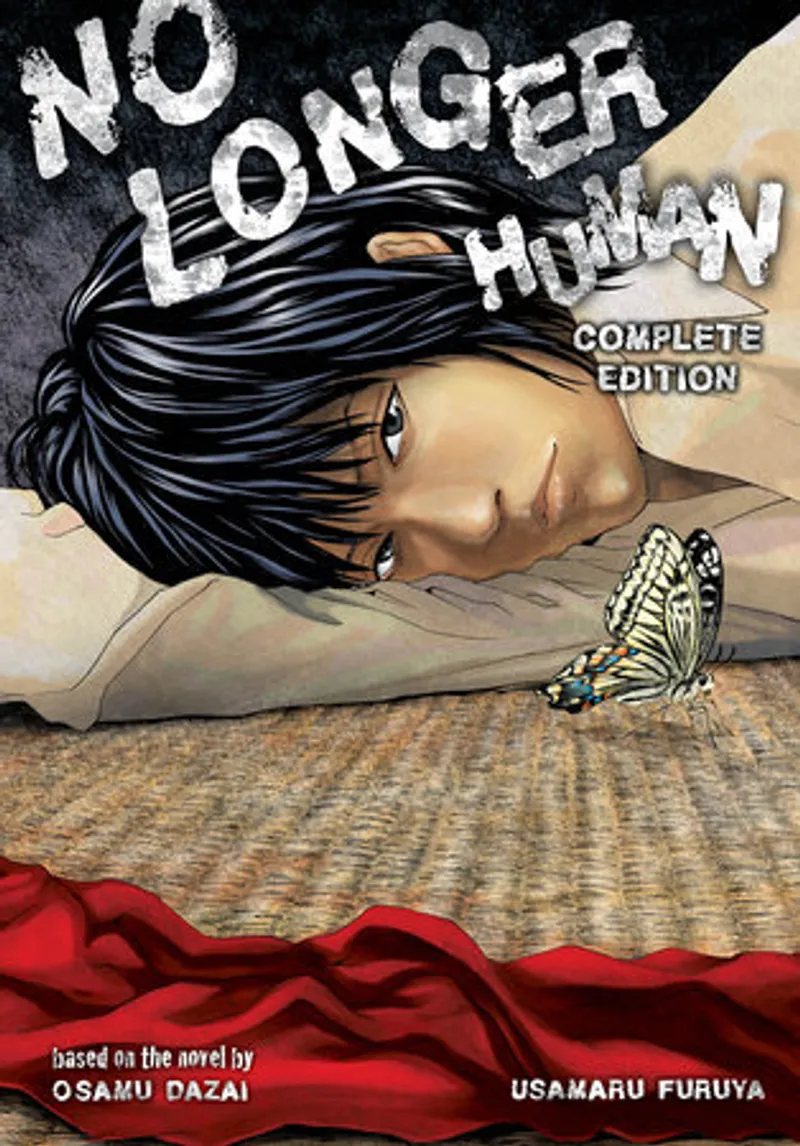
No Longer Human Complete Edition (manga) Author: Usamaru FuruyaPage Count: UnknownPublication Date: 2022-PRH Usamaru Furuya’s No Longer Human: Complete Edition is a haunting, visually arresting adaptation of Osamu Dazai’s masterpiece, reimagined for a modern audience with a raw, unflinching intensity. Furuya, known for his provocative and unconventional manga style, strips away the novel’s prewar setting and transplants its themes into the fragmented, hyper-connected world of the early 2000s. The result is a work that feels both timeless and urgently contemporary—a meditation on alienation, identity, and the masks we wear to survive. At its core, No Longer Human is a story about a man who cannot connect. The protagonist, Yozo Oba, is a self-described "clown," a performer whose grin hides a void so vast it consumes him. Dazai’s original novel is a semi-autobiographical exploration of depression, addiction, and the failure of human empathy, and Furuya’s adaptation amplifies these themes through his signature aesthetic. His art is deliberately unsettling—angular, exaggerated faces, distorted perspectives, and a color palette that oscillates between sickly pastels and oppressive blacks. The effect is claustrophobic, mirroring Yozo’s descent into isolation. Furuya’s decision to present the manga in a left-to-right format (rather than the traditional Japanese right-to-left) is more than a stylistic choice; it’s a deliberate act of defamiliarization for Western readers. The Westernized layout forces us to engage with the material differently, as if we’re watching Yozo’s life unfold through a distorted lens. This choice underscores the theme of displacement—not just cultural, but existential. Yozo is a man out of sync with the world, and Furuya’s adaptation mirrors that dissonance. The manga’s pacing is deliberate, lingering on moments of quiet despair before erupting into violence or self-destruction. Furuya’s use of negative space is masterful; empty panels and stark, minimalist compositions emphasize the emptiness of Yozo’s existence. When he does employ detail, it’s often grotesque—a twisted smile, a bloodied fist, the hollow eyes of a man who has long since stopped seeing himself. The art isn’t just a vessel for the story; it is the story, a visual manifestation of Yozo’s fractured psyche. One of the most striking aspects of Furuya’s adaptation is his treatment of Yozo’s relationships. The women in his life—his sister, his lovers, his caretakers—are rendered with a mix of tenderness and menace. They are both his salvation and his undoing, their faces often blurred or partially obscured, as if Yozo can never truly see them. This visual motif reinforces the novel’s central tragedy: Yozo is incapable of genuine connection, no matter how desperately he craves it. Furuya’s adaptation also sharpens the novel’s critique of societal expectations. In Dazai’s original, Yozo’s struggles are framed by the rigid social structures of prewar Japan. Here, Furuya updates that critique for the digital age, where the pressure to perform happiness is even more suffocating. Yozo’s "clown" persona isn’t just a personal failing; it’s a survival mechanism in a world that demands constant self-presentation. The manga’s occasional nods to modern media—television static, flickering computer screens—serve as reminders that the mechanisms of alienation have only evolved, not disappeared. The completeness of this omnibus edition is a gift. Previous releases were fragmented, but here, the story flows seamlessly, allowing Furuya’s vision to fully unfurl. The pacing, the art, the thematic depth—all coalesce into a work that is as much a critique of modern life as it is a retelling of a classic. For readers familiar with Dazai’s novel, Furuya’s adaptation offers a fresh, visceral experience. For those encountering No Longer Human for the first time, it’s a brutal introduction to one of literature’s most tragic figures. Either way, it’s impossible to look away. #NoLongerHuman #UsamaruFuruya #MangaAdaptation #OsamuDazai #DarkManga #ExistentialDespair Related InsightsStarship Troopers Book Review and Summary The Crucible Book Review and Summary The First Cut Is the Deepest Book Review and Summary{ "@context": "https://schema.org", "@type": "FAQPage", "mainEntity": [ { "@type": "Question", "name": "What is the main focus of No Longer Human Book Review and Summary?", "acceptedAnswer": { "@type": "Answer", "text": "Everything you need to know about No Longer Human with our detailed review." } }, { "@type": "Question", "name": "Who authored the comprehensive guide on No Longer Human Book Review and Summary?", "acceptedAnswer": { "@type": "Answer", "text": "This detailed article and its insights were carefully researched and authored by Osamu Dazai." } }, { "@type": "Question", "name": "Where can I find more related content about Books?", "acceptedAnswer": { "@type": "Answer", "text": "You can explore more articles, detailed reviews, and similar insights by browsing the Related Insights section at the bottom of this article or visiting our dedicated Books category page." } } ] }