Showing Posts From
Normal people
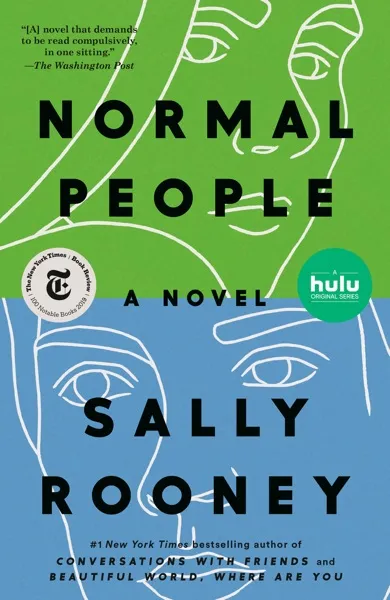

Normal People Author: Sally RooneyPage Count: UnknownPublication Year: 2018-GB Sally Rooney’s Normal People is more than a novel—it’s a mirror held up to the quiet devastation of human connection, the way we shape one another across time and silence, and the fragile, almost invisible fractures in the lives we build together. Published in 2018, Rooney’s second novel catapulted her to international acclaim, not because it offers easy answers, but because it asks the right questions with unflinching precision. It’s a story of two people—Connell and Marianne—who orbit each other through school, university, family trauma, and economic disparity, their bond both nurturing and suffocating, tender and brutal. The genius of Normal People lies not in its plot, but in its emotional architecture: the way Rooney depicts love not as a grand passion, but as a slow, daily negotiation of power, shame, and recognition. At its core, Normal People is about class and consent, about how privilege shapes desire and how silence can be both a shield and a weapon. Connell and Marianne grow up in the same small Irish town, but from vastly different worlds. He is popular, economically secure, surrounded by affection; she is isolated, wealthy in a cold, detached sense, haunted by her mother’s cruelty. Their relationship begins when Connell, the son of their cleaner, starts sleeping with Marianne in secret. What follows is not a love story in the traditional sense, but a chronicle of mutual learning—how two people, each carrying their own wounds, attempt to see the other clearly, only to fail, repeatedly, in the most human ways. Rooney’s prose is deceptively simple, almost austere in its restraint. She writes in short, declarative sentences, often devoid of adornment, yet each word carries weight. There are no purple prose flourishes, no melodramatic declarations. Instead, Rooney trusts the reader to feel the weight of what is unsaid. Her dialogue crackles with authenticity—awkward silences, half-finished thoughts, the kind of exchanges that sound exactly like real conversation. This stylistic choice isn’t laziness; it’s a deliberate rejection of the myth that love must be dramatic to be real. In Normal People, love is ordinary, messy, and therefore all the more devastating. One of the novel’s most potent themes is the way class insidiously insinuates itself into intimacy. Connell’s early shame about being “lower class” in Marianne’s presence isn’t just about money—it’s about fear of being seen as unworthy. Marianne, in turn, is trapped in her own kind of isolation, her family’s cruelty creating a kind of emotional paralysis. Their relationship becomes a site of negotiation, where power shifts unpredictably. There are moments of tenderness—Connell listening to Marianne talk about philosophy over tea, Marianne helping Connell with his essays—but these are always shadowed by the knowledge that they come from vastly different starting points. Rooney never lets us forget that their connection is as much a product of circumstance as it is of choice. The novel’s structure—chapter by chapter, alternating between past and present—mirrors the cyclical nature of memory and trauma. We see the same events through different lenses, over and over, each time with new understanding. What was once a casual hookup becomes something heavier; what felt like friendship curdles into something more complex. Rooney doesn’t offer resolution so much as accumulation. The reader is left with the sense that these two people will always be running toward and away from each other, their bond both salvation and prison. What makes Normal People so quietly devastating is Rooney’s refusal to romanticize suffering. There’s no grand redemption arc here, no neat forgiveness. Instead, we get the raw, unglamorous truth: people hurt each other, even when they love each other. Connell’s infidelity isn’t sensationalized; it’s presented as a failure of communication, a moment of weakness. Marianne’s isolation isn’t dramatized; it’s shown as the slow erosion of self-worth. Rooney’s genius is in making the mundane feel monumental, not by exaggerating, but by insisting on the importance of what often goes unnoticed. This novel resonates because it captures something universal: the way we become who we are through the people we allow close enough to shape us, for better or worse. It’s a story about how privilege isn’t just about money or status—it’s about who gets to be seen, who gets to be heard, and who is left in the dark. And yet, despite all this heaviness, Normal People isn’t a bleak book. There’s light in the small acts of kindness, in the stubborn hope that persists even when everything seems broken. Connell and Marianne don’t have a fairy-tale ending, but their story feels more real because of it. Sally Rooney has written a novel that doesn’t just depict life—it is life, in all its messy, painful, beautiful complexity. Normal People isn’t a book you read once and forget. It’s the kind of book that settles into your bones, that makes you question how you show up in your own relationships, how you listen, how you fail, how you try again. It reminds us that being normal isn’t about being perfect—it’s about being human, in all our flawed, tender glory. #NormalPeople #SallyRooney #ContemporaryFiction #LiteraryFiction #IrishLiterature #LoveAndTrauma Related InsightsA Thousand Mornings Book Review and Summary Wizard's First Rule Book Review and Summary Galleria Book Review and Summary{ "@context": "https://schema.org", "@type": "FAQPage", "mainEntity": [ { "@type": "Question", "name": "What is the main focus of Normal People Book Review and Summary?", "acceptedAnswer": { "@type": "Answer", "text": "Everything you need to know about Normal People with our detailed review." } }, { "@type": "Question", "name": "Who authored the comprehensive guide on Normal People Book Review and Summary?", "acceptedAnswer": { "@type": "Answer", "text": "This detailed article and its insights were carefully researched and authored by Sarah Davis." } }, { "@type": "Question", "name": "Where can I find more related content about Books?", "acceptedAnswer": { "@type": "Answer", "text": "You can explore more articles, detailed reviews, and similar insights by browsing the Related Insights section at the bottom of this article or visiting our dedicated Books category page." } } ] }