Showing Posts From
Oaxacan cuisine
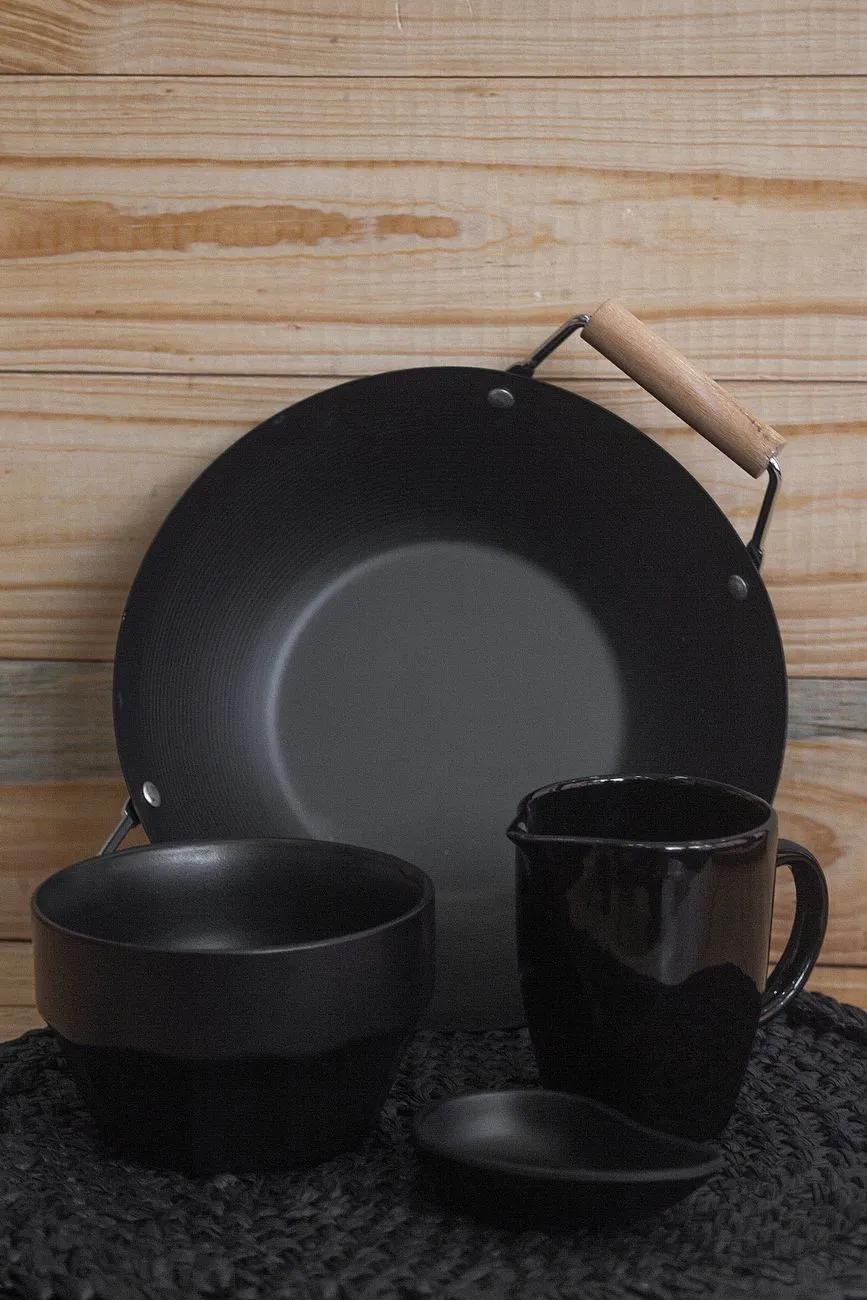

The smoke rising from a clay comal in a Oaxacan kitchen carries more than aroma; it carries a payload of volatile organic compounds synthesized through rigorous thermal degradation. To the uninitiated, mole is a sauce. To the chemist, it is a colloidal suspension stabilized by emulsified lipids and plant mucilages, flavored by the Maillard reaction’s deepest notes. I have spent years chasing the ghost of mole negro across the valleys of Oaxaca, watching abuelas manipulate thermodynamics with nothing but a wooden paddle and generational intuition. What follows is a deconstruction of that intuition, translated into the language of molecules. The Alchemy of the Comal: Toasting the FoundationThe journey of mole begins not with liquid, but with the aggressive dehydration and carbonization of raw ingredients on the comal. This is where the Maillard reaction—technically a non-enzymatic browning reaction between reducing sugars and amino acids—does its heavy lifting. When dried chilhuacle negro, mulato, and pasilla chilies hit the hot clay, surface temperatures exceed 150°C (302°F) rapidly. Water activity ($a_w$) plummets, concentrating precursors. The reaction cascades through Amadori rearrangement into advanced glycation end-products (AGEs), generating pyrazines, furans, and thiophenes. These heterocyclic compounds are the architects of the "roasted" descriptor: 2-acetyl-1-pyrroline (popcorn/nutty), 2,3-diethyl-5-methylpyrazine (earthy/roasted), and 2-furfurylthiol (coffee/meaty). Simultaneously, pyrolysis of pectin and cellulose in the chili skins creates phenolic volatiles—guaiacol and syringol—imparting that unmistakable smoke signature. But control is paramount. A chilhuacle burns in seconds; its thin pericarp offers zero insulation. The abuela’s hand speed modulates the thermal flux, preventing the formation of acrid, bitter benzopyrenes while maximizing flavor-active pyrazines. This is precision thermodynamics executed without a thermocouple. The toasted chilies are then rehydrated, a process governed by Fickian diffusion. Water penetrates the glassy matrix of the dried tissue, plasticizing the cell walls and allowing the solubilization of capsaicinoids and colorants (capsanthin, capsorubin) into the soaking liquid—liquid that is never discarded, for it holds the water-soluble fraction of the flavor architecture. Chilhuacle Negro: The Soul of Oaxaca’s Black Gold If mole is a symphony, the chilhuacle negro (Capsicum annuum var. chilhuacle) is the solo violin—rare, expensive, and irreplaceable. Endemic to the Cañada region of Oaxaca, this chili possesses a unique phytochemical profile driven by terroir-specific stressors: high UV radiation, mineral-rich volcanic soils, and water scarcity. These stressors upregulate the phenylpropanoid pathway, boosting flavonoid and capsanthin production far beyond commercial varieties like ancho or pasilla. Analytically, chilhuacle negro presents a capsaicinoid profile heavily skewed toward dihydrocapsaicin and nordihydrocapsaicin rather than capsaicin itself. This structural nuance—specifically the saturation of the vanillyl amide side chain—alters the binding kinetics to the TRPV1 receptor. The result is a "flatter," more persistent heat that lingers in the throat rather than exploding on the tongue, a critical sensory attribute for a sauce meant to be eaten by the spoonful over turkey. Furthermore, the pericarp contains exceptionally high levels of chlorophyll derivatives (pheophytins) which, upon the alkaline nixtamalization of the corn tortillas often served alongside, or the simple heat of the mole, degrade into the deep, inky black pigments that give mole negro its name. Substituting ancho chilies yields a reddish-brown sauce lacking the spectral absorption properties—the true "black"—that defines the dish visually and chemically. Seeds, Nuts, and the Architecture of BodyA mole without body is merely a spicy broth. The viscosity and mouthfeel—the "cuerpo"—are engineered through a sophisticated lipid-polysaccharide matrix. The traditional trio: pepitas (pumpkin seeds), cacahuates (peanuts), and ajonjolí (sesame seeds), contributes distinct rheological modifiers. Pumpkin seeds are rich in globulin proteins and phospholipids (lecithin). When toasted and ground on the metate (volcanic stone), the mechanical shear forces rupture oleosomes (oil bodies), releasing triglycerides and exposing phospholipid membranes. These phospholipids act as natural emulsifiers, stabilizing the oil-in-water emulsion against coalescence via steric hindrance and electrostatic repulsion (zeta potential). Peanuts contribute arachidic and behenic acids—long-chain saturated fatty acids (C20:0, C22:0)—which crystallize in the $\beta'$ polymorph upon cooling, providing a structured fat network that resists syneresis (weeping) during the long simmer. Sesame seeds bring lignans (sesamin, sesamolin) and high-molecular-weight polysaccharides. These polysaccharides hydrate into a weak gel network, increasing the continuous phase viscosity. The metate is not merely a grinder; it is a high-shear homogenizer. The stone’s porosity absorbs excess oil, while the curved motion creates elongational flow, aligning polysaccharide chains and reducing particle size to sub-50 microns—below the threshold of human tactile detection (grittiness). This particle size reduction exponentially increases the surface area for enzymatic hydrolysis during the simmer, releasing bound phenolics and free fatty acids that further modulate flavor release kinetics. Chocolate’s Late Arrival: Bitterness as Balance The inclusion of chocolate (cacao) in mole is a post-Columbian synthesis, yet it is now chemically indispensable. We are not talking about Swiss milk chocolate. We speak of chocolate de metate: roasted cacao nibs, sugar, cinnamon, and almonds, ground to a paste where particle size hovers around 20-30 microns. The chemistry here revolves around theobromine (3,7-dimethylxanthine) and polyphenol polymerization. Cacao contributes roughly 1-2% theobromine by weight. Theobromine is a competitive antagonist at adenosine receptors and a phosphodiesterase inhibitor, but in the context of mole, its primary role is sensory: a clean, alkaloid bitterness that counters the sweetness of the chilhuacle’s natural sugars and the raisins/plantains often added. More critically, cacao brings procyanidins (condensed tannins). These oligomeric flavan-3-ols interact with salivary proline-rich proteins (PRPs), causing astringency—a tactile "drying" sensation. In mole, this astringency is tamed by the high lipid content (peanut/sesame oil) and the mucilaginous polysaccharides from the seeds and chili skins. Lipids bind tannins via hydrophobic interactions, precipitating them out of the saliva interaction pathway. This molecular "quenching" transforms a harsh astringency into a velvety, coating mouthfeel—what food rheologists term "lubrication efficacy." The cinnamon (Cinnamomum verum) added to the chocolate paste contributes cinnamaldehyde and eugenol, volatile phenylpropanoids that lift the heavy base notes into the nasal cavity via retronasal olfaction, completing the flavor circle. The Molecular Dance: Hydrocolloids and Flavor ReleaseThe final simmer—often three to four hours—is a reactor vessel for hydrocolloid chemistry. The primary thickeners are not added starches (flour, cornstarch) but endogenous polysaccharides: pectin from chili skins and tomatillos/tomatoes, galactomannans from pepitas, and arabinoxylans from the tortillas or bolillos (bread) used as thickeners. At a simmer (95-98°C), these polymers undergo conformational changes. Pectin demethoxylation (catalyzed by the sauce's natural acidity, pH ~4.5-5.0) allows calcium cross-linking (egg-box model), forming a weak gel network. Simultaneously, starch granules from the bread/tortillas swell and burst (gelatinization), leaching amylose into the continuous phase. This creates a "dual-network" gel: a particulate network of swollen starch granules embedded in a continuous polysaccharide mesh. This structure dictates flavor release. Hydrophobic volatiles (pyrazines, terpenes from spices like clove, cumin, anise) partition into the lipid droplets. Their release is governed by the partition coefficient ($K_{oil/water}$) and the diffusion path length through the gel matrix. The gel slows diffusion, creating a sustained release profile—flavors arrive in waves: first the high-volatility top notes (cinnamon, clove), then the mid-palate earthiness (cumin, chili), finishing with the persistent bitterness of theobromine and the capsaicin burn. Mechanical shear from stirring aligns the polymers, inducing shear-thinning (non-Newtonian behavior). The sauce flows under the spoon but clings to the turkey. This rheological fingerprint—yield stress ~5-10 Pa, viscosity ~500-1000 cP at 50 s⁻¹—is the gold standard of mole negro. Chemical Fingerprint of Core Mole Negro IngredientsIngredient Key Volatile Compounds (GC-MS) Primary Non-Volatile Actives Functional Role in MatrixChilhuacle Negro Guaiacol, Syringol, 2-Isobutyl-3-methoxypyrazine Capsanthin, Capsorubin, Dihydrocapsaicin Color (Black), Heat (Persistent), Smoky AromaPasilla de Oaxaca β-Damascenone, 3-Methylbutanal, Hexanal Quercetin glycosides, Chlorogenic acid Fruity/Floral notes, Antioxidant capacityPepitas (Pumpkin Seeds) 2-Acetyl-1-pyrroline, Pyrazines (toasted) Δ7-Sterols, Tocopherols, Lecithin Emulsification (Lecithin), Nutty Aroma, Oil BodyCacao (Metate) 2-Phenylethanol, 3-Methylbutanal, Dimethylpyrazine Theobromine, Epicatechin, Procyanidins B2/B5 Bitterness, Astringency modulation, Flavor depthSesame Seeds 2-Furfurylthiol, Pyrroles (toasted) Sesamin, Sesamolin, Mucilage (Galactomannan) Oxidative stability (Lignans), Viscosity (Mucilage)Clove (Clavo) Eugenol (70-85%), β-Caryophyllene, Eugenyl acetate Eugenol glycosides Antimicrobial, Potent spicy/top note, TRPV1 agonistPlantain (Macho) Esters (Isoamyl acetate), Lactones Resistant Starch, Pectin Sweetness, Body/Thickening (Starch/Pectin)Serving the Legacy: A Bowl of History The bowl placed before you—a dark, glistening mirror reflecting the kitchen light—is the culmination of a multi-variable optimization problem solved over centuries. It represents a masterclass in colloidal science, enzymatic management, and volatile organic chemistry, executed without a single laboratory instrument. The turkey leg submerged in that sauce is not merely protein; it is a substrate for the sauce’s proteases (from chili, tomatillo) to slowly hydrolyze collagen into gelatin, further enriching the matrix. To eat mole is to participate in a chemical reaction. Your saliva introduces amylases that attack the starch network, thinning the sauce on the tongue. Your tongue’s TRPV1 receptors fire in response to dihydrocapsaicin. Your olfactory epithelium captures the retronasal plume of pyrazines and eugenol. It is a full-spectrum sensory event, engineered by the women of Oaxaca who understood that flavor is not in the ingredient, but in the transformation. They manipulated time, temperature, shear, and pH to coax flavor from reluctance. When I taste it now, I do not just taste chocolate and chili. I taste the Maillard reaction on a clay griddle. I taste the phospholipid bilayer of a pumpkin seed rupturing under volcanic stone. I taste the polymerization of procyanidins tamed by peanut oil. I taste chemistry, perfected by love.#Oaxaca #MoleNegro #FoodScience #CulinaryChemistry #MexicanCuisine Related InsightsSalsify: The Oyster Plant's Whispering Secret Through Culinary Eras The Obscure Origins and Transcendent Transformation of Cacao's Dark Heart Savor the World: The Ultimate Guide to the Planet’s Most Exquisite Food Markets{ "@context": "https://schema.org", "@type": "FAQPage", "mainEntity": [ { "@type": "Question", "name": "What is the main focus of The Alchemy of Oaxaca: Decoding the Molecular Symphony of Mole Negro?", "acceptedAnswer": { "@type": "Answer", "text": "Explore the rigorous biochemistry behind Oaxaca's Mole Negro, from Maillard reactions on the comal to the hydrocolloid matrix that defines its legendary texture." } }, { "@type": "Question", "name": "Who authored the comprehensive guide on The Alchemy of Oaxaca: Decoding the Molecular Symphony of Mole Negro?", "acceptedAnswer": { "@type": "Answer", "text": "This detailed article and its insights were carefully researched and authored by Kenji Sato." } }, { "@type": "Question", "name": "Where can I find more related content about Food?", "acceptedAnswer": { "@type": "Answer", "text": "You can explore more articles, detailed reviews, and similar insights by browsing the Related Insights section at the bottom of this article or visiting our dedicated Food category page." } } ] }