Showing Posts From
Of mice and men
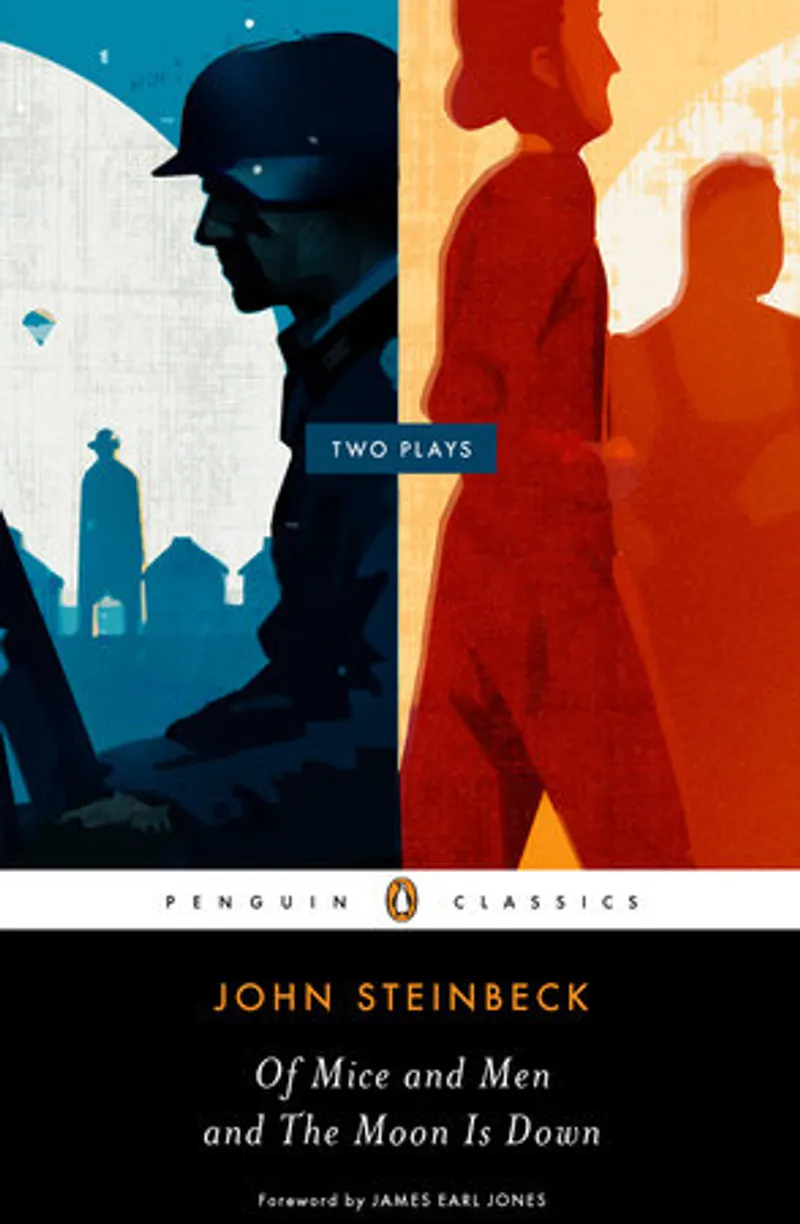
Of Mice and Men and The Moon Is Down Author: John SteinbeckPage Count: UnknownPublication Date: 2010-PRH John Steinbeck’s Of Mice and Men and The Moon Is Down is a masterclass in storytelling that strips away the illusions of power, fate, and human connection, leaving only raw, unflinching truth. This Penguin Classics edition, featuring Steinbeck’s own adaptations of his novellas for the stage, is not just a book—it’s a confrontation. A confrontation with loneliness, with the fragility of dreams, and with the quiet brutality of authority. Whether read as novels or imagined as plays, these two works reveal Steinbeck at his most devastating, blending lyrical prose with the stark inevitability of tragedy. At the heart of Of Mice and Men lies the doomed friendship between George Milton and Lennie Small, two migrant workers chasing a dream that feels just out of reach. George, sharp and pragmatic, and Lennie, physically powerful but mentally limited, are bound by a shared hope: to one day own a patch of land where Lennie can tend rabbits without fear. Their dream is simple, almost childlike, yet Steinbeck exposes its fragility with brutal honesty. The novella’s power lies in its inevitability—like a Greek tragedy, we know from the start that their aspirations will crumble. Yet Steinbeck’s genius is in making us care anyway. His prose is deceptively simple, laced with the rhythms of rural speech, but beneath that simplicity lies a searing critique of the American Dream. The land they long for is never theirs; the freedom they seek is an illusion. Steinbeck forces us to ask: What does it mean to be human when the world offers so little mercy? The Moon Is Down, on the other hand, is a different kind of tragedy—one of resistance and oppression. Set in an unnamed town conquered by foreign soldiers, the novella explores the psychological warfare of occupation. The invaders believe their victory is absolute, but Steinbeck reveals the quiet defiance of the conquered. The townspeople, led by the mayor, refuse to break, even as the occupiers tighten their grip. Steinbeck’s genius here is in flipping the script: the "enemy" is not the faceless army but the arrogance of power itself. The occupiers expect submission, but the townspeople’s solidarity becomes their greatest weapon. It’s a story about the indomitable human spirit, but also a chilling reminder that oppression rarely breaks the oppressed—it only hardens their resolve. The Moon Is Down was so effective as wartime propaganda that it was banned in Nazi-occupied Europe, a testament to its subversive power. Steinbeck’s style in both works is unadorned yet deeply evocative. He writes with the precision of a poet and the urgency of a journalist, capturing the cadence of everyday speech while weaving in themes of mythic proportion. His characters are not heroes or villains but flawed, real people, shaped by their circumstances. In Of Mice and Men, Lennie’s childlike innocence contrasts with the harshness of the world, making his fate all the more heartbreaking. In The Moon Is Down, the occupiers’ hubris blinds them to the resilience of those they seek to control. Steinbeck’s genius lies in making the personal universal—whether it’s the bond between two men dreaming of a better life or the quiet rebellion of an occupied town, his stories resonate because they speak to fundamental truths about human nature. The stage adaptations included in this edition further highlight Steinbeck’s versatility. He didn’t just write novels that could be turned into plays; he wrote works that demanded to be performed. The dialogue crackles with tension, the settings feel alive, and the themes leap off the page. James Earl Jones’ foreword is a fitting tribute to this duality, reminding us that Steinbeck’s words were meant to be heard as much as read. Whether performed in a dusty barn or a grand theater, these stories retain their power, a testament to Steinbeck’s understanding of drama as both entertainment and revelation. What makes Of Mice and Men and The Moon Is Down so enduring is their refusal to offer easy answers. Steinbeck doesn’t preach; he presents. He doesn’t comfort; he confronts. In a world that often feels divided between the powerful and the powerless, these stories remind us that the human condition is far more complex—and far more fragile—than we’d like to admit. They are cautionary tales, yes, but also celebrations of resilience, loyalty, and the stubborn hope that lingers even in the darkest times. For anyone who has ever felt the weight of an impossible dream or the sting of oppression, Steinbeck’s words will feel like a mirror held up to society’s contradictions. This edition is not just a collection of two great works; it’s an invitation to witness the raw, unfiltered power of storytelling at its finest. #OfMiceAndMen #TheMoonIsDown #JohnSteinbeck #ClassicLiterature #AmericanLiterature #TragicFiction Related InsightsDeal Breaker (Aristocrats of London, #2) Book Review and Summary The Way of Kings Book Review and Summary Don't Stop Snowing Book Review and Summary{ "@context": "https://schema.org", "@type": "FAQPage", "mainEntity": [ { "@type": "Question", "name": "What is the main focus of Of Mice and Men Book Review and Summary?", "acceptedAnswer": { "@type": "Answer", "text": "Everything you need to know about Of Mice and Men with our detailed review." } }, { "@type": "Question", "name": "Who authored the comprehensive guide on Of Mice and Men Book Review and Summary?", "acceptedAnswer": { "@type": "Answer", "text": "This detailed article and its insights were carefully researched and authored by John Steinbeck." } }, { "@type": "Question", "name": "Where can I find more related content about Books?", "acceptedAnswer": { "@type": "Answer", "text": "You can explore more articles, detailed reviews, and similar insights by browsing the Related Insights section at the bottom of this article or visiting our dedicated Books category page." } } ] }