Showing Posts From
One day in the life
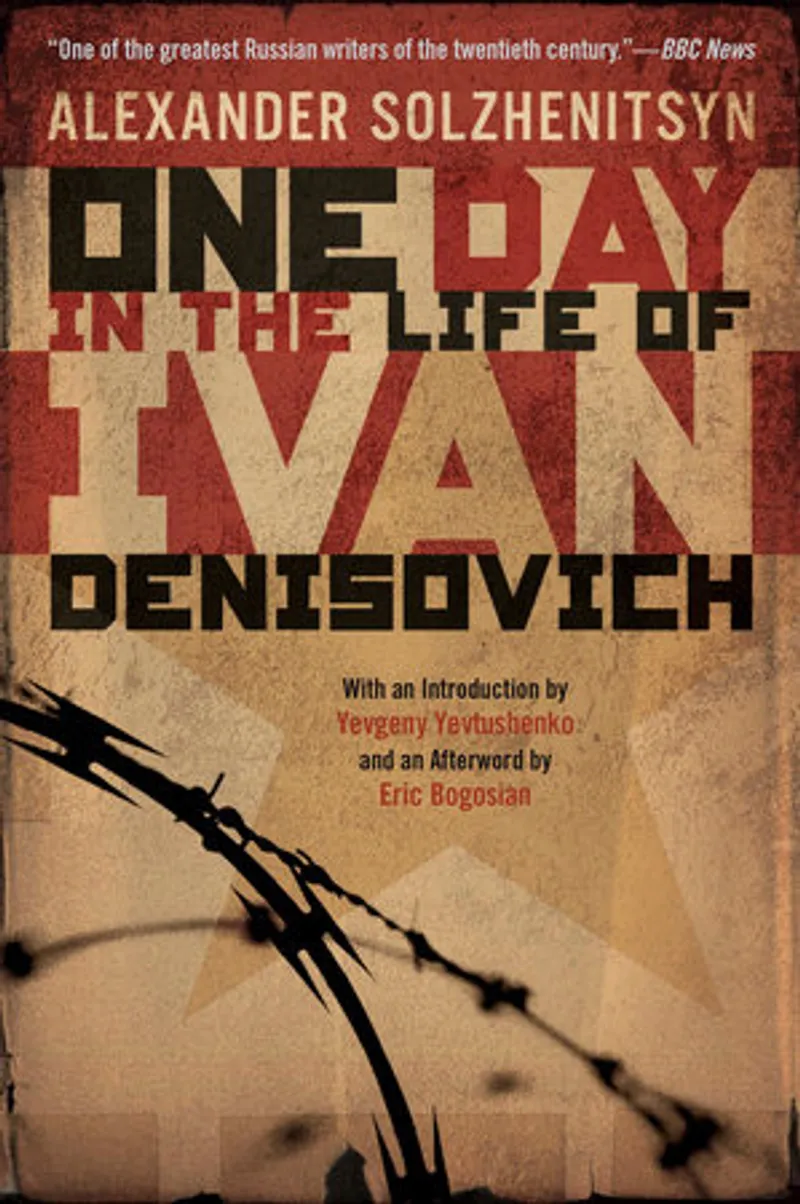
One Day in the Life of Ivan Denisovich Author: Alexander SolzhenitsynPage Count: UnknownPublication Date: 2009-PRH One Day in the Life of Ivan Denisovich is not just a book—it is a quiet rebellion against oblivion. Alexander Solzhenitsyn, a man who knew the Soviet gulag system from the inside out, crafts a narrative so stark, so unflinching, that it feels less like fiction and more like a survival report smuggled out from the frozen hell of Siberia. Published in 1962—amid the thaw of Khrushchev’s “secret speech”—this slender novel became a cultural earthquake, the first literary tremor that would eventually topple the monolith of Soviet censorship. It is a work of such moral clarity and narrative precision that it redefined what literature could dare to say about power, suffering, and the indomitable human spirit. At its core, the book is a single day in the life of Ivan Denisovich Shukhov, a prisoner in a Soviet labor camp in the 1950s. But this is no sweeping epic of war or revolution. It is a microcosm—a single, frozen morning, a bowl of thin gruel, a pair of stolen boots, a brick laid in the cold, a whispered prayer. Solzhenitsyn zooms in with the focus of a surgeon, dissecting not the grand tragedy of history, but the daily mechanics of endurance. The genius of the novel lies in this paradox: by narrowing the lens to one ordinary day, Solzhenitsyn reveals the full, monstrous scale of the system that imprisons millions. The theme is not suffering itself, but the way human dignity persists within it. Shukhov is not a hero in the traditional sense—he is a flawed, tired man, a former soldier betrayed by a system that labels him a traitor. Yet in the face of hunger, cold, and cruelty, he clings to small victories: finishing his work quota before the whistle blows, hiding a piece of bread in his mattress, trading a crust for tobacco, or simply managing to sleep without coughing in the night. These are not acts of defiance in the grand revolutionary sense; they are acts of quiet resistance, of maintaining one’s humanity when the world has stripped it away. Solzhenitsyn’s prose is as austere as the camp itself. There are no lyrical flights, no sentimental digressions. The language is blunt, functional, almost utilitarian—like the tools Shukhov uses to survive. Yet within this restraint lies immense power. Every sentence feels earned, every detail precise. The camp is not described in sweeping metaphors but in the cold facts of frostbitten fingers, the weight of a shovel, the smell of damp wool. The effect is devastating: we do not pity Shukhov because he is pitiful, but because he is ordinary, and in his ordinariness, we see ourselves. What makes the novel so chilling is its realism. Solzhenitsyn does not exaggerate the horrors; he understates them. The violence is not dramatized—it is routine. The cruelty is not theatrical—it is bureaucratic. The guards are not mustache-twirling villains; they are functionaries, following orders, indifferent to human life. This is the true horror: not the exceptional cruelty, but the systematic dehumanization that turns people into numbers, into labor units, into ghosts. Yet, for all its bleakness, the book is not despairing. It is, in fact, a celebration of resilience. Shukhov survives not because he is exceptional, but because he is ordinary—because he knows how to make do, how to wait, how to hope in small increments. His strength lies not in defiance, but in adaptation. He does not rage against the machine; he learns to move within its gears without being crushed. Solzhenitsyn’s genius is in showing that dignity is not found in grand gestures, but in the stubborn refusal to surrender to despair. In a system designed to break the human spirit, Shukhov’s quiet persistence is a form of rebellion. He does not dream of escape; he dreams of finishing his work, of eating his soup, of sleeping through the night. And in that, he wins. The novel’s publication in 1962 was a turning point. For the first time, the Soviet public was forced to confront the reality of the gulag—not as propaganda, but as lived experience. Solzhenitsyn’s voice was not that of a dissident raging against the state, but of a witness bearing testimony. His authority came not from ideology, but from experience. He had been there. He had shivered in the barracks. He had counted the bricks. One Day in the Life of Ivan Denisovich is a masterclass in narrative restraint and moral courage. It is a book that does not ask to be read—it demands to be remembered. In an era where dehumanization is often abstracted into data and algorithms, Solzhenitsyn’s novel is a necessary reminder: oppression is not an abstraction. It is a shovel in the snow, a bowl of watery soup, a man lying on his bunk, whispering a prayer before sleep. This is not just a book about a day in a labor camp. It is a book about what it means to be human when the world tries to convince you that you are nothing. #IvanDenisovich #GulagLiterature #Solzhenitsyn #SovietHistory #HumanDignity #LiteraryTestimony Related InsightsWe Chase Shadows (We Solve Murders, #2) Book Review and Summary Savages Book Review and Summary Pretty Girls Book Review and Summary{ "@context": "https://schema.org", "@type": "FAQPage", "mainEntity": [ { "@type": "Question", "name": "What is the main focus of One Day in the Life of Ivan Denisovich Book Review and Summary?", "acceptedAnswer": { "@type": "Answer", "text": "Everything you need to know about One Day in the Life of Ivan Denisovich with our detailed review." } }, { "@type": "Question", "name": "Who authored the comprehensive guide on One Day in the Life of Ivan Denisovich Book Review and Summary?", "acceptedAnswer": { "@type": "Answer", "text": "This detailed article and its insights were carefully researched and authored by Aleksandr Solzhenitsyn." } }, { "@type": "Question", "name": "Where can I find more related content about Books?", "acceptedAnswer": { "@type": "Answer", "text": "You can explore more articles, detailed reviews, and similar insights by browsing the Related Insights section at the bottom of this article or visiting our dedicated Books category page." } } ] }