Showing Posts From
Pau the last song of
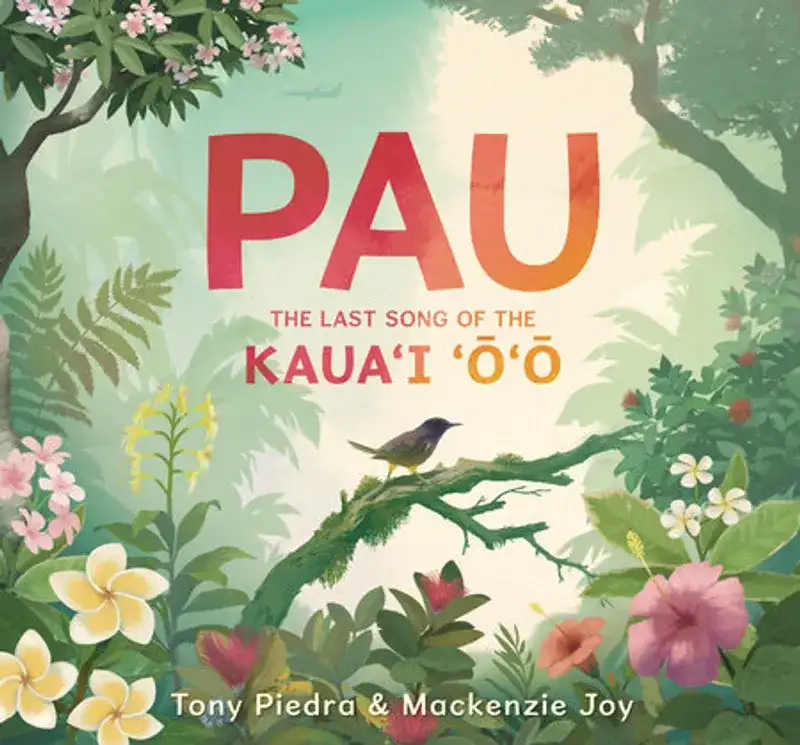

Pau: The Last Song of the Kaua’i ‘o’o Author: Tony PiedraPage Count: UnknownPublication Date: 2024-PRH Pau: The Last Song of the Kaua’i ‘o’o is a hauntingly beautiful meditation on extinction, memory, and the fragile poetry of nature. Tony Piedra, co-creator of the acclaimed One Tiny Treefrog, crafts a work that is both an ecological fable and a eulogy for a species lost forever. The Kaua’i ‘o’o, a striking black bird with golden wattles, sang its final notes in 1987, leaving behind only a fragment of recorded song—an audio ghost in the jungle. Piedra’s book doesn’t just recount this disappearance; it sings it, weaving a narrative that is as lyrical as it is devastating. From the opening lines, Piedra establishes a tone of quiet reverence. The prose is sparse but deliberate, each word carrying the weight of loss. The island of Kaua’i is described as a place where "millions of years of patience" culminated in a symphony of life—until humans arrived. The arrival of people isn’t framed as an act of malice but as an inevitable tide, a force that reshapes ecosystems with unintended consequences. The Kaua’i ‘o’o, once a vibrant part of this chorus, becomes a symbol of what happens when progress outpaces preservation. Piedra’s strength lies in his ability to balance sorrow with wonder. There’s no moralizing, no finger-pointing—just the quiet acknowledgment that beauty and extinction are two sides of the same coin. The book’s structure mirrors its theme. It unfolds like a countdown, not in numbers but in presence. We meet the ‘o’o when it is abundant, its song a fixture of the forest, then watch as its numbers dwindle—first to a few, then to one, then to none. The finality of "pau," a Hawaiian word meaning "finished" or "done," hangs over the text like a shroud. Yet Piedra refuses to let the story end there. The back matter is clear and informative, offering scientific context without overshadowing the emotional core. It’s a rare feat: a children’s book that respects its audience enough to acknowledge the full weight of the subject. Piedra’s collaboration with illustrator Mark Hoffmann (though not named in the synopsis, implied by the reference to One Tiny Treefrog) is crucial. The tropical hues and lush textures of the illustrations immerse the reader in a world that is both vibrant and vanishing. The ‘o’o is depicted in all its glory—its iridescent feathers catching the light, its wattles glowing like embers—before fading into the green shadows of decline. The art doesn’t shy away from the bird’s absence; instead, it leaves room for the reader’s imagination to fill the silence. What makes Pau so powerful is its refusal to offer easy answers. There’s no villain here, no dramatic rescue—just the slow, inevitable erosion of a species. It’s a book that asks its readers to sit with discomfort, to feel the ache of loss without being paralyzed by it. In doing so, it becomes more than a story about extinction; it’s a call to attention. The Kaua’i ‘o’o’s song may be gone, but the ecosystems it once inhabited—and the ones we’re still losing—demand our listening. Piedra’s prose is poetic without being flowery, scientific without being cold. He trusts the reader to understand the gravity of the subject while still finding moments of quiet awe. The final image—the last recorded note of the Kaua’i ‘o’o, a sound that no longer exists—is a gut-punch. It’s the kind of ending that lingers, that makes you pause and consider what else we’ve lost, and what we might still save. One Tiny Treefrog proved Piedra’s ability to blend education and emotion; Pau cements that talent. This isn’t just a book about a bird. It’s a book about listening, about remembering, and about the cost of silence. In a world where so many stories end in tragedy, Piedra’s work is a reminder that even in loss, there is meaning—and that meaning is worth preserving. #PauTheLastSong #KauaiOo #ExtinctionTale #EcoFable #ConservationStory #TonyPiedra Related InsightsThe Hearth Witch's Guide to Spite & Spellwork (Deluxe Edition) (The Hemlock Saga, 2) Book Review and Summary The Lightning Thief Book Review and Summary The Art of John Harris: Beyond the Horizon Book Review and Summary{ "@context": "https://schema.org", "@type": "FAQPage", "mainEntity": [ { "@type": "Question", "name": "What is the main focus of Pau: The Last Song of the Kaua’i ‘o’o Book Review and Summary?", "acceptedAnswer": { "@type": "Answer", "text": "Everything you need to know about Pau: The Last Song of the Kaua’i ‘o’o with our detailed review." } }, { "@type": "Question", "name": "Who authored the comprehensive guide on Pau: The Last Song of the Kaua’i ‘o’o Book Review and Summary?", "acceptedAnswer": { "@type": "Answer", "text": "This detailed article and its insights were carefully researched and authored by Chloé Laurent." } }, { "@type": "Question", "name": "Where can I find more related content about Books?", "acceptedAnswer": { "@type": "Answer", "text": "You can explore more articles, detailed reviews, and similar insights by browsing the Related Insights section at the bottom of this article or visiting our dedicated Books category page." } } ] }