Showing Posts From
Poppy war collector
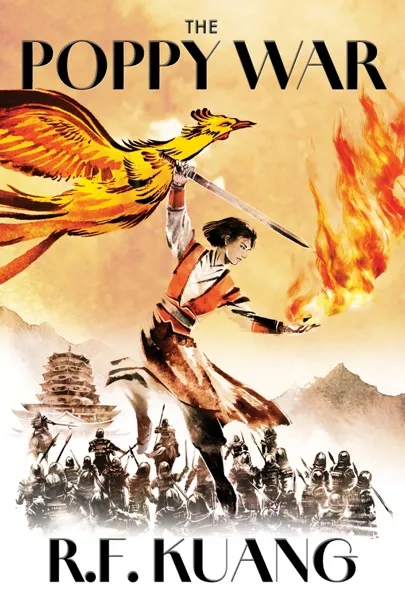

Poppy War Collector's Edition Author: R. F. KuangPage Count: UnknownPublication Year: 2024-GB The Poppy War Collector’s Edition is more than a reissue—it’s a reckoning. R. F. Kuang’s 2018 debut didn’t just arrive; it detonated, carving a permanent scar on the landscape of contemporary fantasy. Now, in 2024, this collector’s edition reaffirms its place not just as a story, but as a cultural artifact—one that demands to be held, studied, and reckoned with. Kuang, a former Rhodes Scholar and now a voice of her generation, wields prose like a weapon, blending the visceral brutality of war with the quiet devastation of human complicity. At its core, The Poppy War is a tragedy in the classical sense: a young woman’s rise and ruin, framed against the backdrop of a nation teetering on the edge of self-destruction. Rin, our protagonist, is no chosen hero. She’s a war orphan, poor, outcast, and hungry—both literally and for power. Her journey from the slums of Tikany to the halls of Sinegard Academy is less a triumph of destiny than a collision of circumstance and desire. Kuang refuses to romanticize Rin’s ascent. The cost of her power—sourced from the Phoenix, a god of fire and ruin—is paid in blood, memory, and sanity. This is not the story of a hero who saves the world. It’s the story of a girl who learns too late that the world was never worth saving. The novel’s greatest strength lies in its refusal to soften its gaze. The Second Poppy War is not a sanitized conflict; it’s a grotesque mirror to the real-world atrocities of the Second Sino-Japanese War and the Rape of Nanjing. Kuang doesn’t flinch. She shows us the fall of a city through a haze of opium and fire, where soldiers bayonet children and commanders order mass executions without hesitation. Yet, she also forces us to see the humanity in the enemy—the grieving mothers, the conscripted boys, the civilians who just want to survive. War, Kuang insists, is not a clash of heroes and villains, but a machine fueled by collective indifference. Kuang’s prose is electric—sharp, brutal, and unapologetically direct. She writes with the precision of a historian and the lyricism of a poet. Her sentences cut to the bone, often ending in abrupt silence, mimicking the way trauma distorts memory. Dialogue crackles with tension; silence speaks volumes. The pacing is relentless, moving from academic intrigue to battlefield chaos with disorienting speed. There are no easy victories here, no clean arcs. Every triumph is shadowed by loss; every victory feels like defeat. What makes The Poppy War enduring is not just its world-building or its epic scale, but its moral complexity. Kuang challenges the reader to confront uncomfortable truths: that power corrupts, that survival often requires complicity, and that heroism is a myth sold to the desperate. Rin’s fall is not just personal—it’s ideological. She begins believing in the righteousness of her cause, only to realize that she has become the very monster she sought to destroy. This is not a coming-of-age story. It’s a coming-of-unraveling. The collector’s edition enhances this experience with premium materials—thicker paper, embossed cover art, and perhaps new bonus content like author commentary or deleted scenes. While the core narrative remains unchanged, the presentation signals respect for the book’s cultural weight. It’s not just a book to be read; it’s a book to be preserved, discussed, and debated across generations. In an era where fantasy increasingly leans toward escapism, The Poppy War is a necessary counterforce. It reminds us that fantasy can—and should—be a mirror, not just a window. Kuang’s work is a warning, a lament, and a masterclass in narrative fearlessness. It doesn’t just entertain. It haunts. This is not a book you finish. It’s a book that finishes you. #ThePoppyWar #R.F.Kuang #DarkFantasy #WarFiction #AsianSpeculativeFiction #MustRead2024 Related InsightsIn the Margins Book Review and Summary Fear Farm (Bleak Haven, #4) Book Review and Summary Cozy Little Christmas Book Review and Summary{ "@context": "https://schema.org", "@type": "FAQPage", "mainEntity": [ { "@type": "Question", "name": "What is the main focus of Poppy War Collector's Edition Book Review and Summary?", "acceptedAnswer": { "@type": "Answer", "text": "Everything you need to know about Poppy War Collector's Edition with our detailed review." } }, { "@type": "Question", "name": "Who authored the comprehensive guide on Poppy War Collector's Edition Book Review and Summary?", "acceptedAnswer": { "@type": "Answer", "text": "This detailed article and its insights were carefully researched and authored by Victoria Smith." } }, { "@type": "Question", "name": "Where can I find more related content about Books?", "acceptedAnswer": { "@type": "Answer", "text": "You can explore more articles, detailed reviews, and similar insights by browsing the Related Insights section at the bottom of this article or visiting our dedicated Books category page." } } ] }