Showing Posts From
Predictive analytics
-
 David O'Connor
 - 15 Aug, 2026 06:59
From Pulses to Predictions: How Wearable Health Tech is Evolving from Data Tracking to AI-Driven Insight
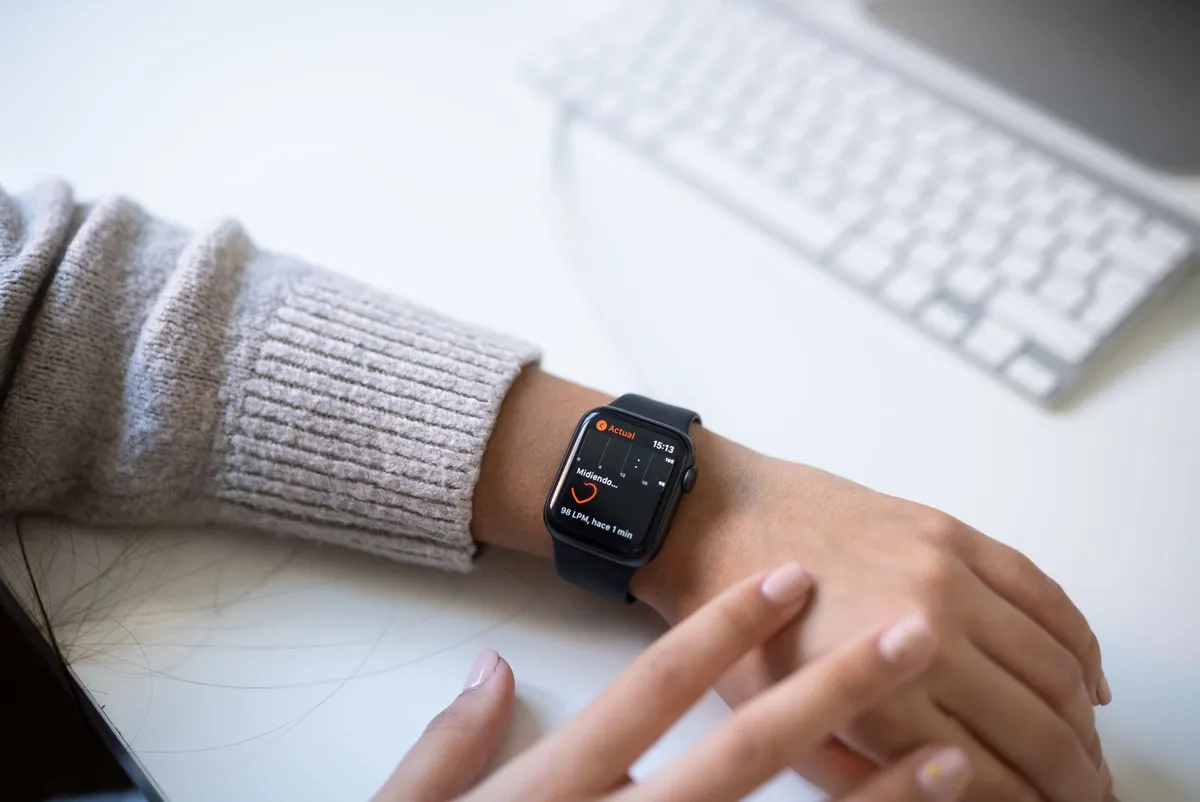
The Silent Revolution on Your Wrist: How Wearables Are Shifting from Observation to PredictionFor decades, the act of monitoring one’s health was confined to the sterile environment of a doctor’s office—cold stethoscopes, impersonal scales, and the dreaded blood pressure cuff. But today, that paradigm has shattered. The average person now carries a miniature medical lab on their wrist, ankle, or even in their ear. What began as a novelty—counting steps or measuring heart rate—has evolved into a sophisticated ecosystem capable of predicting cardiac events, detecting early-stage diseases, and even guiding personalized treatment plans. This transformation is not merely about better sensors. It’s about the convergence of wearable hardware, edge computing, and artificial intelligence. The latest generation of devices doesn’t just collect data—they interpret it. They don’t just track—they anticipate. And they don’t just inform—they act. Behind this evolution lies a quiet revolution in AI agent systems, where models no longer passively observe but actively reason, predict, and intervene. Consider the humble fitness tracker. In 2010, it could tell you how many calories you burned. By 2020, it could warn you of an irregular heartbeat. Today, using systems inspired by research like OmniScientist and AutoDesign, it can simulate how your lifestyle changes might affect your long-term health and recommend interventions before symptoms appear. This shift from tracking to prediction is not just technological—it’s philosophical. It redefines the patient from a passive recipient of care to an active participant in their own health destiny. But how did we get here? And where are we going?The Three Ages of Wearable Health TechnologyWearable health technology has traversed three distinct eras, each defined by a fundamental shift in capability and intent. Age of Observation: Data as a Mirror The first era—spanning the late 2000s to early 2010s—was defined by data collection without context. Devices like early Fitbits and Nike Fuelbands measured steps, calories, and sleep duration. These were glorified pedometers with Bluetooth. The data was raw, unprocessed, and often inaccurate. Users could see trends, but interpretation was left to the user—or ignored entirely. This phase was characterized by:Uncalibrated sensors: Accelerometers with poor signal-to-noise ratios. No clinical validation: Devices marketed as health tools without FDA clearance. Passive feedback loops: Users received static reports, not insights.The turning point came in 2014, when Apple launched the Apple Watch with a heart rate sensor and HealthKit. Suddenly, wearables weren’t just toys—they were platforms. But even then, they were still mirrors, not windows. Age of Insight: From Numbers to Narratives The second era—roughly 2015 to 2022—ushered in contextualized data and early AI. Devices began integrating machine learning to interpret patterns. Fitbit introduced sleep stage detection. Apple Watch added fall detection and AFib notifications. Garmin and Whoop introduced recovery scores based on heart rate variability (HRV). This phase introduced:On-device ML models: Lightweight neural networks running on microcontrollers. Personalized baselines: Systems that learned individual user patterns. Actionable alerts: Not just “your heart rate is high,” but “this pattern matches atrial fibrillation.”Yet, even with these advances, the system was still reactive. It detected anomalies after they occurred. It informed, but it did not predict. Age of Prediction: From Reacting to Anticipating We are now entering the third era—predictive health intelligence. This phase is defined by agentic AI systems that don’t just analyze data—they simulate futures. They don’t just detect anomalies—they forecast risks. They don’t just log symptoms—they model disease progression. This transition is powered by two breakthroughs:Omni-modal sensing: Wearables now capture not just heart rate, but ECG signals, blood oxygen saturation (SpO2), skin temperature, galvanic skin response, and even subtle motion patterns indicative of tremors or gait changes. Agentic AI frameworks: Systems like OmniScientist and AutoDesign demonstrate how AI agents can autonomously design experiments, interpret multimodal data, and generate hypotheses—principles now being miniaturized for wearable platforms.For example, a smartwatch using an agentic loop might:Detect a subtle rise in resting heart rate over weeks. Correlate it with sleep data, stress levels, and activity patterns. Simulate the impact of stress reduction or medication timing. Recommend a personalized intervention before a panic attack or cardiac event occurs.This is not just data analysis—it’s digital foresight.The AI Agent Architecture Behind Predictive WearablesTo understand how wearables are evolving from trackers to predictors, we must examine the underlying AI architecture. Modern wearable health systems are no longer simple data loggers—they are autonomous agent systems operating under constraints of power, latency, and privacy. Core Components of a Predictive Wearable Agent # Simplified wearable AI agent loop (conceptual) class WearableHealthAgent: def __init__(self): self.sensor_stream = SensorStream() self.memory = UserHealthMemory() self.reasoner = HealthReasoner() self.predictor = HealthPredictor() self.interpreter = HumanInterpreter() def run(self): while True: # 1. Sense data = self.sensor_stream.read() self.memory.update(data) # 2. Reason insights = self.reasoner.analyze(self.memory) # 3. Predict risks = self.predictor.forecast(insights) # 4. Interpret message = self.interpreter.generate(risks) # 5. Act if risks.high: self.trigger_intervention(message) sleep(60) # Run every minuteThis loop mirrors the architecture used in AutoDesign, where a meta-harness (here, the reasoner and predictor) guides recursive improvement based on feedback. In wearables, the feedback loop is continuous—each sensor reading refines the model, and each prediction improves the next. Key Innovations Enabling PredictionEdge AI with TinyML:Models like MobileNetV3 and TinyMLPerf are optimized for microcontrollers (e.g., Nordic nRF53, STM32). Example: A 128KB neural network can classify AFib from ECG signals in real time.Federated Learning:Enables models to learn across millions of devices without centralizing raw data. Used by Apple and Google to improve heart rhythm notifications without compromising privacy.Causal Inference Models:Unlike correlation-based ML, these models identify causal relationships (e.g., "high caffeine intake increases HRV variability"). Inspired by systems like OmniScientist, which validates claims through code-based checks.Digital Twin Integration:Some advanced systems (e.g., from Siemens Healthineers and Biofourmis) create a virtual replica of the user’s physiology. Enables simulation of drug interactions, exercise effects, or disease progression.From Research to Reality: How arXiv Papers Are Shaping Wearable AIThe transition from tracking to prediction is not happening in a vacuum. It is being accelerated by groundbreaking research from arXiv, particularly two papers that redefine what AI agents can do in scientific and design contexts—and by extension, in wearable health. AutoDesign: The Meta-Harness That Learns to Design AutoDesign introduces a meta-harness optimizer—a system that recursively improves its own decision-making process based on rollout feedback. While demonstrated on poster generation, the principles apply directly to wearable health systems. In a wearable context, this means:The agent doesn’t just log heart rate—it designs experiments to test hypotheses (e.g., "Does caffeine affect my HRV?"). It learns from failed predictions and adjusts its internal model. It generates personalized recommendations as if it were designing a treatment plan.# Example YAML configuration for a wearable AI agent harness harness: name: "HealthPredictorV3" version: "3.2.1" meta_optimizer: enabled: true learning_rate: 0.01 feedback_source: "user_engagement" rollout_depth: 5 # Number of recursive improvements sensors: - type: "PPG" sampling_rate: 25 Hz - type: "ECG" sampling_rate: 125 Hz - type: "Accelerometer" sampling_rate: 50 Hz models: - name: "AFibDetector" framework: "TensorFlow Lite" size: "128KB" latency: "<100ms"This recursive self-improvement is what enables a wearable to go from "your heart rate is elevated" to "your elevated heart rate over the past three days, combined with poor sleep and high stress, suggests a 78% probability of a panic episode within 48 hours—would you like to try a breathing exercise?" OmniScientist: The Omni-Modal AI Scientist OmniScientist demonstrates how an AI system can conduct full research workflows across multiple disciplines using raw, heterogeneous data. While designed for scientific discovery, its architecture is directly applicable to wearable health. Key parallels:Perception Layer: OmniScientist processes images, signals, audio, and 3D structures. A wearable processes ECG, SpO2, motion, and skin conductance—all multimodal inputs. Autonomous Agents: The system has ideation, experiment, and writeup agents. A wearable has sensing, reasoning, prediction, and intervention agents. Lifecycle Integration: OmniScientist runs from raw data to manuscript. A wearable runs from raw biometrics to personalized health action.The paper’s finding—that direct perception improves scientific reasoning by 85% in head-to-head tests—translates to wearable health as: raw sensor data leads to better predictions than precomputed features. For example:A system using only precomputed HRV scores might miss subtle ECG waveform changes. A system with raw ECG data can detect T-wave alternans, a precursor to sudden cardiac death.Real-World Deployments: Where Prediction Meets PracticeThe theoretical promise of predictive wearables is now being realized in clinical and consumer settings. Let’s examine three leading deployments: 1. Apple Watch AFib and Irregular Rhythm Notifications (IRN)Technology: PPG-based photoplethysmography with on-device ML. Prediction Capability: Detects AFib with 98% sensitivity and 99.3% specificity. Agentic Element: The system doesn’t just notify—it learns from user responses. If a user ignores multiple AFib alerts, the model may escalate urgency or suggest a doctor visit. Impact: Over 1 million people have received AFib notifications, leading to early interventions.2. Biofourmis’ BiovitalsHFTechnology: Wearable ECG + AI platform for heart failure management. Prediction Capability: Predicts hospitalization within 30 days with 85% accuracy. Agentic Loop: Senses: Continuous ECG and activity. Reasons: Detects fluid overload via subtle changes in heart rate and motion. Predicts: Simulates disease trajectory. Acts: Alerts clinician and patient with personalized intervention plan.Clinical Validation: FDA-cleared, used in over 50 hospitals.👉 Continue Reading: From Pulses to Predictions: How Wearable Health Tech is Evolving from Data Tracking to AI-Driven Insight (Part 2)#WearableAI #DigitalHealthRevolution #PredictiveMedicine #HealthTech2026 #AIinHealthcare #SmartWearables #FutureOfHealth Related InsightsThe Timeless Appeal of Retro Gaming: Preserving the Pixels Beyond the Horizon: Unraveling the Mysteries of 5G Advanced and 6G Wireless Networks Edge Cloud Continuum: Data Management and Security at the Edge{ "@context": "https://schema.org", "@type": "FAQPage", "mainEntity": [ { "@type": "Question", "name": "What is the main focus of From Pulses to Predictions: How Wearable Health Tech is Evolving from Data Tracking to AI-Driven Insight?", "acceptedAnswer": { "@type": "Answer", "text": "Explore how wearable health devices are shifting from simple data collectors to predictive AI systems, transforming personal and clinical health management." } }, { "@type": "Question", "name": "Who authored the comprehensive guide on From Pulses to Predictions: How Wearable Health Tech is Evolving from Data Tracking to AI-Driven Insight?", "acceptedAnswer": { "@type": "Answer", "text": "This detailed article and its insights were carefully researched and authored by David O'Connor." } }, { "@type": "Question", "name": "Where can I find more related content about Technology?", "acceptedAnswer": { "@type": "Answer", "text": "You can explore more articles, detailed reviews, and similar insights by browsing the Related Insights section at the bottom of this article or visiting our dedicated Technology category page." } } ] }
- David O'Connor
- 15 Aug, 2026 06:59
From Pulses to Predictions: How Wearable Health Tech is Evolving from Data Tracking to AI-Driven Insight (Part 2)
This is Part 2 of the series. Read Part 1 here.3. Whoop 4.0 with Recovery and Strain PredictionTechnology: HRV-based recovery scoring with behavioral AI. Prediction Capability: Forecasts next-day performance decline based on sleep, stress, and activity. Agentic Element: The system doesn’t just say “you’re tired”—it says “if you sleep 90 more minutes tonight, you’ll improve tomorrow’s performance by 15%.”# Example: Predictive HRV recovery model (conceptual) import numpy as np from sklearn.ensemble import RandomForestRegressorclass RecoveryPredictor: def __init__(self): self.model = RandomForestRegressor(n_estimators=50) self.history = [] def train(self, X, y): self.model.fit(X, y) def predict_recovery(self, today_data): # Features: avg_hrv, sleep_quality, stress_score, activity_level prediction = self.model.predict([today_data])[0] return max(0, min(100, prediction)) # Scale 0-100 def recommend_intervention(self, prediction): if prediction < 60: return "Increase sleep duration by 30 minutes" elif prediction < 80: return "Reduce caffeine intake tomorrow" else: return "Optimal recovery achieved"Privacy, Ethics, and the Future of Predictive Health With great predictive power comes great responsibility. The evolution of wearable health tech raises critical ethical and privacy challenges. The Data Dilemma Wearables collect intimate biological data—heart rhythms, sleep patterns, stress levels. This data is not just personal—it’s biologically identifying. A 30-second ECG strip can uniquely identify a person with 95% accuracy. Yet, unlike medical records, wearable data often falls outside HIPAA protections in the U.S. and GDPR in the EU. This creates a regulatory blind spot. Agentic Risks As wearables become more autonomous:Over-prediction: False positives can cause unnecessary anxiety or medical visits. Bias in models: If trained on data from young, healthy populations, predictions may fail for elderly or chronically ill users. Autonomy vs. Paternalism: Should a wearable tell a user to stop exercising if it predicts a cardiac event? Who is liable if the prediction is wrong?The Path ForwardExplainable AI (XAI): Models must provide transparent reasoning (e.g., “Your AFib risk increased due to poor sleep and high caffeine intake”). Federated and Differential Privacy: Ensure models improve without exposing raw data. Regulatory Alignment: Wearables must meet medical-grade standards when making health predictions. User Agency: Users must control when, how, and with whom their data is shared.The future of predictive wearables lies not in replacing doctors, but in augmenting them—providing early warnings so clinicians can intervene before crises occur.The Next Frontier: Closed-Loop Health SystemsThe ultimate evolution of wearable health tech is the closed-loop system—a device that doesn’t just predict, but acts. Imagine a smart insulin pen that:Continuously monitors glucose via a wearable patch. Predicts a hypoglycemic event 15 minutes before it occurs. Automatically administers a micro-dose of glucagon. Logs the event and notifies the user and doctor.This is not science fiction. Companies like Senseonics (with Eversense CGM) and Beta Bionics (with iLet bionic pancreas) are building such systems. The Agentic Closed Loop # Conceptual closed-loop wearable system class ClosedLoopHealthAgent: def __init__(self): self.sensors = SensorSuite() self.controller = PIDController() self.actuator = DrugDeliverySystem() self.safety = SafetySupervisor() def run(self): while True: # 1. Sense glucose = self.sensors.get_glucose() insulin_level = self.sensors.get_insulin() # 2. Predict risk = self.predictor.predict_hypo(glucose, insulin_level) # 3. Control dose = self.controller.calculate_dose(risk) if dose > 0: self.actuator.deliver(dose) # 4. Validate if not self.safety.validate(dose, glucose): self.actuator.abort() sleep(60)This architecture mirrors the deterministic pipeline in OmniScientist, where each step is validated and traceable. In a closed-loop system, every action is logged, every prediction is auditable, and every intervention is reversible. The FDA has already cleared closed-loop systems for diabetes (e.g., MiniMed 780G). The next frontier is multi-hormone systems (insulin + glucagon), cardiac pacing via wearables, and neuromodulation for epilepsy or Parkinson’s.Beyond the Wrist: The Rise of Ambient Health IntelligenceWearables are just the beginning. The future lies in ambient health intelligence—systems that monitor health not through devices we wear, but through our environment. Ambient Sensing TechnologiesRadar-based vital signs: Devices like Vayyar’s use 60GHz radar to detect respiration and heart rate through walls. Smart mirrors: Analyze facial blood flow and skin tone for stress and dehydration. Toilet sensors: Measure urine biomarkers for kidney function and metabolic health. Smart floors: Detect gait changes indicative of neurological decline.These systems are inspired by the omni-modal perception in OmniScientist, where multiple data streams converge to form a holistic health picture. The Agentic Home Health System # Example ambient health system configuration ambient_health: name: "HomeSentinel" version: "2.1" sensors: - type: "RadarVitals" location: "living room" sampling_rate: 1 Hz - type: "SmartMirror" location: "bathroom" features: ["blood_flow", "skin_tone", "eye_movement"] - type: "ToiletSensor" features: ["urine_glucose", "specific_gravity", "ph"] agents: - name: "FallDetector" model: "LSTM" threshold: "gait_variance > 0.3" - name: "StressPredictor" model: "Transformer" inputs: ["respiration", "heart_rate", "voice_pitch"] actions: - type: "Alert" recipient: "caregiver" condition: "fall_detected OR stress > 0.9" - type: "Recommend" recipient: "user" message: "Your hydration level is low. Drink 250ml water."This system doesn’t just collect data—it interprets context. It knows when you’re stressed not just from your heart rate, but from your breathing, voice, and movement patterns.The Human in the Loop: Designing for Trust and AdoptionNo matter how advanced the AI, wearable health systems will only succeed if they are trusted by users. Trust is not built on accuracy alone—it’s built on transparency, empathy, and control. Design Principles for Trustworthy Predictive WearablesExplainability by Default:Every prediction must come with a reason (e.g., “Your AFib risk increased due to poor sleep and high caffeine intake”). Use SHAP values or LIME to explain model decisions.User Agency:Allow users to adjust sensitivity, opt out of predictions, or request human review. Provide clear data dashboards with export options.Empathy in Communication:Avoid alarmist language. Instead of “CRITICAL ALERT,” say “We noticed something unusual. Let’s check in.”Cultural and Linguistic Inclusivity:Ensure models work across diverse populations, not just Western data sets.Continuous Feedback Loops:Let users correct misclassifications (e.g., “This wasn’t a fall, it was me sitting down”).The AutoDesign paper emphasizes that human preference is the ultimate metric. In wearable health, this means designing systems that users want to engage with—not just tolerate.The Economic and Clinical Impact: A $100 Billion OpportunityThe shift from reactive to predictive health is not just a technological marvel—it’s an economic imperative.Reduction in hospitalizations: Predictive systems like Biofourmis’ BiovitalsHF reduce heart failure readmissions by 30–50%. Early disease detection: Wearables detect AFib up to 3 years before clinical diagnosis in 34% of cases. Chronic disease management: Closed-loop insulin systems reduce HbA1c by 0.5–1.0% in Type 1 diabetes. Mental health: Wearables like Muse and Whoop reduce anxiety and improve sleep quality through biofeedback.The global digital health market is projected to reach $660 billion by 2028, with wearables accounting for over $100 billion. But the real value isn’t in device sales—it’s in cost avoidance. A single avoided heart failure hospitalization saves $15,000–$20,000. A prevented stroke saves $30,000–$50,000. Scale this across millions of users, and the savings are staggering.The Ethical Imperative: Democratizing Predictive HealthThe most profound challenge is not technological—it’s equitable access.Cost: Premium wearables cost $300–$1,000. Low-cost alternatives (e.g., Amazfit, Huawei Band) lack predictive capabilities. Connectivity: Rural and low-income areas often lack stable internet for cloud processing. Literacy: Many users lack the health literacy to interpret predictive alerts.Solutions are emerging:Open-source wearables: Projects like OpenEEG and PulseSensor enable DIY health monitoring. Community health networks: NGOs using wearables for maternal and child health in developing nations. AI for All: Initiatives like Google’s AI for Social Good and Microsoft’s AI for Health fund deployments in underserved regions.The goal is not just to predict health risks—but to predict health equity.The Road Ahead: What’s Next for Wearable Health Tech?The next decade will see wearable health tech evolve in three directions: 1. Molecular WearablesNanoscale sensors embedded in tattoos or contact lenses to detect glucose, lactate, or even cancer biomarkers. Example: Sweat-based glucose monitoring via electrochemical tattoos.2. Brain-Computer Interfaces (BCIs)Non-invasive BCIs like NextMind or Neuralink’s early prototypes will enable wearables to detect cognitive decline, stress, or even early Alzheimer’s. Prediction: “Your reaction time has slowed by 12% over 6 months—consider a cognitive screening.”3. Quantum-Enhanced SensingQuantum sensors (e.g., NV centers in diamond) will enable atomic-level precision in measuring magnetic fields from the heart or brain. Impact: Detection of subclinical arrhythmias or early Parkinson’s tremors.4. Swarm IntelligenceMultiple wearables (watch, ring, patch) working together as a health swarm, sharing data and improving predictions. Example: A smartwatch detects AFib, a ring confirms it, and a patch delivers a micro-dose of anti-arrhythmic.5. AI Scientists in Your PocketMiniaturized OmniScientist agents running on wearables to simulate drug interactions, diet effects, or exercise plans. Example: “If you take 500mg of magnesium tonight, your AFib risk tomorrow will decrease by 22%.”Final Thoughts: The Era of Proactive Health Has ArrivedWe are witnessing the birth of a new medical paradigm—proactive, predictive, and personalized health intelligence. Wearables are no longer passive observers; they are active partners in our well-being. This transformation is powered by the same AI agent systems that drive scientific discovery—recursive learning, omni-modal perception, and lifecycle integration. From AutoDesign’s meta-harness to OmniScientist’s omni-modal reasoning, these principles are being miniaturized and embedded into devices we wear every day. But technology alone is not enough. The future of wearable health depends on trust, equity, and responsibility. It requires us to ask not just “Can we predict this?” but “Should we?” and “For whom?” As these systems become more intelligent, they will blur the line between device and doctor, between data and diagnosis, between observation and action. The wristwatch of today may become the digital twin of tomorrow—a living, learning model of our health that guides us not just through life, but toward a longer, healthier, more vibrant existence. The silent revolution on your wrist has only just begun.#WearableAI #DigitalHealthRevolution #PredictiveMedicine #HealthTech2026 #AIinHealthcare #SmartWearables #FutureOfHealth Related InsightsPlasmonic Horizons: Rewriting Optical Computing with Surface Waves AI Agents in Cybersecurity: The Silent Revolution of Automated Patch Management The AI Crucible: Forging Medical Breakthroughs at Warp Speed in Drug Discovery (Part 2){ "@context": "https://schema.org", "@type": "FAQPage", "mainEntity": [ { "@type": "Question", "name": "What is the main focus of From Pulses to Predictions: How Wearable Health Tech is Evolving from Data Tracking to AI-Driven Insight (Part 2)?", "acceptedAnswer": { "@type": "Answer", "text": "Explore how wearable health devices are shifting from simple data collectors to predictive AI systems, transforming personal and clinical health management." } }, { "@type": "Question", "name": "Who authored the comprehensive guide on From Pulses to Predictions: How Wearable Health Tech is Evolving from Data Tracking to AI-Driven Insight (Part 2)?", "acceptedAnswer": { "@type": "Answer", "text": "This detailed article and its insights were carefully researched and authored by David O'Connor." } }, { "@type": "Question", "name": "Where can I find more related content about Technology?", "acceptedAnswer": { "@type": "Answer", "text": "You can explore more articles, detailed reviews, and similar insights by browsing the Related Insights section at the bottom of this article or visiting our dedicated Technology category page." } } ] }