Showing Posts From
Primera persona del
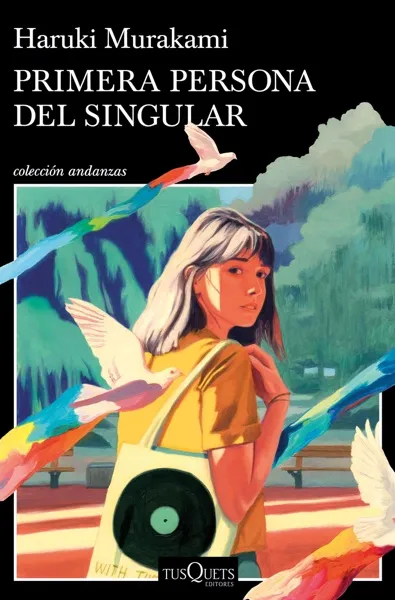

Primera persona del singular Author: 村上春樹Page Count: UnknownPublication Year: 2021-GB Haruki Murakami’s Primera Persona del Singular is a masterclass in introspection, blending the mundane with the surreal in a way that only he can. Published in 2021, this collection of eight short stories feels like a whispered conversation with the reader—intimate, fragmented, and deeply human. Murakami, ever the philosophical bartender, serves up tales that linger like the aftertaste of a well-aged whiskey: smooth, thought-provoking, and impossible to shake. At its core, Primera Persona del Singular explores the quiet revolutions of the self. The stories orbit around identity, memory, and the fragile boundaries between reality and imagination. Murakami’s protagonists—lonely jazz enthusiasts, alienated office workers, and wandering musicians—are all searching, though they may not know it. Whether it’s a man who wakes up to find his shadow missing or a woman whose cat becomes her unwitting confidant, the narratives pulse with the kind of existential curiosity that defines Murakami’s oeuvre. The title itself, a nod to first-person perspective, underscores the book’s focus on the internal monologue, the way we narrate our own lives even as our selves slip through our fingers. Murakami’s style is deceptively simple, like a Zen koan disguised as casual prose. His sentences flow with the effortless rhythm of a cat padding across a tatami mat—unhurried, deliberate, yet charged with hidden tension. There’s a jazz-like improvisation to his storytelling; themes recur like recurring motifs in a Miles Davis solo, subtly shifting each time they appear. The supernatural elements—ghosts, doppelgängers, sudden disappearances—are never fully explained, because in Murakami’s world, the mystery isn’t the point. The point is the way these uncanny moments force his characters (and readers) to confront the unanswerable: Who are we, really? Take the opening story, “Cream,” where a man reflects on his high school days and a girl he once loved. The narrative unfolds like a memory being excavated, layer by layer, with the protagonist piecing together fragments of the past that may or may not be true. The prose is sparse, almost clinical, but the emotions it conveys are raw and aching. It’s a reminder that Murakami’s genius lies not in grand revelations but in the quiet devastation of small, personal truths. Another standout, “Charlie Parker Plays Bossa Nova,” is a surrealist gem about a jazz musician who stumbles upon a record that shouldn’t exist—one that predicts the future. The story is a meditation on art, fate, and the eerie synchronicities that bind us. Murakami’s love for music shines here, as it often does, with jazz serving as a metaphor for life’s improvisational nature. The characters don’t just listen to music; they become it, dissolving into the rhythm of existence. What makes Primera Persona del Singular so compelling is how it refuses to offer closure. The stories end not with answers, but with questions—like the one in “With the Beatles,” where a man receives a mysterious vinyl record that may or may not belong to him. The ambiguity is deliberate, a reflection of life’s inherent uncertainty. Murakami doesn’t provide catharsis; he provides presence. He invites us to sit with the discomfort of not knowing, to embrace the strangeness of being alive. This collection is a testament to Murakami’s ability to find profundity in the ordinary. His characters are everymen (and everywomen) caught in the gears of modernity, yet their struggles feel timeless. They listen to records, drink coffee, walk city streets, and occasionally, the fabric of reality frays just enough to let something extraordinary peek through. It’s a delicate balance—one Murakami maintains with the precision of a tightrope walker. For readers new to Murakami, Primera Persona del Singular is a perfect introduction. For longtime fans, it’s a reunion with an old friend—one who still knows how to surprise. Either way, it’s a book that demands to be read slowly, savored like a rare vintage, and returned to again and again, each time uncovering new layers of meaning. In a world that often feels too loud, too rushed, Murakami’s quiet, insistent voice is a balm. He reminds us that the most profound stories are the ones we tell ourselves when no one else is listening. #Murakami #JapaneseLiterature #ShortStories #ExistentialFiction #Surrealism #BookRecommendation Related InsightsBlack Officer, White Navy Book Review and Summary The Pale House Devil Book Review and Summary Cars on the Road (Disney/Pixar Cars on the Road) Book Review and Summary{ "@context": "https://schema.org", "@type": "FAQPage", "mainEntity": [ { "@type": "Question", "name": "What is the main focus of Primera persona del singular Book Review and Summary?", "acceptedAnswer": { "@type": "Answer", "text": "Everything you need to know about Primera persona del singular with our detailed review." } }, { "@type": "Question", "name": "Who authored the comprehensive guide on Primera persona del singular Book Review and Summary?", "acceptedAnswer": { "@type": "Answer", "text": "This detailed article and its insights were carefully researched and authored by Beatriz Costa." } }, { "@type": "Question", "name": "Where can I find more related content about Books?", "acceptedAnswer": { "@type": "Answer", "text": "You can explore more articles, detailed reviews, and similar insights by browsing the Related Insights section at the bottom of this article or visiting our dedicated Books category page." } } ] }