Showing Posts From
Prodigal summer
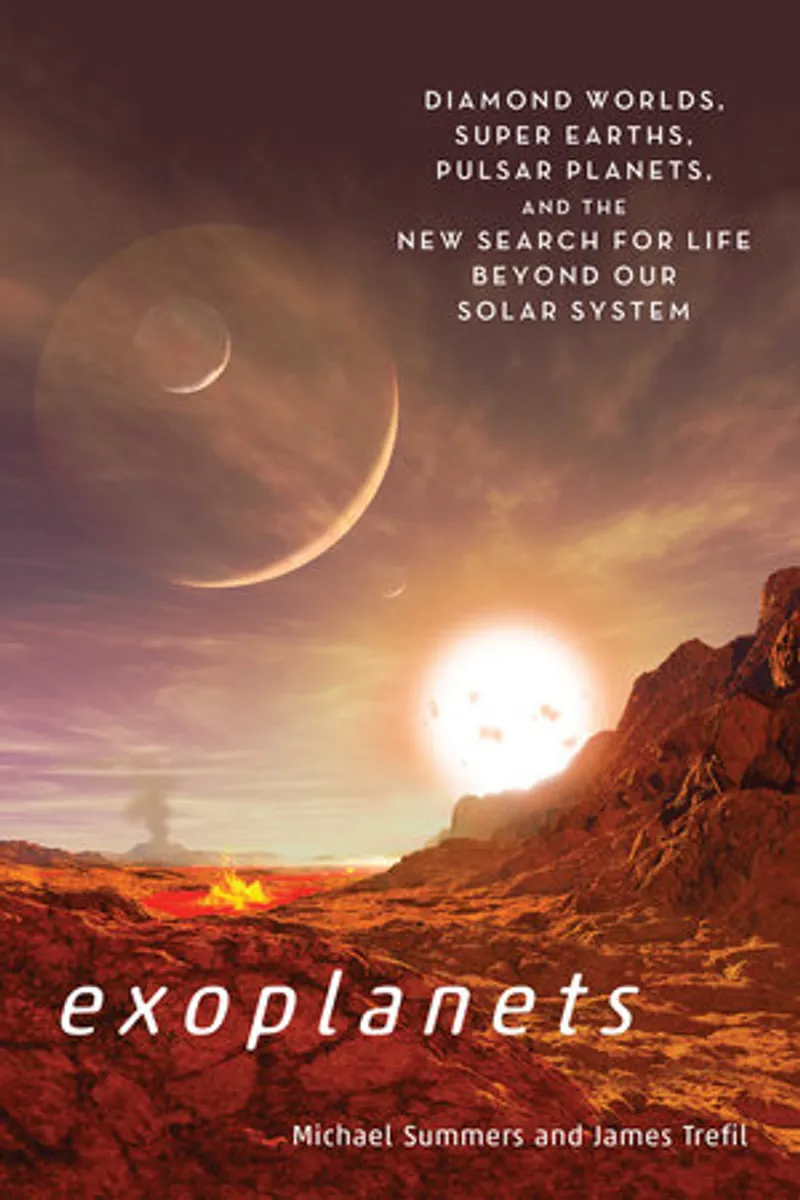
Exoplanets Author: James TrefilPage Count: UnknownPublication Date: 2018-PRH James Trefil’s Exoplanets is a thrilling expedition into the cosmic unknown, where the boundaries of science fiction blur with the breathtaking realities of modern astronomy. Co-authored with Michael Summers, this 2018 exploration of worlds beyond our solar system is not just a catalog of discoveries—it’s a mind-altering journey that challenges our deepest assumptions about the universe and our place within it. At its core, Exoplanets is about perspective. Trefil, a physicist with a knack for making complex science accessible, doesn’t just list the staggering variety of exoplanets discovered by missions like Kepler—he forces us to confront the implications of that variety. We’ve moved far beyond the idea of a single, Earth-like planet orbiting a stable star. Instead, Summers and Trefil introduce us to a menagerie of celestial oddities: planets forged from diamond, worlds where water is as common as rock, rogue planets drifting in the void between stars, and even planets orbiting the remnants of dead stars. Each discovery isn’t just a footnote in a textbook; it’s a puzzle piece that reshapes our understanding of planetary formation, habitability, and the very nature of existence. Trefil’s writing style is the book’s greatest strength. He balances scientific rigor with a conversational tone, avoiding the dryness that often plagues popular science books. His explanations are vivid and engaging, whether he’s describing the hellish conditions of a tidally locked planet where one side is perpetually bathed in scorching sunlight while the other freezes in eternal night, or the eerie silence of a rogue planet wandering the galaxy with no star to call home. The prose is never condescending, yet it never dumbs down the science. Instead, Trefil invites readers to think alongside him, to marvel at the strangeness of these worlds while grappling with the questions they raise. One of the book’s most compelling themes is the idea that we are living in a golden age of discovery—but also a time of profound humility. The more we learn about exoplanets, the more we realize how little we truly understand. Trefil doesn’t shy away from this uncertainty. He acknowledges the gaps in our knowledge and the limits of our current technology, all while painting a picture of a universe far stranger and more wondrous than we ever imagined. It’s a reminder that science isn’t about having all the answers; it’s about asking the right questions. The book also serves as a call to action. Trefil argues that our old paradigms—our assumptions about what a "normal" planet looks like, where life can exist, or even what constitutes a solar system—are crumbling under the weight of new evidence. If we’re to make sense of this cosmic zoo, we need to expand our thinking. This isn’t just a challenge for astronomers; it’s a challenge for all of us. How do we reconcile the idea of a diamond planet with our Earth-centric view of geology? What does it mean for the search for extraterrestrial life when we find planets that defy every model we’ve built? Trefil doesn’t provide easy answers, but he does something far more valuable: he makes the questions irresistible. The structure of Exoplanets is another standout feature. The book is organized thematically, with each chapter diving into a different aspect of exoplanetary science—from their formation and composition to the potential for life and the future of exoplanet exploration. This approach keeps the narrative flowing smoothly, even as the concepts grow increasingly complex. Trefil’s ability to weave together hard science, historical context, and speculative wonder makes the book feel like a guided tour through the cosmos, led by a guide who’s as excited about the discoveries as his readers should be. If there’s a criticism to be made, it’s that the book occasionally skims over some of the more technical details in favor of accessibility. Readers looking for deep dives into the physics of planetary atmospheres or the intricacies of exoplanet detection methods might find themselves wanting more. However, this is a minor quibble in a book that succeeds so brilliantly at its primary goal: to inspire awe and curiosity. Exoplanets is more than a book about distant worlds—it’s a book about us. It’s about the limits of human imagination and the endless possibilities that lie beyond them. In an era where science often feels like a series of dry facts, Trefil reminds us that the universe is still a place of wonder, mystery, and endless discovery. If you’ve ever looked up at the night sky and wondered what’s out there, this book will change how you see it. #Exoplanets #Astronomy #SpaceExploration #ScienceBooks #CosmicWonders #KeplerMission Related InsightsIsles of the Emberdark Book Review and Summary Family Remains Book Review and Summary Off Balance (The Heights, #2) Book Review and Summary{ "@context": "https://schema.org", "@type": "FAQPage", "mainEntity": [ { "@type": "Question", "name": "What is the main focus of Prodigal Summer Book Review and Summary?", "acceptedAnswer": { "@type": "Answer", "text": "Everything you need to know about Prodigal Summer with our detailed review." } }, { "@type": "Question", "name": "Who authored the comprehensive guide on Prodigal Summer Book Review and Summary?", "acceptedAnswer": { "@type": "Answer", "text": "This detailed article and its insights were carefully researched and authored by Barbara Kingsolver." } }, { "@type": "Question", "name": "Where can I find more related content about Books?", "acceptedAnswer": { "@type": "Answer", "text": "You can explore more articles, detailed reviews, and similar insights by browsing the Related Insights section at the bottom of this article or visiting our dedicated Books category page." } } ] }