Showing Posts From
Red moon
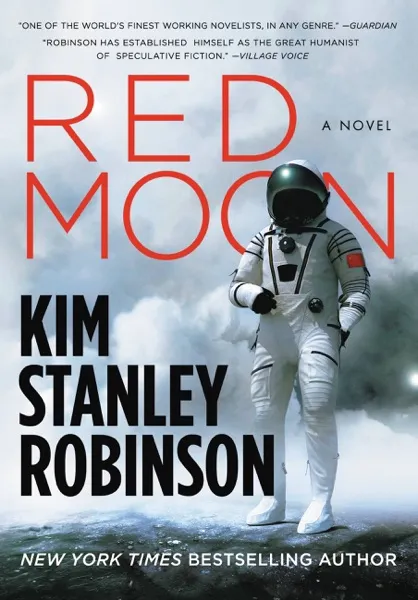

Red Moon Author: Kim Stanley RobinsonPage Count: UnknownPublication Year: 2018-GB Red Moon is not just another near-future speculative novel—it is a searing meditation on power, identity, and the quiet revolutions that erupt when the old world collides with the new. Kim Stanley Robinson, the architect of such visionary tomes as the Mars trilogy and New York 2140, once again proves why he remains one of science fiction’s indispensable voices. Red Moon, published in 2018, is a masterclass in geopolitical tension, human resilience, and the fragile beauty of lunar dreams. It is a book that lingers long after the last page, its themes echoing like the low gravity of its setting. At its heart, Red Moon is a story about borders—not just the physical ones carved into the lunar surface, but the psychological and political boundaries that define who belongs and who does not. Robinson sets his tale in a near-future where China has established a significant presence on the Moon, and the lunar colony of Shackleton Crater becomes a microcosm of global power struggles. The novel follows Fred Fredericks, a young American diplomat sent to negotiate a treaty, as he navigates a labyrinth of cultural clashes, corporate espionage, and personal betrayal. But the true protagonist is the Moon itself—a silent witness to human ambition, greed, and the fragile hope of cooperation. Robinson’s genius lies in his ability to weave hard science into emotionally resonant storytelling. The lunar setting is not just a backdrop but a character in its own right, its harsh environment shaping every decision, every conflict. The low gravity, the harsh radiation, the psychological toll of isolation—all are rendered with meticulous accuracy, yet never at the expense of human drama. The Moon here is both a frontier and a prison, a place of both liberation and suffocation. Robinson’s prose is precise yet lyrical, balancing the cold calculations of orbital mechanics with the raw, messy emotions of his characters. The novel’s central theme is the collision between tradition and progress. China’s lunar colony, under the leadership of the enigmatic and ruthless Cixi Lin, represents a new order—one that values pragmatism, discipline, and long-term vision over the short-sighted greed of Earth’s corporations. In contrast, Fred Fredericks embodies the American ideal of individualism, but his journey forces him to confront the limitations of his own beliefs. The tension between these worldviews drives the narrative forward, culminating in a climax that is as intellectually stimulating as it is suspenseful. Robinson’s style is unmistakable: a blend of rigorous research, philosophical depth, and a deep empathy for his characters. He doesn’t just describe the future; he dissects it, laying bare the contradictions that define human nature. The dialogue crackles with authenticity, the political intrigue feels terrifyingly plausible, and the emotional beats land with the weight of real stakes. There are no easy answers in Red Moon, no simplistic heroes or villains—just flawed individuals navigating a world on the brink of transformation. What makes Red Moon particularly compelling is its quiet subversion of the "lone hero" trope. Fred Fredericks is not a swashbuckling action hero; he’s an outsider, a man out of his depth, whose greatest strength is his willingness to listen and learn. His relationship with the lunar environment—and with the people he meets—is one of discovery, not conquest. This humility is rare in science fiction, where protagonists so often shape the world around them. Here, the world reshapes him, and in doing so, reshapes the reader’s understanding of what it means to belong. The novel’s pacing is deliberate, allowing the themes to simmer beneath the surface before boiling over in moments of high drama. Robinson trusts his readers to engage with complexity, to sit with ambiguity. There are no neat resolutions, no tidy endings—only the promise of a new beginning, one that feels both inevitable and fragile. Red Moon is a book for our time—a reminder that the future is not something we inherit but something we must fight for, shape, and, above all, imagine with courage. It is a testament to Robinson’s enduring vision that he can make the politics of lunar colonies feel as urgent and human as the struggles of any Earthbound city. This is science fiction at its finest: speculative yet grounded, daring yet deeply human. If you’ve ever wondered what happens when the old world’s empires meet the new world’s frontiers, look no further. Red Moon is a masterpiece of ideas, a novel that challenges, provokes, and ultimately inspires. #RedMoon #KimStanleyRobinson #NearFutureSciFi #LunarColony #HardScienceFiction #SciFiPolitics Related InsightsLa pitonisa y el idiota / The Prophet and the Idiot Book Review and Summary The Dating Game Book Review and Summary Prey for Me (Feral Love, #2) Book Review and Summary{ "@context": "https://schema.org", "@type": "FAQPage", "mainEntity": [ { "@type": "Question", "name": "What is the main focus of Red Moon Book Review and Summary?", "acceptedAnswer": { "@type": "Answer", "text": "Everything you need to know about Red Moon with our detailed review." } }, { "@type": "Question", "name": "Who authored the comprehensive guide on Red Moon Book Review and Summary?", "acceptedAnswer": { "@type": "Answer", "text": "This detailed article and its insights were carefully researched and authored by Chloé Laurent." } }, { "@type": "Question", "name": "Where can I find more related content about Books?", "acceptedAnswer": { "@type": "Answer", "text": "You can explore more articles, detailed reviews, and similar insights by browsing the Related Insights section at the bottom of this article or visiting our dedicated Books category page." } } ] }