Showing Posts From
Regenesis
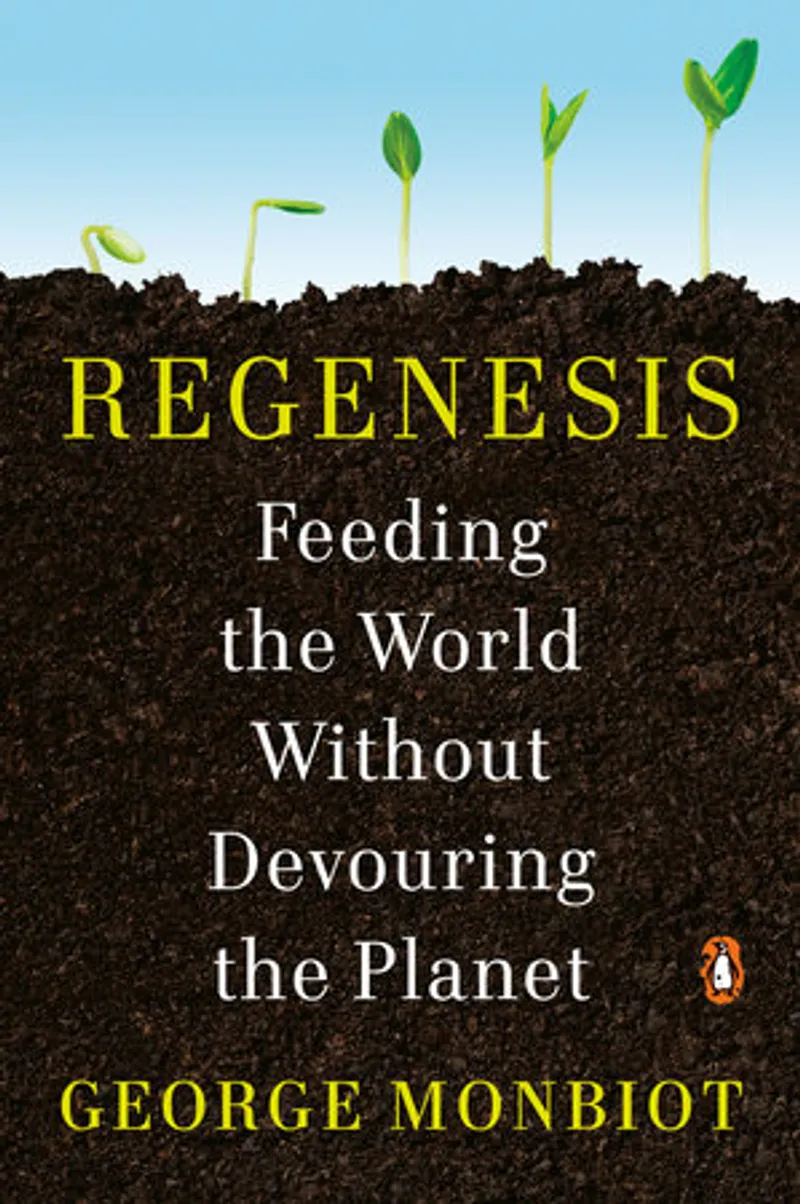

Regenesis Author: George MonbiotPage Count: UnknownPublication Date: 2022-PRH George Monbiot’s Regenesis is a radical reimagining of humanity’s relationship with food and the planet—a book that dares to ask whether we can feed the world without destroying it. Winner of the Orwell Prize for Journalism and shortlisted for the Wainwright Prize, this isn’t just another environmental manifesto; it’s a manifesto for a revolution in how we grow, consume, and even think about food. Monbiot, one of the most incisive voices in climate activism, dismantles the myths of industrial agriculture with forensic precision, then rebuilds a vision of hope from the soil up. At its core, Regenesis challenges the most sacred cow of modern life: the idea that farming must expand to feed the world. Monbiot flips this assumption on its head. Farming, he argues, is the single greatest destroyer of ecosystems—responsible for more habitat loss, biodiversity collapse, and carbon emissions than any other human activity. Yet despite this devastation, we still fail to feed everyone. The system is broken, and the cracks are widening: food prices are soaring, supply chains are fragile, and climate chaos is making fertile land scarcer by the year. The solution, Monbiot insists, isn’t more of the same—it’s a complete reinvention of agriculture, one that works with nature rather than against it. The book’s strength lies in its blend of hard science and human storytelling. Monbiot doesn’t just preach from a ivory tower; he embeds himself in the lives of the people who are already pioneering this new way of farming. He visits a vegetable grower in the UK who has unlocked the secrets of soil fertility without synthetic fertilizers, a scientist breeding perennial grains that could eliminate the need for plowing, and researchers culturing fat and protein from microbes—essentially growing food in vats, with a fraction of the land and water. These aren’t fringe experiments; they’re the frontiers of a coming agricultural revolution. Monbiot’s prose is as sharp as his arguments. He writes with the urgency of a whistleblower and the clarity of a poet, weaving together dense scientific research with vivid anecdotes. His descriptions of soil ecosystems—teeming with fungi, bacteria, and unseen life—are nothing short of lyrical. He makes the invisible visible, turning what could be a dry treatise on microbiology into a thrilling detective story. The book crackles with the energy of a man who has seen the future and refuses to accept the status quo. What makes Regenesis so compelling is its refusal to offer easy answers. Monbiot doesn’t peddle false optimism; he acknowledges the scale of the challenge. But he also refuses to surrender to despair. The book is, at heart, a call to arms—not for more protests or policy tweaks, but for a fundamental shift in how we see ourselves in relation to the Earth. We are not conquerors of nature, he argues, but participants in a vast, interconnected web of life. The age of extraction must give way to the age of regenesis. Some readers might find Monbiot’s vision too radical, too fast. After all, the idea of replacing vast fields of wheat with perennial grains or lab-grown protein is a seismic shift. But that’s precisely the point. The food system we have now is unsustainable, and incremental change won’t save us. Regenesis is a manifesto for those who believe that the only way forward is to burn the old models to the ground and start again. If you’ve ever felt despair at the state of the planet, if you’ve wondered whether there’s a way out of the ecological crisis, this book is a lifeline. It’s not just about food—it’s about redefining what it means to be human in the Anthropocene. Monbiot doesn’t just diagnose the problem; he shows us how to heal it. #Regenesis #GeorgeMonbiot #SustainableAgriculture #ClimateAction #FoodRevolution #RegenerativeFarming Related InsightsFrostbite Book Review and Summary The Firm Book Review and Summary Charlaine Harris Cemetery Girl Book Three Book Review and Summary{ "@context": "https://schema.org", "@type": "FAQPage", "mainEntity": [ { "@type": "Question", "name": "What is the main focus of Regenesis Book Review and Summary?", "acceptedAnswer": { "@type": "Answer", "text": "Everything you need to know about Regenesis with our detailed review." } }, { "@type": "Question", "name": "Who authored the comprehensive guide on Regenesis Book Review and Summary?", "acceptedAnswer": { "@type": "Answer", "text": "This detailed article and its insights were carefully researched and authored by Natalia Sokolova." } }, { "@type": "Question", "name": "Where can I find more related content about Books?", "acceptedAnswer": { "@type": "Answer", "text": "You can explore more articles, detailed reviews, and similar insights by browsing the Related Insights section at the bottom of this article or visiting our dedicated Books category page." } } ] }