Showing Posts From
Romanempire
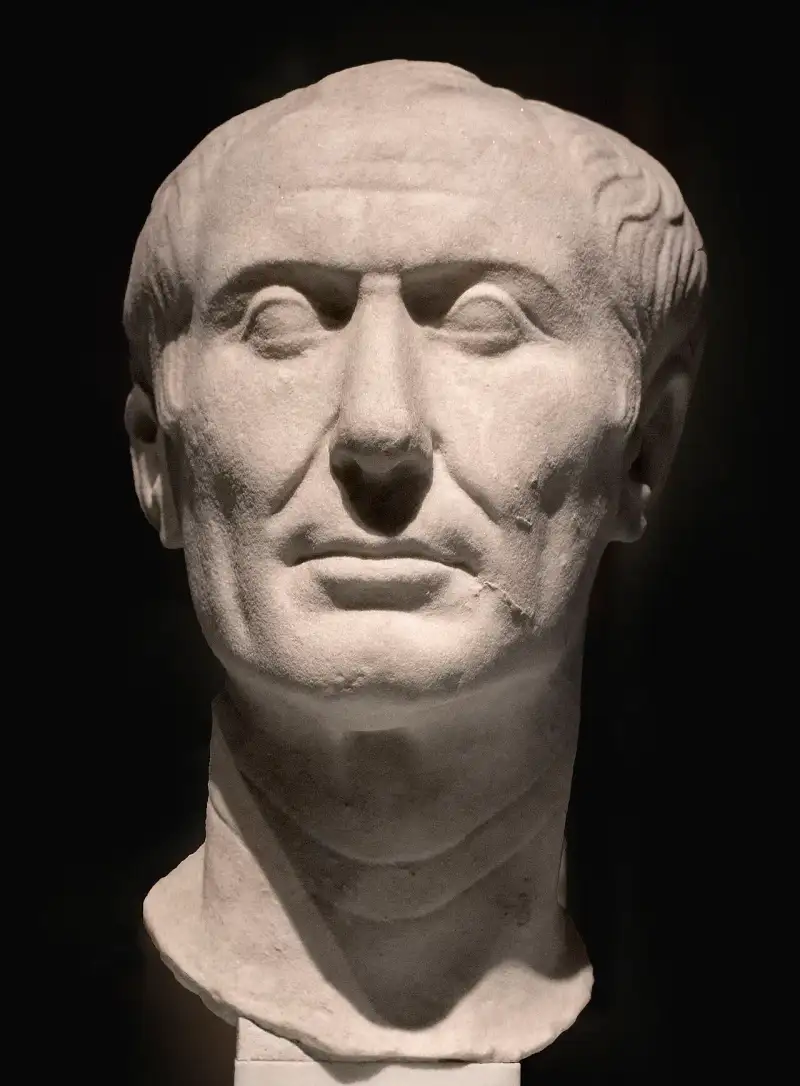

Julius Caesar: The Ambitious Soldier Behind the Myth "Alea iacta est." The die is cast. These four words, muttered on the banks of a muddy, insignificant river in northern Italy, shattered the greatest Republic the ancient world had ever seen. They belong to a man whose name has transcended history to become synonymous with absolute power: Gaius Julius Caesar. Yet, behind the marble busts, the Shakespearean tragedy, and the millennia of mythological accretion, who was the real Julius Caesar? He was not born an emperor. He was not destined for godhood. He was, first and foremost, an ambitious soldier, a political chameleon, and a man who understood that in Rome, power belonged not to the virtuous, but to the audacious. Join me, Mark Dinn, as we peel back the layers of antiquity, dust off the cobwebs of romanticized folklore, and step onto the blood-soaked soil of the #RomanEmpire. We are about to journey into the heart of the first century BC, a time of gladiators and legions, of treacherous senators and scheming generals, to uncover the visceral truth of the man who dared to conquer the known world. #AncientHistory #JuliusCaesar #HistoricalFiction The Crucible of Youth: Patrician Blood, Plebeian Sympathies To understand Caesar, one must first understand the volatile furnace of the late Roman Republic. It was a state tearing itself apart, polarized by extreme wealth inequality and the fierce rivalry between two political factions: the Optimates, who favored the traditional aristocratic Senate, and the Populares, who sought power by appealing directly to the plebeian masses. Gaius Julius Caesar was born in 100 BC into the Julian clan (the gens Julia), a patrician family of impeccable lineage that claimed direct descent from Iulus, son of the Trojan prince Aeneas, and through him, the goddess Venus herself. It was a pedigree that commanded immense respect, yet, surprisingly, his family was not particularly wealthy or politically dominant at the time of his birth. They lived in the Subura, a crowded, noisy, and notoriously rough lower-class neighborhood in Rome. This geographical reality—growing up a patrician in the slums—profoundly shaped the young Caesar. He learned the language of the streets, he understood the grievances of the poor, and he recognized the latent, terrifying power of the mob. His early years were forged in the fires of civil war. His uncle by marriage, Gaius Marius, a champion of the Populares, waged a brutal conflict against Lucius Cornelius Sulla, the ruthless defender of the Optimates. When Sulla emerged victorious and declared himself Dictator, he instituted horrific proscriptions—lists of enemies to be executed on sight. The teenage Caesar, because of his family ties, found himself squarely in Sulla’s crosshairs. Stripped of his inheritance and his priesthood, Caesar was forced to go into hiding, fleeing into the Sabine hills, ravaged by malaria, constantly moving to stay one step ahead of Sulla’s bounty hunters. It was a lesson in the fragility of power and the ruthlessness required to hold it. Eventually, Sulla pardoned the young man, supposedly remarking, "In this Caesar, there are many Mariuses." It was a chilling prophecy. The Forging of a Centurion: The Eastern Campaigns Knowing Rome was still too dangerous, Caesar joined the army and traveled east. It was here, far from the suffocating intrigues of the Senate, that the myth began to crystallize into reality. He served in Asia and Cilicia, displaying conspicuous bravery. At the Siege of Mytilene, he won the Civic Crown (Corona Civica), an immensely prestigious military decoration awarded for saving the life of a fellow citizen in battle. The laurel wreath was more than a medal; it was a political talisman that guaranteed him a seat in the Senate and immunity from certain physical punishments. But the defining anecdote of his early career occurred when he was captured by Cilician pirates while traveling across the Aegean Sea. The pirates, unaware of the tiger they held by the tail, demanded a ransom of twenty talents of silver. Caesar, insulted by the paltry sum, demanded they increase it to fifty talents, boasting that twenty was an insult to his worth. While his associates gathered the silver, Caesar lived among his captors not as a prisoner, but as a king. He demanded they keep quiet when he slept, forced them to listen to his poetry, and jokingly promised that once he was freed, he would return and crucify them all. They laughed. They thought it was the arrogant bluster of a pampered Roman aristocrat. But Caesar never made idle threats. Upon his release, he immediately raised a small fleet, hunted down the pirates, reclaimed his silver, and, true to his word, had them all crucified. This was the essence of Caesar: boundless confidence, absolute ruthlessness, and an unwavering commitment to his own perceived destiny. #MilitaryHistory #RomanRepublic The Political Gladiator: Bribery, Debt, and the First Triumvirate Returning to Rome after Sulla's death, Caesar threw himself into the gladiatorial arena of Roman politics. The Cursus Honorum (the sequential order of public offices) was a treacherous path, requiring not just talent, but immense wealth. Caesar, understanding that visibility was paramount, borrowed astronomical sums of money to fund lavish public games, banquets, and infrastructure projects. He essentially bought the love of the Roman mob, plunging himself into a debt so staggering it threatened to crush him. His creditors howled at his gates, but Caesar gambled on his own upward trajectory. He knew that if he could attain the highest offices, the spoils of war and governance would wipe his slates clean. He became Pontifex Maximus (chief priest), a lifelong position that carried immense prestige and political leverage. However, to truly dominate, he needed allies. In 60 BC, he orchestrated one of the most brilliant and consequential political maneuvers in ancient history: The First Triumvirate. He forged a secret alliance with the two most powerful men in Rome: Gnaeus Pompeius Magnus (Pompey the Great), the Republic's most celebrated general, and Marcus Licinius Crassus, the wealthiest man in Rome. It was a three-headed monster that effectively hijacked the Roman Republic. Crassus brought the gold, Pompey brought the soldiers, and Caesar brought the political acumen and the favor of the mob. Together, they bypassed the Senate, passed their own legislation, and divided the Roman world among themselves. For Caesar, the prize was the consulship in 59 BC, followed by the governorship of Gaul (modern-day France, Belgium, and northern Italy). Gaul was his proving ground. It was the anvil upon which he would forge an army loyal not to Rome, but to Caesar alone. The Conquest of Gaul: Mud, Blood, and Genius The Gallic Wars (58–50 BC) are where the ambitious politician transformed into one of the greatest military commanders in human history. Gaul was a vast, untamed wilderness inhabited by fiercely independent Celtic tribes. For centuries, the Gauls had been the boogeymen of the Roman psyche, ever since they had sacked Rome itself in 390 BC. Caesar did not just defeat the Gauls; he annihilated them, subjected them, and incorporated their vast territories into the Roman Empire. Over eight grueling years, he waged a campaign of staggering brutality and tactical brilliance. He fought the Helvetii, the Belgae, the Nervii, and the Veneti. He bridged the mighty Rhine River in just ten days to terrorize the Germanic tribes, proving that nowhere was safe from Roman engineering and Roman steel. He even launched two punitive expeditions to the misty, mysterious island of Britannia, becoming the first Roman general to cross the English Channel. His tactical genius was matched only by his logistical mastery. He moved his legions with terrifying speed, often appearing days before the enemy thought possible, catching them disorganized and unawares. He fought in the freezing mud of winter and the sweltering heat of summer. He suffered setbacks and near-disasters, but he possessed an uncanny ability to read the battlefield, to inspire his men to superhuman feats of endurance, and to snatch victory from the jaws of defeat. The defining moment of the Gallic Wars came at the Siege of Alesia in 52 BC. A united Gallic army under the charismatic chieftain Vercingetorix had retreated into the heavily fortified hilltop town of Alesia. Caesar, commanding a much smaller force, laid siege. He ordered his men to build an immense ring of circumvallation (inward-facing fortifications) around the town to starve the defenders. But then, word arrived that a massive Gallic relief army, hundreds of thousands strong, was marching to crush the Romans against the walls of Alesia. Caesar was trapped. The sensible, conventional decision would have been to retreat. Instead, Caesar ordered his men to build a second ring of fortifications, this one facing outward (contravallation). The Romans were now besieged while laying siege. When the relief army attacked, the fighting was apocalyptic. The Roman lines were stretched to the breaking point. But Caesar, wearing his trademark red cloak, rode into the thickest part of the fray, rallying his exhausted legionaries. The Gallic assault broke, Vercingetorix surrendered, and Gaul was irrevocably conquered. The human cost was staggering. Plutarch estimates that in Gaul, Caesar conquered three hundred tribes, took eight hundred cities, fought against three million men, killed one million in battle, and took another million as slaves. It was a genocide by modern standards, a triumph of civilization by Roman ones. Through it all, Caesar chronicled his victories in his Commentarii de Bello Gallico (Commentaries on the Gallic War), a masterpiece of propaganda written in crisp, third-person prose, ensuring the Roman populace knew exactly who their greatest hero was. #GallicWars #MilitaryStrategy #HistoryNerd The Rubicon: "Let the Die be Cast" While Caesar was subjugating Gaul, the political landscape in Rome had shifted dramatically. Crassus had been killed in a disastrous campaign against the Parthians, destroying the equilibrium of the Triumvirate. Pompey, growing increasingly jealous and fearful of Caesar’s rising star, aligned himself with the conservative Senate faction (the Optimates). The Senate, terrified of Caesar’s veteran army and his immense popularity with the plebeians, ordered him to disband his legions and return to Rome as a private citizen to face prosecution for alleged war crimes and political irregularities during his consulship. Caesar knew that returning to Rome without his army meant political annihilation, exile, or death. He faced an impossible choice: surrender his destiny to his enemies, or plunge the Republic into a catastrophic civil war. On January 10, 49 BC, Caesar stood on the banks of the Rubicon River, the northern boundary of Italy proper. Roman law strictly forbade a general from crossing the Rubicon with a standing army. To do so was an act of treason. According to the historian Suetonius, Caesar hesitated. He stared at the dark, rushing water, contemplating the magnitude of his actions. Finally, he turned to his officers and uttered the immortal words: “Alea iacta est.” The die is cast. He spurred his horse into the freezing water. The XIII Legion followed. The Roman Republic, effectively, died in that moment. What replaced it was a brutal, empire-spanning conflict between Caesar and Pompey. The Civil War: Pharsalus and the Fall of Pompey The ensuing civil war was a clash of titans. Pompey, boasting that he only had to stamp his foot on the ground of Italy for armies to appear, was caught off guard by Caesar's lightning-fast advance. Unprepared, Pompey and the majority of the Senate fled Rome, retreating to Greece to gather their massive Eastern legions. Caesar secured Rome, stabilized the economy, and then relentlessly pursued his former ally. The defining clash occurred on the dusty plains of Pharsalus in Greece in 48 BC. Pompey’s army was significantly larger, well-rested, and well-supplied. Caesar’s men were exhausted, hungry, and outnumbered almost two-to-one. But Caesar’s veterans were hardened by a decade of slaughter in Gaul. When Pompey’s vaunted cavalry charged, expecting to sweep the Roman flanks, Caesar revealed a hidden line of infantry armed with pila (javelins). He ordered them not to throw the javelins, but to use them as spears and thrust them directly into the faces of the aristocratic cavalrymen. The shock tactic worked. The cavalry panicked and broke, exposing Pompey’s flank. Caesar’s veterans rolled up the enemy line, and Pompey’s army disintegrated. Pompey fled to Egypt, seeking refuge with the young Pharaoh Ptolemy XIII. But the Egyptian king’s advisors, wishing to curry favor with the victorious Caesar, had Pompey assassinated the moment he stepped ashore. When Caesar arrived in Egypt and was presented with the severed head of his great rival, he did not rejoice. He wept. Pompey had been his son-in-law, his ally, and a fellow Roman. The assassination was a barbaric indignity that offended Caesar’s sense of Roman honor. #CivilWar #Pharsalus #JuliusCaesarHistory The Egyptian Interlude: Cleopatra and the Siege of Alexandria Caesar’s intervention in Egypt became one of the most romanticized and politically fraught chapters of his life. He found himself embroiled in a civil war between Ptolemy XIII and his sister-wife, the brilliant and alluring Cleopatra VII. Legend dictates that Cleopatra had herself smuggled into Caesar’s presence rolled in a carpet (or a linen sack). However it happened, the 52-year-old Roman dictator was instantly captivated by the 21-year-old Egyptian queen. She possessed a formidable intellect, a silver tongue, and the political ambition to match his own. Caesar sided with Cleopatra. For months, he was besieged in the royal palace of Alexandria by Ptolemy’s forces. It was a desperate struggle, during which the Great Library of Alexandria allegedly caught fire. Caesar fought in the streets, even swimming for his life in the harbor at one point, holding a valuable manuscript above the water with one hand. Eventually, Roman reinforcements arrived, Ptolemy was defeated, and Cleopatra was installed as the undisputed ruler of Egypt. Caesar remained in Egypt much longer than was militarily necessary, indulging in a lavish cruise down the Nile with his new lover. She bore him a son, Caesarion, the only known biological son of the great dictator. "Veni, Vidi, Vici": Consolidating Absolute Power Caesar tore himself away from the seductions of the East to extinguish the remaining fires of Pompeian resistance in Asia Minor, North Africa, and Spain. It was after a lightning-fast, five-day campaign against Pharnaces II in Pontus that Caesar sent his famously laconic report to the Senate: “Veni, vidi, vici.” I came, I saw, I conquered. By 45 BC, Caesar had defeated all his enemies. He returned to Rome the undisputed master of the Mediterranean world. He was appointed Dictator Perpetuo (Dictator for Life). Unlike Sulla, who had used his dictatorship to bathe Rome in the blood of his enemies, Caesar instituted a policy of clementia (clemency). He forgave those who had fought against him, restoring them to positions of power. It was a noble gesture, but a fatally flawed one. The men he pardoned were staunch republicans who could not abide the destruction of their ancient constitution. As dictator, Caesar initiated a staggering array of reforms. He relieved debt, reformed the calendar (creating the Julian calendar, the basis of the one we use today), built magnificent public works, founded colonies for his veterans, and expanded the Senate to include provincials from Gaul and Spain. He was a visionary who saw that the corrupt, inefficient republican system could no longer govern an empire spanning three continents. He centralized power, laid the groundwork for an imperial administration, and brought stability to a world fractured by decades of war. But his ambition was terrifying. He wore purple robes (the color of ancient kings), he allowed his face to be minted on coins (an unprecedented honor for a living Roman), and he sat on a gilded chair in the Senate. To the proud, aristocratic senators, Caesar was no longer a first citizen; he was a tyrant who threatened the very soul of Rome. #Dictator #RomanRepublic #AncientRome The Ides of March: The Bloody Price of Ambition The conspiracy against Caesar was born not in the slums, but in the highest echelons of Roman society. It was led by Gaius Cassius Longinus and Marcus Junius Brutus. Brutus was a particularly agonizing figure; he was the son of Caesar’s long-time mistress, Servilia, and Caesar loved him like a son. But Brutus claimed descent from Lucius Junius Brutus, the man who had expelled the last king of Rome centuries earlier. The weight of his ancestry compelled him to strike down the new tyrant. On March 15, 44 BC—the Ides of March—Caesar was scheduled to attend a Senate meeting at the Theatre of Pompey. The air was thick with omens. A soothsayer named Spurinna had warned him to beware the Ides of March. His wife, Calpurnia, had suffered a terrifying nightmare of his murder and begged him to stay home. Caesar, arrogant and fatalistic, ignored the warnings. "It is better to die once than to live in constant fear of death," he reportedly said. As he took his seat in the Senate, the conspirators crowded around him, under the pretense of presenting a petition. Tillius Cimber grabbed Caesar’s toga, pulling it down from his neck—the signal to attack. Publius Servilius Casca struck the first blow, a glancing knife wound to the neck. Caesar, the hardened soldier, fought back, driving his stylus into Casca’s arm. But he was surrounded by sixty men, their daggers flashing in the dim light. He fought like a trapped lion, bleeding from multiple wounds. But then, he saw Brutus step forward, dagger in hand. This was the ultimate betrayal. Whether he spoke the Greek phrase “Kai su, teknon?” (And you, my child?) or the Shakespearean “Et tu, Brute?” is heavily debated by historians. But what is universally agreed upon is that upon seeing Brutus, Caesar covered his face with his toga and stopped fighting. He collapsed at the base of the statue of Pompey, his great rival, bleeding out from twenty-three stab wounds. Only one, a blow to the chest, was deemed fatal by the physician Antistius. The dictator was dead. The Republic, the conspirators believed, was saved. The Aftermath: The Legacy that Birthed an Empire The assassins, calling themselves the "Liberators," expected to be hailed as heroes. They rushed into the streets holding their bloody daggers aloft, shouting that the tyrant was dead. Instead, they were met with stunned silence. Caesar was beloved by the plebeians and his veterans. His death did not restore the Republic; it plunged Rome into thirteen more years of apocalyptic civil war. Caesar’s right-hand man, Mark Antony, delivered a masterful funeral oration (dramatized brilliantly by Shakespeare) that incited the mob to riot, forcing the conspirators to flee Rome. But the greatest shock came when Caesar’s will was read. He had not named Antony as his primary heir, nor his son with Cleopatra, Caesarion. Instead, he adopted his obscure 18-year-old great-nephew, Gaius Octavius, leaving him his name, his vast fortune, and his political legacy. It was a stroke of posthumous genius. Octavius—soon to be known as Octavian, and eventually Augustus—proved to be an even more cunning and ruthless politician than his adoptive father. He allied with Antony to hunt down and destroy the assassins at the Battle of Philippi, and then, inevitably, turned on Antony and Cleopatra, defeating them at Actium. Augustus achieved what Caesar could not: he permanently dismantled the Republic and established the Roman Empire, ruling as its first Emperor for over forty years. But he did so standing on the shoulders of the giant who had paved the blood-soaked way. Conclusion: The Immortal Caesar Julius Caesar was a man of staggering contradictions. He was a populist who claimed divine lineage; a ruthless conqueror who pardoned his deadliest enemies; a brilliant writer, a legendary lover, and a military genius whose tactical doctrines are still studied in war colleges today. He recognized that the institutions of his era were decaying, and he possessed the audacity, the vision, and the terrible will to tear them down and build something new. He crossed the Rubicon knowing there was no turning back, embracing the chaos that would either elevate him to the heavens or cast him into oblivion. In the end, he achieved both. He was murdered on the Senate floor, a victim of his own unchecked ambition and his failure to understand the deep-rooted republican pride of his peers. Yet, in death, he became a god. A comet appeared in the sky shortly after his assassination, which Augustus declared was Caesar’s soul ascending to the heavens (Sidus Iulium). He gave his name to the month of July, and his family name became the title for emperors (Kaiser, Czar) for two thousand years. The Republic died with him, but the Empire he envisioned shaped the trajectory of Western civilization. As a writer of historical fiction, I find Caesar endlessly fascinating not because he was perfect, but because he was profoundly human, driven by an elemental fire that burned hotter and brighter than anyone else of his age. He was the ambitious soldier who looked at the known world and decided it belonged to him. And for a fleeting, glorious, terrifying moment in history, it did. Mark Dinn is a best-selling author of historical fiction. His latest novel, "The Blood of the Rubicon," explores the intimate political betrayals leading up to the Ides of March. Follow Mark for more deep dives into the shadows of antiquity. #HistoricalWriter #HistoryBlogger #RomanHistory #Antiquity #JuliusCaesarLife #DictatorPerpetuo Related InsightsThe Rosetta Stone: Breaking the Silence of Ancient Egypt Ghosts of the Tower of London: Betrayal, Blood, and Royal Secrets The Great Fire of London (1666): An Empire Reborn from Ashes{ "@context": "https://schema.org", "@type": "FAQPage", "mainEntity": [ { "@type": "Question", "name": "What is the main focus of Julius Caesar: The Ambitious Soldier Behind the Myth?", "acceptedAnswer": { "@type": "Answer", "text": "A dramatic deep dive into Julius Caesar: The Ambitious Soldier Behind the Myth. Mark Dinn explores the untold history, drama, and legacy of this fascinating subject." } }, { "@type": "Question", "name": "Who authored the comprehensive guide on Julius Caesar: The Ambitious Soldier Behind the Myth?", "acceptedAnswer": { "@type": "Answer", "text": "This detailed article and its insights were carefully researched and authored by Mark Dinn." } }, { "@type": "Question", "name": "Where can I find more related content about History?", "acceptedAnswer": { "@type": "Answer", "text": "You can explore more articles, detailed reviews, and similar insights by browsing the Related Insights section at the bottom of this article or visiting our dedicated History category page." } } ] }