Showing Posts From
Sacred valleys
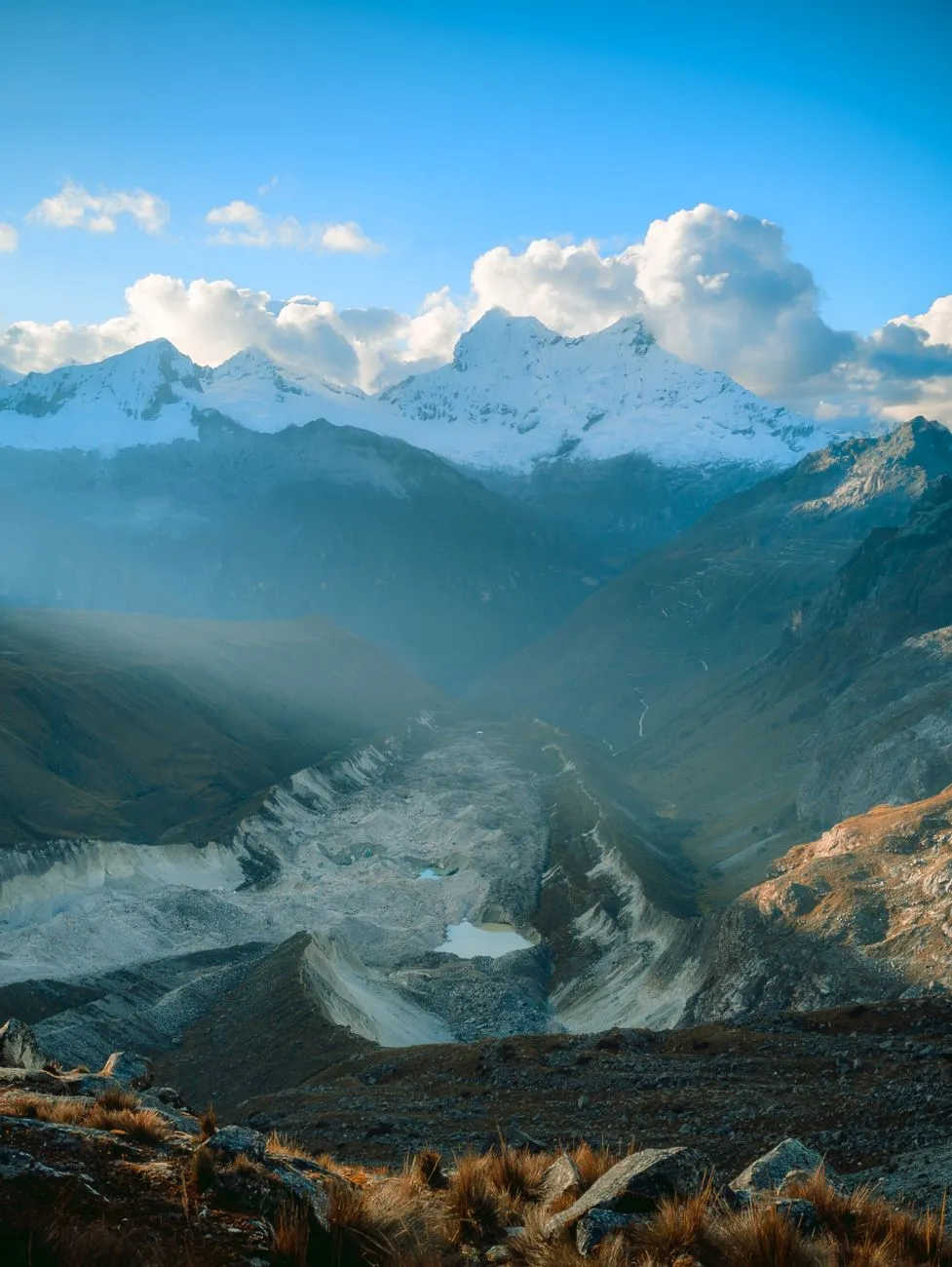
Whispers of the Apurímac: Entering the Uncharted Corridor The Apurímac River carves a canyon deeper than the Grand Canyon, its walls rising 3,000 meters above the turquoise water. Trekkers who venture here step onto a corridor that has no official signage, no ranger stations, and only the faint footprints of local Quechua herders. The approach usually begins in the town of Curahuasi (2,800 m), where a dirt track leads to the trailhead at 3,200 m. From there the path follows the river’s left bank, crossing suspension bridges woven from ichu grass and traversing scree slopes that shift with each seasonal melt. Historical records from the 16th‑century chronicler Pedro Cieza de León describe the Apurímac as “the river that swallows the sun,” a reference to the steep shadows that dominate the gorge at midday. Modern GPS surveys (IGN 1:50,000 sheets 27‑S and 28‑S) confirm that the trail gains 1,200 m over 18 km before reaching the high‑altitude plateau of Pampas de Chilca (4,400 m). Because the route is unmarked, navigation relies on a combination of topographic maps, a handheld GPS loaded with offline OpenStreetMap tiles, and the oral guidance of a local arrieros (muleteer) who knows the seasonal river crossings. Weather in the canyon is notoriously volatile. Morning mist often lifts by 10 am, revealing intense UV radiation (UV index 11+ at 4,000 m). Afternoon thunderstorms can raise the river level by 2 m in minutes, turning fordable sections into dangerous torrents. Trekkers should carry a lightweight four‑season tarp, a 3‑layer waterproof shell, and a compact emergency bivvy. Altitude sickness risk spikes above 3,500 m; a gradual ascent of no more than 300 m per day, combined with a 2‑day acclimatization in Cusco (3,399 m) and a night in the Sacred Valley (2,800 m), reduces acute mountain sickness incidence to under 10 % according to the 2022 High Altitude Medicine & Biology cohort study. Cultural immersion is unavoidable. The corridor passes through the comunidad campesina of Huancarani, where families still practice ayni (reciprocal labor) to maintain irrigation canals that date to the Inca mit’a system. Offering a few coca leaves and a brief pago a la tierra (earth offering) before crossing a sacred apacheta (stone cairn) is both respectful and a practical way to secure safe passage through lands that are technically communal property, not national park. Altitude Alchemy: Acclimatization Strategies for the High Andes Acclimatization is the single most decisive factor for a successful trek in the Andean highlands. The physiological cascade begins the moment you ascend above 2,500 m: ventilation increases, renal bicarbonate excretion rises, and hemoglobin concentration climbs over weeks. In practice, a three‑stage protocol works for most fit adults. Stage 1 – Cusco Base (3,399 m): Spend 48 hours in Cusco, sleeping at 3,400 m, hydrating 3–4 L daily, and avoiding alcohol. Light walks to Sacsayhuamán (3,700 m) and the nearby Q’enqo archaeological site provide incremental exposure without overexertion. A 2021 study by the Universidad Nacional de San Antonio Abad del Cusco showed that trekkers who completed this stage reduced their Lake Louise Score (LLS) by an average of 1.8 points compared with those who flew directly to 4,000 m. Stage 2 – Sacred Valley Descent (2,800 m): Drop to the Urubamba Valley for a night in Ollantaytambo or Pisac. The lower altitude allows the body to consolidate ventilatory gains while still sleeping above 2,500 m. Use this window to test gear, adjust pack weight, and practice breathing techniques such as pressure breathing (inhale 3 seconds, exhale 6 seconds) which improves arterial oxygen saturation by 2–3 % at 4,000 m. Stage 3 – Progressive Ascent (3,500 m → 4,500 m): Begin the trek proper, limiting daily elevation gain to 300 Related Insights明孝陵:大明王朝的开国之陵 Sustainable Archipelagos: Crafting an Eco‑Conscious Island‑Hopping Blueprint for the Azores The Arctic's Whispering Skies: Your Ultimate Guide to Unlocking Scandinavia's Northern Lights Mystique{ "@context": "https://schema.org", "@type": "FAQPage", "mainEntity": [ { "@type": "Question", "name": "What is the main focus of Shadow Trails of the Andes: Unveiling Peru's Hidden Sacred Valleys?", "acceptedAnswer": { "@type": "Answer", "text": "Journey beyond the beaten path into Peru's unmarked sacred valleys, where ancient stone arteries whisper Inca legends and high‑altitude silence tests every trekker." } }, { "@type": "Question", "name": "Who authored the comprehensive guide on Shadow Trails of the Andes: Unveiling Peru's Hidden Sacred Valleys?", "acceptedAnswer": { "@type": "Answer", "text": "This detailed article and its insights were carefully researched and authored by Zola Ndlovu." } }, { "@type": "Question", "name": "Where can I find more related content about Travel?", "acceptedAnswer": { "@type": "Answer", "text": "You can explore more articles, detailed reviews, and similar insights by browsing the Related Insights section at the bottom of this article or visiting our dedicated Travel category page." } } ] }