Showing Posts From
Shroud
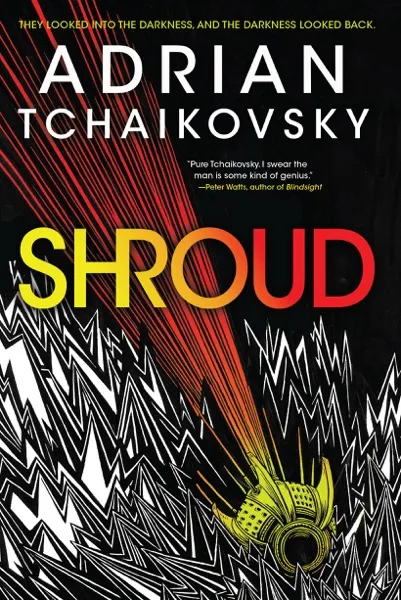

Shroud Author: Adrian TchaikovskyPage Count: UnknownPublication Year: 2025-GB Adrian Tchaikovsky’s Shroud isn’t just another science fiction novel—it’s a haunting meditation on identity, memory, and the fragility of the self, wrapped in the kind of high-concept dread that has made Tchaikovsky a master of speculative fiction. Set against a backdrop that feels both achingly familiar and profoundly alien, the book explores what happens when the boundaries between mind and machine, past and present, collapse under the weight of time and trauma. With its intricate plotting, psychological depth, and a prose style that oscillates between poetic precision and brutal clarity, Shroud reaffirms Tchaikovsky’s place as one of the genre’s most inventive and emotionally resonant voices. At its core, Shroud grapples with the idea of a "shroud" not just as a covering for the dead, but as a metaphor for the layers that obscure truth—whether in personal memory, historical record, or the very architecture of human cognition. The novel’s unnamed protagonist (or protagonists? The book plays with this ambiguity masterfully) wakes into a world where their past is a patchwork of implanted recollections, their body a vessel for borrowed identities, and their purpose a cipher. This premise alone would be compelling, but Tchaikovsky pushes further: what if the past isn’t just obscured—what if it was never real? The book interrogates the nature of selfhood in an era where technology can rewrite history, where memories can be hacked, and where the line between victim and perpetrator blurs into something unrecognizable. Tchaikovsky’s style is deceptively simple, lulling the reader with a quiet, introspective tone before delivering shocks that linger like bruises. His prose has a tactile quality, describing not just the cold sterility of a spaceship’s corridors or the hum of a neural interface, but the feel of isolation—the way silence presses against the ears, how a single unanswered question can curdle into paranoia. There’s a clinical detachment in his writing that mirrors the protagonist’s fractured psyche, yet beneath it burns a fire of raw, unrelenting desperation. When Tchaikovsky pivots to moments of explosive action, the violence feels sudden and visceral, a rupture in the protagonist’s carefully constructed calm. Thematically, Shroud feels like a spiritual successor to Tchaikovsky’s Children of Time, but where that novel revelled in the grandeur of evolution, Shroud drills down into the cost of progress. The book doesn’t shy away from asking: How much of ourselves do we sacrifice to survive? To belong? To be useful? The answers, when they come, are never tidy—and that’s the point. Tchaikovsky refuses to offer easy resolutions, instead leaving the reader to sit with the discomfort of ambiguity. Is the protagonist the hero or the villain? A victim or a perpetrator? The answers may lie buried in the "shroud" of the title, but the journey to uncover them is the real story. What makes Shroud particularly striking is its ability to balance high-concept sci-fi with deeply human concerns. The novel’s world-building is intricate but never overwhelming, its mysteries unfolding like a puzzle where the rules keep shifting. Tchaikovsky’s characters—even the peripheral ones—feel real in their contradictions, their motivations murky, their loyalties suspect. This is a book that trusts its readers to sit in the discomfort of not knowing, to lean into the unease of a narrative that refuses to be pinned down. If Shroud has a weakness, it’s that its pacing demands patience. The first third of the novel is deliberately slow, a deliberate choice that mirrors the protagonist’s disorientation. Some readers may find it frustrating, but those who push through will be rewarded with a story that lingers long after the last page. This is the kind of book that demands re-reading, not just to catch the details you missed, but to experience again the way Tchaikovsky constructs meaning in the gaps. In an era where science fiction often leans toward either escapist fantasy or grim dystopian allegory, Shroud carves out a space that’s uniquely its own: a story about the terror and beauty of being human in a world where humanity itself is negotiable. It’s a book that will haunt you—not because of its monsters or its violence, but because of its quiet, insistent question: What if you don’t even know who you are anymore? Adrian Tchaikovsky has delivered another masterpiece, one that cements his reputation as a writer who doesn’t just imagine the future, but dissects the present with the scalpel of his prose. #ShroudAdrianTchaikovsky #SciFiMustRead #MindBendingFiction #TechHorror #IdentityCrisis #FutureDystopia Related InsightsDead Lift Book Review and Summary The Home Within: Design a Life You Love from the Inside Out Book Review and Summary The Fine Print Book Review and Summary{ "@context": "https://schema.org", "@type": "FAQPage", "mainEntity": [ { "@type": "Question", "name": "What is the main focus of Shroud Book Review and Summary?", "acceptedAnswer": { "@type": "Answer", "text": "Everything you need to know about Shroud with our detailed review." } }, { "@type": "Question", "name": "Who authored the comprehensive guide on Shroud Book Review and Summary?", "acceptedAnswer": { "@type": "Answer", "text": "This detailed article and its insights were carefully researched and authored by Olivia Harris." } }, { "@type": "Question", "name": "Where can I find more related content about Books?", "acceptedAnswer": { "@type": "Answer", "text": "You can explore more articles, detailed reviews, and similar insights by browsing the Related Insights section at the bottom of this article or visiting our dedicated Books category page." } } ] }