Showing Posts From
Smart home
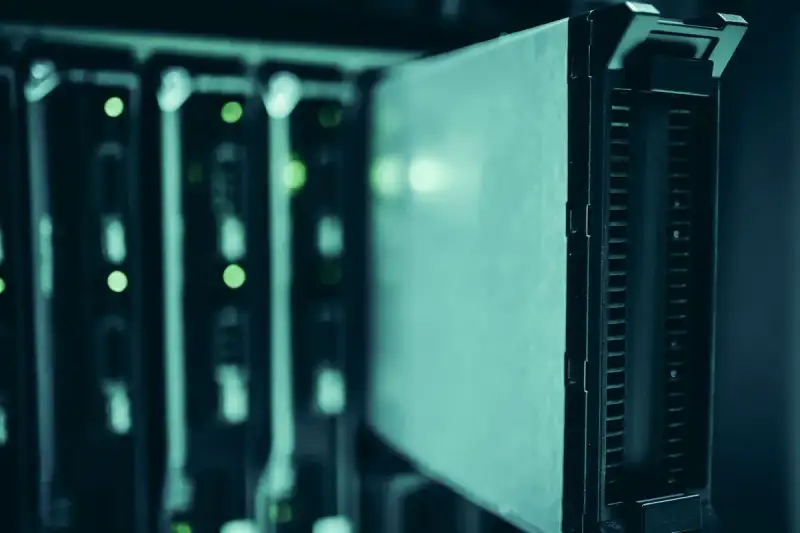

Imagine a smart home that anticipates your needs, understands complex voice commands, and recognizes your face at the door—all without sending a single byte of your personal data to a corporate server. Until recently, this level of intelligence required the massive computing power of cloud data centers. But the rapid miniaturization of neural processing units (NPUs) and the optimization of open-source models have ushered in a new era: The Edge AI Smart Home. As a robotics engineer with a background in autonomous systems, I view the home as the ultimate localized robotic environment. Relying on cloud infrastructure for critical home operations is not just a privacy risk; it's an architectural flaw. #Robotics #AutonomousVehicles In this comprehensive, step-by-step guide, we will explore how to architect, hardware-provision, and deploy a privacy-first smart home using Edge AI hubs. We will cut the cord to the cloud and bring the brain of the operation directly into your living room. #EdgeAI #IoT What is Edge AI in the Context of a Smart Home? "Edge computing" means processing data at or near the source of data generation, rather than sending it across the internet to a centralized cloud. When we add "AI" to the mix, we are talking about running machine learning models—such as computer vision for security cameras or Large Language Models (LLMs) for voice assistants—locally on hardware physically located inside your home. The Three Pillars of Edge AI Privacy:Zero Data Exfiltration: Your audio recordings, video feeds, and daily routines never leave your local area network (LAN). Infinite Uptime: Because processing is local, your voice commands and automations work flawlessly even during internet outages. Instant Latency: Processing an image or a voice command locally takes milliseconds, compared to the round-trip latency of cloud APIs.Step 1: Choosing the Right Hardware for the Hub You cannot run advanced AI models on a standard $30 smart hub. You need compute power, specifically hardware optimized for AI inference. The Entry Level: Raspberry Pi 5 with an AI Accelerator The Raspberry Pi 5 is incredibly capable, but for Edge AI, you need to pair it with an accelerator like the Google Coral USB Accelerator or a Hailo-8 M.2 module. These specialized chips (TPUs/NPUs) can perform trillions of operations per second (TOPS), making them perfect for local object detection on camera feeds. The Power User: The N100 Mini PC or Mac Mini M-Series For running local LLMs (like Llama 3 8B or Mistral) to process natural language voice commands locally, you need significant RAM and a powerful CPU/GPU. A refurbished Mac Mini M1/M2 (due to its unified memory architecture) or an Intel N100-based Mini PC running Proxmox is the sweet spot for budget-conscious edge computing in 2026. Step 2: The Operating System - Proxmox and Home Assistant OS To maximize efficiency, we will use a hypervisor. Proxmox Virtual Environment (VE) allows you to split your Mini PC into multiple isolated virtual machines (VMs). Install Proxmox on your Mini PC via a bootable USB. Deploy Home Assistant OS (HAOS) as a primary Virtual Machine. HAOS will act as the central nervous system connecting all your IoT devices.Terminal Command: HAOS Proxmox Installation Script The community has created brilliant automation scripts for this. Log into your Proxmox web shell and execute: bash -c "$(wget -qLO - https://github.com/tteck/Proxmox/raw/main/vm/haos.sh)"Follow the prompts to allocate RAM (minimum 4GB) and storage (minimum 32GB). Within minutes, your local Home Assistant instance will be running. Step 3: Local Computer Vision with Frigate NVR Cloud cameras like Ring or Nest upload your continuous video feeds to external servers, analyze them for human movement, and send you a notification. We will replace this with Frigate, an open-source Network Video Recorder (NVR) built specifically for real-time local object detection. Frigate integrates directly into Home Assistant and utilizes the Google Coral TPU (which you plugged into your Mini PC) to analyze RTSP video streams from local, offline IP cameras (like Reolink or Amcrest). Sample Frigate Configuration (frigate.yml): mqtt: host: 192.168.1.100 detectors: coral: type: edgetpu device: usb cameras: front_door: ffmpeg: inputs: - path: rtsp://admin:password@192.168.1.50:554/h264Preview_01_main roles: - detect - rtmp detect: width: 1920 height: 1080 objects: track: - person - dog - carBecause the Coral TPU runs the inference locally, the moment a person steps onto your porch, the AI detects it in milliseconds, triggers a Home Assistant automation to turn on the porch light, and sends a snapshot to your phone via an encrypted local push notification—zero cloud required. #DataSecurityStep 4: Local Voice Processing (The Holy Grail) Voice assistants are the biggest privacy offenders. To replace them, we use the Home Assistant Assist pipeline, powered by local Whisper (for Speech-to-Text) and Piper (for Text-to-Speech). If you have a powerful enough Edge Hub (like an M2 Mac Mini or a machine with an Nvidia RTX GPU), you can route the transcribed text through a local LLM using Ollama. Running Ollama locally: # Install Ollama on your Linux VM curl -fsSL https://ollama.com/install.sh | sh# Pull a lightweight, highly capable model ollama run llama3:8bBy connecting Home Assistant to your local Ollama instance via the "Extended OpenAI Conversation" integration (pointing the API URL to http://localhost:11434/v1), your home becomes truly intelligent. You don't have to say rigid commands like "Turn on living room light." You can say, "It's getting a bit dark in here, and I want to read a book." Your local Edge AI processes the intent, understands you are in the living room, realizes reading requires light, and autonomously turns on the reading lamp. Step 5: Network Isolation (VLANs) The final, and most crucial, step in a privacy-first smart home is network isolation. Even if you don't use cloud services, many cheap IoT devices (like smart plugs or Wi-Fi bulbs) have hardcoded telemetry that constantly tries to "phone home" to servers in foreign countries. You must configure your router (using pfSense, OPNsense, or Unifi) to create an IoT VLAN.Move all IoT hardware to this separate Wi-Fi network. Create a firewall rule that Blocks all traffic from the IoT VLAN to the WAN (Internet). Create a rule that allows your Home Assistant server to initiate communication with the IoT VLAN.Now, your devices are trapped. They cannot spy on you, they cannot update their firmware without your permission, and they cannot be compromised by external botnets. They exist purely to serve your local Edge AI hub. The Future is Local Building an Edge AI smart home requires more upfront effort than simply plugging in a Google Nest Hub. It requires tinkering with Docker containers, writing YAML, and managing subnets. However, the reward is absolute digital sovereignty. Your home becomes a fortress of privacy. Your automations execute with lightning speed. And you are utilizing cutting-edge neural processing technology exactly where it belongs: at the edge, serving you, and only you. Welcome to the true definition of a "Smart" Home.Have questions about hardware requirements or Proxmox setups? Let me know in the comments, and I'll help you architect your local edge server! Related InsightsAlgorithmic Sovereignty: Deconstructing the DAO Paradox in On-Chain Governance Revolutionizing Autonomous Task Execution: The Evolution of Large Action Models (LAMs) Holographic Displays: The Silent Revolution Reshaping AR/VR, 3D Visualization, and Human-Computer Interaction{ "@context": "https://schema.org", "@type": "FAQPage", "mainEntity": [ { "@type": "Question", "name": "What is the main focus of How to Set Up a Privacy-First Smart Home Using Edge AI Hubs?", "acceptedAnswer": { "@type": "Answer", "text": "Learn how to build a 100% private smart home utilizing Edge AI hubs, local LLMs, and secure hardware without relying on external cloud servers." } }, { "@type": "Question", "name": "Who authored the comprehensive guide on How to Set Up a Privacy-First Smart Home Using Edge AI Hubs?", "acceptedAnswer": { "@type": "Answer", "text": "This detailed article and its insights were carefully researched and authored by Kaan Demir." } }, { "@type": "Question", "name": "Where can I find more related content about Technology?", "acceptedAnswer": { "@type": "Answer", "text": "You can explore more articles, detailed reviews, and similar insights by browsing the Related Insights section at the bottom of this article or visiting our dedicated Technology category page." } } ] }