Showing Posts From
Sol de medianoche
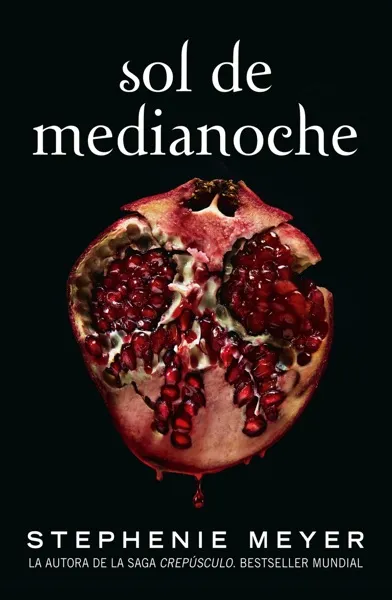

Sol de medianoche Author: Stephenie MeyerPage Count: UnknownPublication Year: 2020-GB Stephenie Meyer’s Sol de medianoche (Midnight Sun), the long-awaited companion to her 2005 vampire epic Twilight, arrives not as a mere retelling but as a full-bodied exploration of love, obsession, and identity from the perspective of its most enigmatic figure. Published in 2020, the novel takes the familiar story of Bella Swan—now Bella Cullen—and casts it in the shadow of Edward Cullen’s tormented soul, transforming a modern myth into a psychological portrait of a being caught between monstrosity and humanity. Meyer’s decision to revisit her groundbreaking saga through this lens is audacious, and the result is a work that deepens the emotional stakes of the original while challenging readers to confront the ethics of love born from secrecy and danger. At its core, Sol de medianoche is a meditation on the duality of identity—what it means to be seen, and what it means to hide. Edward Cullen is not just a vampire; he is a creature of paradox: beautiful and destructive, compassionate and cruel, yearning for connection yet paralyzed by the fear of harming those he loves. Meyer strips away the romance of immortality to reveal its raw, unglamorous truth. Edward’s narration is not that of a swooning lover but of a man haunted by his own hunger, by the knowledge that his very existence is a violation of human life. His poetic introspection—laced with Shakespearean allusions, scientific musings, and a gothic melancholy—turns each page into a confession rather than a declaration. We don’t just witness his love for Bella; we endure his self-loathing, his obsessive need to protect her, and his quiet terror of becoming the monster he fears he is. Meyer’s prose is at once luxuriant and razor-sharp. Her writing style in Sol de medianoche is introspective and densely atmospheric, drawing readers into Edward’s mind with a hypnotic rhythm. The language is lush, almost operatic in its cadence, reflecting the vampire’s heightened senses and emotional intensity. Yet beneath this beauty lies a psychological precision that elevates the narrative beyond mere fantasy. Edward’s internal monologue is a masterclass in unreliable narration—his perceptions are colored by bias, fear, and an almost pathological self-awareness. When he describes Bella’s scent as intoxicating, we feel not just desire, but the sickening guilt that accompanies it. When he speaks of her voice as a siren call, we sense not just romance, but the dread of what he might do if he loses control. This is where Meyer’s genius lies: she doesn’t gloss over the darkness of love. The novel interrogates the boundaries between devotion and possession, between care and control. Edward’s love is not gentle; it is ferocious, possessive, and sometimes suffocating. He monitors Bella’s every move, analyzes her every word, and justifies his actions with the cold logic of a predator calculating risk. Yet, Meyer complicates this portrayal by showing the humanity beneath the fangs. Edward’s humanity is not diminished by his vampirism—it is intensified. His capacity for love is boundless, but so is his capacity for suffering. His greatest fear is not death, but becoming the very thing he hates: a monster who destroys what he cherishes. Structurally, Sol de medianoche follows the events of Twilight almost beat-for-beat, but the shift in perspective transforms the familiar into something unsettlingly new. Bella, who once seemed passive and dreamy, now appears in Edward’s eyes as a force of nature—irresistible, luminous, and dangerously fragile. Her presence disrupts the order of his immortal existence, forcing him to confront emotions he thought long buried. The tension between them is less about destiny and more about power: who controls the narrative? Who decides what is safe? Meyer forces readers to question whether Edward’s love is truly selfless or merely another form of control. What makes Sol de medianoche more than just a retread is its unflinching honesty. Meyer doesn’t shy away from the grotesque realities of vampirism—blood as nourishment, the physical revulsion of human warmth, the horror of aging while loved ones change. Yet, she counterbalances this with moments of transcendent tenderness. Edward’s devotion is not diminished by his flaws; it is defined by them. His love is not perfect because he is not perfect—he is flawed, tormented, and deeply human in his inhumanity. In the end, Sol de medianoche is a novel about the cost of love when one partner is not fully human. It asks whether love can exist without sacrifice, whether devotion can coexist with destruction, and whether forgiveness is possible in the face of irreversible wrongs. Meyer doesn’t offer easy answers. Instead, she presents a story that is equal parts seductive and sobering, inviting readers to fall in love with Edward not despite his darkness, but because of it. This is not the Twilight of glittering vampires and doe-eyed heroines. This is a darker, more mature exploration of what it means to love someone so deeply that you risk becoming their greatest fear. Sol de medianoche is a vampire novel for those who have outgrown fairy tales—one that lingers not because of its romance, but because of its raw, unfiltered humanity. #MidnightSun #VampireLove #TwilightReimagined #DarkRomance #EdwardCullen #StephenieMeyer Related InsightsThe Perfect Match Book Review and Summary The Big Sleep Book Review and Summary The Iliad Book Review and Summary{ "@context": "https://schema.org", "@type": "FAQPage", "mainEntity": [ { "@type": "Question", "name": "What is the main focus of Sol de medianoche Book Review and Summary?", "acceptedAnswer": { "@type": "Answer", "text": "Everything you need to know about Sol de medianoche with our detailed review." } }, { "@type": "Question", "name": "Who authored the comprehensive guide on Sol de medianoche Book Review and Summary?", "acceptedAnswer": { "@type": "Answer", "text": "This detailed article and its insights were carefully researched and authored by Olivia Harris." } }, { "@type": "Question", "name": "Where can I find more related content about Books?", "acceptedAnswer": { "@type": "Answer", "text": "You can explore more articles, detailed reviews, and similar insights by browsing the Related Insights section at the bottom of this article or visiting our dedicated Books category page." } } ] }