Showing Posts From
Steppenwolf
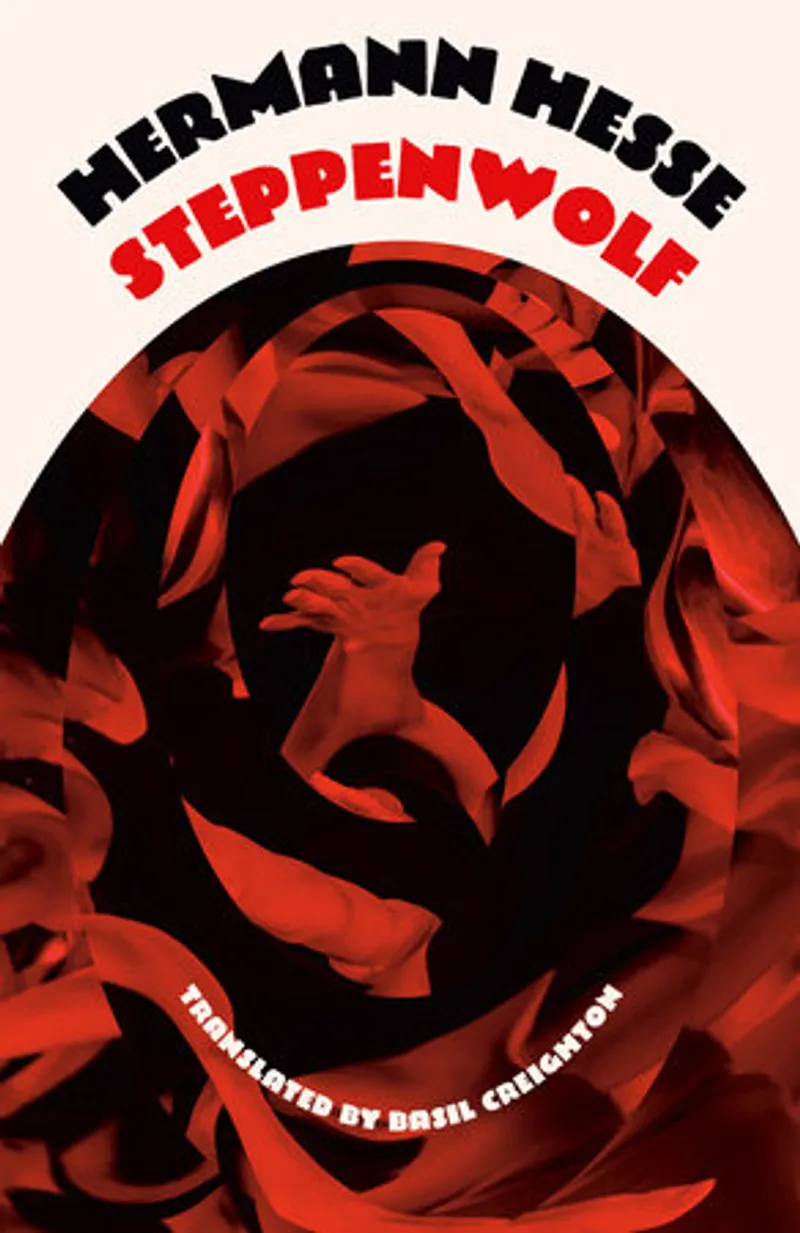
Steppenwolf Author: Hermann HessePage Count: UnknownPublication Date: 2025-PRH Hermann Hesse’s Steppenwolf is a labyrinth of the mind, a novel that doesn’t just tell a story but dismantles the reader’s assumptions about identity, sanity, and the search for meaning. Published in 1927 but timeless in its resonance, this book feels as if it were written for the modern age—a mirror held up to the fractured soul of a world teetering between chaos and transcendence. At its core, Steppenwolf is a brutal yet poetic exploration of the duality within us all: the civilized man versus the wild beast, the seeker versus the skeptic, the individual versus the collective illusion of self. The protagonist, Harry Haller, is a man out of time, a misanthrope who views himself as a "steppenwolf"—a lone creature caught between the human world and the untamed wilderness of his own psyche. Hesse doesn’t spare him (or us) the discomfort of self-examination. Haller is a man who has read too much, felt too deeply, and found himself trapped in the prison of his own intellect. His despair is palpable, his cynicism biting, yet there’s a vulnerability beneath it all that makes him impossible to dismiss. He is, in many ways, the archetype of the modern existential wanderer, a figure who could step out of Kafka’s pages or the journals of a tormented Romantic poet. What makes Steppenwolf so compelling is Hesse’s fearless approach to the psyche. The novel isn’t just a narrative; it’s an experiment in consciousness. The famous "Treatise on the Steppenwolf," a pseudo-academic pamphlet that Haller finds, serves as a guide—or perhaps a warning—into the depths of his own mind. It dissects his self-loathing, his intellectual arrogance, and his inability to reconcile the different facets of his personality. The prose here shifts from lyrical to clinical, mirroring the way the mind oscillates between raw emotion and detached analysis. Hesse doesn’t just describe Haller’s turmoil; he immerses the reader in it, forcing us to confront our own contradictions. The book’s second half takes a surreal turn, as Haller stumbles into a masquerade ball where reality and fantasy blur. This isn’t mere whimsy; it’s a deliberate unraveling of the ego. The characters he encounters—most notably Hermine, a woman who becomes both muse and mirror—are not just people but embodiments of aspects of his soul. Hermine teaches him to dance, to love, to embrace pleasure without guilt, but she also pushes him toward self-destruction, revealing that true freedom might require annihilation. The infamous "Magic Theater" sequence, where Haller is forced to confront his deepest fears and desires, is both terrifying and exhilarating. It’s as if Hesse is saying: to find peace, you must first be willing to lose yourself entirely. Hesse’s style is deceptively simple yet profoundly layered. His prose has the clarity of a man who has stripped away all pretense, yet it’s also rich with symbolism and metaphor. The novel moves between introspection and action, between despair and ecstasy, in a rhythm that feels organic to the experience of being human. There’s a musicality to his writing, a cadence that lulls the reader into a trance-like state, only to jolt them awake with a sudden, brutal insight. He doesn’t offer easy answers, nor does he promise redemption. Instead, he presents the struggle itself as the only truth worth pursuing. Steppenwolf is a book that demands to be read slowly, savored, and revisited. It’s not a story to be rushed through but one to be inhabited, like a dream you can’t quite shake. It’s a novel for those who have ever felt like outsiders in their own lives, for those who have stared into the abyss and wondered if the abyss was staring back. It’s a book that will frustrate those seeking resolution but reward those willing to sit with the discomfort of not knowing. In the end, Steppenwolf is about the courage to be alone—not in the sense of isolation, but in the sense of facing oneself without flinching. Hesse doesn’t let Haller (or the reader) off the hook. The path to enlightenment, if it exists, is paved with suffering, with laughter, with madness, and with moments of fleeting grace. To read this book is to take a step into the unknown, to dance with the wolf within, and perhaps, just perhaps, to learn to live with it. #Steppenwolf #HermannHesse #ExistentialFiction #LiteraryClassic #PhilosophicalNovel #SelfDiscovery Related InsightsBetrayed Book Review and Summary All your perfects Book Review and Summary 2001: A Space Odyssey Book Review and Summary{ "@context": "https://schema.org", "@type": "FAQPage", "mainEntity": [ { "@type": "Question", "name": "What is the main focus of Steppenwolf Book Review and Summary?", "acceptedAnswer": { "@type": "Answer", "text": "Everything you need to know about Steppenwolf with our detailed review." } }, { "@type": "Question", "name": "Who authored the comprehensive guide on Steppenwolf Book Review and Summary?", "acceptedAnswer": { "@type": "Answer", "text": "This detailed article and its insights were carefully researched and authored by Hermann Hesse." } }, { "@type": "Question", "name": "Where can I find more related content about Books?", "acceptedAnswer": { "@type": "Answer", "text": "You can explore more articles, detailed reviews, and similar insights by browsing the Related Insights section at the bottom of this article or visiting our dedicated Books category page." } } ] }