Showing Posts From
Tender is the night
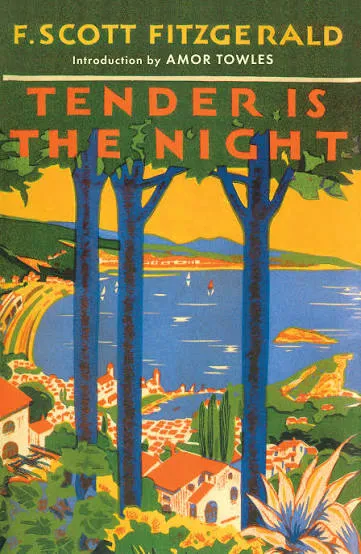
Suave es la noche / Tender is The Night Author: Fitzgerald ScottPage Count: UnknownPublication Date: 2016-PRH Francis Scott Fitzgerald’s Tender Is the Night is a glittering mirage that dissolves into a haunting meditation on love, decay, and the illusions of the American Dream. Often overshadowed by The Great Gatsby, this novel is Fitzgerald’s most personal and devastating work—a confession carved from the wreckage of his own life. Here, the Jazz Age’s golden sheen is not just a backdrop but a character in itself, a dazzling but treacherous surface that hides the rot beneath. At its core, Tender Is the Night is a tragedy of two souls trapped in a gilded cage. Dick and Nicole Diver are the embodiment of 1920s glamour: wealthy, charismatic, and seemingly untouchable. They host lavish parties on the French Riviera, their charm drawing in a circle of admirers who orbit around their radiance like moths. But their perfection is a performance, a carefully constructed facade that masks Nicole’s mental instability and Dick’s crumbling self-worth. Fitzgerald, who battled alcoholism and financial ruin while writing the novel, channels his own struggles into Dick’s character—a man who starts as a brilliant psychiatrist and ends as a hollow shell, his idealism eroded by his wife’s illness and his own failures. The novel’s brilliance lies in its structure, which unfolds like a slow unraveling. The first half immerses us in the Divers’ world, painting them as gods among mortals. Nicole, with her "bright, brittle laughter," and Dick, with his "tired but kind" eyes, seem invincible. But Fitzgerald drops subtle hints—Nicole’s erratic behavior, Dick’s drinking, the way their friends whisper about them when they’re not looking. The second half peels back the layers, revealing the rot beneath the glamour. The Divers’ marriage is a transaction, their love a performance, and their friends’ admiration a fleeting thing. By the end, the reader is left with the same hollow ache that Fitzgerald must have felt: the realization that beauty is fleeting, and that the people we admire most are often the most broken. Fitzgerald’s prose is a masterclass in restraint and lyricism. His sentences shimmer with the same effortless elegance as the Divers’ lifestyle, yet beneath the surface, there’s a quiet desperation. He writes of the Riviera’s "pale gold" light and the "soft, sad music" of the waves, but these descriptions are tinged with melancholy. The novel’s title, taken from Keats’ Ode to a Nightingale, is a clue: night is tender, but it is also dark, a time when illusions fade and truths emerge. Fitzgerald’s genius is in making the reader feel both the allure and the tragedy of the Divers’ world—a world where champagne flows but tears are hidden, where laughter is constant but joy is rare. What makes Tender Is the Night so devastating is its autobiographical weight. Fitzgerald and his wife, Zelda, were the real-life inspiration for Dick and Nicole. Their marriage, like the Divers’, was a mix of love, artistry, and self-destruction. Zelda’s mental health struggles and Fitzgerald’s alcoholism mirror Nicole’s breakdown and Dick’s decline. In writing this novel, Fitzgerald wasn’t just crafting fiction—he was dissecting his own life, exposing the cracks in the American Dream he had once so fervently believed in. The novel’s power lies in its ambiguity. Is Dick a victim or a villain? Is Nicole’s illness a tragedy or an escape? Fitzgerald refuses to offer easy answers. Instead, he presents a world where morality is fluid, where love is both a salvation and a prison, and where the pursuit of happiness often leads to ruin. The Divers’ story is a cautionary tale, but it’s also a eulogy—for a generation that believed in the myth of endless possibility, and for Fitzgerald himself, who died believing he was a failure. Tender Is the Night is not just a novel about the Jazz Age; it’s a novel about the human condition. It asks: What happens when the dreams we chase turn to dust? What remains when the masks come off? Fitzgerald’s answer is both beautiful and heartbreaking: we are left with the fragments of what we once were, and the knowledge that some illusions are better left unbroken. #Fitzgerald #TenderIsTheNight #JazzAge #LiteraryTragedy #AmericanDream #ClassicNovel Related InsightsNineteen Days in Autumn: A New History of 1066 Book Review and Summary 1984 (edición definitiva avalada por The Orwell Estate) (edición especial limitada con cantos pintados) / 1984 (Edition Endorsed by The Orwell Estate) Book Review and Summary Boleyn Traitor Book Review and Summary{ "@context": "https://schema.org", "@type": "FAQPage", "mainEntity": [ { "@type": "Question", "name": "What is the main focus of Tender Is the Night Book Review and Summary?", "acceptedAnswer": { "@type": "Answer", "text": "Everything you need to know about Tender Is the Night with our detailed review." } }, { "@type": "Question", "name": "Who authored the comprehensive guide on Tender Is the Night Book Review and Summary?", "acceptedAnswer": { "@type": "Answer", "text": "This detailed article and its insights were carefully researched and authored by F. Scott Fitzgerald." } }, { "@type": "Question", "name": "Where can I find more related content about Books?", "acceptedAnswer": { "@type": "Answer", "text": "You can explore more articles, detailed reviews, and similar insights by browsing the Related Insights section at the bottom of this article or visiting our dedicated Books category page." } } ] }