Showing Posts From
The angel of darknes
-
 Marco Conti
 - 01 May, 2026 19:13
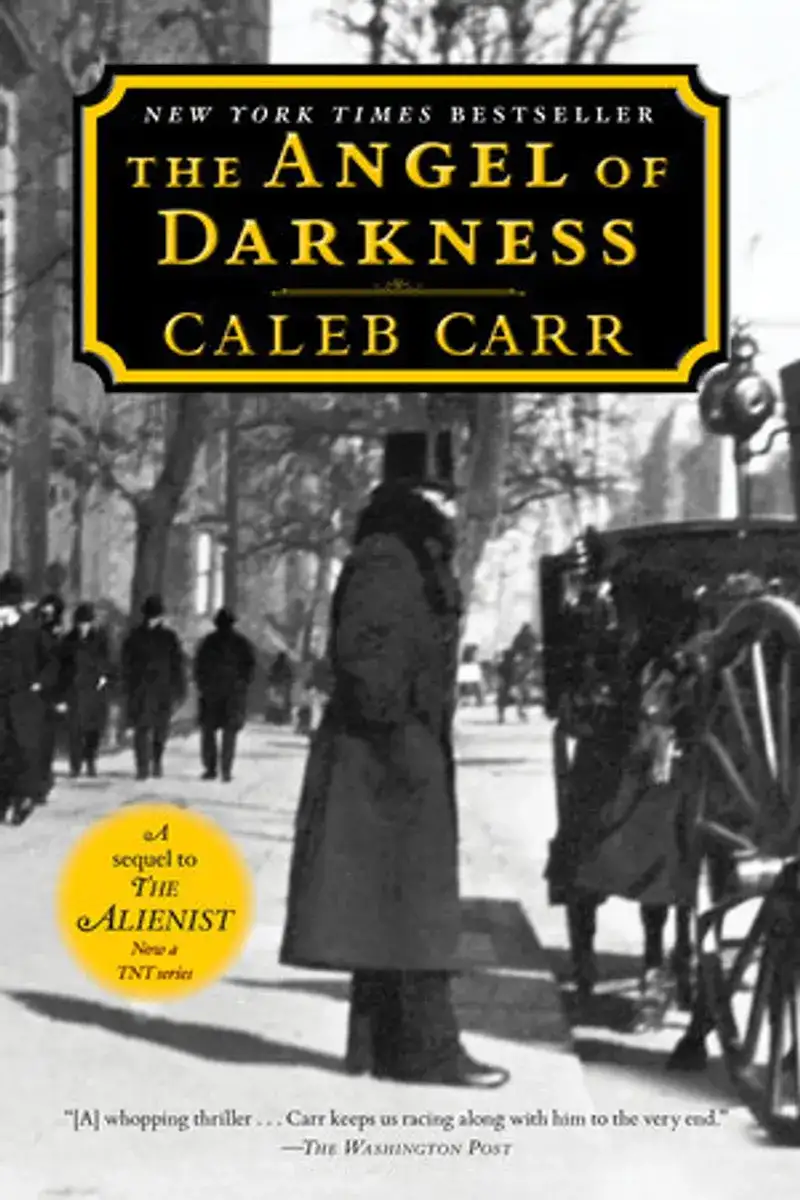
The Angel of Darkness: Book 2 of the Alienist Book Review and Summary
The Angel of Darkness: Book 2 of the Alienist Author: Caleb CarrPage Count: UnknownPublication Date: 2018-PRH The Angel of Darkness: A Chilling Masterpiece of Historical Horror Caleb Carr’s The Angel of Darkness is not just a sequel—it is a descent into the heart of human depravity, wrapped in the gilded yet grotesque world of 1890s New York. Returning to the haunting brilliance of The Alienist, Carr once again immerses us in an era where science, social upheaval, and primal evil collide. This time, the stakes are higher, the villain more insidious, and the stakes not just personal but political, threatening to ignite an international crisis. If the first book terrified us with the specter of a child-murdering monster, The Angel of Darkness forces us to confront something far worse: the banality of evil cloaked in virtue. At the heart of the novel lies a chilling paradox—how a monster can masquerade as an angel. The case begins with the kidnapping of a Spanish diplomat’s infant daughter, a crime that carries the weight of geopolitical tension between the U.S. and Spain. The suspect? A woman whose very public persona as a compassionate nurse and devoted mother makes her crime all the more horrifying. Libby Hatch is not a grotesque figure from the slums; she is a woman of respectability, a pillar of her community, and that is what makes her so terrifying. Carr’s genius lies in his ability to craft a villain who is not just evil but plausible—a woman whose crimes are committed with the same quiet efficiency as her charity work. In Libby Hatch, Carr gives us the antithesis of the Victorian ideal of womanhood, a figure who embodies the era’s hypocrisy: the idea that goodness could coexist with monstrosity, that morality was a performance. What elevates The Angel of Darkness beyond a mere mystery is Carr’s unparalleled evocation of time and place. New York in 1897 is not a backdrop but a character—a city of gaslit streets and soaring ambitions, where wealth and squalor exist in uneasy proximity. Carr’s prose is lush yet precise, painting a world where the opulence of high society masks the rot beneath. The city’s contradictions—its rapid modernization and lingering brutality, its democratic ideals and entrenched prejudices—mirror the duality of Libby Hatch herself. The novel’s tension is not just in the hunt for a killer but in the struggle to reconcile the world as it appears with the world as it truly is. Carr’s writing style is a masterclass in pacing and atmosphere. The novel moves with the relentless momentum of a locomotive, each chapter escalating the stakes without ever resorting to cheap thrills. His dialogue crackles with the wit and tension of a well-oiled machine, and his ability to weave historical detail into the narrative is nothing short of alchemical. The characters, both familiar and new, are rendered with such depth that they feel like living, breathing figures rather than creations of ink and paper. Dr. Laszlo Kreizler, the alienist himself, is a man of contradictions—a genius with a dark past, a healer who understands the depths of human cruelty. Sara Howard, the indomitable detective with a derringer always at hand, is a feminist icon before the term was even coined, her intelligence and courage shining through every page. The novel’s true triumph, however, is its exploration of the nature of evil. Carr does not shy away from the psychological underpinnings of his villain, nor does he reduce her to a caricature of madness. Instead, he presents Libby Hatch as a product of her time—a woman who has internalized the era’s rigid gender roles so completely that she has twisted them into a justification for her crimes. In doing so, Carr forces the reader to confront uncomfortable questions: How well do we truly know the people around us? Can goodness and evil coexist in the same soul? And what happens when the very institutions we trust—family, religion, medicine—become the tools of our destruction? The Angel of Darkness is more than a thriller; it is a meditation on the fragility of morality and the masks we wear to hide our true selves. Carr’s prose is sharp as a scalpel, dissecting not just the crimes but the society that permits them. The novel’s final act is a triumph of suspense, a trial that feels as vital and riveting as the hunt that precedes it. And in Clarence Darrow—cast here as a brilliant defense attorney—Carr gives us a real-life figure who embodies the moral ambiguity of the age, a man whose presence adds another layer of depth to an already rich narrative. If The Alienist introduced us to a world where science and horror intertwined, The Angel of Darkness forces us to stare into the abyss and realize that the abyss is not some monstrous stranger but the reflection of our own complicity. It is a novel that lingers, a story that haunts long after the final page. Carr has done the impossible: he has taken a genre often dismissed as mere entertainment and transformed it into a work of art that is as intellectually rigorous as it is viscerally gripping. This is historical fiction at its finest—where the past is not just recreated but relived, where the ghosts of history walk among us, and where the line between hero and villain is as thin as a knife’s edge. #TheAngelOfDarkness #CalebCarr #HistoricalThriller #PsychologicalHorror #VictorianMystery #CrimeFiction Related InsightsFall into Place Book Review and Summary Heartstopper, Volume 3 Book Review and Summary Tackling Rugby Book Review and Summary{ "@context": "https://schema.org", "@type": "FAQPage", "mainEntity": [ { "@type": "Question", "name": "What is the main focus of The Angel of Darkness: Book 2 of the Alienist Book Review and Summary?", "acceptedAnswer": { "@type": "Answer", "text": "Everything you need to know about The Angel of Darkness: Book 2 of the Alienist with our detailed review." } }, { "@type": "Question", "name": "Who authored the comprehensive guide on The Angel of Darkness: Book 2 of the Alienist Book Review and Summary?", "acceptedAnswer": { "@type": "Answer", "text": "This detailed article and its insights were carefully researched and authored by Marco Conti." } }, { "@type": "Question", "name": "Where can I find more related content about Books?", "acceptedAnswer": { "@type": "Answer", "text": "You can explore more articles, detailed reviews, and similar insights by browsing the Related Insights section at the bottom of this article or visiting our dedicated Books category page." } } ] }