Showing Posts From
The audacity of hope
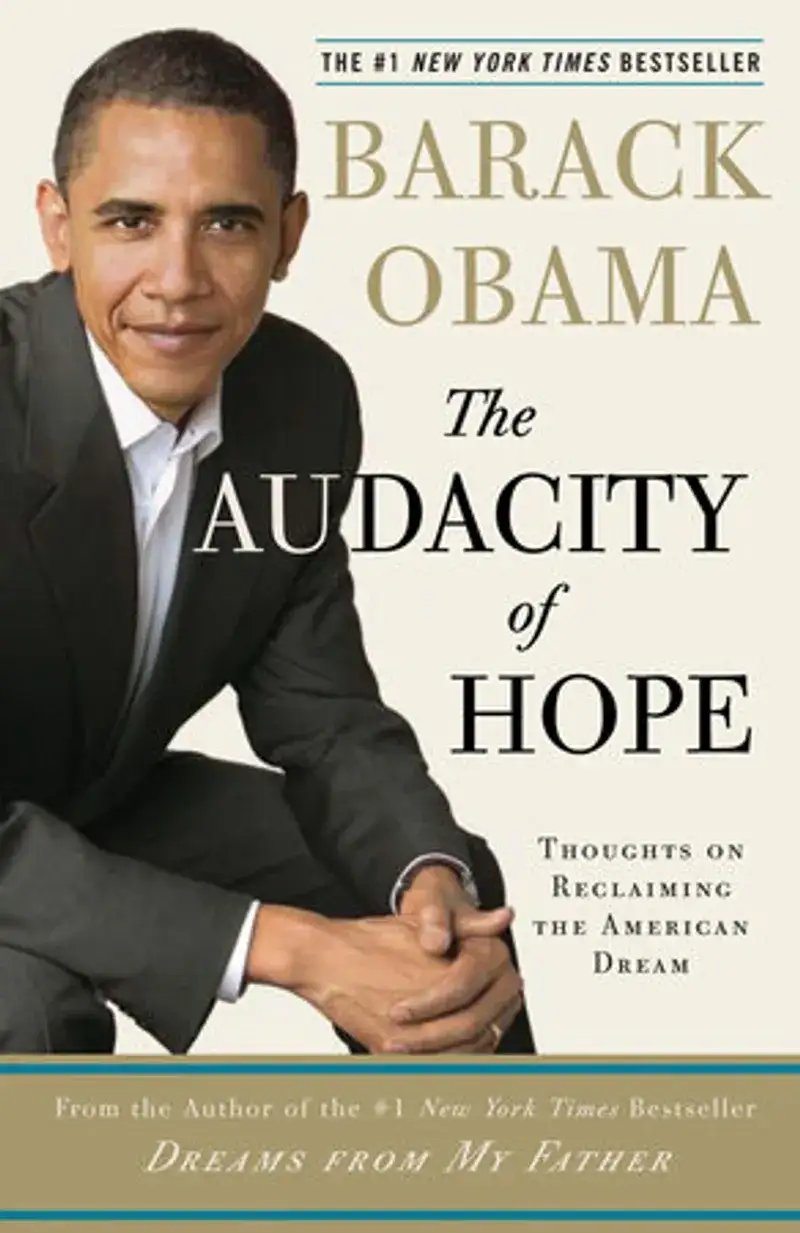

The Audacity of Hope Author: Barack ObamaPage Count: UnknownPublication Date: 2007-PRH Barack Obama’s The Audacity of Hope is more than a political memoir—it is a manifesto for unity in a fractured nation, a blueprint for a politics of shared purpose, and a testament to the enduring power of hope. Published in 2007, as Obama was poised to ascend from the Illinois Senate to the national stage, the book distills his years in public service into a compelling vision of what America could—and should—become. It is, above all, a defense of democracy itself, not as a system of perpetual conflict but as a fragile, evolving experiment in collective aspiration. The central theme of The Audacity of Hope is reconciliation—between Americans, between political adversaries, and between the ideals of the past and the challenges of the present. Obama writes not as a partisan firebrand but as a bridge-builder, urging readers to look beyond the "endless clash of armies" in Washington and instead embrace a politics rooted in empathy, pragmatism, and faith. He dismantles the myth that progress requires ideological purity, arguing instead that the most durable solutions emerge from compromise, mutual respect, and a willingness to confront uncomfortable truths. Whether dissecting the corrosive influence of money in politics, the anxiety of a shrinking middle class, or the lingering scars of racial and religious division, Obama’s approach is disarmingly honest. He admits to his own moments of doubt—whether as a senator struggling to balance ambition with family or as a man wrestling with the role of faith in a secular democracy—but always circles back to a core conviction: that democracy thrives not when it is defined by what separates us, but by what unites us. Obama’s prose is the book’s greatest strength. It is at once intellectual and accessible, blending the precision of a legal scholar with the storytelling gifts of a natural orator. His writing is suffused with a quiet optimism, even in passages where he confronts harsh realities. He describes the "fear of losing" that drives political actors into cynicism, the media’s addiction to conflict as entertainment, and the way institutional inertia can stifle even well-intentioned reform. Yet he never wallows in despair. Instead, he channels his frustration into a call to action, reminding readers that the Constitution is not a relic but a living document, one that demands renewal from each generation. What makes The Audacity of Hope so compelling is its balance between idealism and pragmatism. Obama acknowledges that politics is messy, that progress is incremental, and that no single figure—no matter how charismatic—can single-handedly heal a nation. Yet he insists that hope is not passive; it is a discipline. It requires engagement, not withdrawal; dialogue, not monologue; and a willingness to see one’s opponents not as enemies but as fellow citizens with legitimate concerns. This is the audacity of his title—not the blind optimism that ignores reality, but the courage to believe in possibility despite it. Obama’s style is also deeply personal. He peppers his analysis with anecdotes from his life—growing up in Hawaii, working as a community organizer in Chicago, navigating the Senate’s labyrinthine politics—grounding abstract ideas in lived experience. His humor is dry but warm, as when he jokes about the absurdity of campaign fundraising or the surreal experience of being scrutinized by the media. Yet beneath the wit lies a seriousness of purpose. He is not interested in performative outrage or ideological purity; he is interested in results. Whether discussing healthcare, education, or foreign policy, his focus is on solutions that serve the common good, not the narrow interests of a partisan base. The book is also a meditation on the role of faith in public life. Obama, a Christian with a deep respect for other traditions, writes passionately about the need for moral clarity in politics without imposing dogma. He critiques the way religious language is often co-opted for political ends, but he also laments a culture that dismisses faith as irrelevant to governance. For him, faith is not about demanding conformity but about inspiring a shared commitment to justice and compassion. It is a theme that would later animate his presidency, but here, it feels less like a campaign talking point and more like a genuine reflection on what gives meaning to public service. The Audacity of Hope is, at its heart, an invitation. It invites readers to reject the politics of division, to reclaim the idea that democracy is a project worth fighting for, and to believe—against all evidence to the contrary—that progress is possible. In an era where polarization feels like a permanent condition, Obama’s words are a reminder that hope is not naive; it is a choice. And in choosing it, we inch closer to the America we aspire to be. #HopeOverDivision #PoliticsOfUnity #BarackObama #AudacityOfHope #DemocracyInAction #BeyondPartisanship Related InsightsGravity’s Rainbow Book Review and Summary Nothing to Fix: The Life-Changing Science of Shifting Your Perspective Book Review and Summary Tiger, Tiger Book Review and Summary{ "@context": "https://schema.org", "@type": "FAQPage", "mainEntity": [ { "@type": "Question", "name": "What is the main focus of The Audacity of Hope Book Review and Summary?", "acceptedAnswer": { "@type": "Answer", "text": "Everything you need to know about The Audacity of Hope with our detailed review." } }, { "@type": "Question", "name": "Who authored the comprehensive guide on The Audacity of Hope Book Review and Summary?", "acceptedAnswer": { "@type": "Answer", "text": "This detailed article and its insights were carefully researched and authored by Maximilian Fischer." } }, { "@type": "Question", "name": "Where can I find more related content about Books?", "acceptedAnswer": { "@type": "Answer", "text": "You can explore more articles, detailed reviews, and similar insights by browsing the Related Insights section at the bottom of this article or visiting our dedicated Books category page." } } ] }