Showing Posts From
The birthing tree
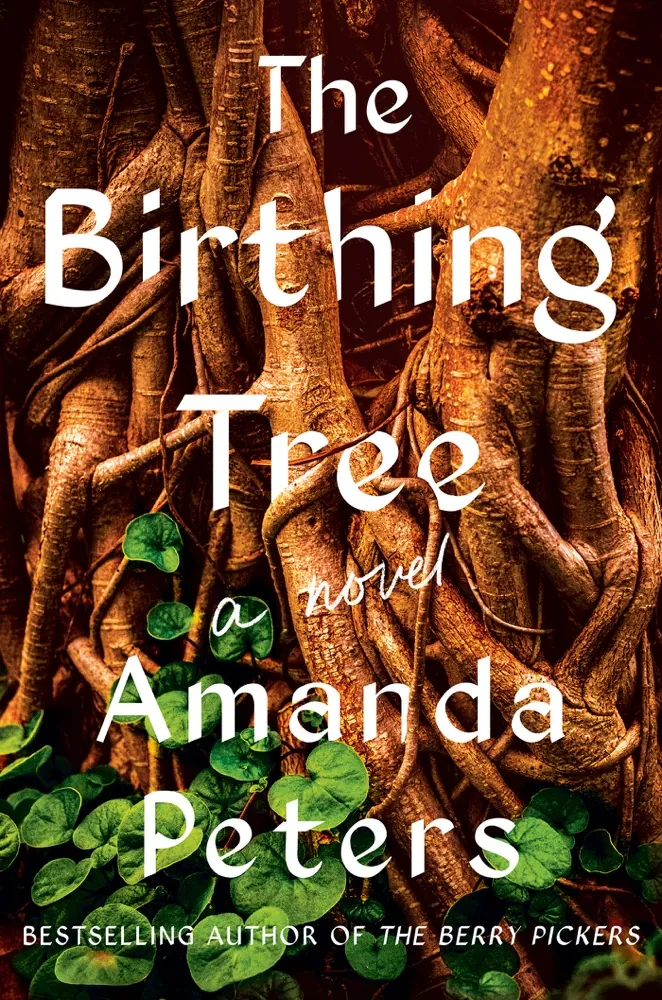

Author: Amanda PetersPage Count: UnknownPublication Date: Expected publication 2026-09-01 APL The birthing tree is a metaphor so overused it should be buried under a slab of granite with a plaque reading Do Not Disturb—unless, of course, you’re a literary tourist hoping to gawk at another iteration of the "woman returns to her roots" trope, which feels like watching The Notebook for the 47th time but with more hemlock tea and less Ryan Gosling. Amanda Peters, whose last novel was praised for its "lyrical prose" (a phrase that now makes me want to set fire to my copy of The Berry Pickers), has clearly decided to lean into the rustic nostalgia so hard that the birthing tree itself might start bleeding sap from exhaustion. The synopsis reads like a cross between Anne of Green Gables and a Hallmark movie where the villain is a faceless "system" that wants to "condemn" midwifery—because nothing says oppression like a government official with a clipboard and a disapproving look. The real crime here isn’t the plot, though. It’s the vagueness. We’re told Aliet is "shaped by seasonal apple pickers" and "the medicinal wisdom of the old ways," but what does that even mean? Is this a historical novel? A magical realism piece? A cozy mystery? The synopsis oscillates between the grounded and the mystical like a pendulum in a haunted house—one minute we’re in the realm of The Handmaid’s Tale’s reproductive politics, the next we’re in the realm of Little Women’s domestic idyll, and then suddenly we’re in the realm of The Secret History, where someone "wants the past to remain undisturbed" like a Greek chorus of small-town gossip. The tone is all over the place, which is either a sign of bold experimentation or a sign that the ghostwriter who drafted this synopsis was high on wild cherry tea and a copy of The Joy Luck Club. The most infuriating part? The way the synopsis frames Aliet’s journey as some kind of epic reclamation of lineage, when really, it sounds like a very middlebrow version of The Secret Life of Bees—minus the bees, minus the depth, and with all the emotional weight of a TED Talk about "finding your voice." The birthing tree is supposed to be sacred, but it’s treated like a prop in a soap opera, a gimmick to evoke sentimentality without any real stakes. And don’t even get me started on the "mystery of her own bloodline"—because nothing says literary intrigue like a woman discovering her father’s name is "someone" and her mother’s death was "witnessed by the wrong person." It’s the literary equivalent of a True Detective episode where the only twist is that the killer is a very confused neighbor. The most damning comparison, though, is to The Power and the Glory, where Graham Greene’s prose burns with moral urgency and the stakes are as high as the sky. Here, we’re getting a novel where the highest tension comes from a grandmother’s death and a house that needs "restoring"—which, let’s be honest, is just a metaphor for the author’s own creative exhaustion. The synopsis reads like it was written by someone who loves the sound of their own words more than they love the story itself. And that’s a shame, because Peters has the chops—she’s a Carnegie winner, after all—but this feels like a missed opportunity to do something truly bold, something that doesn’t just evoke the past but confronts it. The worst part? The synopsis doesn’t even try to be subtle. It’s like the author is whispering, "Look at me, I’m writing about sacred trees and generational trauma—aren’t I deep?" But the truth is, this reads like a novel that could have been written by any number of midlist authors who think "roots" and "heritage" are enough to sell a book. It’s the literary equivalent of a MasterClass on "how to write about family secrets," where the instructor is a very earnest but uninspired community college professor. And now, I must sigh—because I know this book is going to be marketed as "lyrical," "haunting," and "unforgettable," even though it’s just another entry in the "woman returns to her roots" canon, where the only thing that’s truly sacred is the author’s bank account. I should have fired the ghostwriter months ago. They clearly misunderstood the vision—because this isn’t a novel about reclaiming lineage. It’s a novel about recycling tropes, and that’s not the kind of legacy I want to leave behind. #BookTok #LiteraryNostalgia #GhostwriterFail Related InsightsAll the Little Secrets (All the Little Houses, 2) Book Review and Summary The Divide Book Review and Summary Invenzione occasionale Book Review and Summary{ "@context": "https://schema.org", "@type": "FAQPage", "mainEntity": [ { "@type": "Question", "name": "What is the main focus of The Birthing Tree Book Review and Summary?", "acceptedAnswer": { "@type": "Answer", "text": "Everything you need to know about The Birthing Tree with our detailed review." } }, { "@type": "Question", "name": "Who authored the comprehensive guide on The Birthing Tree Book Review and Summary?", "acceptedAnswer": { "@type": "Answer", "text": "This detailed article and its insights were carefully researched and authored by Lucia Garcia." } }, { "@type": "Question", "name": "Where can I find more related content about Books?", "acceptedAnswer": { "@type": "Answer", "text": "You can explore more articles, detailed reviews, and similar insights by browsing the Related Insights section at the bottom of this article or visiting our dedicated Books category page." } } ] }