Showing Posts From
The boy in the strip
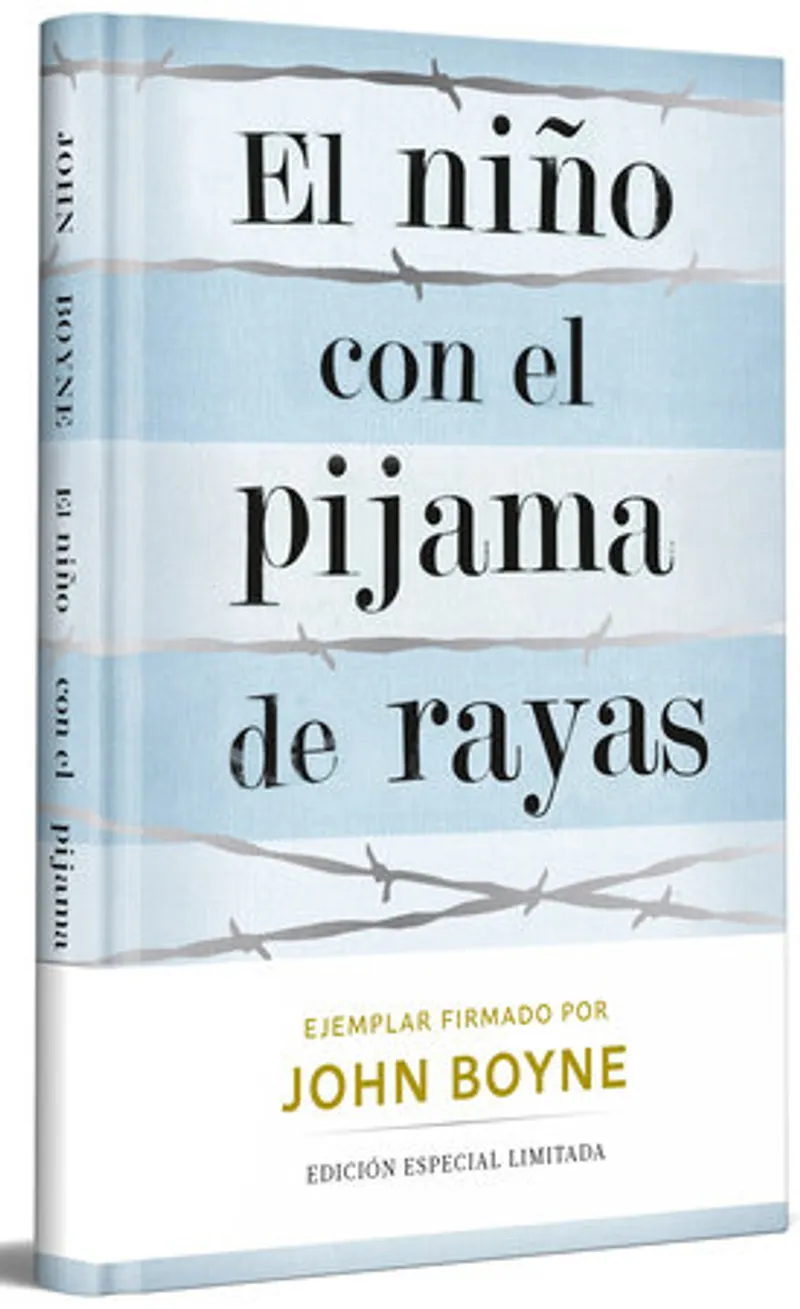
El niño con el pijama de rayas (Edición limitada firmada) / The Boy in the Striped Pajamas (Limited Signed Edition) Author: John BoynePage Count: UnknownPublication Date: 2025-PRH John Boyne’s The Boy in the Striped Pajamas (Limited Signed Edition) is a haunting exploration of innocence, prejudice, and the brutal absurdity of war, wrapped in the deceptive simplicity of a child’s perspective. Originally published in 2006, this limited edition—signed and presumably adorned with exclusive illustrations or annotations—reaffirms the novel’s power to unsettle, even decades after its debut. Boyne’s prose is unadorned, almost fable-like, yet beneath its surface lies a searing indictment of complicity, ignorance, and the way history’s darkest chapters are often written in the passive voice of bystanders. At its core, the story follows Bruno, a nine-year-old German boy whose father, a high-ranking Nazi officer, relocates the family to a remote area near a concentration camp. From his bedroom window, Bruno sees a vast field of striped pajamas, where people—whom he assumes are farmers—move in eerie unison. His curiosity leads him to befriend Shmuel, a Jewish boy on the other side of the fence, their bond forming the emotional heart of the novel. What unfolds is not just a tale of friendship across impossible divides, but a meditation on how easily evil is normalized when seen through the eyes of the uninitiated. Boyne’s genius lies in his refusal to preach. He doesn’t need to—his narrative voice is that of a child, wide-eyed and literal, which makes the horrors unfolding around Bruno all the more chilling. When Bruno describes the camp as a "farm" where people wear "striped pajamas," his confusion is palpable, but so is the reader’s dawning horror. The disconnect between Bruno’s understanding and the reality of the Holocaust is where the novel’s tension resides. It’s a masterclass in showing, not telling: the gas chambers are never explicitly described, yet their presence looms like a shadow over every interaction. When Bruno’s mother casually remarks that the people in the camp are "not really people," the reader recoils—not just at the sentiment, but at the casualness with which it’s delivered. The author’s style is deliberately sparse, mirroring Bruno’s limited worldview. Sentences are short, dialogue is sparse, and the prose avoids melodrama. This restraint makes the rare moments of emotional intensity—like Bruno’s tearful farewell to his grandparents or his desperate attempt to help Shmuel find his father—land with devastating force. Boyne also excels in capturing the absurdity of Nazi bureaucracy through Bruno’s father, a man who speaks in cold, clinical terms about "the Final Solution" while tucking his son into bed with a bedtime story. The contrast between domestic warmth and industrialized cruelty is one of the book’s most disturbing themes. Yet, for all its bleakness, The Boy in the Striped Pajamas is not without hope—or at least, a kind of tragic hope. Bruno and Shmuel’s friendship is a fragile beacon of humanity in a world that has abandoned it. Their final moments together, a heartbreaking echo of the novel’s title, serve as a gut-punch reminder that innocence is not a shield against history’s worst crimes. Boyne forces the reader to confront uncomfortable questions: How much of Bruno’s tragedy is due to his parents’ willful ignorance? Could the Holocaust have been stopped if more people had dared to see beyond the propaganda? The limited signed edition adds a layer of exclusivity that feels almost sacrilegious for a book so deeply tied to collective memory. One can’t help but wonder if the signatures and embellishments risk turning a solemn work into a collector’s curiosity. Yet, if this edition serves to introduce Boyne’s novel to new readers—or remind older ones of its enduring relevance—it may be a price worth paying. In an era where history is often reduced to memes and misinformation, The Boy in the Striped Pajamas is a necessary corrective. It doesn’t just tell the story of the Holocaust; it asks us to remember that the first step toward atrocity is always the refusal to see. Bruno’s story is a warning, not just about the past, but about the dangers of looking away. #BoyInTheStripedPajamas #JohnBoyne #HolocaustLiterature #HistoricalFiction #NeverForget #WWIIBooks Related InsightsThe Stand Book Review and Summary Dovecombe: A Novel Book Review and Summary How To Get The Girl Book Review and Summary{ "@context": "https://schema.org", "@type": "FAQPage", "mainEntity": [ { "@type": "Question", "name": "What is the main focus of The Boy in the Striped Pajamas Book Review and Summary?", "acceptedAnswer": { "@type": "Answer", "text": "Everything you need to know about The Boy in the Striped Pajamas with our detailed review." } }, { "@type": "Question", "name": "Who authored the comprehensive guide on The Boy in the Striped Pajamas Book Review and Summary?", "acceptedAnswer": { "@type": "Answer", "text": "This detailed article and its insights were carefully researched and authored by John Boyne." } }, { "@type": "Question", "name": "Where can I find more related content about Books?", "acceptedAnswer": { "@type": "Answer", "text": "You can explore more articles, detailed reviews, and similar insights by browsing the Related Insights section at the bottom of this article or visiting our dedicated Books category page." } } ] }