Showing Posts From
The chosen
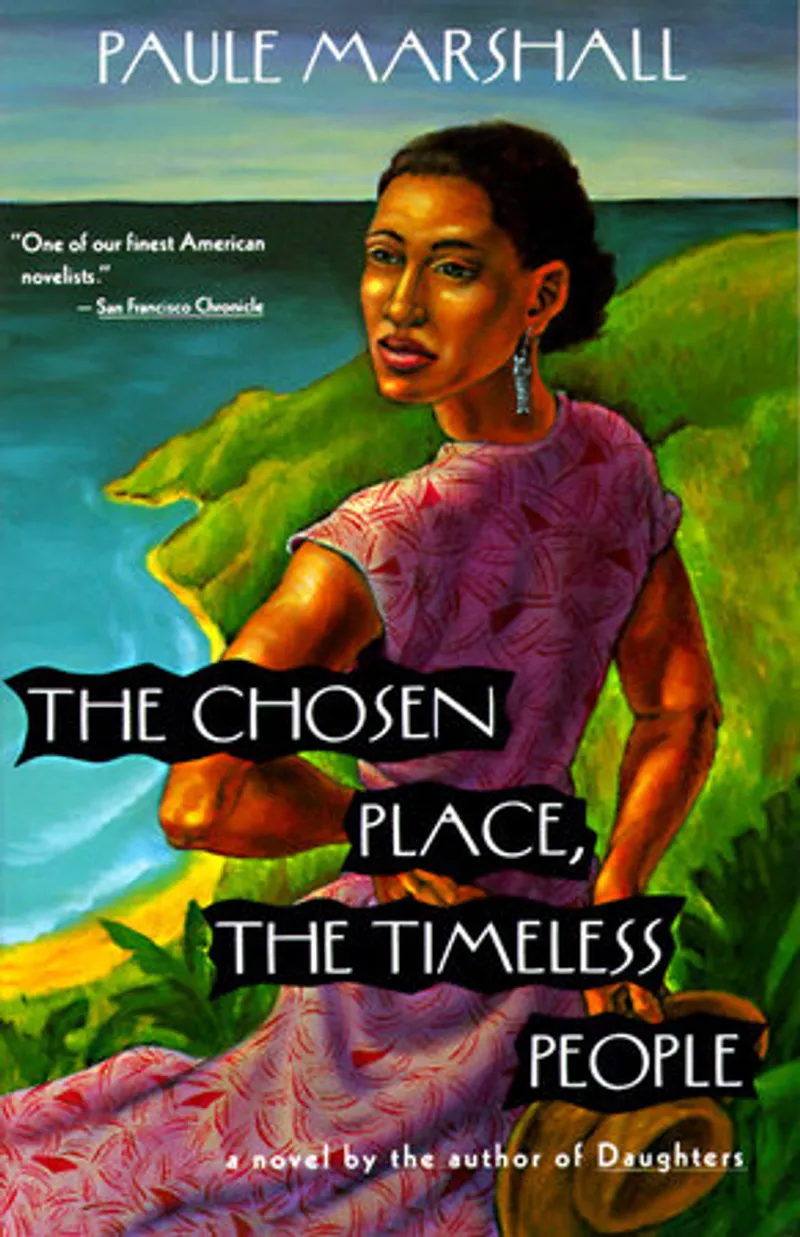
The Chosen Place, The Timeless People Author: Paule MarshallPage Count: UnknownPublication Date: 1984-PRH Paule Marshall’s The Chosen Place, The Timeless People is a searing, lyrical novel that excavates the wounds of colonialism, the resilience of identity, and the fraught dance between power and resistance. Set in Bourneville, a fictional Caribbean island scarred by poverty and historical oppression, Marshall’s narrative unfolds like a slow-burning storm—part social critique, part poetic meditation—where the land itself seems to remember the chains of slavery even as its people fight to reclaim their future. At its core, the novel is about the collision of worlds: the insidious arrival of an American research project, led by the charismatic but myopic Saul Amron, and the unyielding spirit of the island’s Black inhabitants, who are both haunted and sustained by their past. Marshall doesn’t just describe Bourneville; she renders it as a living entity, a place where time folds in on itself, where the "timeless people" of the title are both prisoners of history and its stubborn survivors. The island’s devastation is not just physical but spiritual, a landscape where the remnants of plantation culture linger in the bones of the community, in the way the elders speak of ancestors who "walked the Middle Passage," in the way the younger generation, like the idealistic intellectual Merle Kinbona, grapples with the weight of reclaiming a heritage that was stolen. Marshall’s prose is rich, almost incantatory, weaving Creole rhythms into the English language with a fearless precision. Her sentences are lush but never indulgent, each word carrying the weight of generations. There’s a musicality to her writing, a cadence that mirrors the oral traditions of the Caribbean, where stories are passed down not just in books but in the cadence of speech, in the pauses between words. When she describes the island’s decay—"the skeletal remains of sugar mills, the rusted husks of old machinery, the way the sea gnaws at the coastline like a patient scavenger"—you don’t just see it; you feel the salt on your skin, the heat pressing down on your shoulders. Yet Marshall never lets beauty obscure the brutality. The American research project, ostensibly aimed at "development," is a thinly veiled neocolonial enterprise, a way for outsiders to extract knowledge, resources, and even cultural artifacts under the guise of progress. Saul Amron, with his liberal guilt and paternalistic condescension, embodies the contradictions of well-meaning imperialism. He wants to "help," but his help is predicated on control, on the assumption that Bourneville’s people need saving rather than justice. Marshall exposes this dynamic with surgical precision, showing how even the most progressive-seeming interventions can become another form of domination. The novel’s true power lies in its refusal to offer easy resolutions. The characters—Merle, the disillusioned academic; Allen Fuso, the American anthropologist entangled in his own contradictions; the unnamed elders who carry the weight of memory—are all caught in a web of history they didn’t weave but must navigate. Marshall doesn’t give them a neat escape. Instead, she offers something more profound: the recognition that healing begins with truth, with the act of naming the violence that has shaped them. The island’s people are "timeless" not because they are stuck in the past, but because their struggle is eternal—a cycle of resistance and renewal that predates and outlasts any foreign intervention. What makes The Chosen Place, The Timeless People so vital is Marshall’s unflinching gaze. She doesn’t romanticize the Caribbean; she doesn’t reduce its people to victims or saints. Instead, she presents them as fully realized humans, flawed and fierce, capable of both despair and defiance. The novel is a testament to the idea that decolonization isn’t just about political independence—it’s about reclaiming the right to define oneself, to tell one’s own story without the filter of outsiders’ pity or exploitation. In an era where "development" is still too often a euphemism for extraction, where the ghosts of slavery and colonialism haunt even the most well-intentioned global projects, Marshall’s novel feels urgent. It’s a reminder that the past is never truly past, that the struggle for dignity is ongoing, and that the most revolutionary act may be simply to listen—to the land, to the people, to the stories that have been silenced for too long. #CaribbeanLiterature #PostcolonialFiction #BlackIdentity #Neocolonialism #PauleMarshall #LiteraryActivism Related InsightsLove You to Death Book Review and Summary Mirror Mirror (The Dresden Files, #19) Book Review and Summary Cosmos Book Review and Summary{ "@context": "https://schema.org", "@type": "FAQPage", "mainEntity": [ { "@type": "Question", "name": "What is the main focus of The Chosen Book Review and Summary?", "acceptedAnswer": { "@type": "Answer", "text": "Everything you need to know about The Chosen with our detailed review." } }, { "@type": "Question", "name": "Who authored the comprehensive guide on The Chosen Book Review and Summary?", "acceptedAnswer": { "@type": "Answer", "text": "This detailed article and its insights were carefully researched and authored by Chaim Potok." } }, { "@type": "Question", "name": "Where can I find more related content about Books?", "acceptedAnswer": { "@type": "Answer", "text": "You can explore more articles, detailed reviews, and similar insights by browsing the Related Insights section at the bottom of this article or visiting our dedicated Books category page." } } ] }