Showing Posts From
The city and its unc
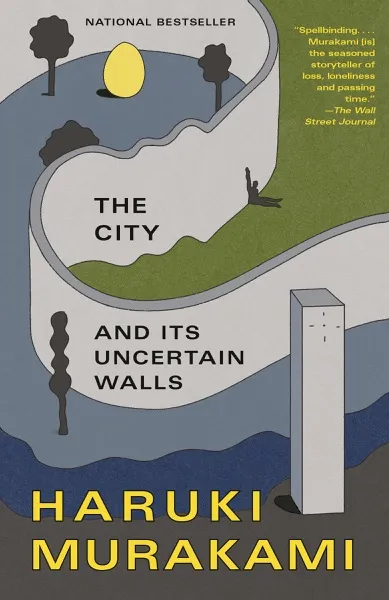
The City and Its Uncertain Walls Author: 村上春樹Page Count: UnknownPublication Year: 2024-GB Haruki Murakami’s The City and Its Uncertain Walls is a masterclass in weaving the mundane with the mystical, a novel that feels both intimate and vast, much like the labyrinthine streets of the city it inhabits. Published in 2024 to immediate acclaim, this book reaffirms Murakami’s status as a literary alchemist, transforming the ordinary into something hauntingly surreal. At its core, the novel explores the fragility of memory, the permeability of reality, and the way cities—both physical and psychological—shape our identities. It is a work that lingers, not just in the mind but in the bones, leaving the reader with the disquieting sense that the boundaries between past and present, dream and waking life, are far more porous than we dare to believe. Murakami’s prose is deceptively simple, lulling the reader into a false sense of comfort before plunging them into the depths of existential unease. His sentences ripple with a quiet precision, each word carefully placed to evoke mood rather than overwhelm. The city in this novel is not just a setting; it is a character, a living, breathing entity that shifts and morphs with the protagonist’s perceptions. It is a place of "uncertain walls"—boundaries that may or may not exist, thresholds that could dissolve at any moment. This theme of instability is central to Murakami’s work, but here it feels more urgent, more personal. The city becomes a metaphor for the self, a place where one’s past is both a refuge and a prison. The narrative follows a man who returns to a city he once knew, only to find it altered in ways both subtle and profound. The city’s walls, once solid and defining, now seem to recede or rearrange themselves, as if the very fabric of reality is malleable. This is vintage Murakami: a blend of the fantastical and the deeply human. The protagonist’s journey is less about physical exploration and more about confronting the ghosts of his own making. Memories resurface like half-remembered dreams, and the line between what was and what is blurs into something indistinguishable. It’s a theme that resonates deeply in an era where our sense of place—both literal and digital—feels increasingly fragmented. Murakami’s genius lies in his ability to make the surreal feel inevitable. He doesn’t force the reader to suspend disbelief so much as he makes them wonder why they ever believed in it to begin with. The city’s uncertain walls are not just a plot device; they are an invitation to question the very nature of reality. Is the protagonist trapped in a loop of his own mind, or is the city itself a sentient force, reshaping itself to reflect his innermost turmoil? Murakami doesn’t provide answers, and that’s the point. The beauty of the novel is in the questions it raises, in the way it makes the reader feel the weight of uncertainty as a tangible, almost physical presence. The author’s style is marked by a recurring motif: cats. In Murakami’s world, cats are often gatekeepers, messengers, or silent observers of the unseen. They move through the city with an air of knowing, their presence a reminder that there are forces at work beyond human comprehension. This novel is no exception. Cats prowl the periphery of the story, their eyes reflecting a wisdom that the human characters lack. It’s a subtle but powerful touch, a way for Murakami to underscore his themes without ever resorting to heavy-handed symbolism. Another hallmark of Murakami’s writing is his use of music. The novel is steeped in the language of sound, from the hum of a distant jazz club to the eerie silence that follows a revelation. Music becomes a bridge between worlds, a way for the protagonist to navigate the shifting landscapes of his mind. It’s a reminder that art—whether in the form of literature, music, or painting—is often the only language capable of expressing the inexpressible. The City and Its Uncertain Walls is not just a book about a man and a city; it’s a meditation on what it means to exist in a world where nothing is fixed, where every certainty is a mirage. Murakami’s writing has always been about the spaces between things—the gaps where meaning hides—and this novel is no different. It’s a work that demands to be read slowly, savored like a fine wine, because its power lies not in its plot but in its atmosphere. By the final page, the reader is left with the unsettling realization that the walls of their own reality might not be as solid as they once believed. In an age where we are constantly bombarded with noise and distraction, Murakami’s novel is a rare oasis of quiet intensity. It asks us to slow down, to pay attention, to listen to the hum of the city and the echo of our own thoughts. It’s a book that lingers, not because it provides answers, but because it makes the questions feel vital, necessary. The City and Its Uncertain Walls is a testament to the enduring power of Murakami’s imagination, a reminder that the most extraordinary things often happen in the spaces we overlook. #MurakamiMagic #UncertainWalls #SurrealFiction #CityOfDreams #LostInMurakami #LiteraryLabyrinth Related InsightsThe Agony and the Ecstasy Book Review and Summary Del cosmos a la vida / From the Cosmos to Life Book Review and Summary Doctor Zhivago Book Review and Summary{ "@context": "https://schema.org", "@type": "FAQPage", "mainEntity": [ { "@type": "Question", "name": "What is the main focus of The City and Its Uncertain Walls Book Review and Summary?", "acceptedAnswer": { "@type": "Answer", "text": "Everything you need to know about The City and Its Uncertain Walls with our detailed review." } }, { "@type": "Question", "name": "Who authored the comprehensive guide on The City and Its Uncertain Walls Book Review and Summary?", "acceptedAnswer": { "@type": "Answer", "text": "This detailed article and its insights were carefully researched and authored by Natalia Sokolova." } }, { "@type": "Question", "name": "Where can I find more related content about Books?", "acceptedAnswer": { "@type": "Answer", "text": "You can explore more articles, detailed reviews, and similar insights by browsing the Related Insights section at the bottom of this article or visiting our dedicated Books category page." } } ] }