Showing Posts From
The complete maus
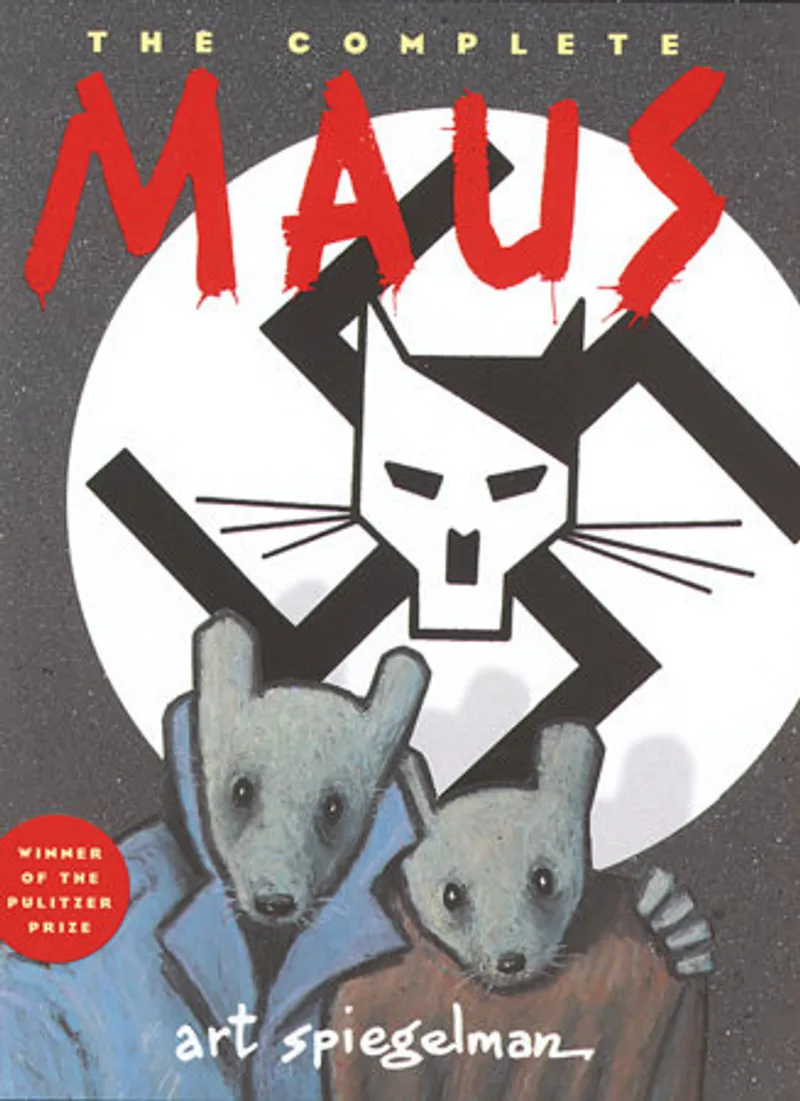
The Complete Maus Author: Art SpiegelmanPage Count: UnknownPublication Date: 1996-PRH Art Spiegelman’s The Complete Maus is not just a graphic novel—it is a seismic shift in how we remember, witness, and grapple with history. Winner of the Pulitzer Prize in 1992, this monumental work redefines the boundaries of literature by transforming the Holocaust into a visual narrative that is at once intimate and harrowing. Through the deceptively simple device of depicting Jews as mice and Nazis as cats, Spiegelman crafts a story that is both a personal memoir and a universal testament to human resilience. It is a book that demands to be read, not just for its historical significance, but for its unflinching emotional power and its bold artistic innovation. At its core, Maus is about survival—not just physical survival, but the survival of memory, identity, and the fragile threads that connect generations. Spiegelman’s narrative unfolds in two intertwined timelines: the harrowing story of his father, Vladek, a Polish Jew who endured the ghettos, Auschwitz, and the loss of his first wife and family; and the fraught, often painful relationship between Art and his father in the present, as the aging Vladek recounts his past with a mix of pride, bitterness, and exhaustion. This dual structure is not merely a storytelling technique—it is a reflection of how trauma lingers, how the past is never truly past, and how the burden of memory is passed down like an inheritance. Vladek’s story is one of extraordinary endurance. His survival is a testament to cunning, luck, and sheer willpower, but it is also a story of loss that never heals. Spiegelman does not shy away from the brutality of the Holocaust; instead, he forces the reader to confront it through stark, unflinching panels. The mice, with their wide eyes and expressive faces, humanize the victims without sentimentalizing their suffering. They are not just symbols—they are people, with flaws, fears, and moments of courage. Meanwhile, the cats, with their predatory postures and sharp claws, embody the relentless, inhuman force of the Nazi regime. This visual metaphor is so potent that it transcends the page, making the horrors of the Holocaust feel immediate and visceral. Yet Maus is not solely about the past. The second narrative thread—Art’s struggle to document his father’s story—adds a layer of complexity that elevates the book beyond a straightforward historical account. Spiegelman portrays himself as a son burdened by guilt, frustration, and a deep-seated need to understand his father’s trauma, even as he resents the emotional toll it takes. Their relationship is fraught with tension: Vladek’s miserliness, his stubbornness, and his refusal to let go of the past clash with Art’s desire for connection and closure. In one particularly poignant moment, Vladek burns his late wife’s diaries, a symbolic act of erasure that haunts Art and underscores the difficulty of preserving memory. This interplay between history and family dynamics makes Maus as much about the present as it is about the past. Spiegelman’s artistic style is deceptively simple, yet it is precisely this simplicity that gives the book its emotional weight. His black-and-white drawings are stark and unadorned, with minimal shading and clean lines that draw the eye directly to the expressions and gestures of his characters. The absence of color is not a limitation but a strength—it strips away distractions and forces the reader to focus on the raw humanity of the story. The panel layouts are dynamic, shifting between intimate close-ups and sprawling, chaotic scenes of the Holocaust, mirroring the disorientation and fragmentation of memory. Spiegelman’s use of space is masterful; he often leaves large areas of white, creating a sense of isolation and emptiness that mirrors the emotional void left by trauma. One of the most striking aspects of Maus is its meta-narrative. Spiegelman frequently breaks the fourth wall, reminding the reader that this is a constructed story, a representation of history rather than history itself. In the second volume, he includes himself as a character, grappling with the ethics of telling his father’s story and the responsibility of bearing witness. This self-awareness adds a layer of depth to the narrative, forcing the reader to question not just what is being told, but how and why. It is a bold and necessary reminder that history is not a neutral record—it is shaped by perspective, memory, and the biases of those who tell it. The Complete Maus is a book that lingers long after the last page is turned. It is a work of art that challenges, disturbs, and ultimately enlightens. Spiegelman does not offer easy answers or catharsis; instead, he presents a raw, unfiltered look at the Holocaust and its aftermath, both for survivors and for their descendants. The book is a testament to the power of graphic novels as a medium for serious storytelling, proving that comics can tackle the most complex and painful subjects with depth and nuance. In an era where Holocaust denial and antisemitism persist, Maus is more than a historical document—it is a vital act of resistance. It ensures that the voices of the victims are not forgotten, that their stories are not silenced. Spiegelman’s masterpiece is not just a book to be read; it is a book to be experienced, a book that demands empathy, reflection, and a willingness to confront the darkest chapters of human history. #Maus #ArtSpiegelman #HolocaustLiterature #GraphicNovel #HistoricalFiction #NeverForget Related InsightsA Dog's Purpose Book Review and Summary Longitude Book Review and Summary The Hunger Games Magnetic Bookmark Set of 3 - Magnetic Bookmarks Book Review and Summary{ "@context": "https://schema.org", "@type": "FAQPage", "mainEntity": [ { "@type": "Question", "name": "What is the main focus of The Complete Maus Book Review and Summary?", "acceptedAnswer": { "@type": "Answer", "text": "Everything you need to know about The Complete Maus with our detailed review." } }, { "@type": "Question", "name": "Who authored the comprehensive guide on The Complete Maus Book Review and Summary?", "acceptedAnswer": { "@type": "Answer", "text": "This detailed article and its insights were carefully researched and authored by Art Spiegelman." } }, { "@type": "Question", "name": "Where can I find more related content about Books?", "acceptedAnswer": { "@type": "Answer", "text": "You can explore more articles, detailed reviews, and similar insights by browsing the Related Insights section at the bottom of this article or visiting our dedicated Books category page." } } ] }